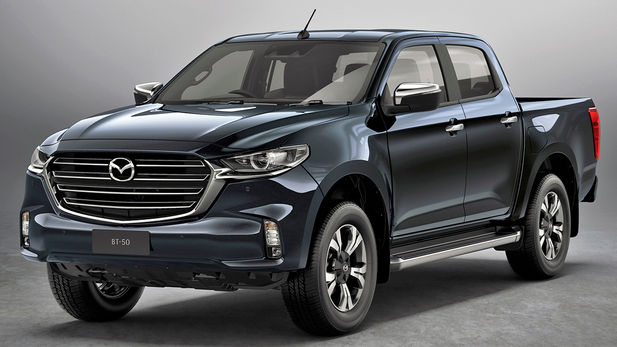
The Mazda BT-50 bakkie has been officially discontinued in South Africa, bringing an end to the nameplate’s 18-year run in the country…
Yes, it’s the end of an era. The Mazda BT-50 been officially discontinued in South Africa, ending the nameplate’s 18-year run (and even longer B-Series heritage) in the country.
We noticed the bakkie was no longer listed on the Japanese firm’s local website and asked the company for comment on the BT-50’s local fate. Our suspicions were unfortunately correct: the Isuzu-built model was indeed axed at the start of March 2024.
For the record, the bakkie was also recently discontinued in New Zealand, another right-hand-drive market, though Mazda says it “will continue to manufacture the BT-50 as part of its alliance with Isuzu for other global markets”.
Why has the axe fallen on the BT-50? Well, Mazda Southern Africa says the current version “has not made inroads into our extremely competitive double-cab market, especially in comparison to brands that manufacture locally”, making reference to the likes of the Toyota Hilux , Ford Ranger and Isuzu D-Max .
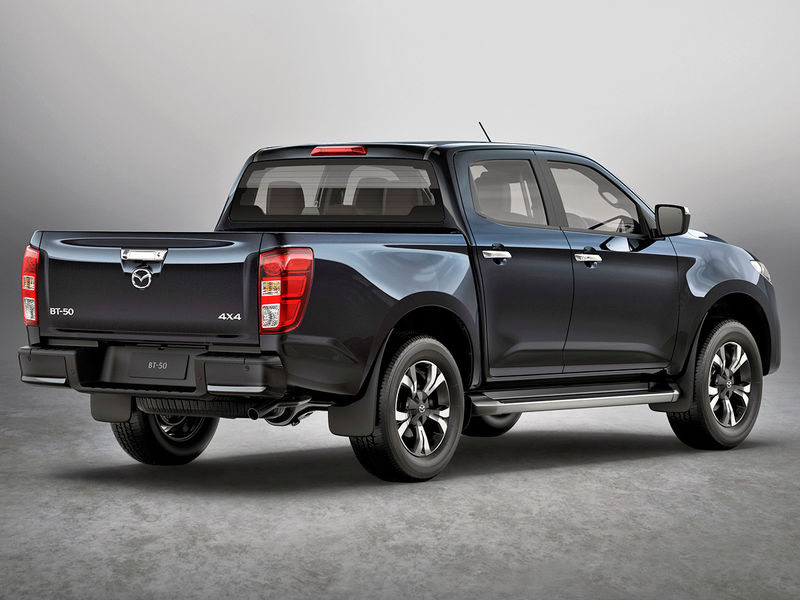
“The South African LCV [light-commercial vehicle], and in particular the double-cab market, is extremely well developed and competitive, with locally manufactured brands and nameplates dominating sales. This factor, as well as an extremely challenging landscape for imported vehicles, competing directly with locally manufactured products, has led Mazda SA to make this difficult decision,” said Craig Roberts, Managing Director of Mazda SA.
As a reminder, the BT-50 range had comprised 4 double-cab derivatives, last priced from R630 400 and running through to R818 400. The line-up kicked off with a pair of 4×2 Active variants using a 1.9-litre, 4-cylinder turbodiesel engine (110 kW and 350 Nm), and available in either 6-speed manual or 6-speed automatic guise. There was also a 3.0-litre, 4-cylinder turbodiesel engine (producing 140 kW and 450 Nm), offered in either 4×2 Dynamic or 4×4 Individual form but exclusively with a 6-speed self-shifting transmission in either case.
The current-generation, SA-spec Mazda BT-50 was imported from Thailand, where it was produced by Isuzu (and based on the latest-generation D-Max ). Though this TF-series BT-50 was revealed in mid-2020, it touched down in Mzansi only in July 2021.
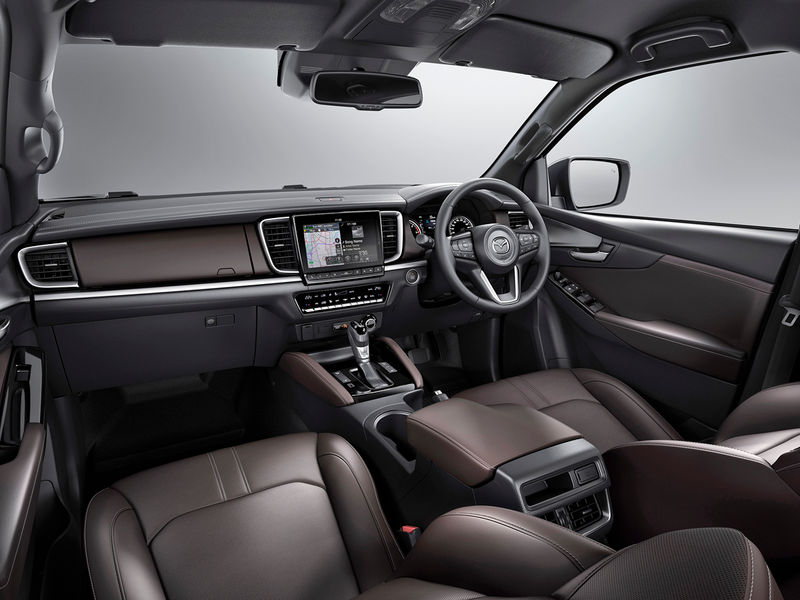
During its time on the local market, this latest BT-50 wasn’t terribly well received. In 2023, for instance, it was South Africa’s slowest-selling traditional bakkie , with 69 units registered across the entire year (that’s a monthly average of fewer than 6 units). Interestingly, sales improved to 15 units apiece in January and February 2024 , though perhaps dealers were offering promotions in order to move the last of the stock.
The original BT-50 was revealed back in 2006, based on the Ford Ranger and built at the Blue Oval brand’s Silverton facility right here in South Africa. The 2nd-generation version debuted in Mzansi in 2012, initially again produced locally by Ford, before Mazda SA switched to a Thai-built version at the facelift in 2017.
Mazda says “current inventory at dealers will be the final available BT-50 vehicles for retail sale in SA, confirming “no further imports of the BT-50” will be made. Existing BT-50 owners, though, needn’t worry since current and previous generations “will continue to be supported by Mazda SA and its 42 dealers around the country”.
“As with the runout of any specific model, Mazda SA will continue to support BT-50 with all service, repair and replacement parts,” the Japanese company’s local arm concluded.
Buy a used Mazda BT-50 on Cars.co.za!
Related content
Mazda CX-5 range trimmed: no more manual, diesel, AWD