
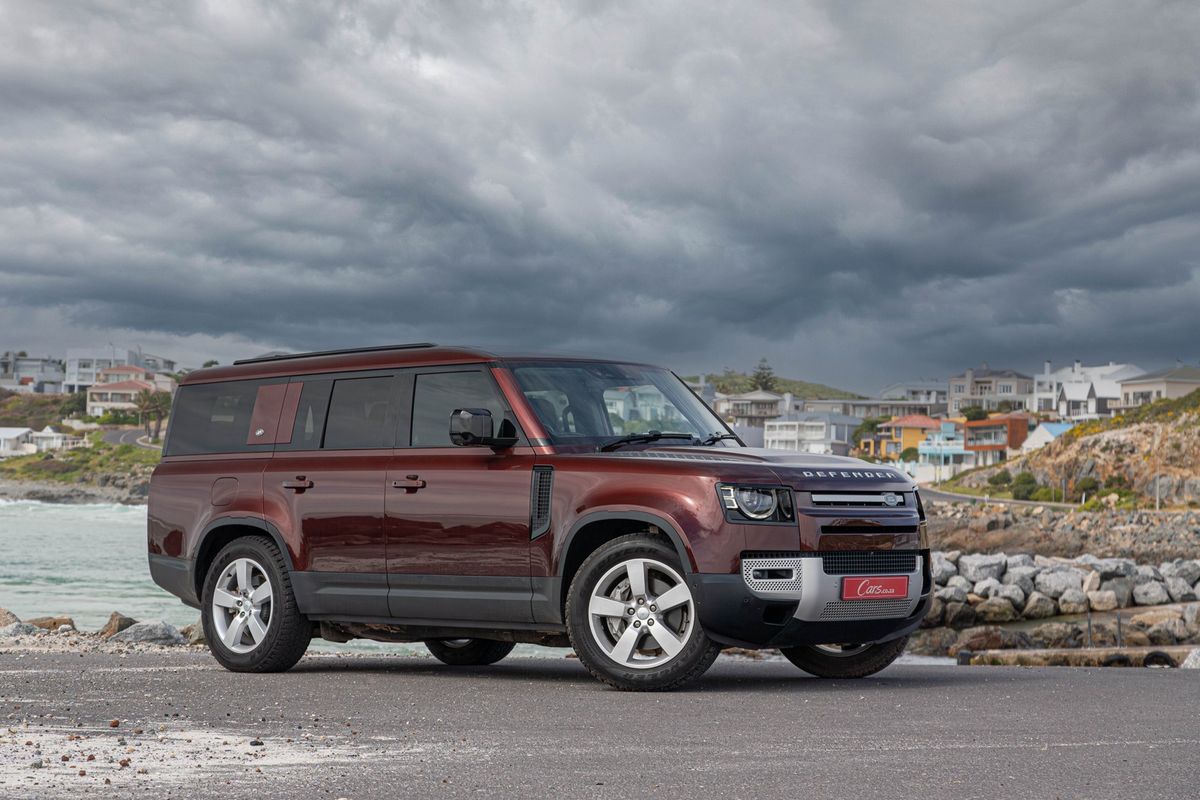
The award-winning Defender continues to be the star in Land Rover’s local line-up and the new 130 variant’s party trick is increased people-carrying capability. Should you buy one? We get to grips with the Land Rover Defender 130 First Edition to find out.
We like: Retains all the Defender party pieces, including luxury, spaciousness and off-road capability.
We don’t like: Awkward styling, ungainly ingress to the 3rd row, a niche too far?
FAST FACTS
- Model: Land Rover Defender 130 First Edition
- Price: R2 102 300 (November 2023, before options)
- Engine: 3.0-litre 6-cylinder turbodiesel
- Power/Torque: 221 kW and 650 Nm
- Transmission: 8-speed automatic
- 0-100 kph: 7.5 seconds (claimed)
- Fuel consumption: 8.2 L/100 km (claimed)
- Luggage/Utility space: 389-1 232-2 291 litres
Serious about buying/selling?
Some dealerships regularly offer great deals. See our New Car Specials!
Looking to sell your car? Sell it on Cars.co.za for free
Where does the Defender 130 fit in?
Land Rover’s Defender (the D240 HSE derivative, to be precise) won the Premium SUV category of the 2020/21 #CarsAwards – it is one of several plaudits it has received. However, the model has faced some challenges too. Given the history of the product, the pressure was on to deliver a vehicle that was able to match the legend’s off-road abilities yet retain 21st-century levels of comfort, tech and convenience.
Fortunately for the Solihull-based brand, this Defender has achieved huge sales success around the globe – it comfortably outsells everything else in the Jaguar Land Rover (JLR) stable. But developing a new model from scratch wasn’t a cheap exercise; understandably, JLR wants to leverage the nameplate.
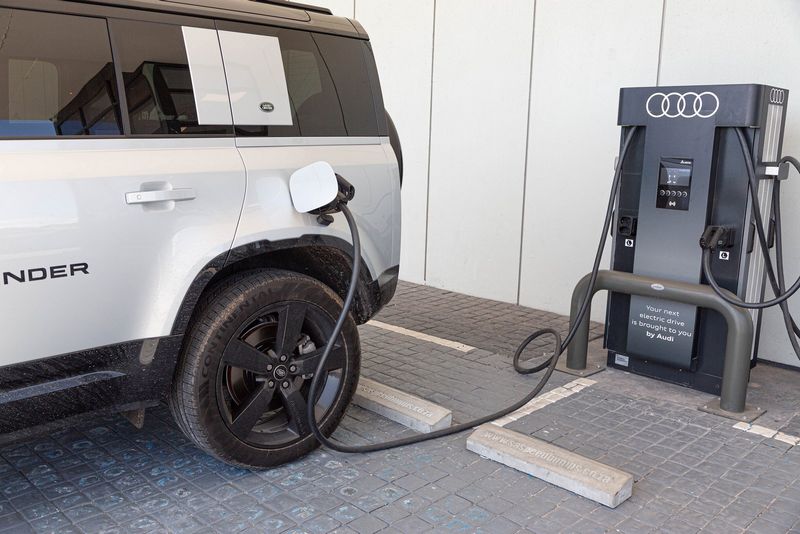
The range comprises the short-wheelbase 90, long-wheelbase 110 and now, the even longer 130. All are available with petrol, diesel or plug-in hybrid engines; the model’s even available with a supercharged V8. In future, JLR will also offer a high-performance version, as well as a smaller, more compact variant.
As far as rivals are concerned, the Defender 130 sits in its own niche: There are no other premium SUVs with 8-seat configurations, but the Toyota Land Cruiser 300 3.3D GR-Sport off-roader has 7 seats and, although it doesn’t have the Defender’s on-road refinement, can match the Briton off the beaten track.
If people-moving is your priority and you have R2 million to spend, check out Mercedes-Benz’s V-Class. Or, If you want a 1st-class luxury SUV that can seat 7 people, consider the BMW X7 and Mercedes-Benz GLS. Although they’re similarly priced to the Defender, they’re far less off-road capable, however.
Compare the Defender 130 with its Toyota Land Cruiser 300 and Mercedes-Benz V-Class rivals
Compare the Defender 130 with its BMW X7 and Mercedes-Benz GLS rivals
How the Land Rover Defender 130 fares in terms of…
Design and Packaging
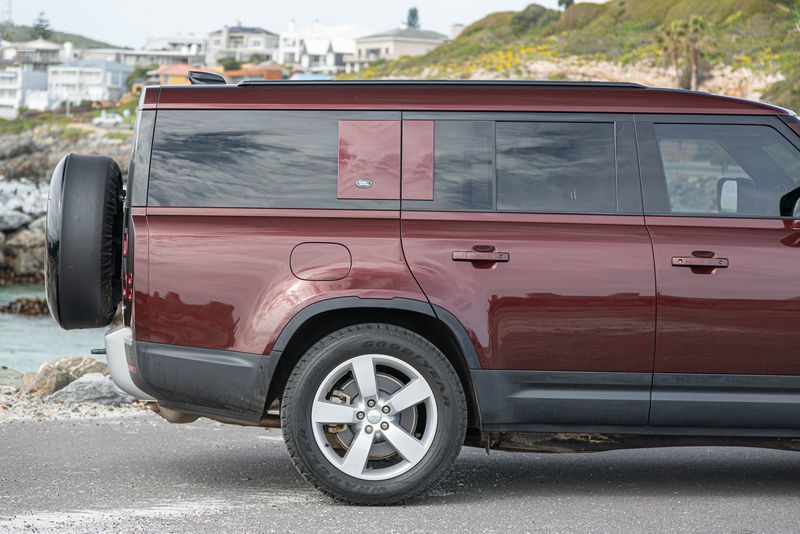
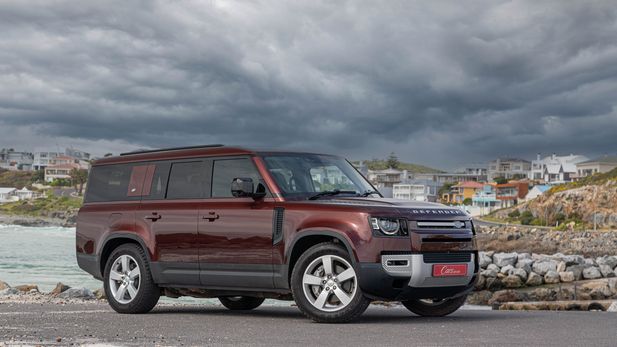
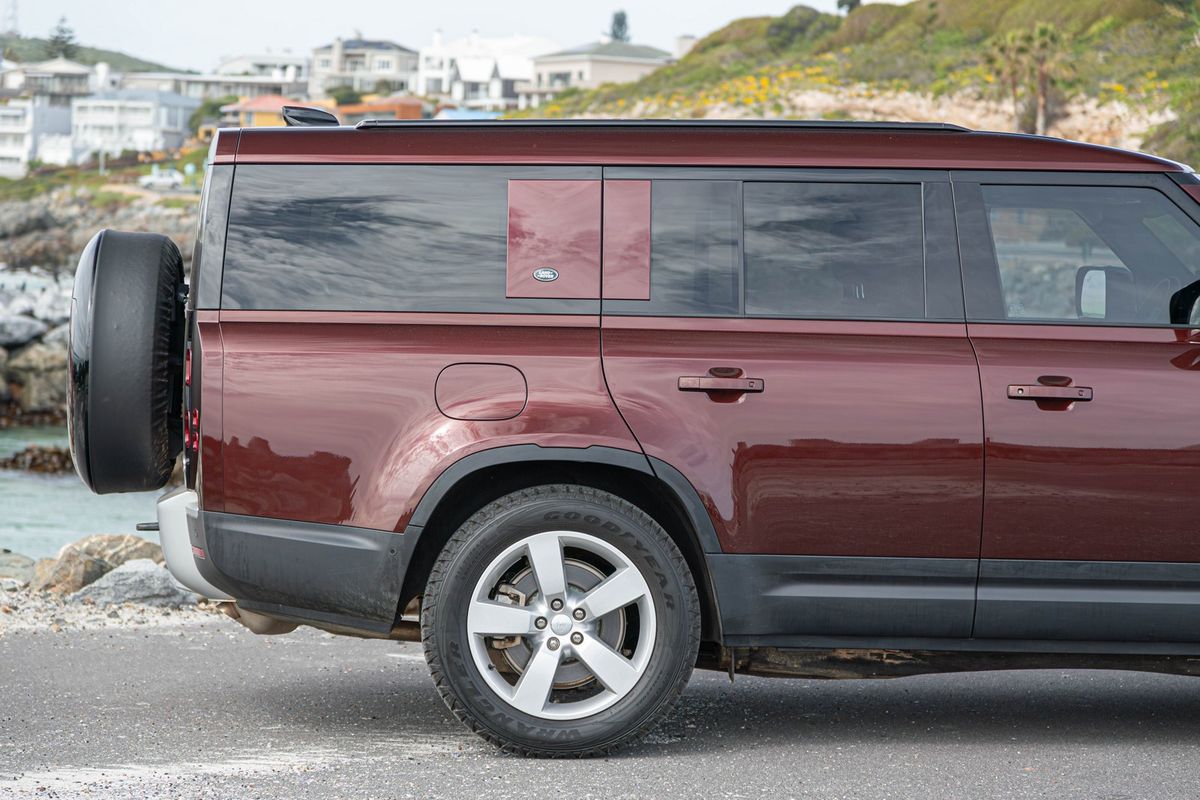
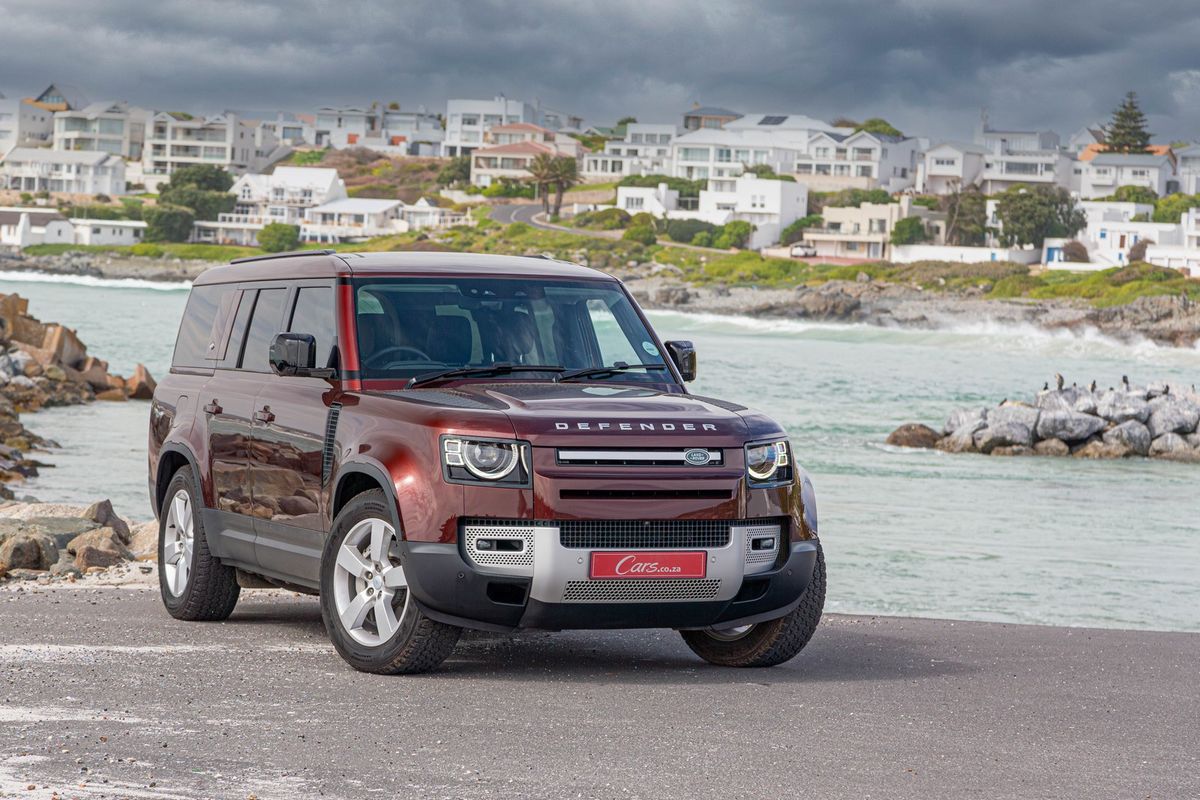
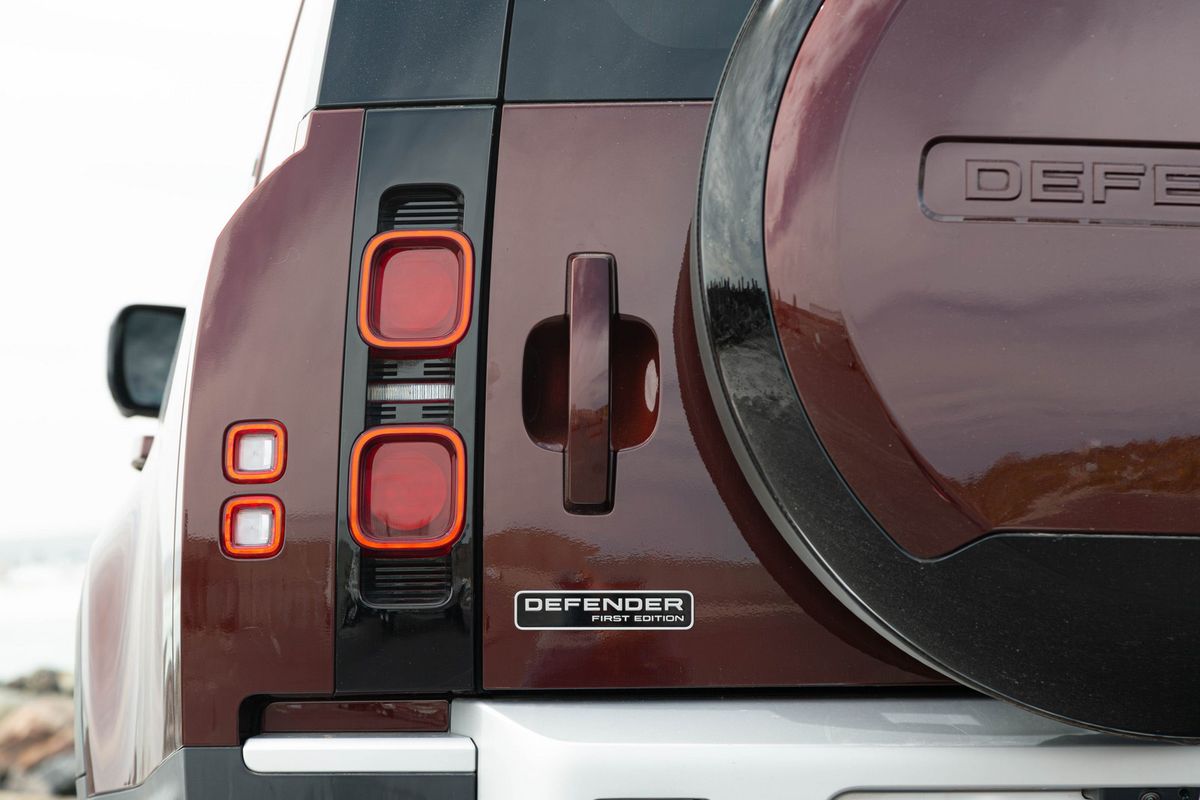
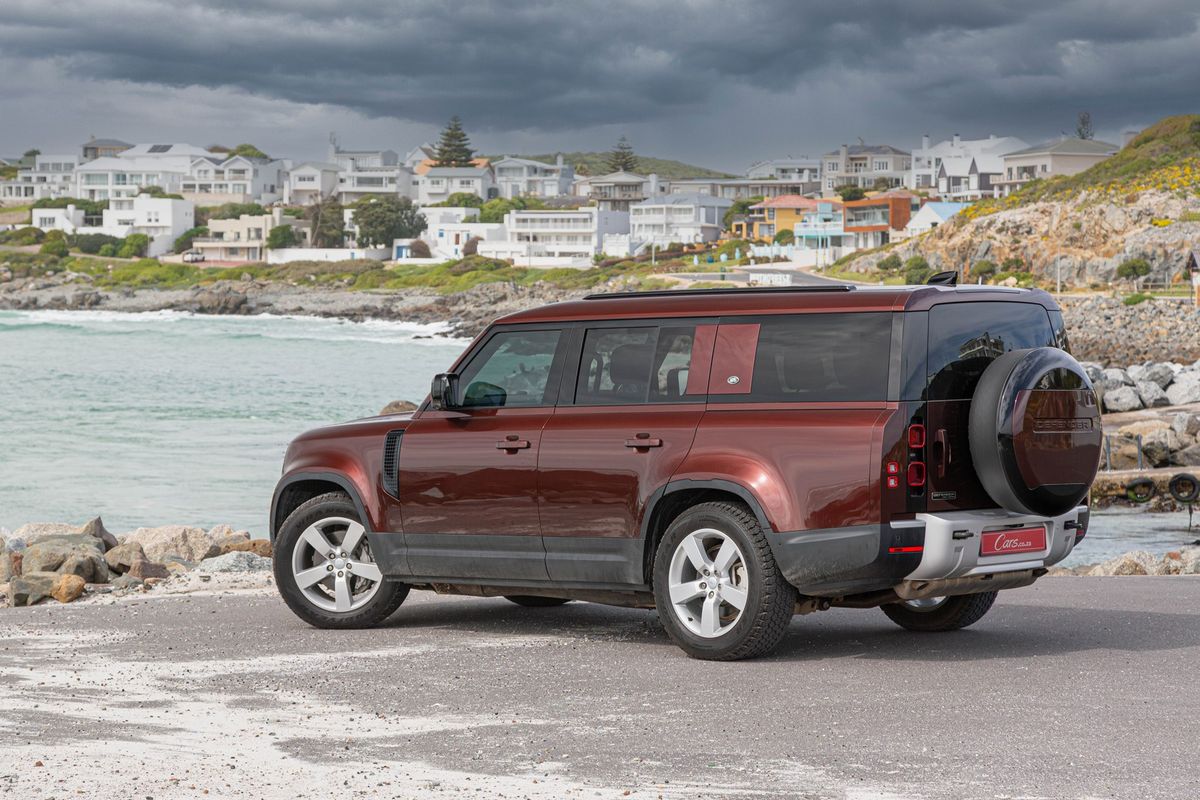
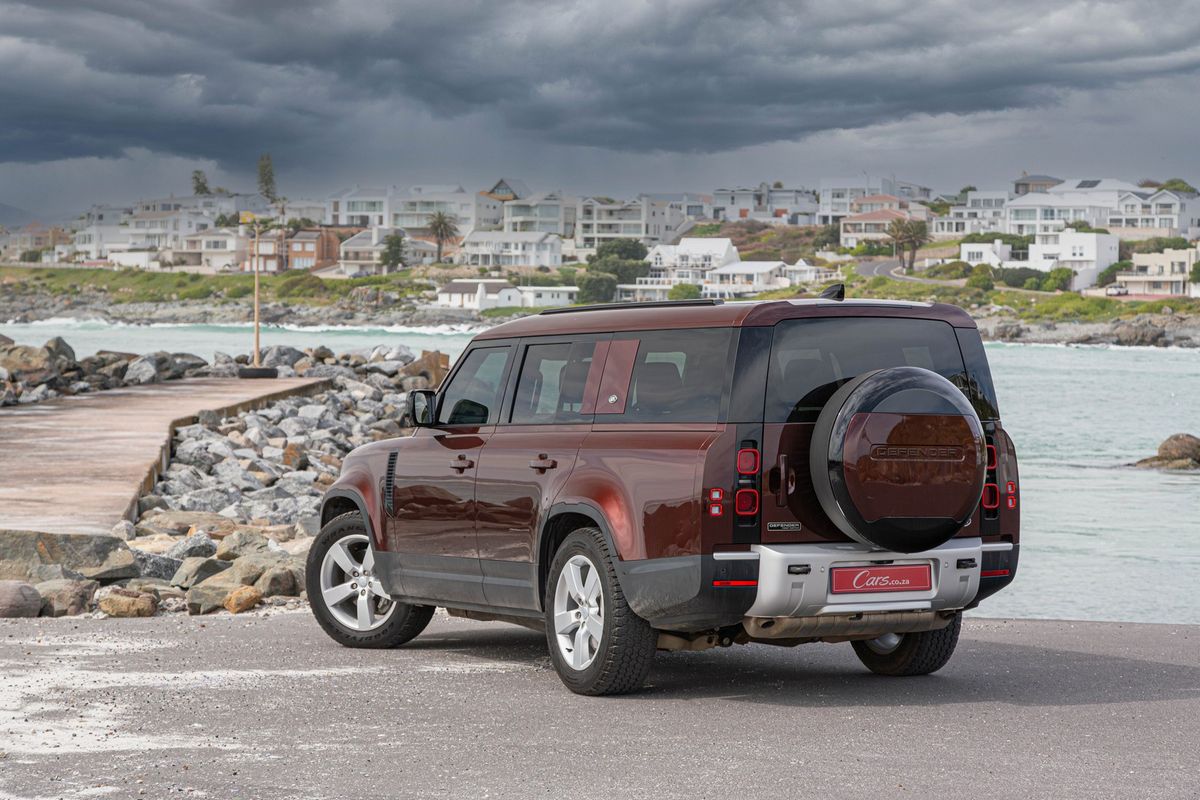
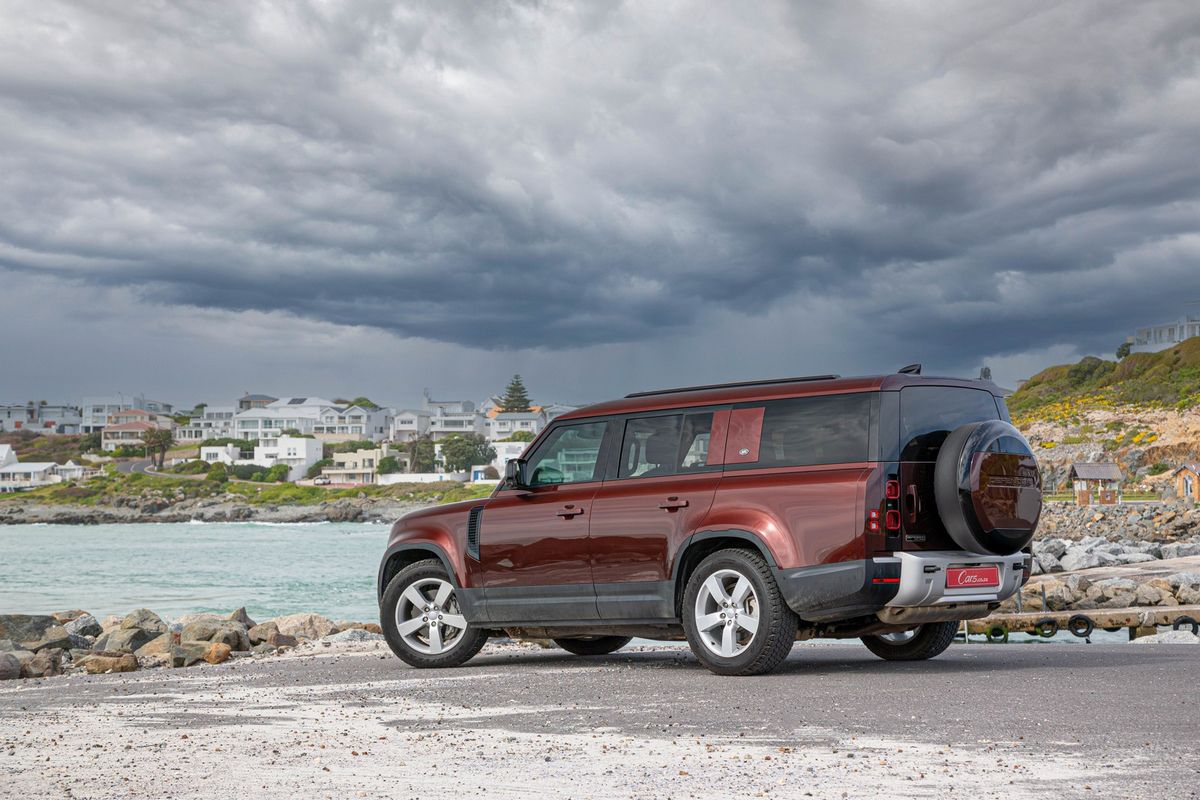
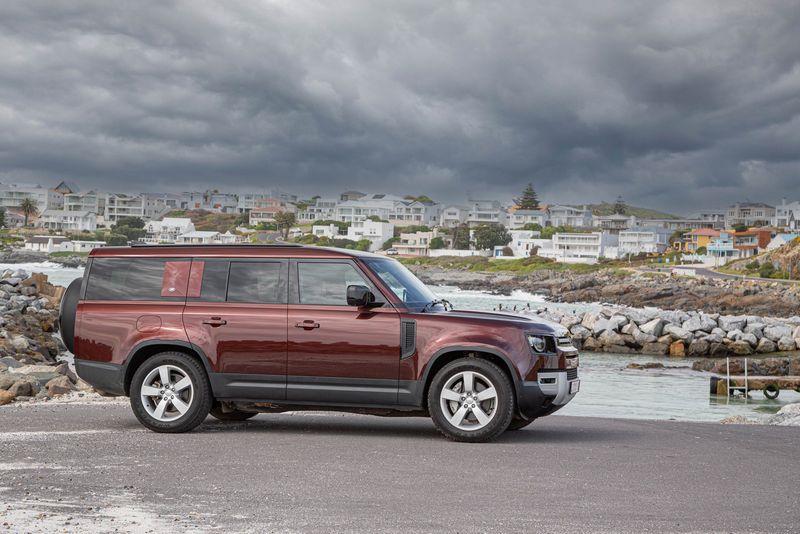
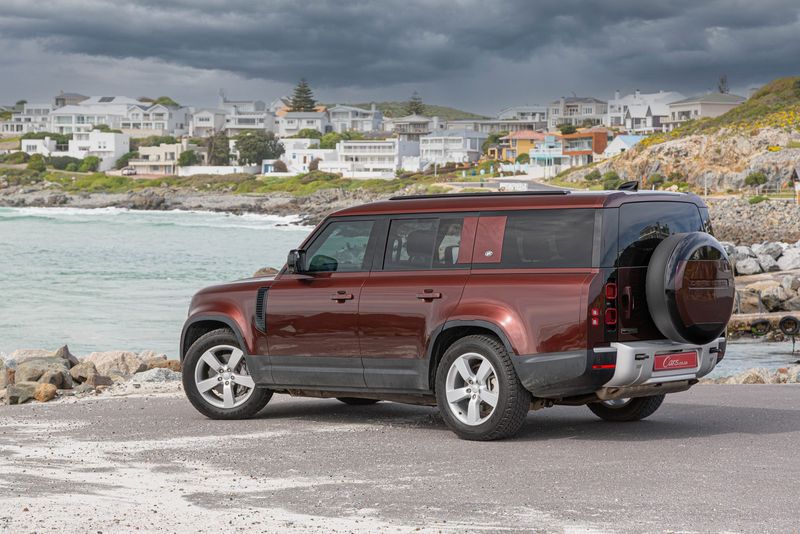
Tested here is the Defender 130 First Edition, which is equipped with additional content such as the Sedona Red paint finish. The main visual difference between the Defender 130 and the rest of the range is its additional length. At almost 5.5 metres in length, the 130 appears slightly awkward or ungainly from the side – some onlookers suggested it resembled a Defender hearse! Interestingly, the wheelbases of the 110 and 130 are identical (just over 3 metres long), which means 2nd-row space isn’t compromised.
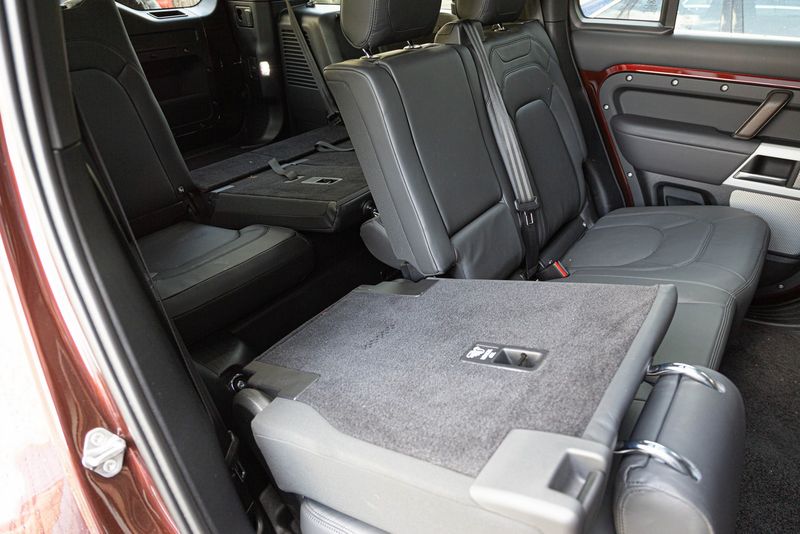
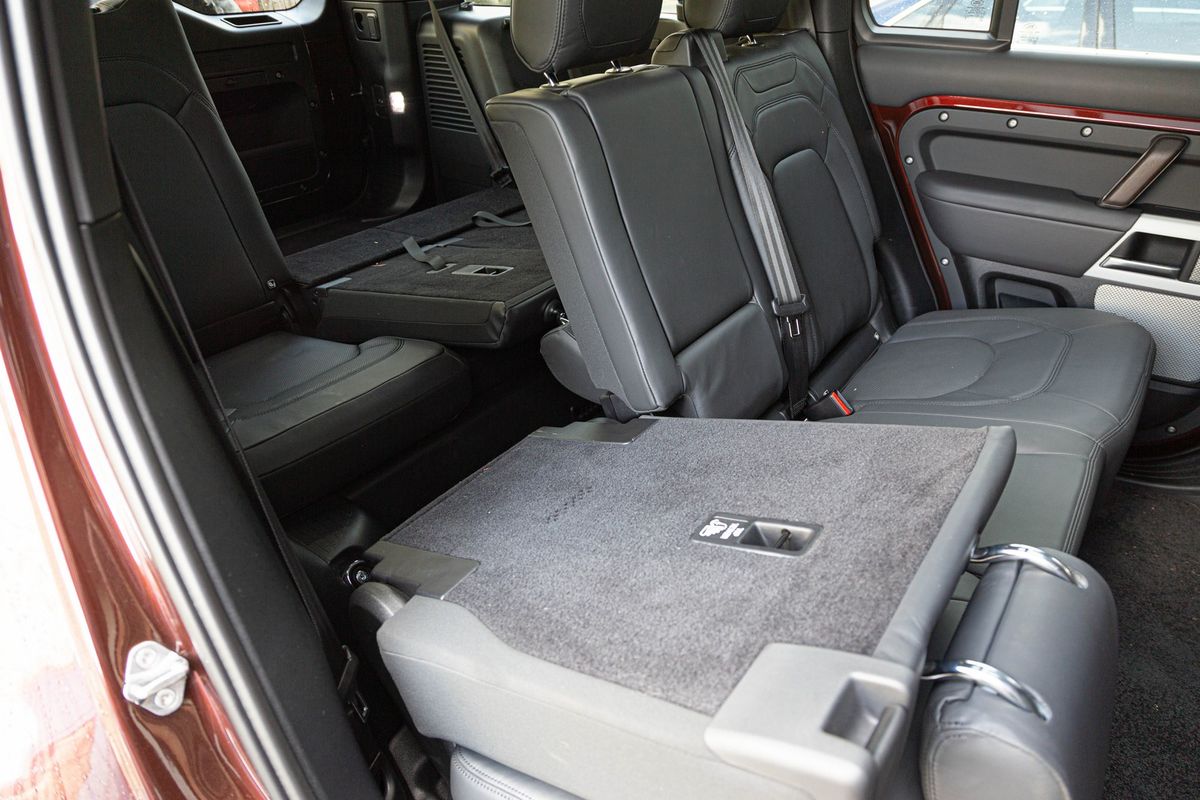
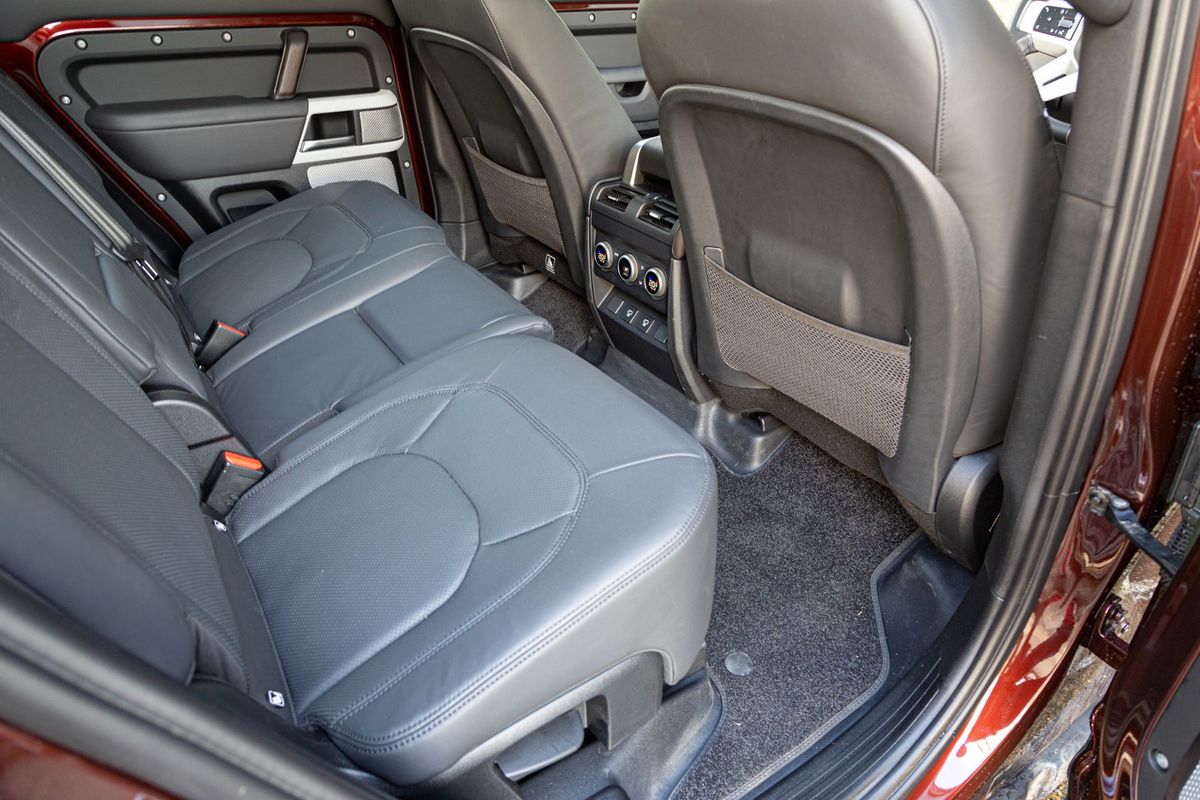
However, compared with a standard 110 derivative, the 130 is a 3-row vehicle (with a 2-3-3 seating configuration). While all occupants are afforded surprisingly generous head- and legroom, access to the last row is awkward and undignified (despite the fact the 2nd row can be folded down and forward).
We were loathe to ask anyone other than children to sit in the Defender 130’s 3rd row… To illustrate our point, the author is 1.91 metres tall and had to perform quite a bit of body contortion to get seated in the back. That said, the Land Rover offers more 3rd-row occupant space than most 3-row Premium SUVs.
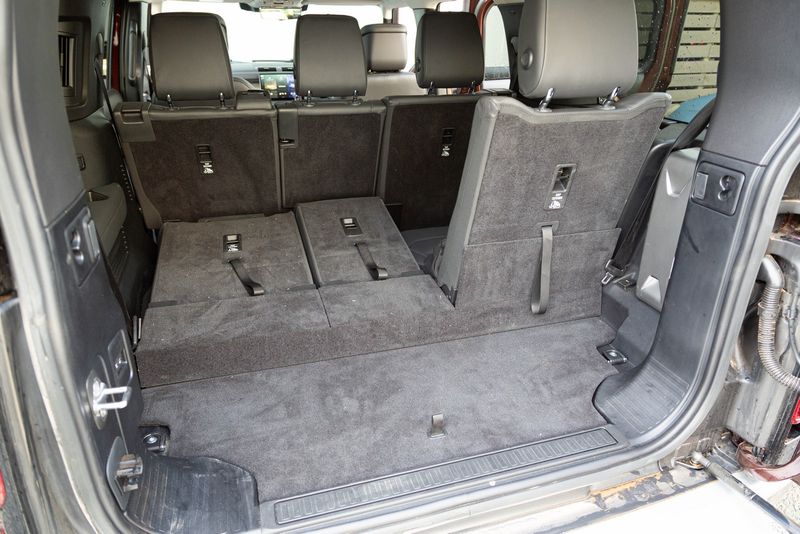
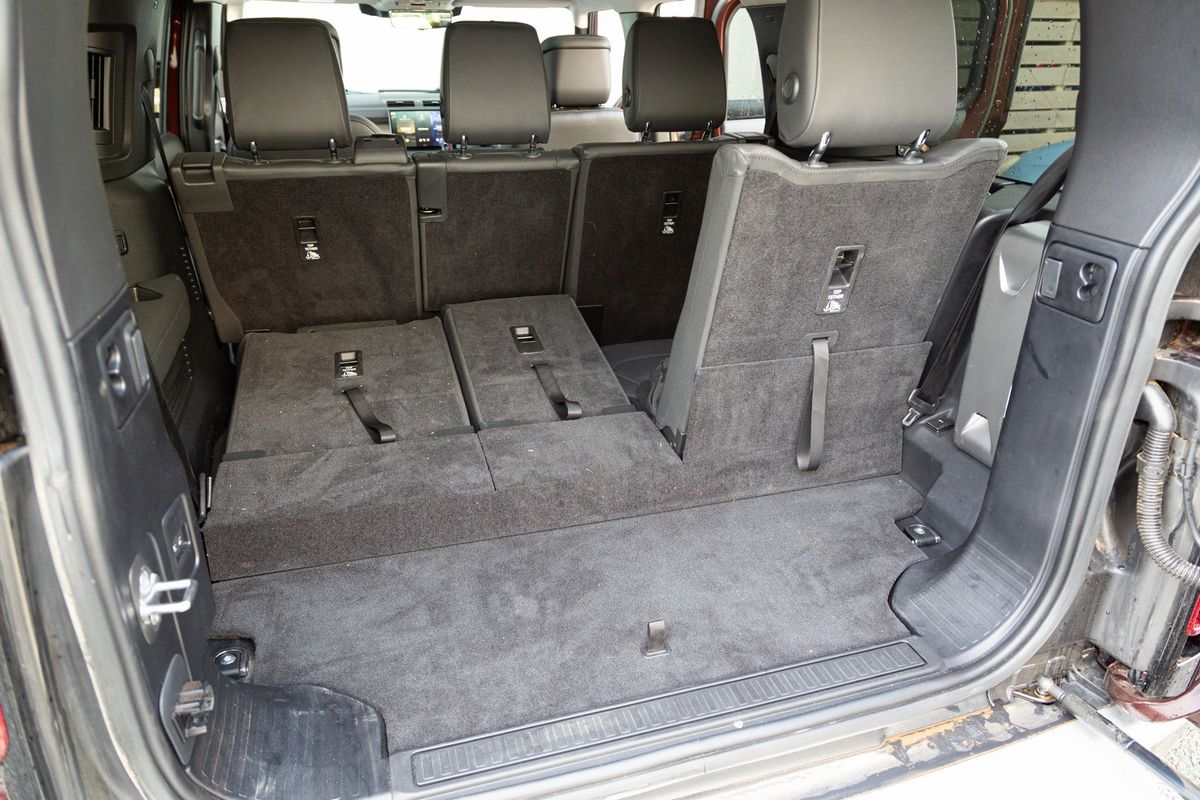
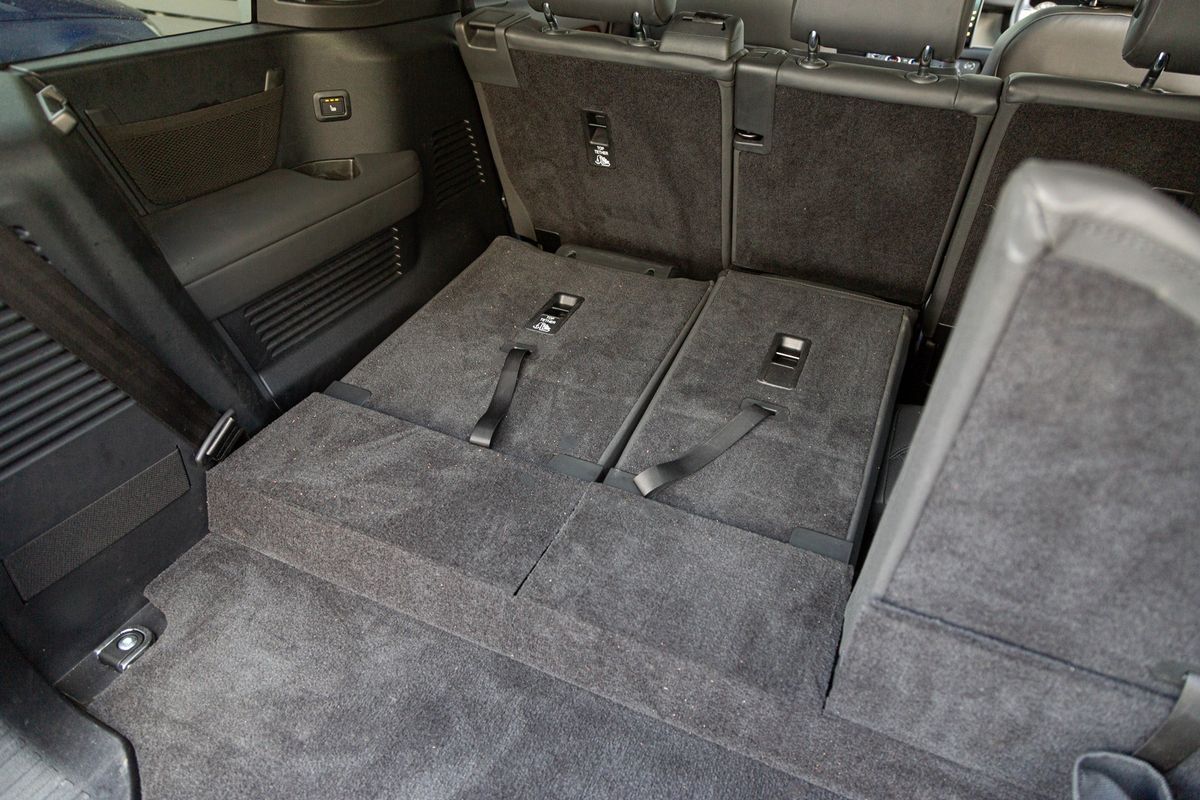
The Defender 130’s main strength is practicality. With as much as 2 291 litres of utility space (with rows 2 and 3 folded down), there’s surely enough capacity for every conceivable item that could go into an SUV.
The seats are split in a 40:20:40 configuration, which enables you to still use certain seats when hauling longer-than-usual items. Plus, even when all seats are in use, the 130 offers reasonable luggage space.
Performance and Efficiency
The Defender 130 First Edition is powered by a 3.0-litre 6-cylinder turbodiesel; it’s offered throughout the brand’s Premium SUV range) and, we’d argue, is the best engine for this application. With outputs of 221 kW and 650 Nm, the powerplant provides adequate performance, as well as reasonable economy.
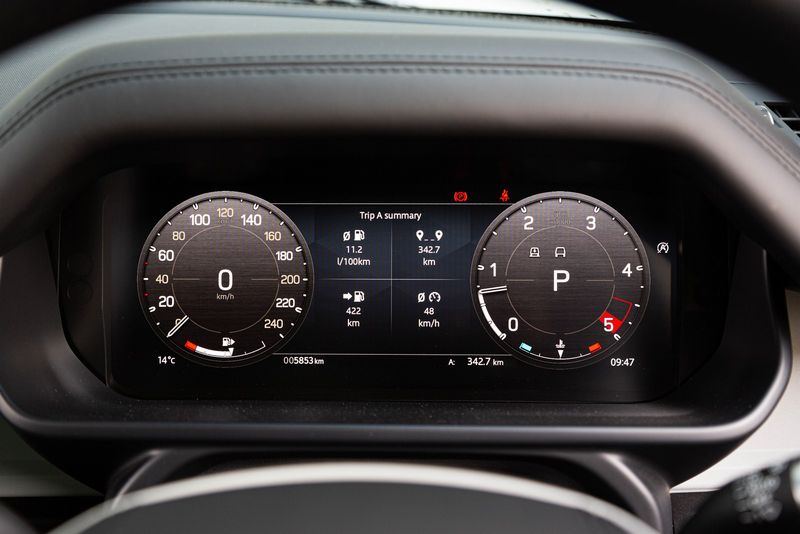
Speaking of performance, when we hooked up our test equipment to the Defender, it dispatched the 0-to-100 kph dash in 7.56 sec, which is very close to the manufacturer’s claim. The Defender 110 with the same engine is said to complete the run 5-tenths quicker, which is to be expected (it’s 240 kg lighter).
From a standstill, the Landy’s acceleration doesn’t feel eager, perhaps due to the 130’s heft, but once up to speed, it offers excellent in-gear shove and effortlessly executes open-road overtaking manoeuvres.
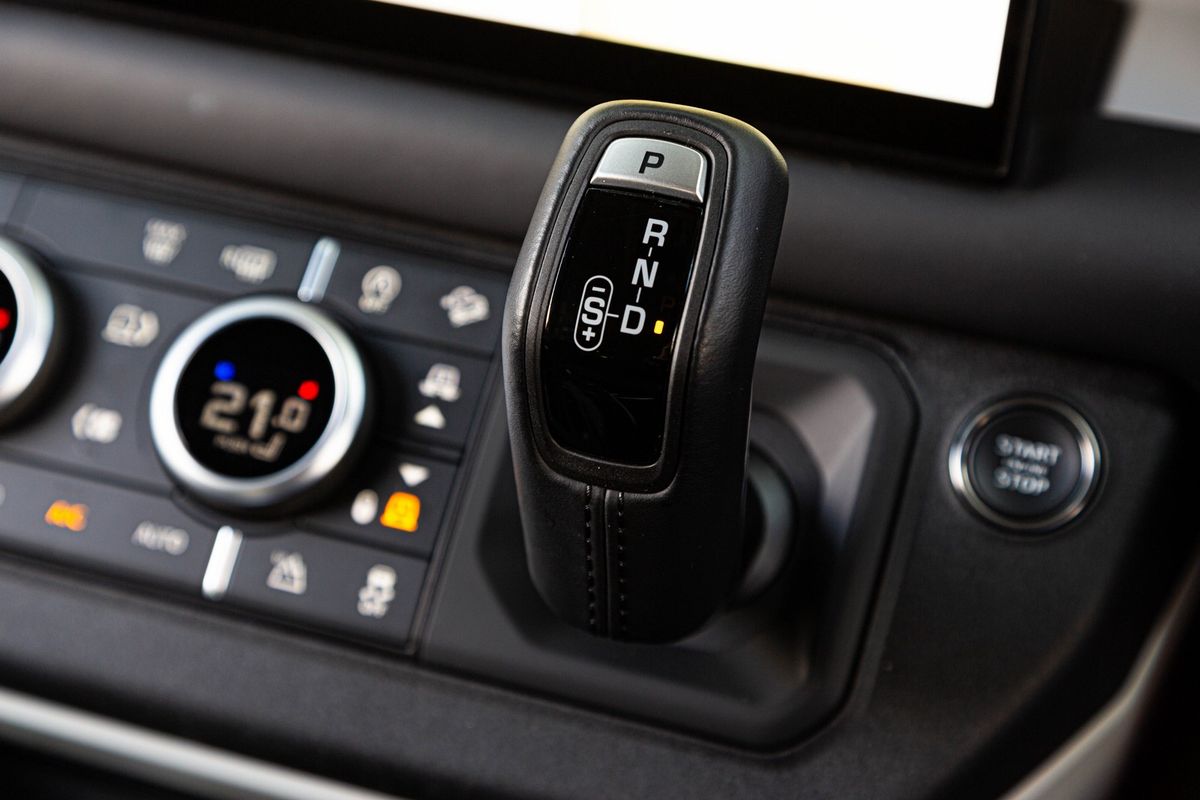
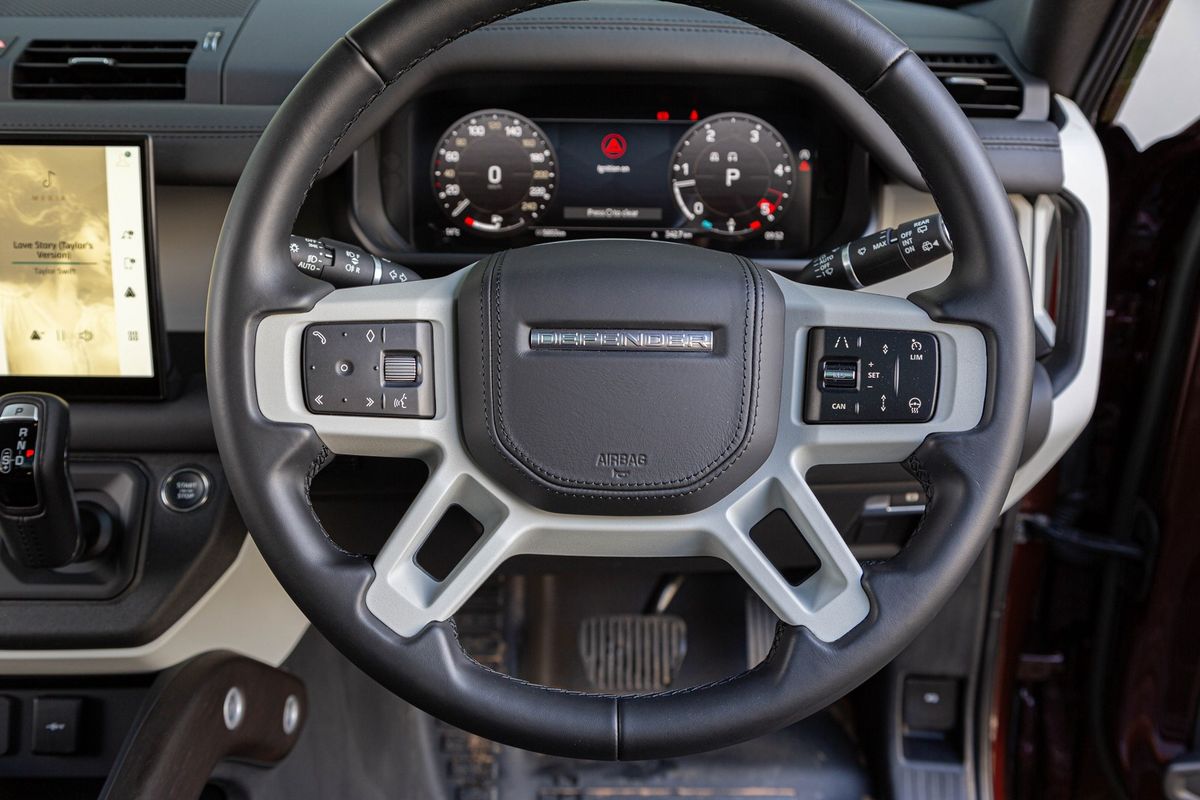
The ZF-sourced 8-speed automatic transmission shifts cogs smoothly and efficiently. There are no shift paddles on the steering wheel, but that’s no loss – the 130 does a fine job of changing gears on its own.
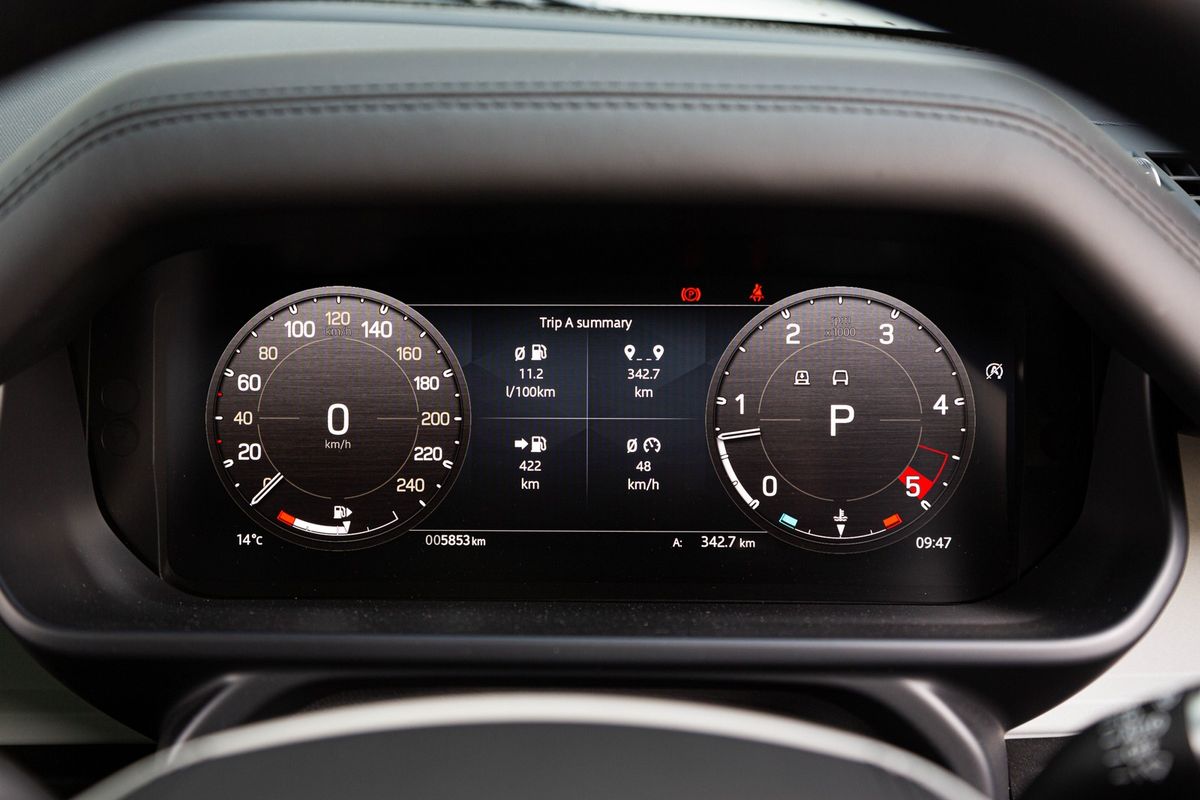
Given it has an 89-litre fuel tank and a claimed fuel consumption figure of 8.2 L/100 km, the Defender’s theoretical range is 1 085 km. During its tenure in our fleet, the test unit indicated a consumption figure of around 11 L/100 km, which wasn’t abysmal, given that it travelled on urban roads most of the time.
Ride and Handling
In terms of handling ability, the Defender 130 is impressively wieldy considering its 2.6-tonne kerb weight and extended dimensions (especially its length). Unlike similarly-sized off-roaders, the Landy doesn’t tend to wallow or wander on the road – its air suspension facilitates good body control and ride comfort.
You may expect an off-road-biased vehicle to feel cumbersome to drive on tar roads, but the Land Rover certainly isn’t. Of course, it has a unibody construction – not a ladder-frame chassis – and we suspect that the same “magic” that makes Range Rovers so lovely to drive on the open road has been applied to this model. If you want a premium SUV that excels at long-distance cruising, the Defender is up there!
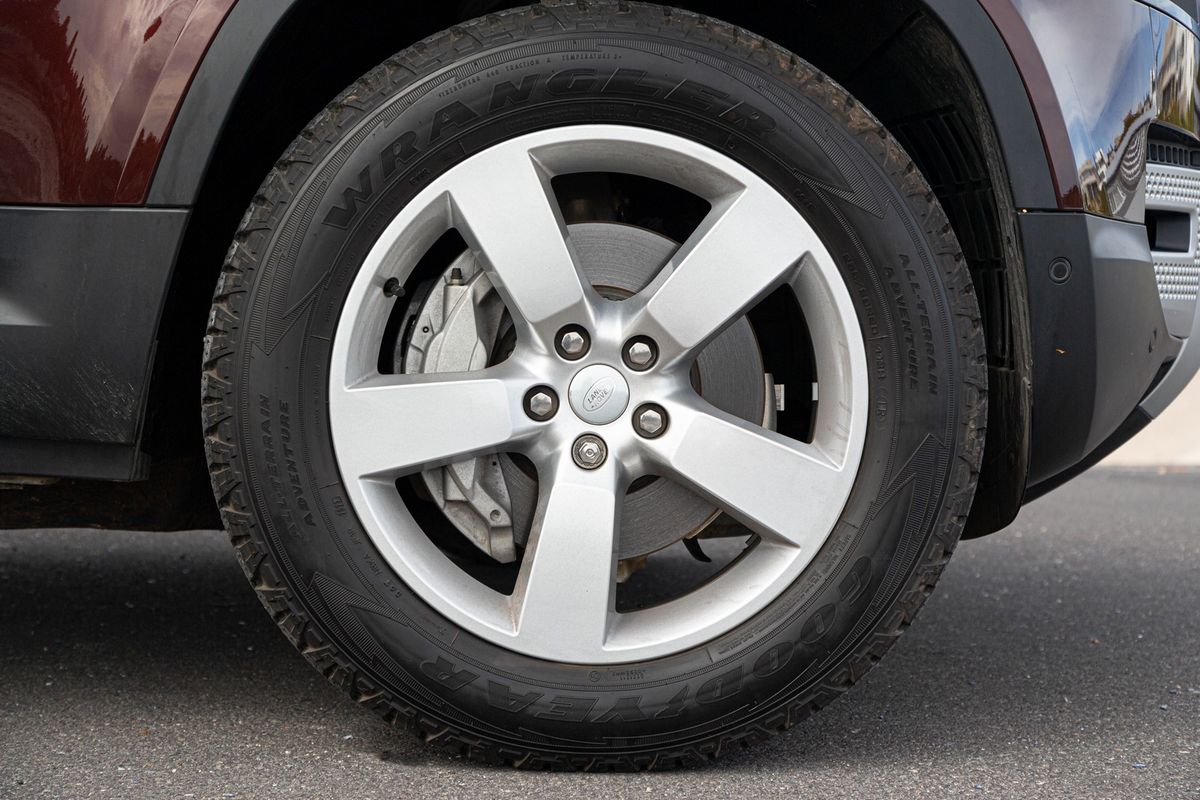
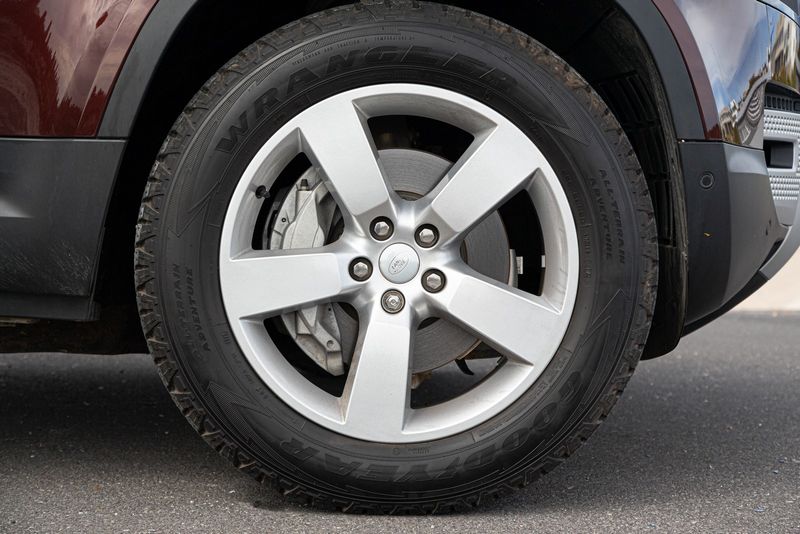
Our test unit was fitted with 20-inch alloy wheels wrapped in chunky 255/60 off-road Goodyears, which, unlike some off-road tyres, didn’t generate excess road noise. Or perhaps if there was noise to speak of, the excellent noise/vibration/harshness (NVH) control of the Defender’s cabin dialled it out. We liked the light steering setup, which masked the 130’s size and made it feel far more nimble than we expected.
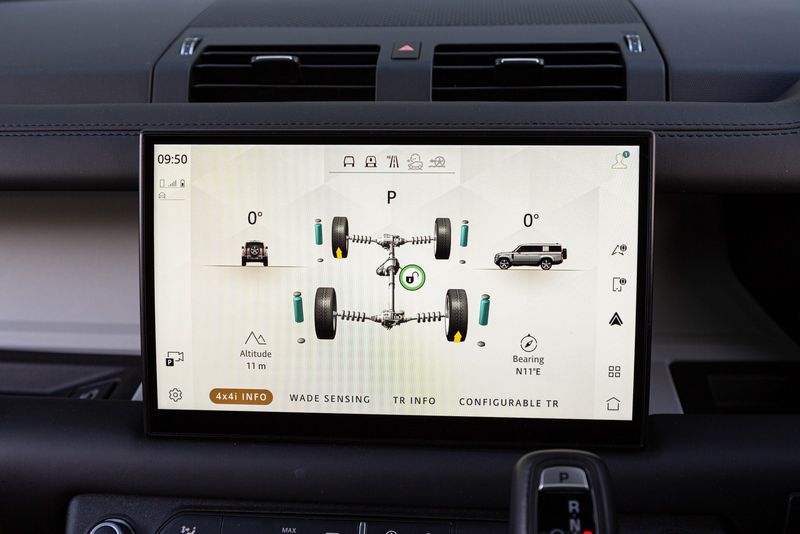
Suffice it to say, the legend of the Defender’s exceptional off-road ability is well-founded, even if the modern iteration of the model offers a much broader 4×4-ing skillset than most buyers of the 130 variant – or any variant – will ever need. Yes, it can traverse some near-impossible terrain, but it’s more likely to be found mounting the pavement of posh shopping malls. Like a Swiss army knife, you may not use all the tools, but it’s reassuring to know they’re there and will be ready whenever you need to utilise them.
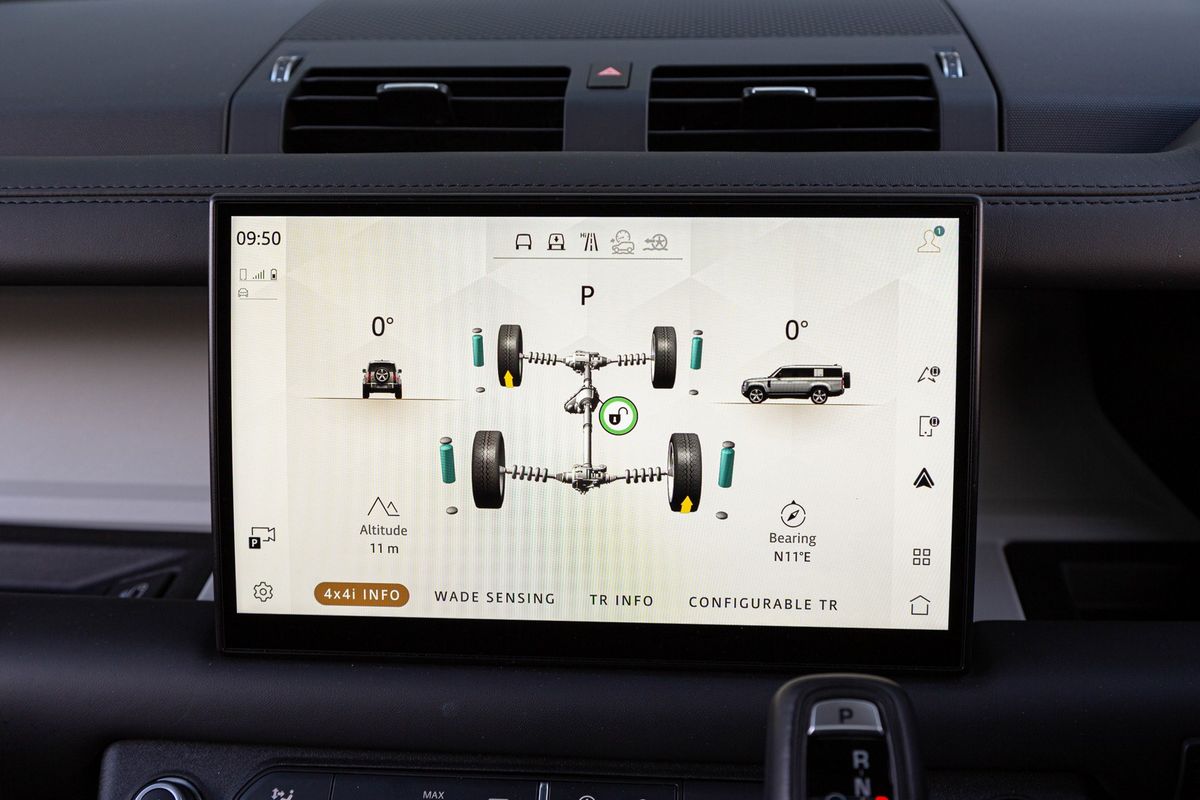
With a ground clearance of 290 mm and a wading depth of 900 mm, the Defender is well-equipped to deal with the harshest off-road terrain. You can raise the air suspension to help the vehicle clear big obstacles or lower it to provide easier access to the cabin or load bay. The Terrain Response off-road modes will flatter off-roading novices, but low-range is there to help you get through tricky conditions.
Comfort and Features
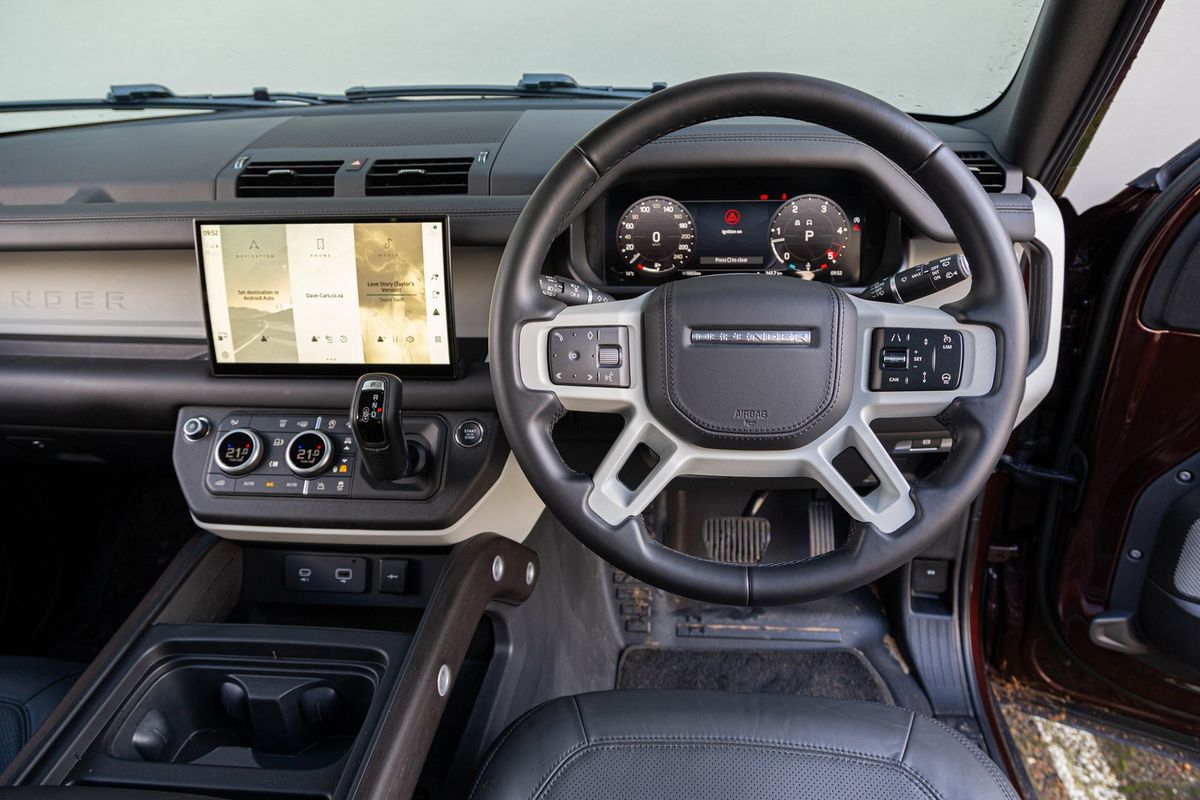
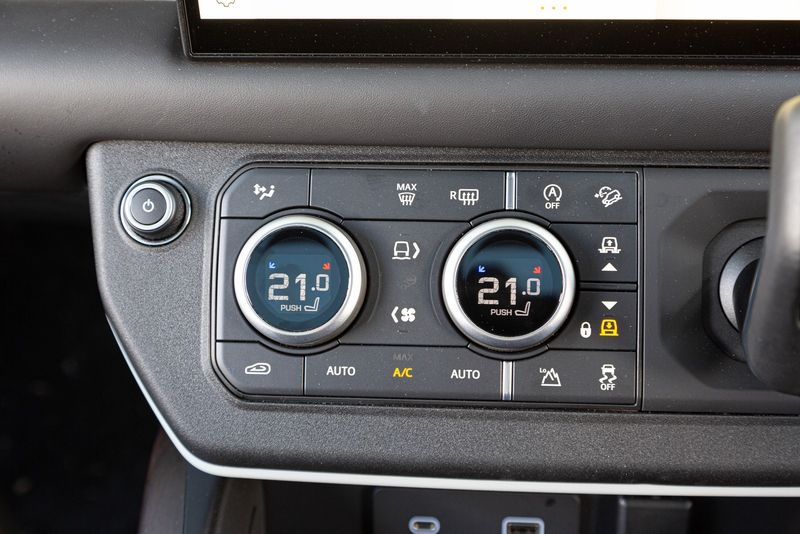
When you climb inside the Defender 130, you’re greeted by a smartly designed cabin that ably balances a rugged look with modern tech conveniences, plus, you’re well catered for in terms of features (as you should be, at this price point). Everything looks and feels solid, and while some plastics (such as the inserts on the steering wheel) feel of marginal quality, we suspect they’re there to add to the utilitarian feel. The seating position is commanding; as you tower above other road users, you feel well in charge.
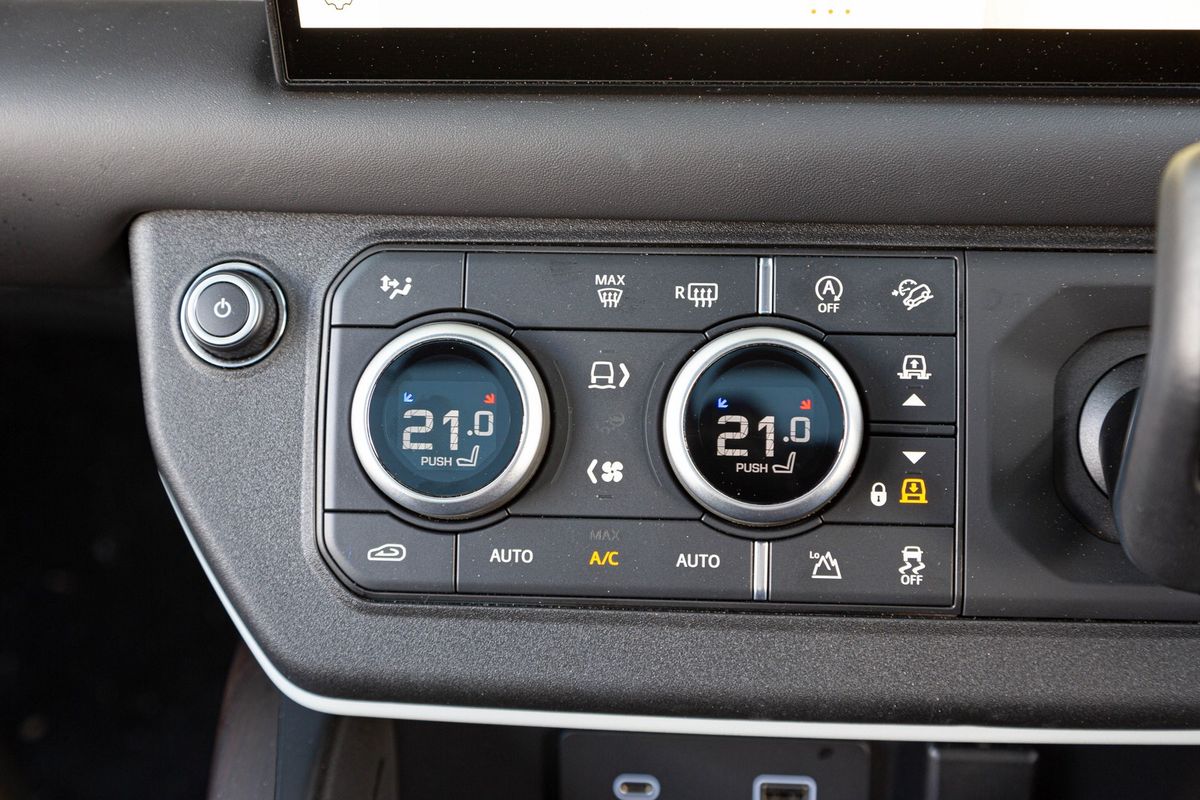
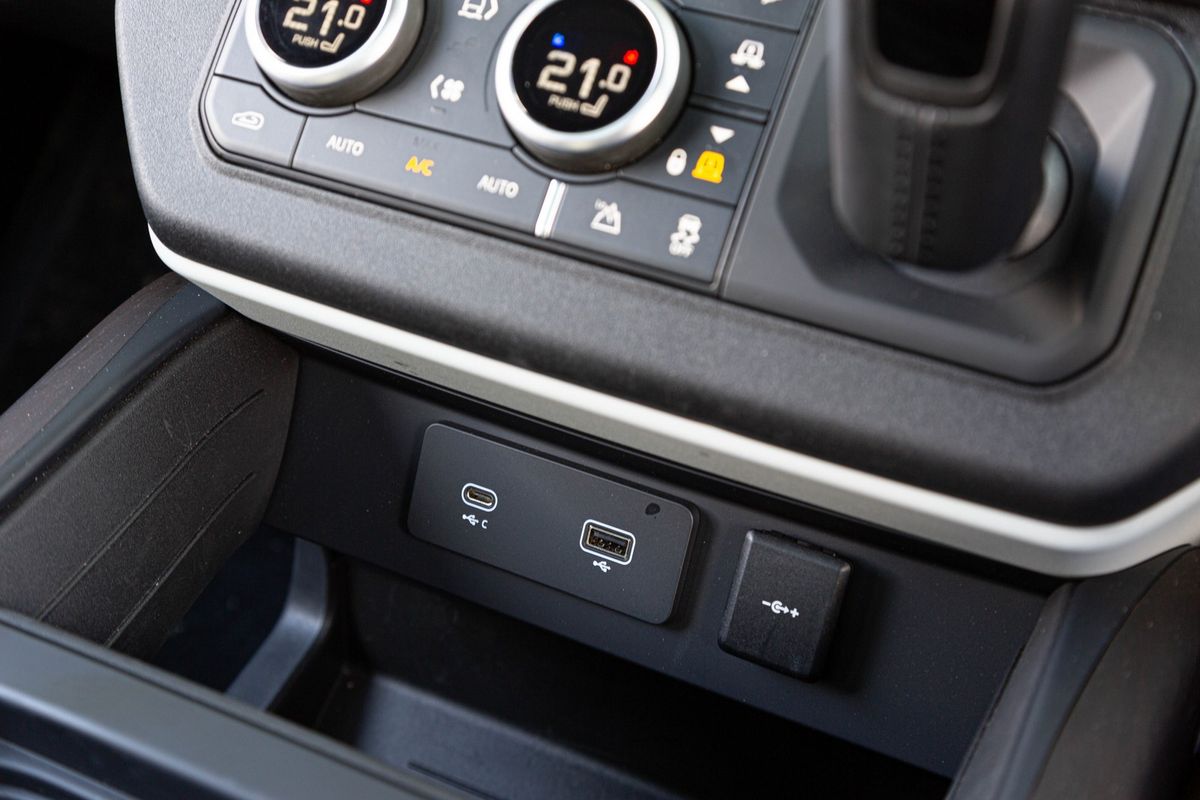
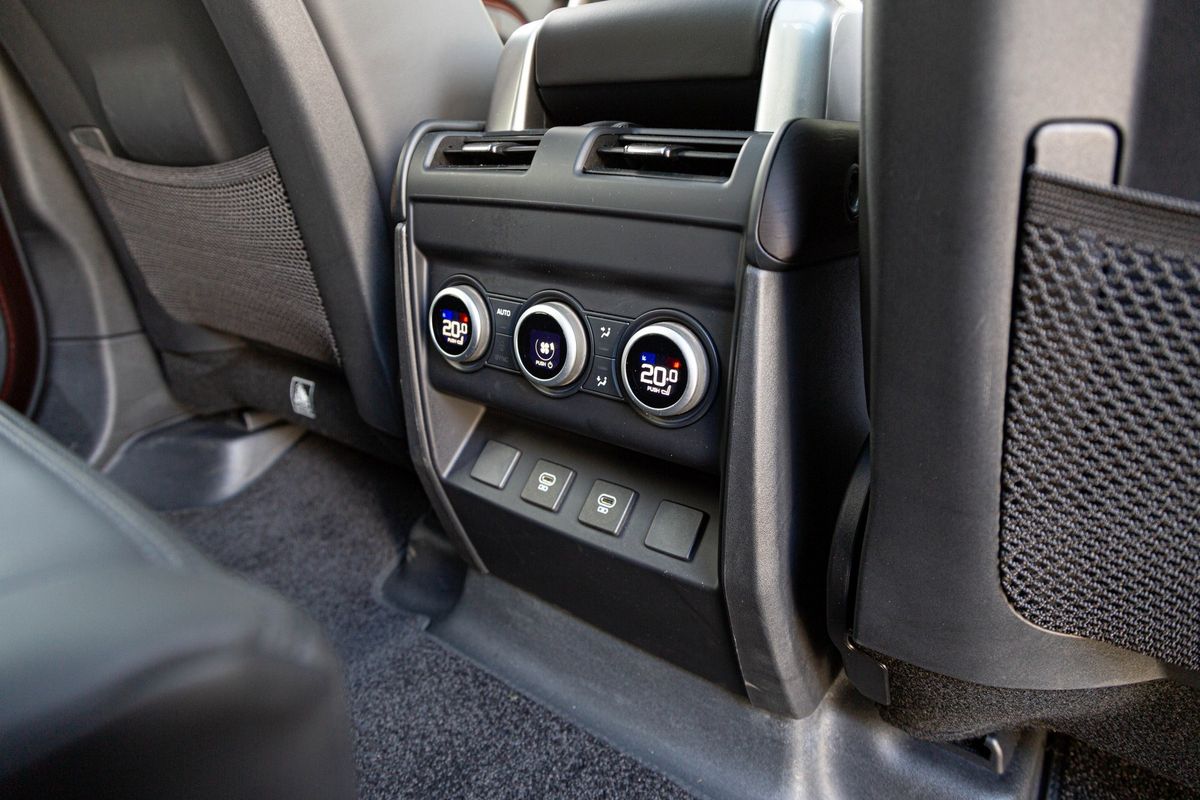
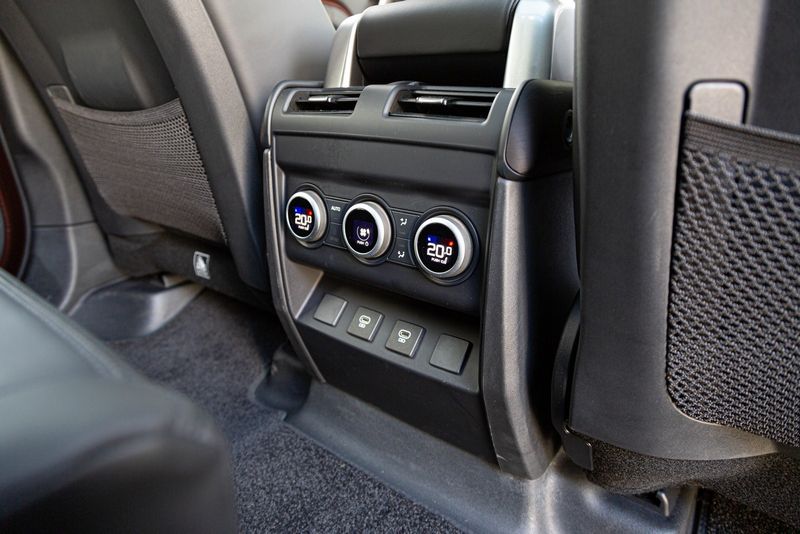
The Defender 130 First Edition comes equipped with, inter alia, matrix LED headlamps, 4-zone climate control, an upgraded Meridian audio system, dual panoramic sunroofs, as well as privacy glass. For the passengers, there are heated seats all round, as well as padded armrests and USB-C charging ports.
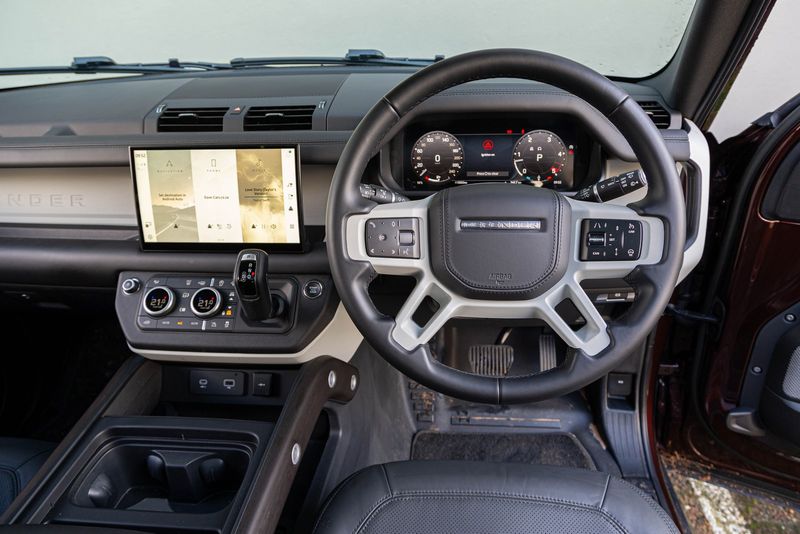
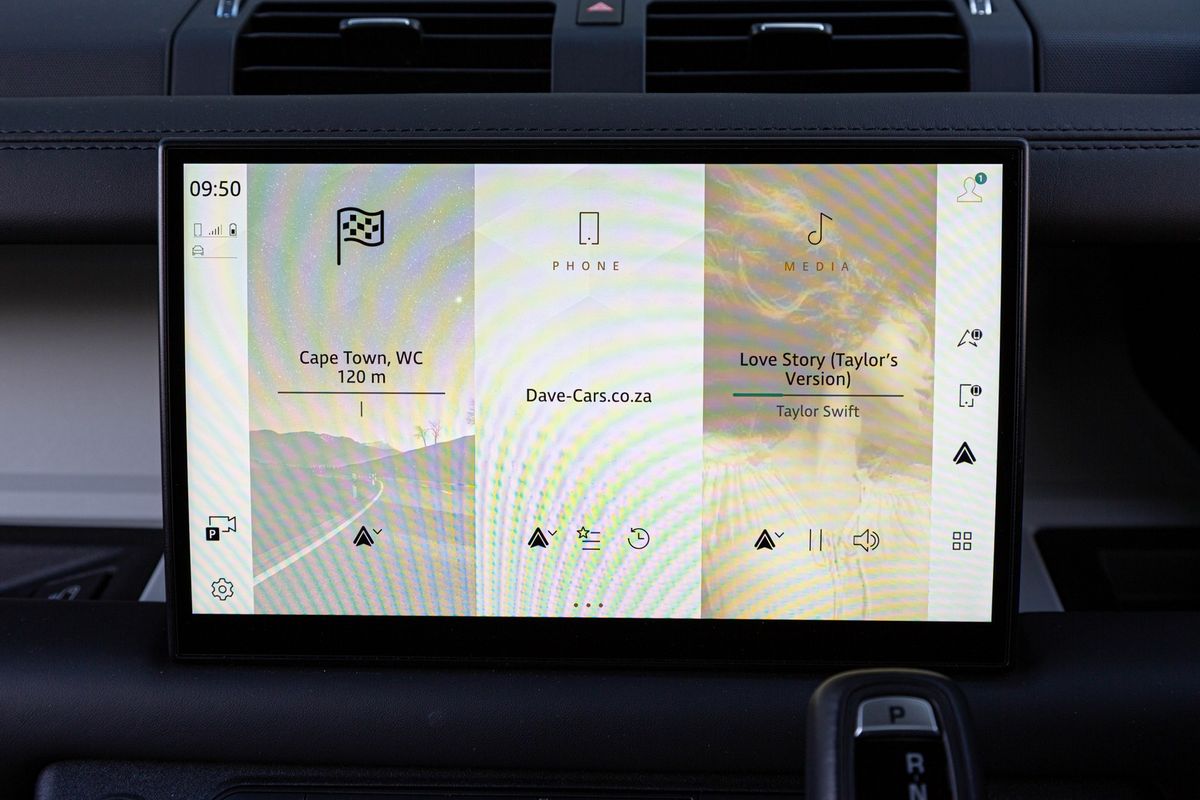
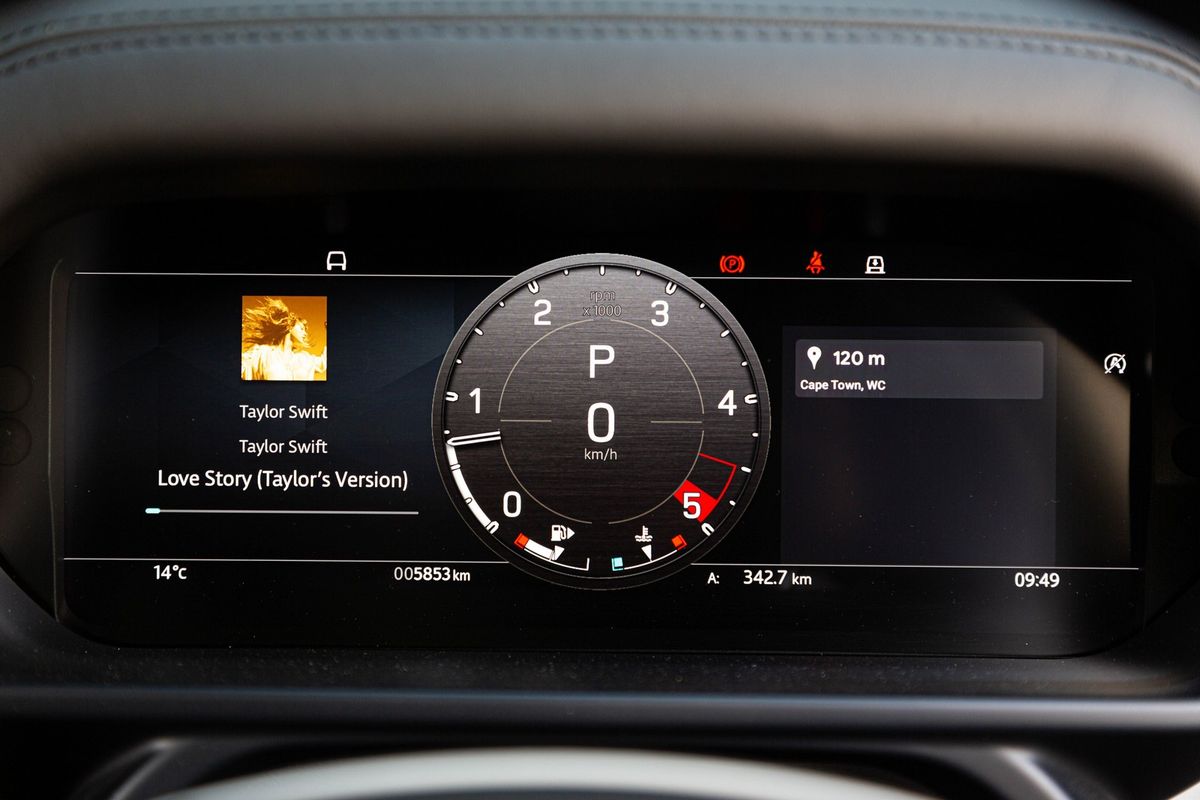
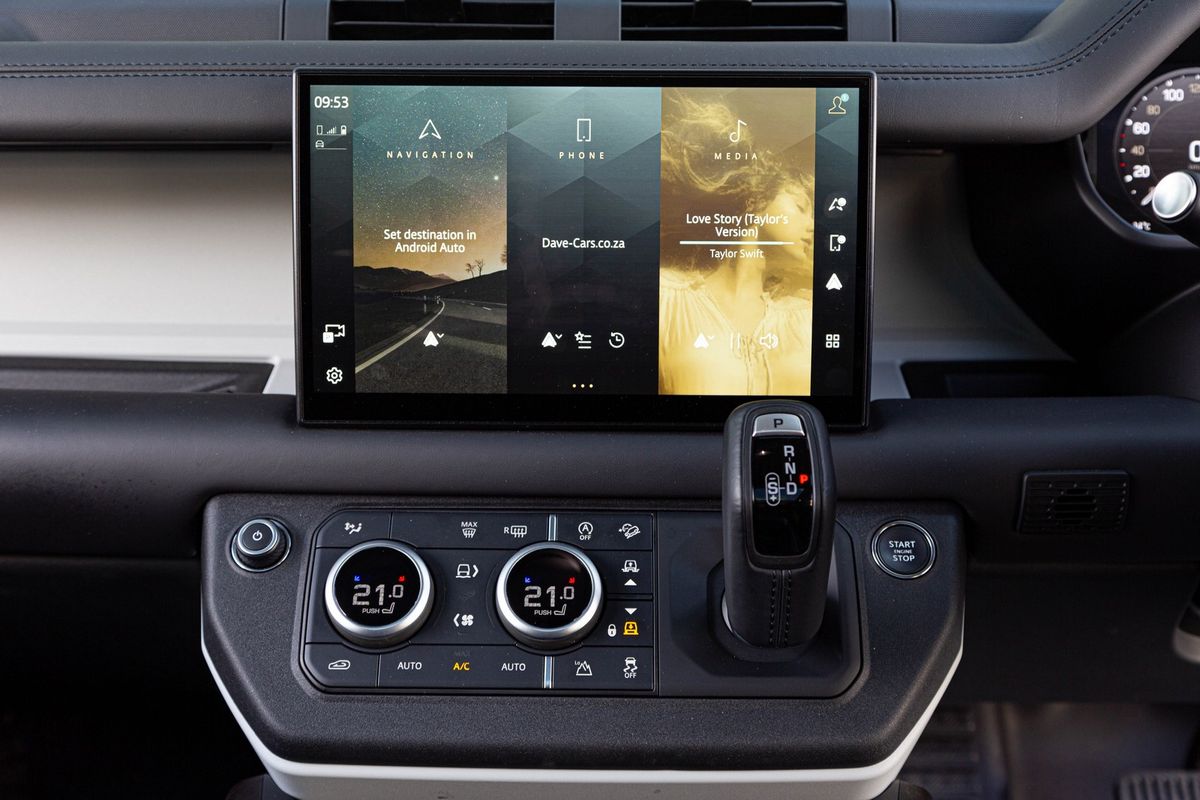
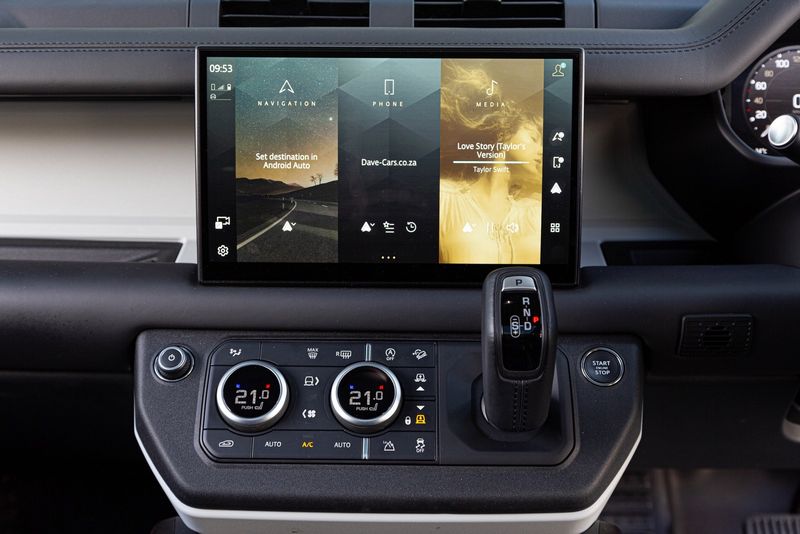
Upfront is a digital instrument cluster (with various display themes to choose from), while the fascia is dominated by the 11.4-inch Pivi Pro infotainment system, which, even more than 3 years after the local launch of the model, still ranks near the best in class: its layout is clean and intuitive, it responds to user inputs quickly (it has its own battery to avoid start-up lag) and supports over-the-air software updates.
Land Rover Defender 130 Price and After-Sales Support
The Defender 130 is sold with a 5-year/100 000 km warranty and 5-year/100 000 km maintenance plan.
Prices range from R1 935 500 to R3 015 700 (November 2023). It appears that the 130 First Editions are sold out, but the closest derivative to that is the Defender 130 D300 X, which retails for R2 102 300 .
Verdict
Should you buy a Defender 130? While we appreciate Land Rover is leveraging the Defender nameplate and platform to cover as many niches as possible (and recoup some of the model’s R&D costs), the 130 variant doesn’t add much to the package beyond an extra seat and additional luggage cargo space.
Its biggest problem is that the Defender 110, with its all-round appeal, sets a very high bar – no wonder it’s again a finalist in the Premium SUV category of the #CarsAwards . Buy the 130 if you must have 8 seats, but if you don’t, consider a well-optioned 110 with a 7-seat configuration. If you do go the 130 route, be mindful that its overall length may mean that it won’t fit in your regular garage or parking bay.