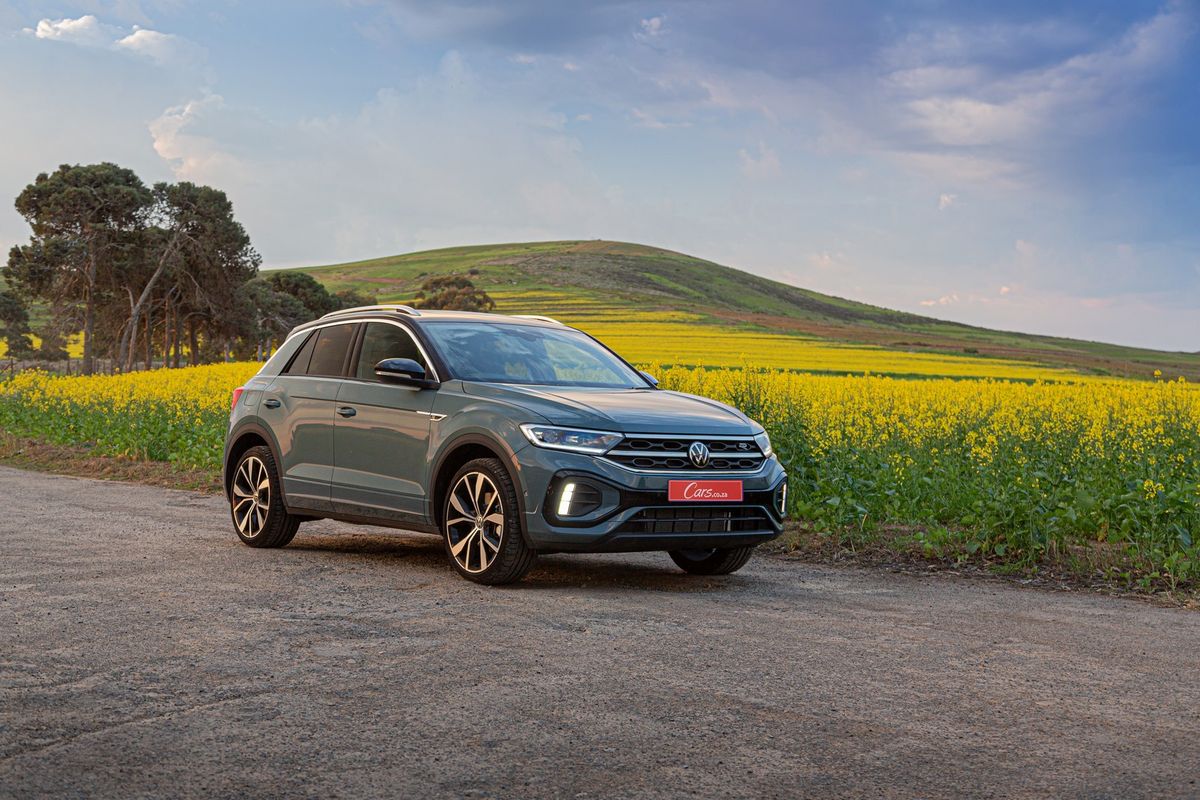
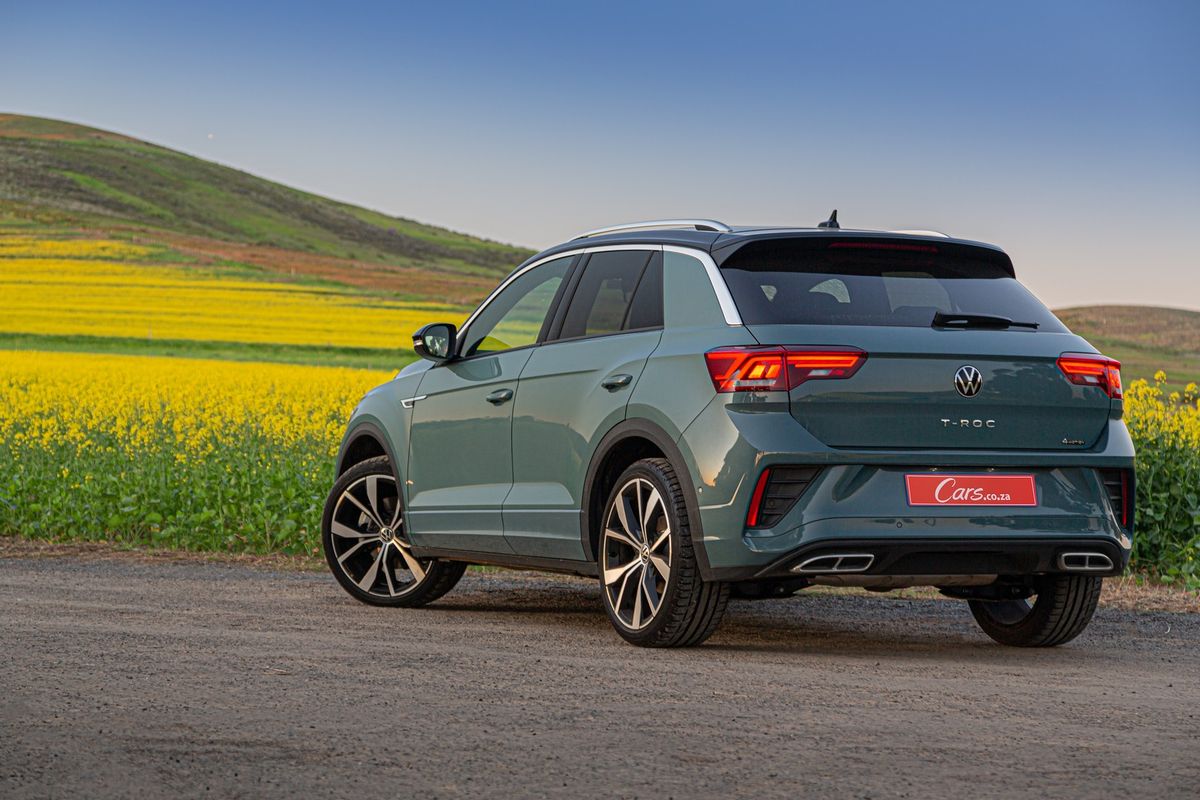
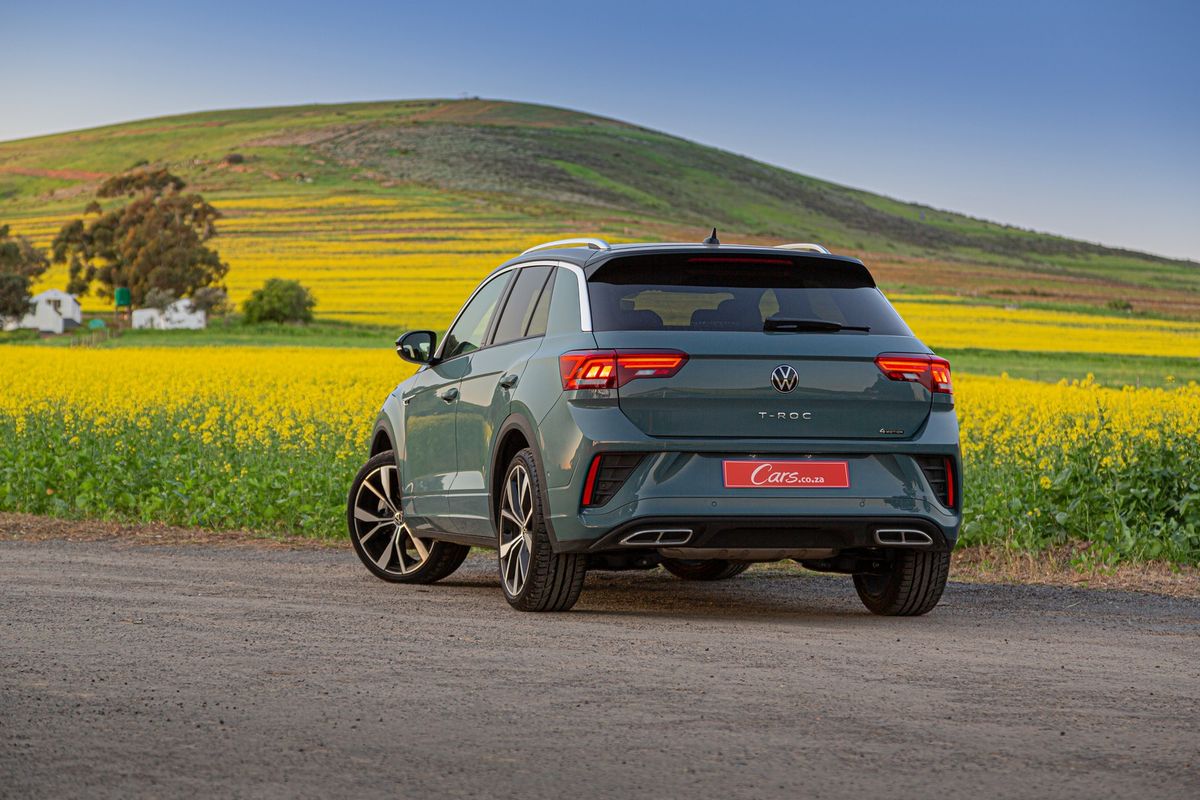
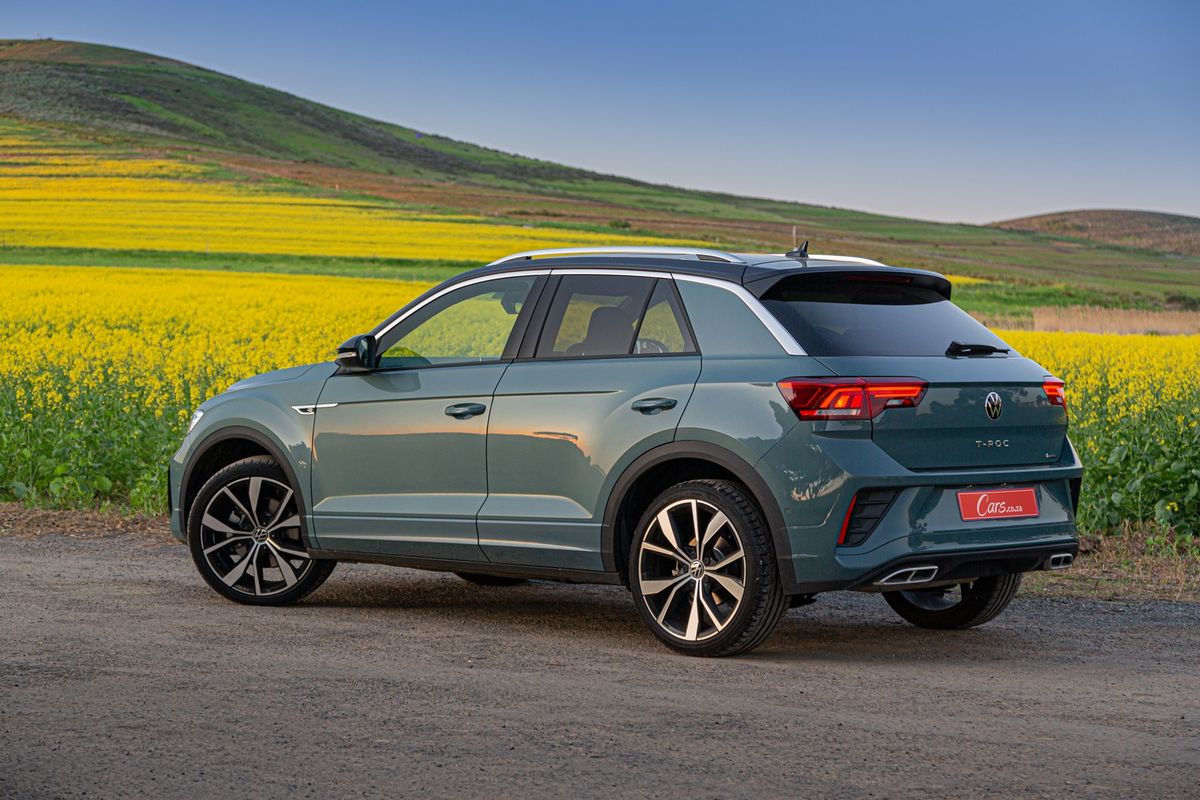
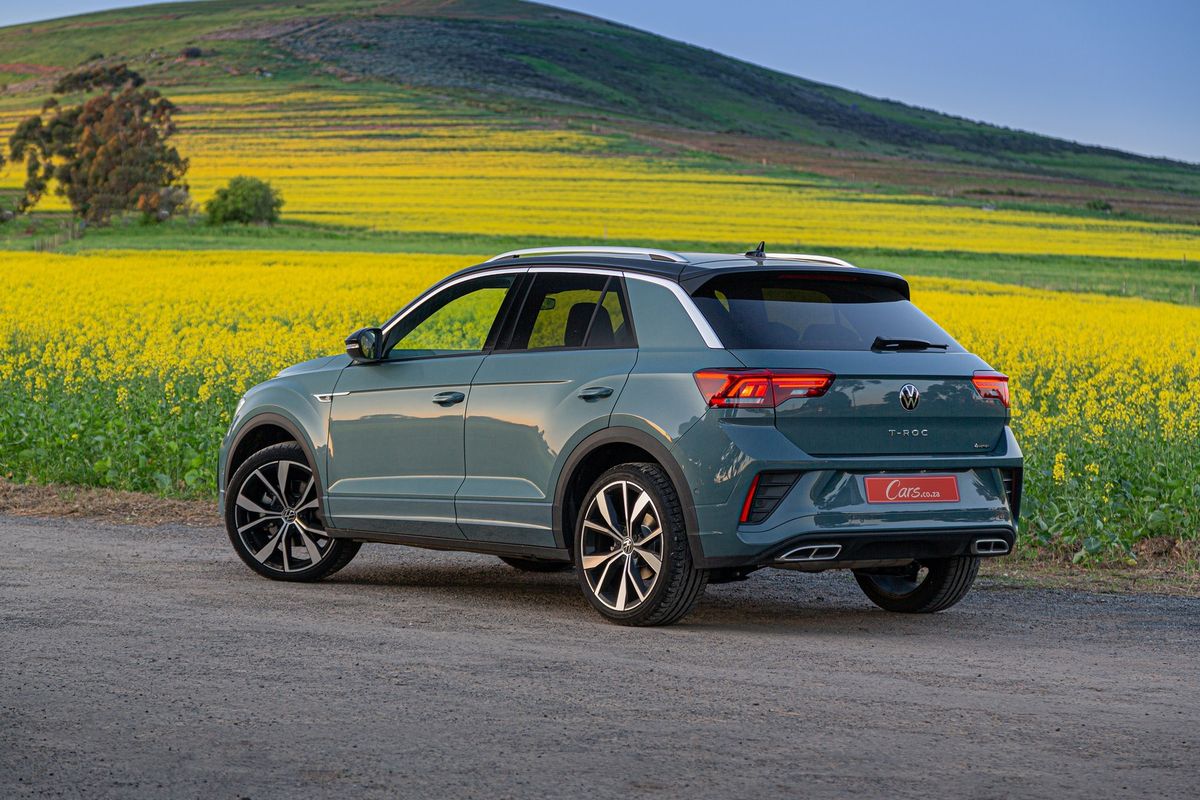
Volkswagen South Africa has introduced an updated version of its T-Roc small crossover. In terms of sales, the German marque’s stylish, premium-positioned offering has been overshadowed by its more affordable T-Cross sibling, but will recent upgrades (introduced as part of a model update) thrust it back into the limelight?
We like: Surprisingly nimble, excellent grip from the 4Motion all-wheel drive, Beats audio system worth forking out extra for.
We don’t like: Not as practical as other, similarly-sized crossovers, frustrating switchgear, not particularly fuel-efficient.
FAST FACTS
- Model: 2.0TSI 140 kW 4Motion R-Line
- Price: R660 400 (before options)
- Engine: 2.0-litre 4-cylinder turbopetrol
- Power/Torque: 140 kW/320 Nm
- Transmission : 7-speed dual-clutch automatic
- Fuel consumption: 7.3 L/100 km (claimed)
- 0-100 kph: 7.2 sec (claimed)
- Luggage capacity: 392–1237 litres
Serious about buying/selling?
Browse the latest Volkswagen T-Roc specs and prices.
Some Volkswagen dealerships regularly offer great deals. See our New Car Specials!
Looking to sell your car? Sell it on Cars.co.za for free
Where does the Volkswagen T-Roc fit in?
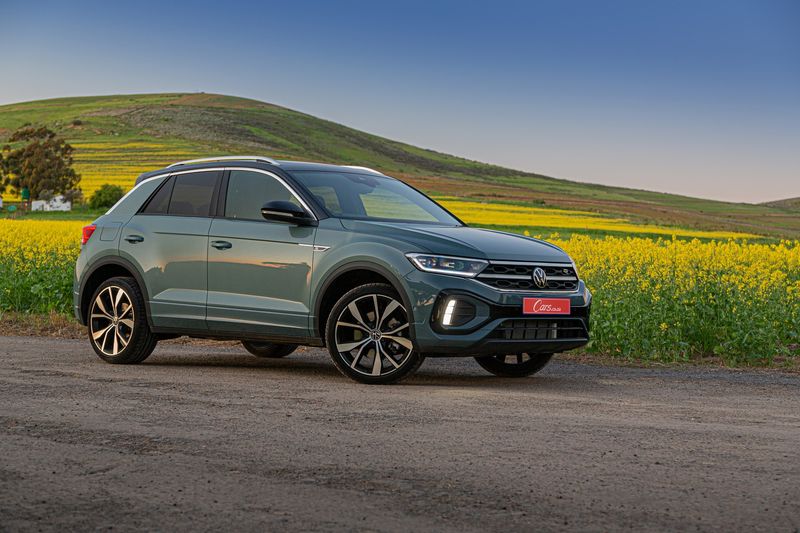
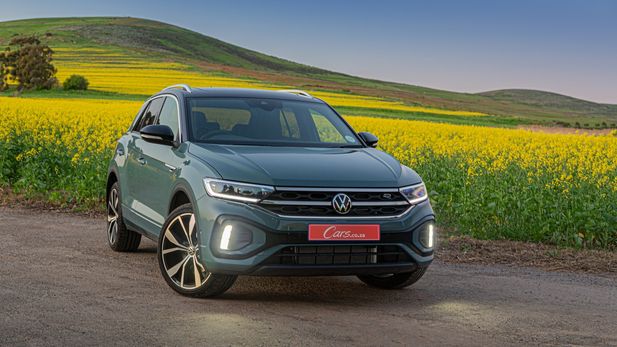
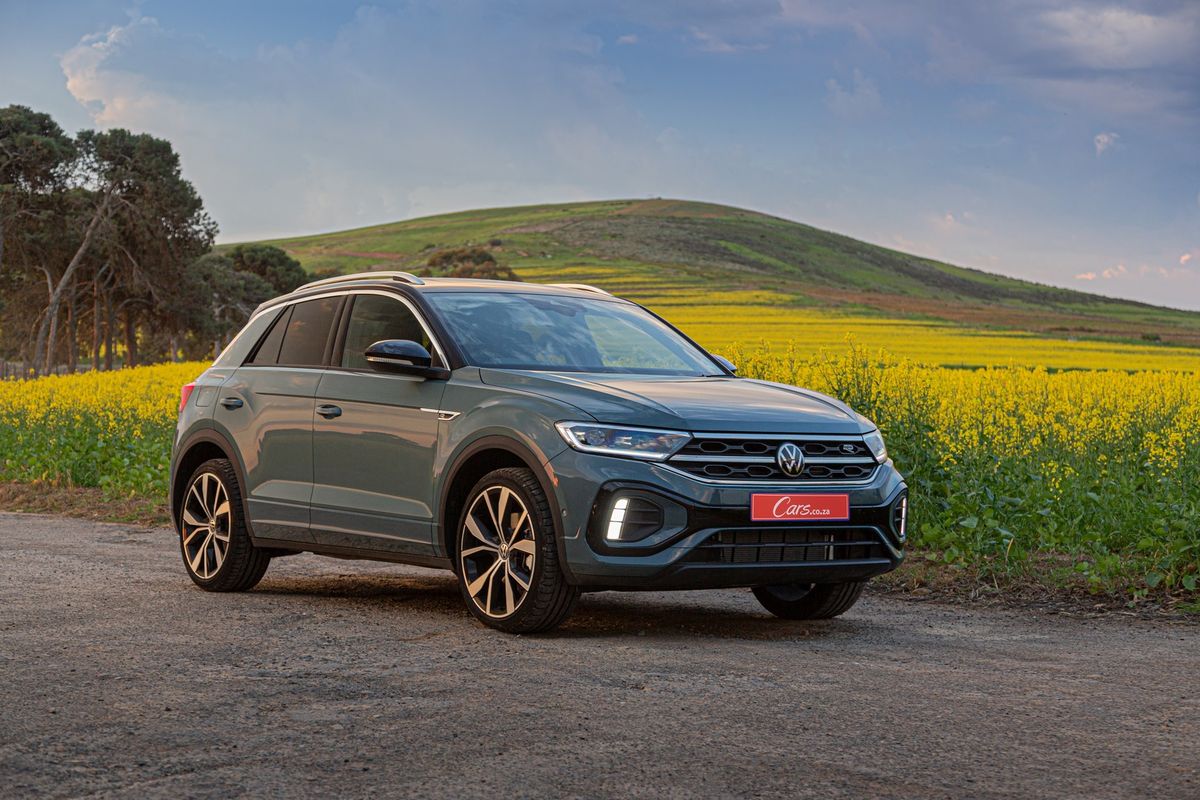
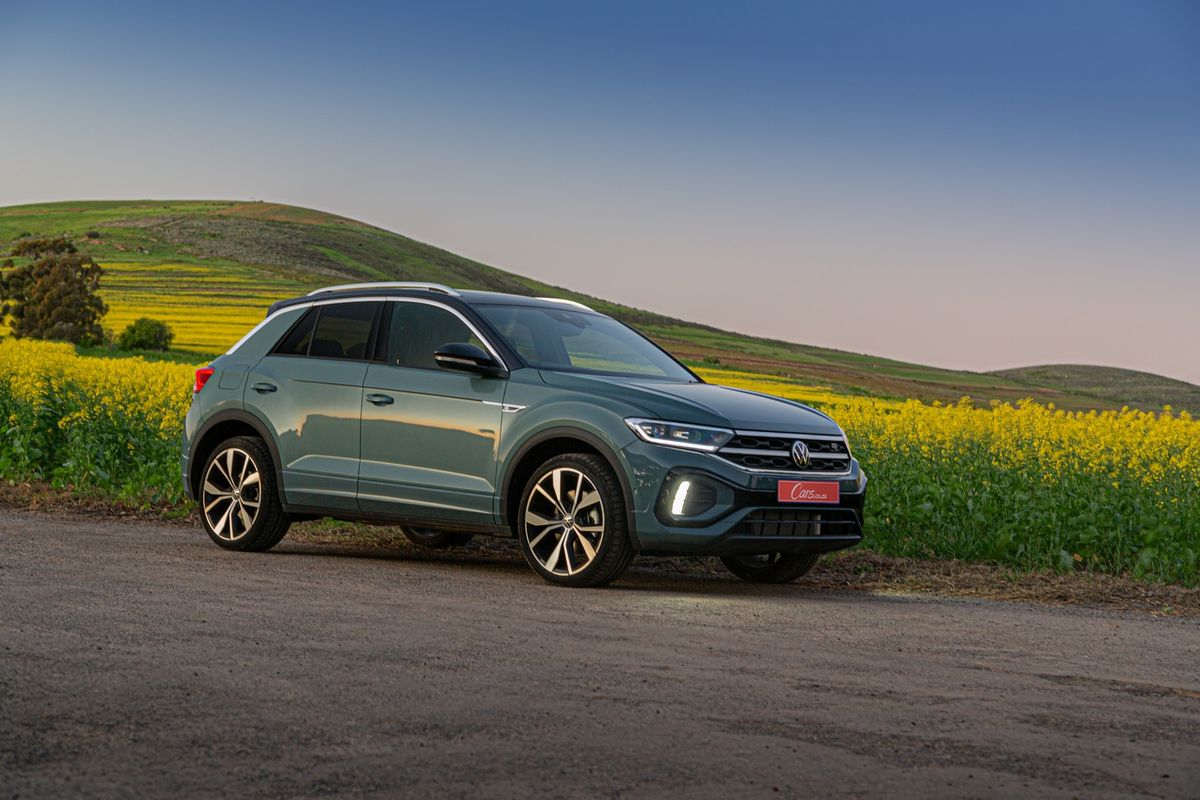
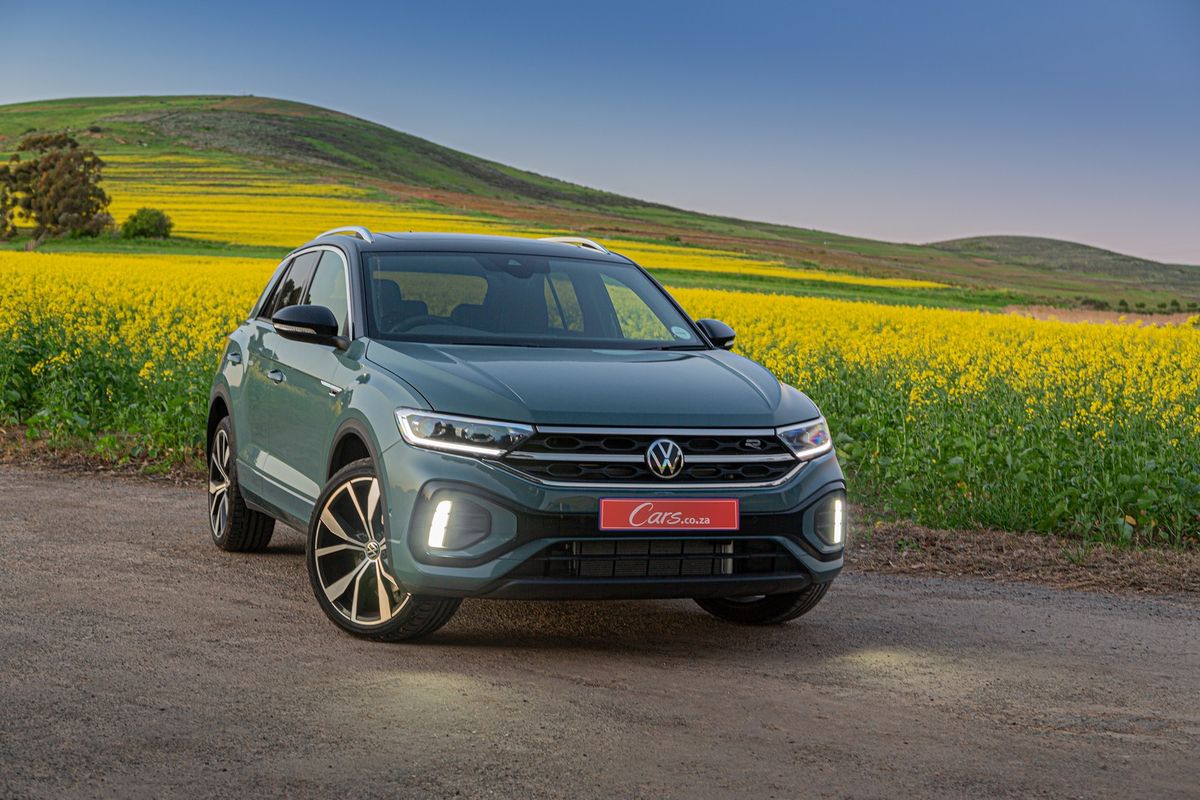
Updates for 2022 include a revised front end, redesigned fog lights and a lightbar that bisects the grille.
The updated Volkswagen T-Roc has arrived rather quickly after the model’s local launch, hasn’t it? The 1st-gen T-Roc landed in Mzansi towards the end of 2020 and now, about 2 years later, a facelifted model has made its debut. In Volkswagen South Africa (VWSA)’s defence, our market was only allocated this vehicle a while after its European debut (2018), but it’s good to see the local subsidiary of the Wolfsburg-based brand back in sync with the European market.
We assumed that the T-Roc, which is aimed at young, trendy urbanites that appreciate the product’s boutique appeal, has been overshadowed by its siblings – the T-Cross compact family car and the Tiguan medium SUV – in our market. However, a quick look at recent new-vehicle sales data suggests that while the T-Cross comfortably outsells the T-Roc by some margin, the gap between the latter and the Tiguan is very close. The T-Roc averages 155 units and the Tiguan 190 units.
There’s a caveat to this, of course: shipping issues and semiconductor shortages have resulted in low stock levels. It’s also worth noting that in May and June 2022, T-Roc sales tapered off in the lead-up to the arrival of the facelifted model.
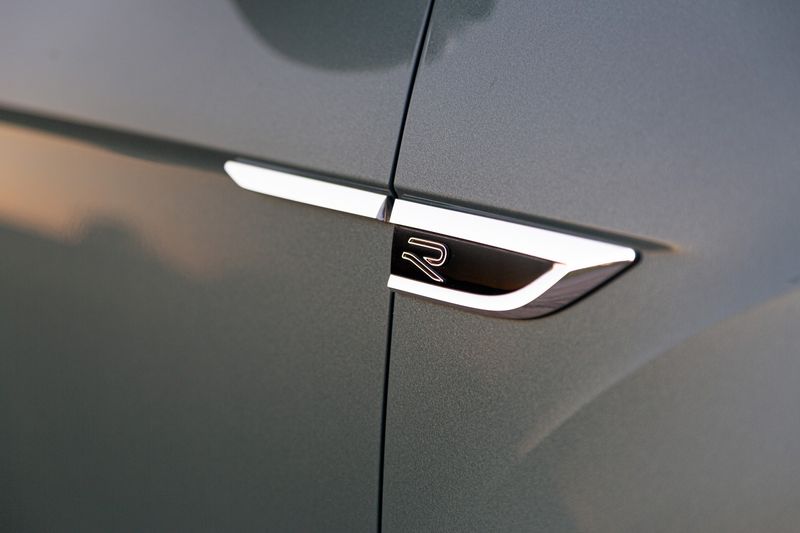
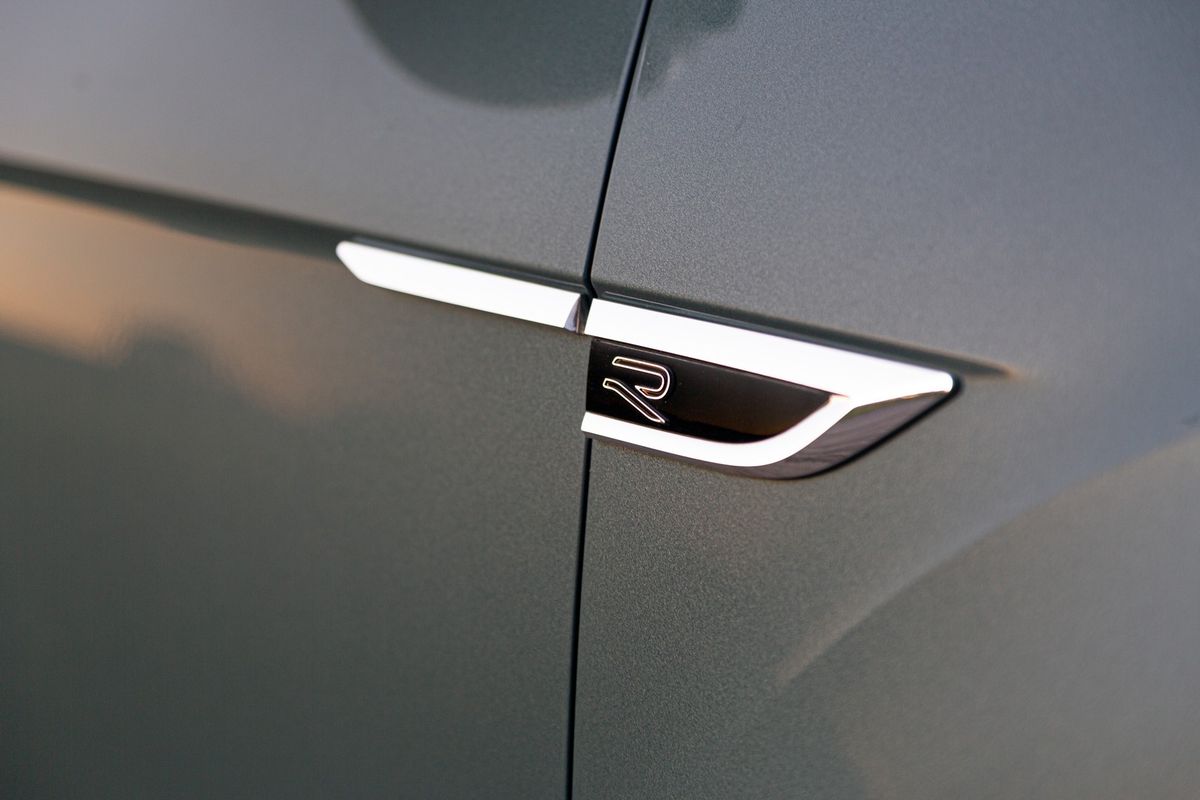
The R-Line adds some style and sportiness to the package.
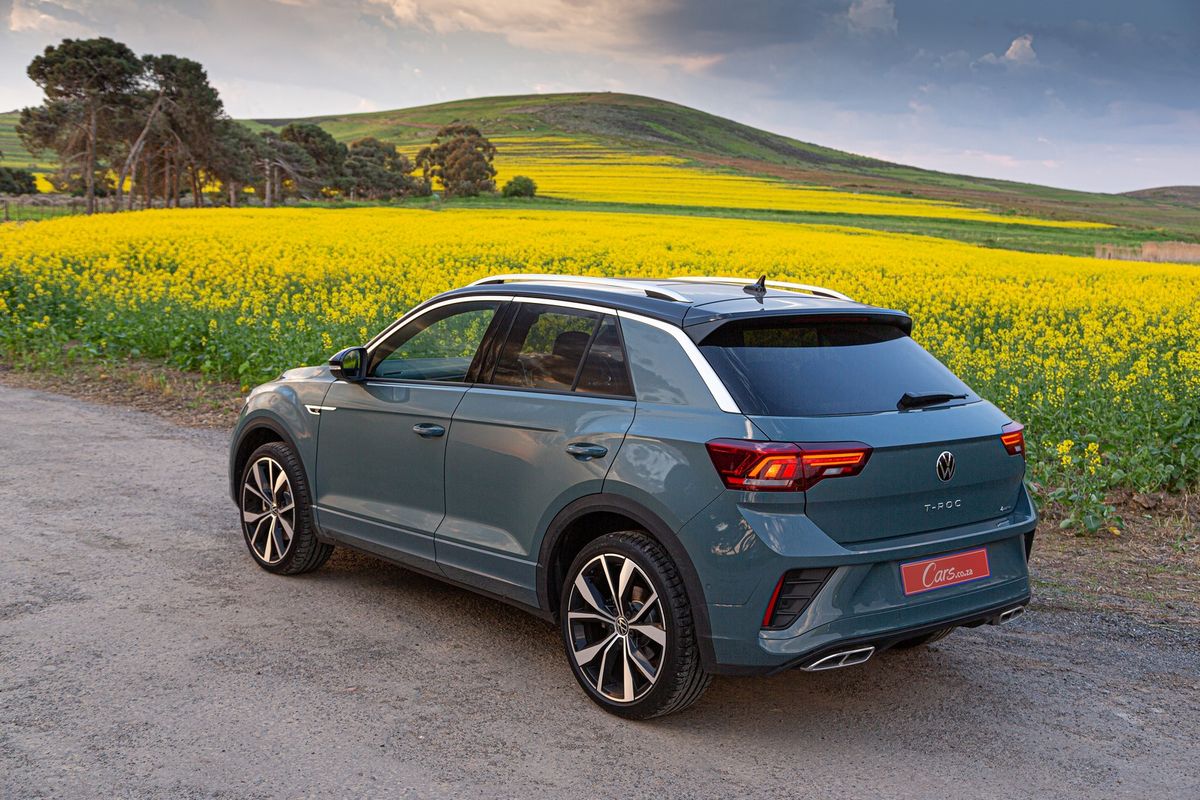
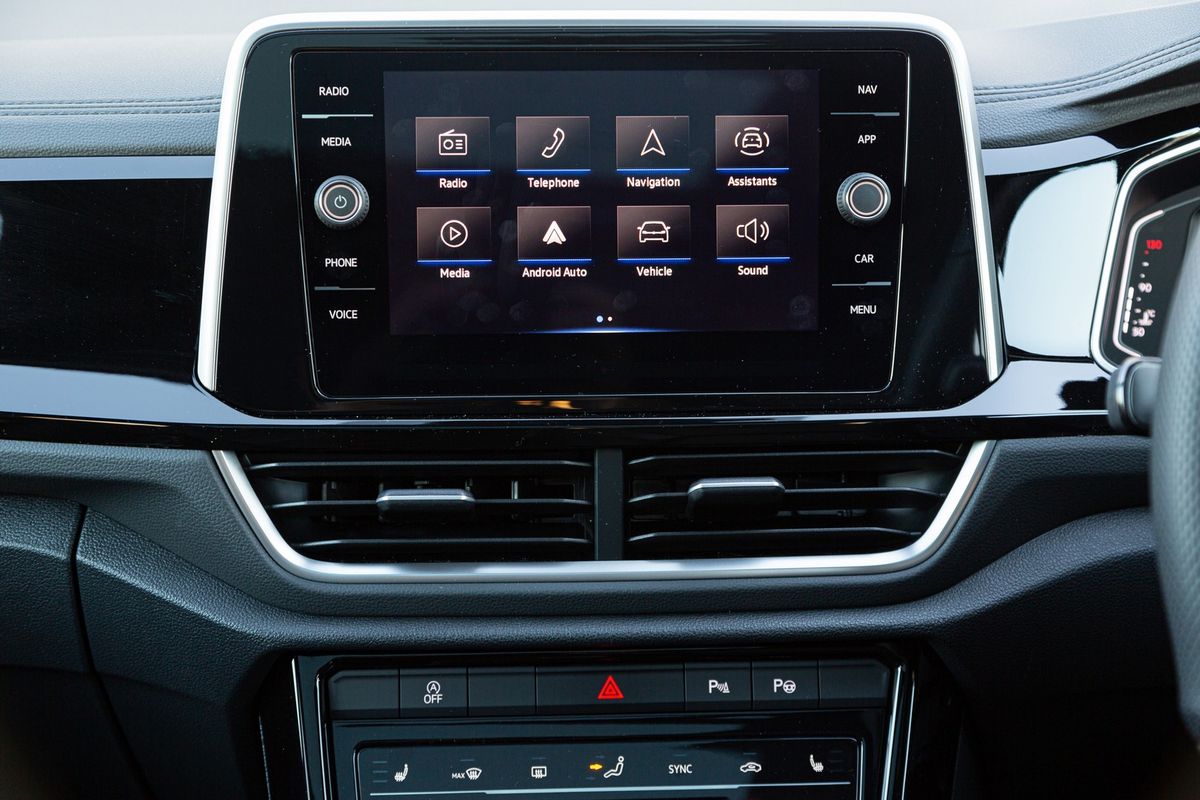
The facelifted Volkswagen T-Roc comes to market with a 2-engine, 3-derivative lineup. Cosmetic revisions include reshaped LED headlamps and fog lights, the addition of an LED light bar that bisects the grille, recontoured bumpers, smart-looking LED tail-light clusters and an updated palette of exterior colours. The cabin gets a makeover too – it features new-generation haptic controls, an overhauled infotainment system and some ergonomic adjustments.
The T-Roc is offered in front-wheel drive and all-wheel-drive (4Motion) guises, with the former featuring a 1.4-litre 4-cylinder turbopetrol engine in combination with a conventional torque-converter-type automatic transmission, while the latter has a 2.0-litre 4-cylinder turbopetrol motor mated with quick-shifting direct-shift gearbox (DSG). Volkswagen SA provided us with a 2.0 TSI 140 kW 4Motion R-Line test unit, which was finished in the new Petroleum Blue metallic paint.
As far as rivals to the T-Roc are concerned, the list is extensive because there is an array of crossovers/SUVs to choose from around the R500k-to-R600k mark. However, considering that the Volkswagen’s is aimed at buyers who want to make a style statement with their choice of vehicle, the German crossover goes up against the likes of the Audi Q2 , Hyundai Kona , Opel Mokka , Mazda CX-30 , Nissan Qashqai , Peugeot 2008 GT , Subaru XV and Toyota C-HR . At the flagship derivative’s price point (R660k), the T-Roc is arguably positioned as a keener-priced alternative to the Audi Q3 Sportback , BMW X2 , Mini Clubman , Mercedes-Benz GLA , Volvo XC40 … and a rival to the larger Haval H6 GT .
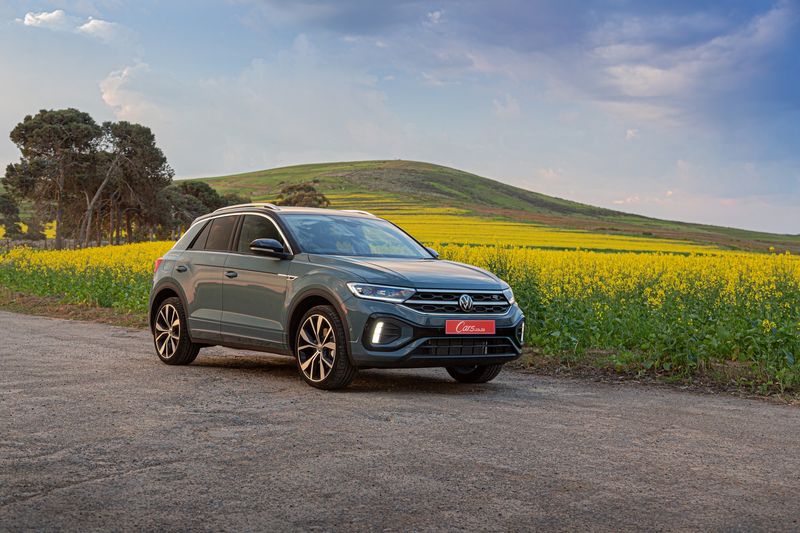
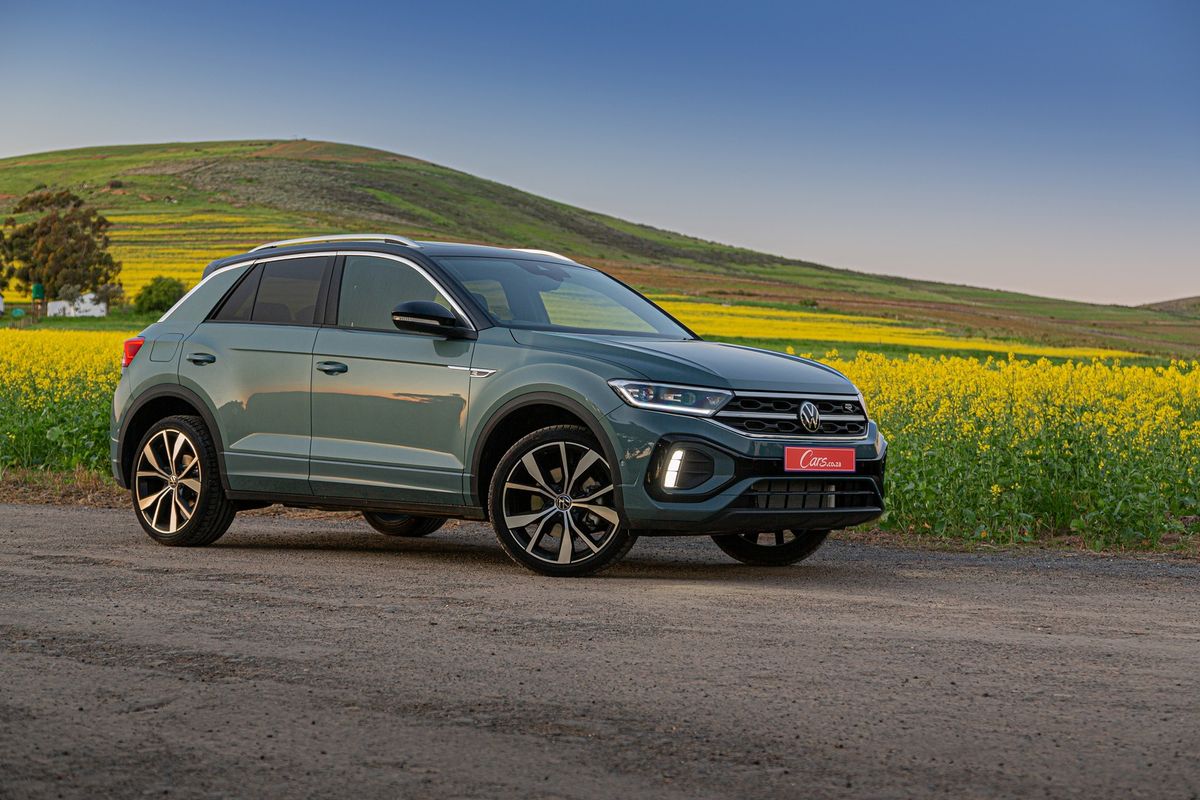
The flagship of the T-Roc range is pitched to sneak sales from premium crossovers; it certainly looks suitably upmarket.
How the T-Roc fares in terms of…
Ride and handling
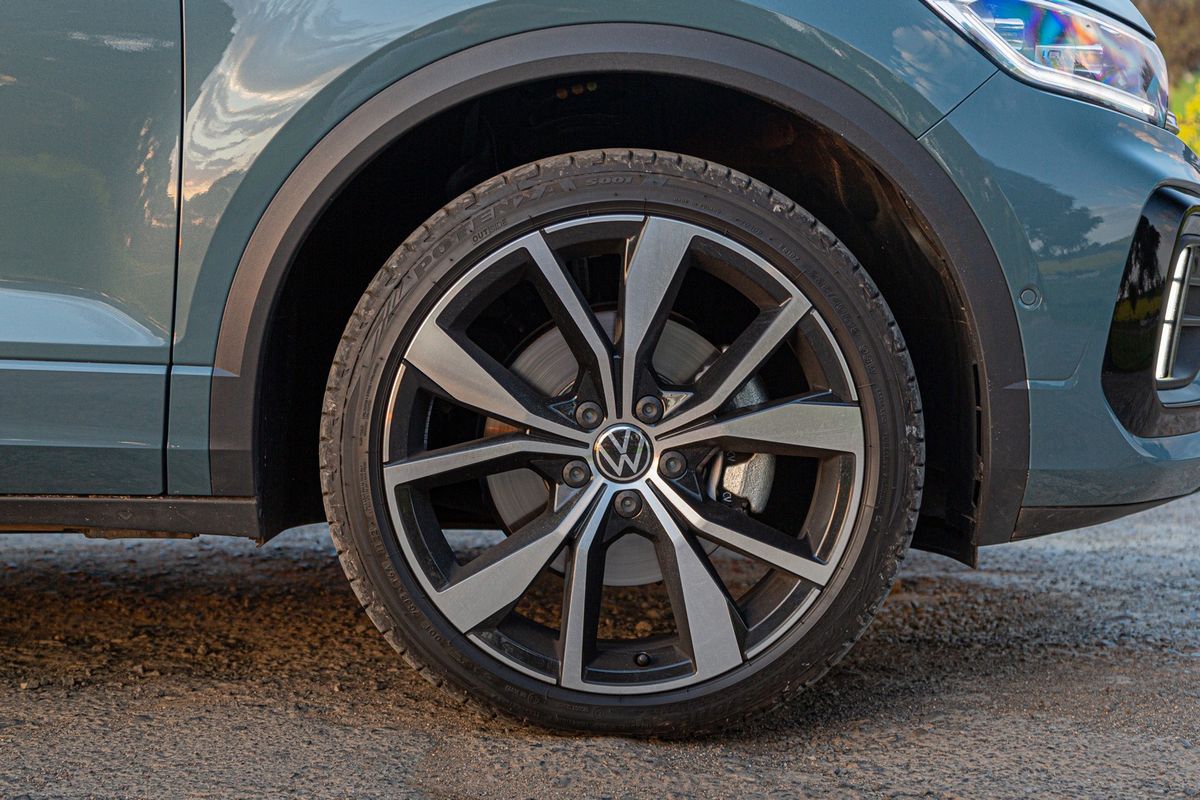
Under the sheet metal of the updated T-Roc is the Volkswagen Group’s (VAG) tried-and-tested MQB platform. MQB underpins many of VW and Audi’s compact (and not-so-compact) models – and other VAG products, including those of the Seat, Cupra and Skoda brands – and the highly lauded platform has a reputation for versatility, practicality and refinement. The T-Roc is no exception – despite its higher-riding setup, it still manages to deliver ride/occupant comfort and driver engagement in equal measures. However, we’d say that, in general, the T-Roc’s ride quality is slightly firm, but the test unit’s large (19-inch) wheels and tyres, plus the uneven road surfaces along our test route, certainly didn’t help matters.
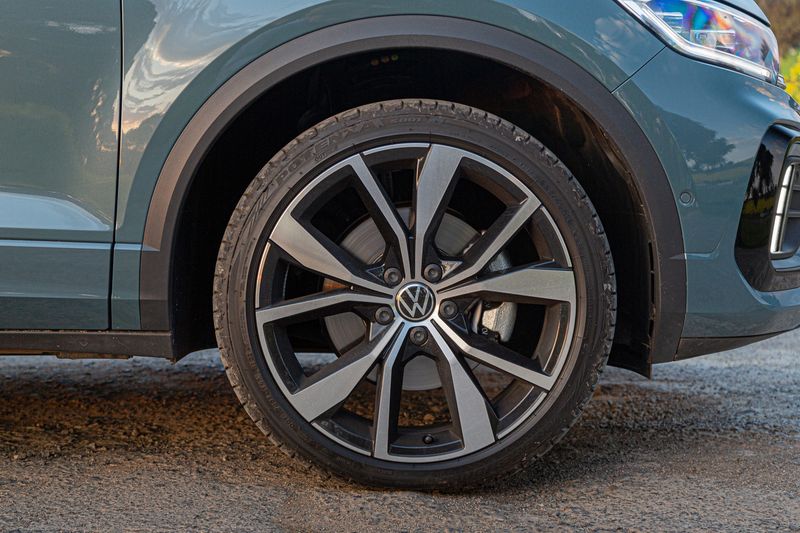
The T-Roc rides on 19-inch alloy wheels.
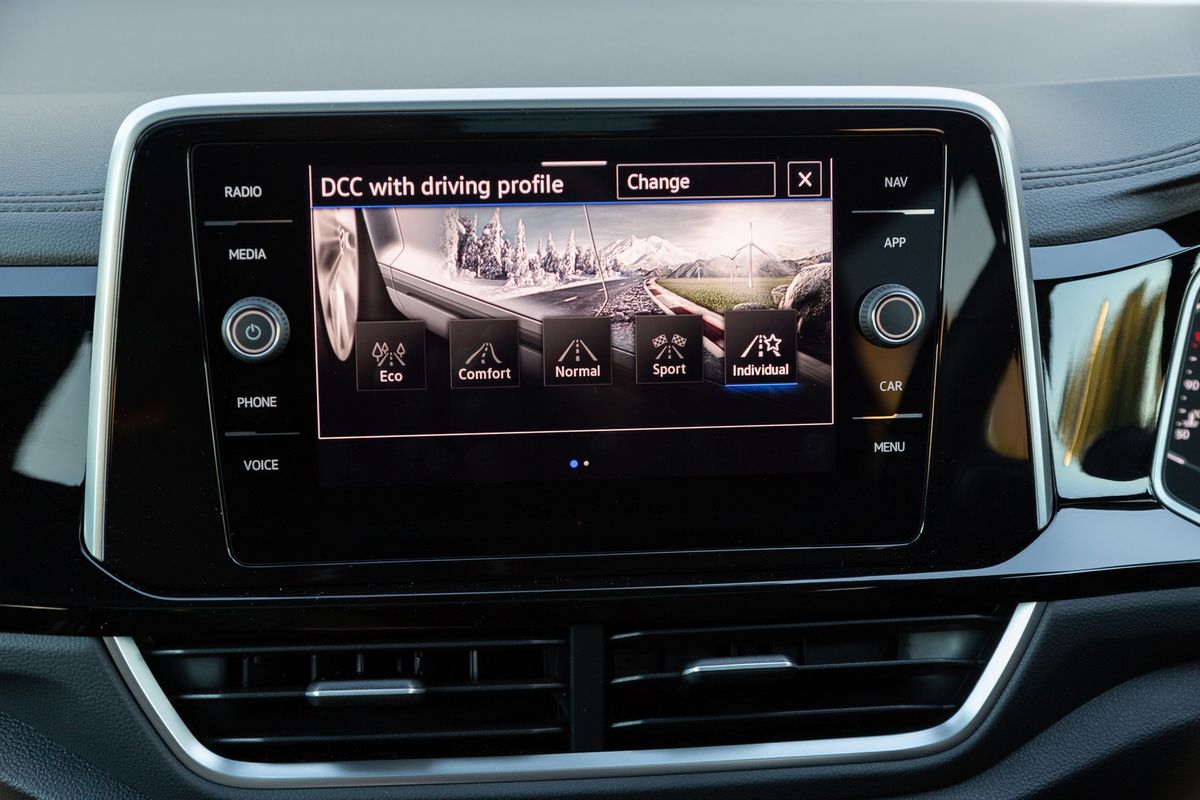
To be fair, the T-Roc’s ride quality could have been even less pliant had the test unit not been equipped with the Adaptive Chassis Control (DCC) – a R15 700 option (October 2022). DCC offers various drive modes (Eco, Normal, Sport and Individual), a progressive steering setup and, importantly, is underpinned by electronically controlled adaptive dampers.
The Comfort setting, for example, makes the Volkswagen’s ride notably suppler; the suspension soaks up road imperfections more readily. Plus, the DCC is very customisable – you could, for example, set the damping to be optimally pliant while leaving the engine and transmission in their sportiest settings.
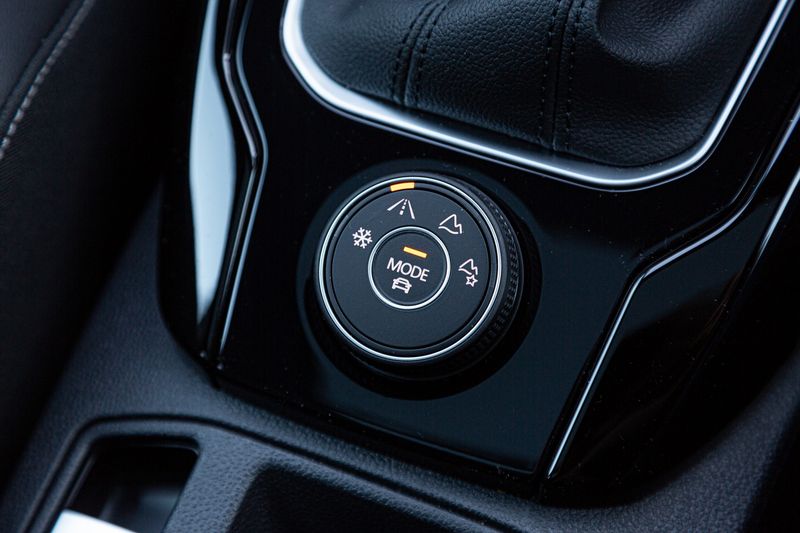
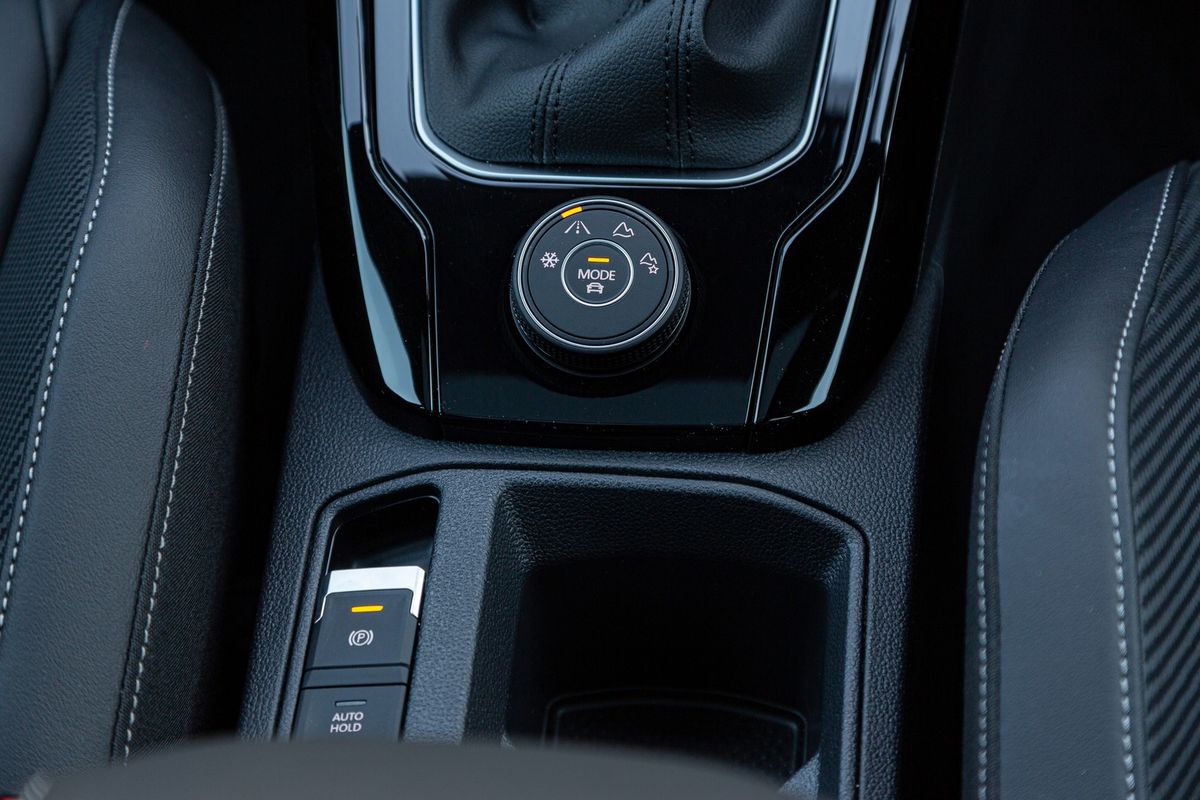
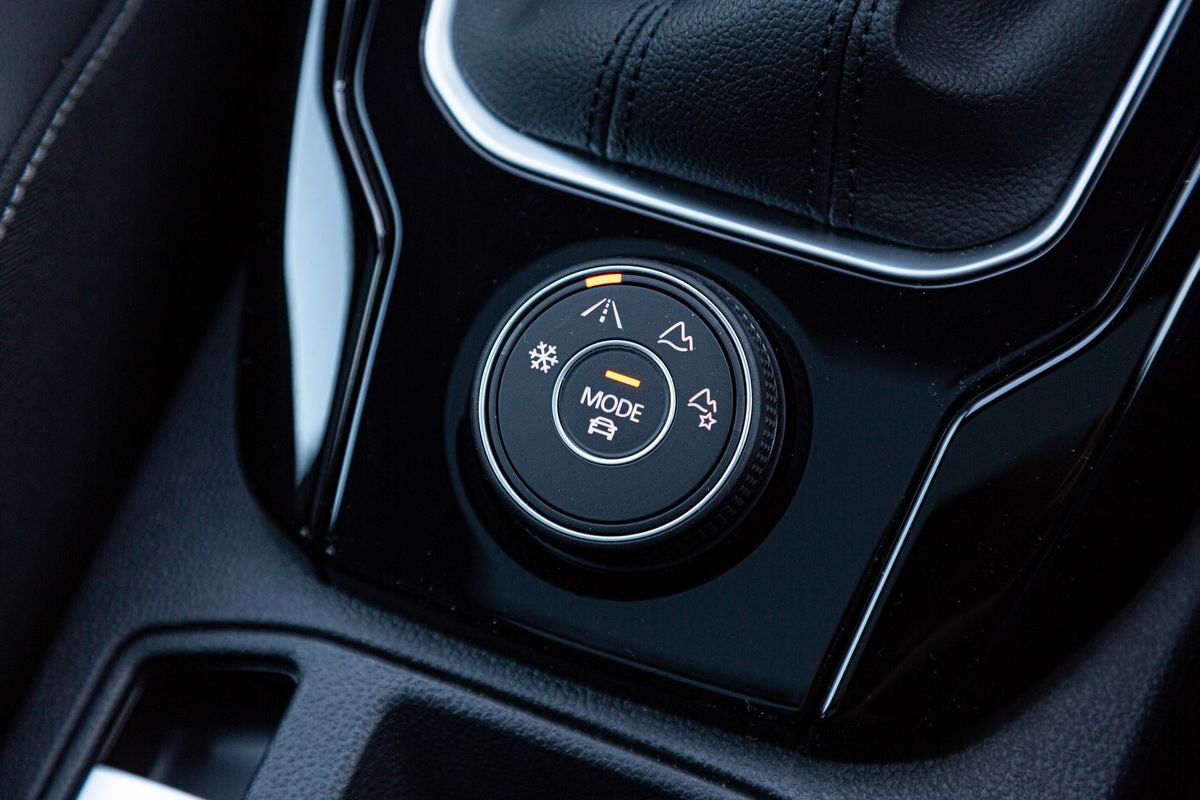
Perhaps the mountain silhouettes depicted on the drive-mode controller are a little ambitious, but the T-Roc makes easy work of traversing dirt roads.
Crossovers tend to be rather anodyne to drive, but the T-Roc was, in actual fact, quite fun to pilot. Despite its SUV-aping shape, this small family car didn’t feel top-heavy or clumsy around town or when scampering along serpentine back roads. The steering was particularly impressive – suitably quick and direct, but also refined and well-weighted.
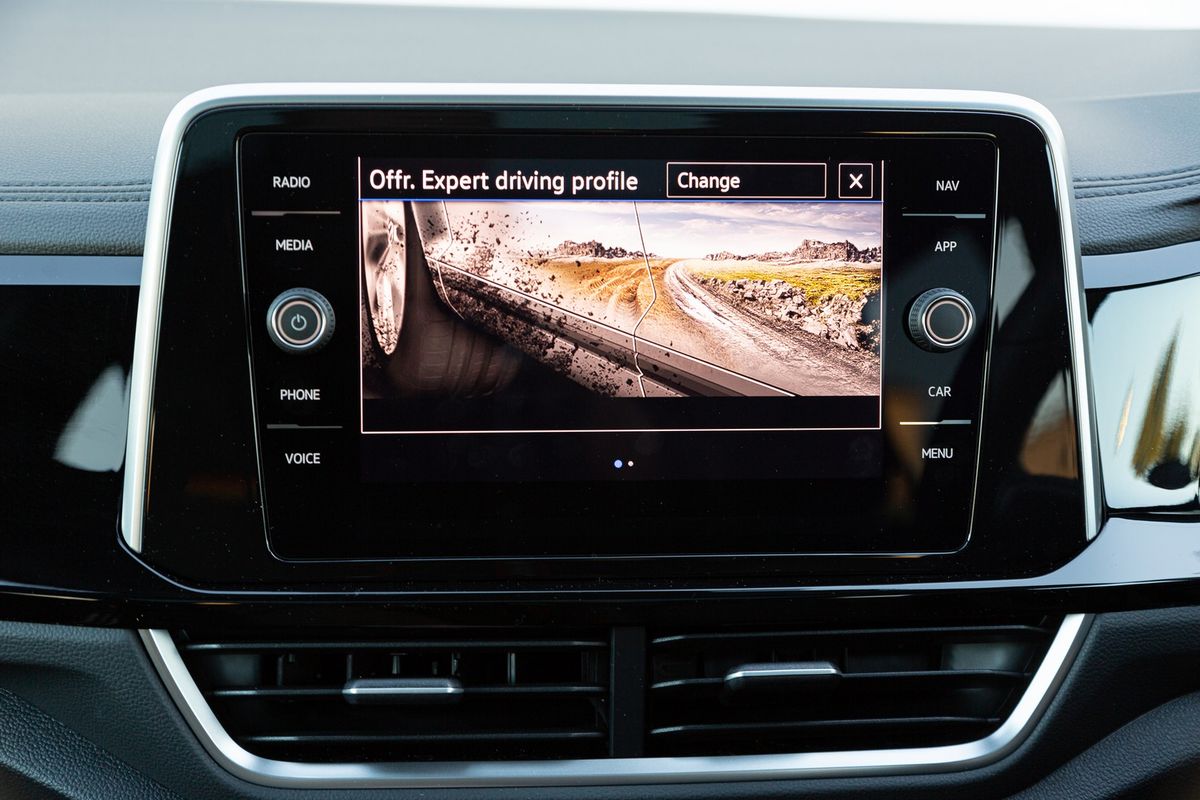
Thanks to the 4Motion all-wheel drivetrain, you can corner a bit more eagerly than you usually would (there’s an abundance of grip available). Off-road mode is useful when the Volkswagen’s traversing dusty gravel roads, but note that the T-Roc’s ground clearance (160 mm) is not generous, so keep an eye out for larger obstacles like rocks.
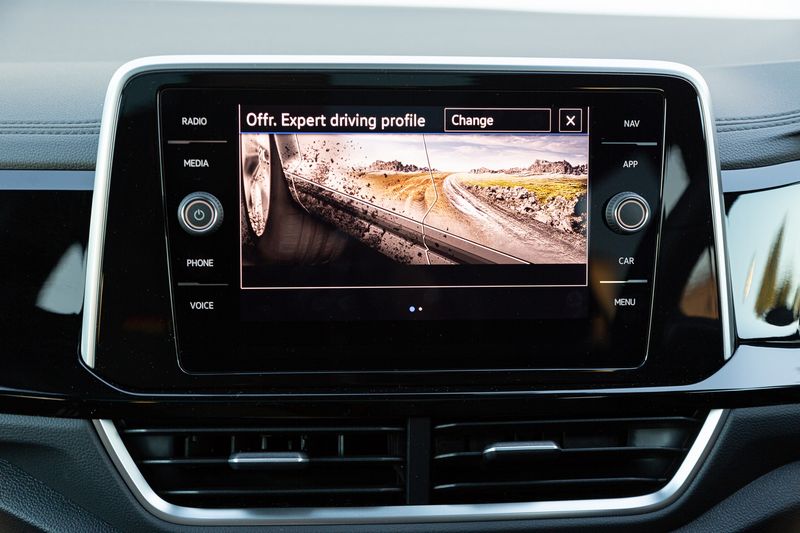
The flagship T-Roc does have off-road modes, but its ground clearance isn’t high enough to make it truly capable off-road.
Performance and economy
Nerds will point out that this derivative’s 2.0-litre 4-cylinder turbopetrol engine is the EA888 – the same unit as in the Golf GTI hot hatchback. However, in this application, the motor’s peak outputs are milder, but that’s not to say the flagship T-Roc is pedestrian – far from it.
Thanks to 140 kW/320 Nm, all-wheel drive and a quick-shifting automatic DSG, this T-Roc performs very eagerly (for a small crossover – at any rate). VW claims a 0-100 kph time of under 7.5 sec, which would make the 2.0TSI 140 kW 4Motion R-Line quicker from a standstill than some of the so-called baby hot hatchbacks, such as the Suzuki Swift Sport , for example.
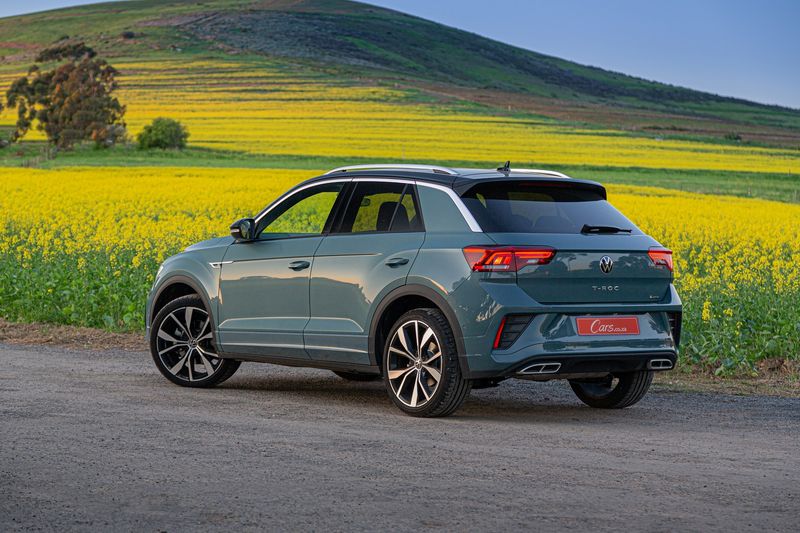
If you miss the Golf’s driving dynamics, consider the T-Roc for a similar level of driver engagement.
The off-the-line performance tells only part of the story, however; this powertrain’s trump card is tractability/in-gear performance. When you want to overtake a truck on a freeway or merge into fast-moving traffic, your vehicle’s ability to accelerate from 80-120 kph at a brisk pace is paramount.
Well, in-gear punch is one thing the top-of-the-range T-Roc has no shortage of. Its transmission is smartly calibrated with the performance characteristics of the turbopetrol engine, so much so that it invariably selects the appropriate gear for the driving scenario – especially so in the sportiest drive mode.
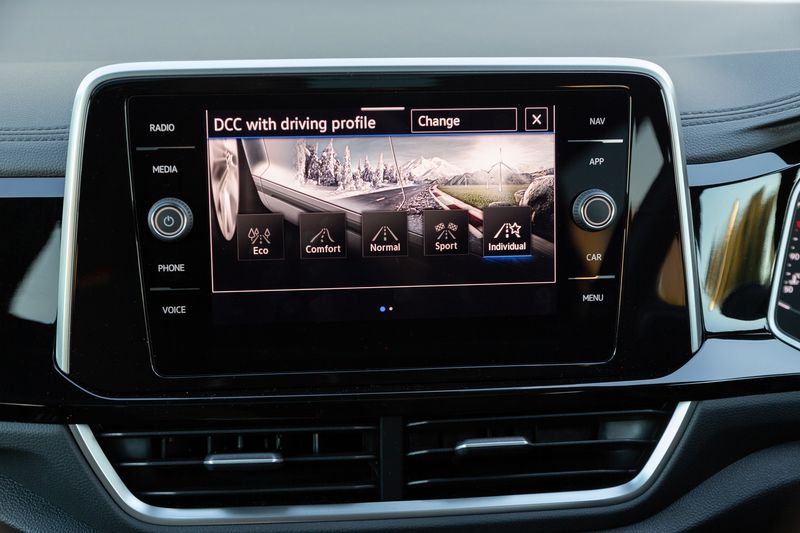
DCC is an optional extra, but worth the additional outlay.
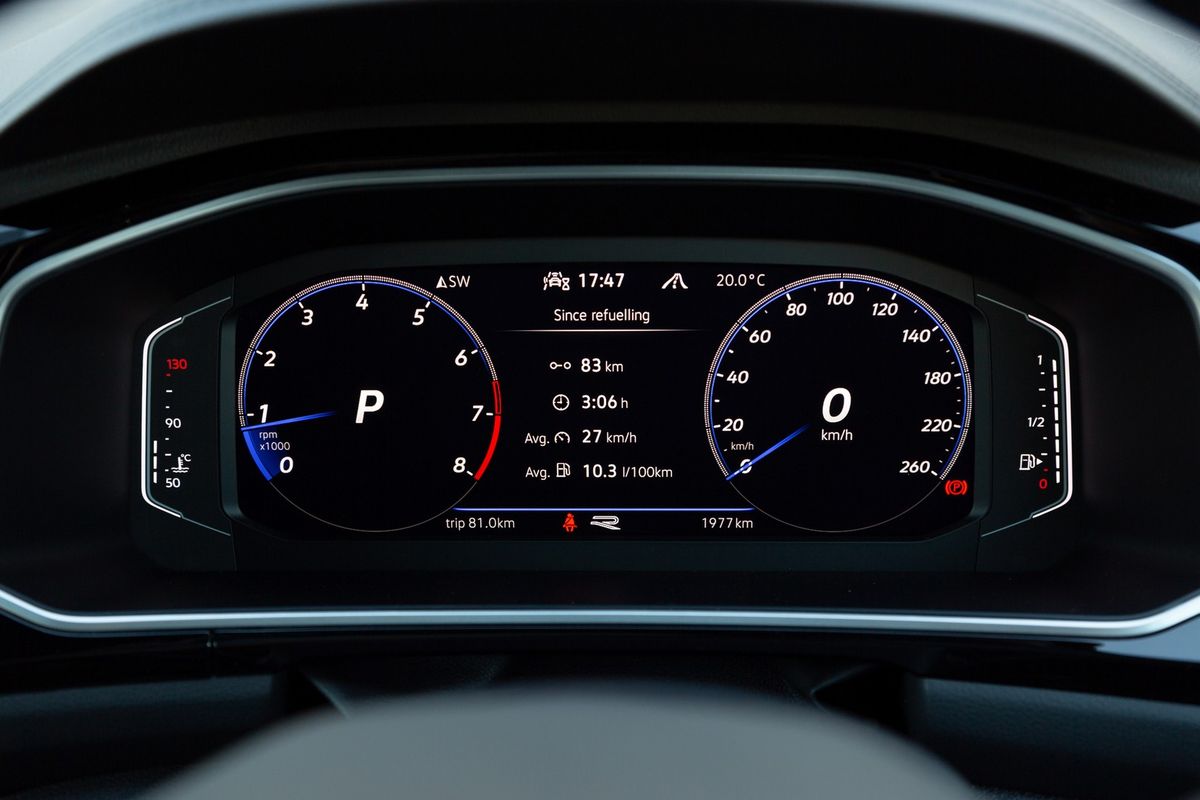
Of course, there’s a price to pay for all that get up and go and that’s harsher fuel consumption. After a day’s worth of free-spirited driving, we saw an indicated 10.3 L/100 km (quite some way off the manufacturer’s claim of 7.3 L/100 km), but if a driver engages the Eco mode and adopts a more measured driving style, a return of around 8 L/100 km is possible. The fuel tank holds 55 litres.
Features, tech and safety
Given its position at the pinnacle of the T-Roc line-up, the 2.0TSI 140 kW 4Motion R-Line comes liberally equipped. Standard features include a Pro version of Volkswagen’s Digital Cockpit, climate control, Nappa leather trim, sports front seats (with heating function), adaptive cruise control, keyless entry, park assist, and a leather-wrapped steering wheel with paddle shifters.
The derivative is further equipped with ABS with EBD and brake assist and autonomous emergency braking, dual front-, side and curtain airbags, as well as electronic stability control.
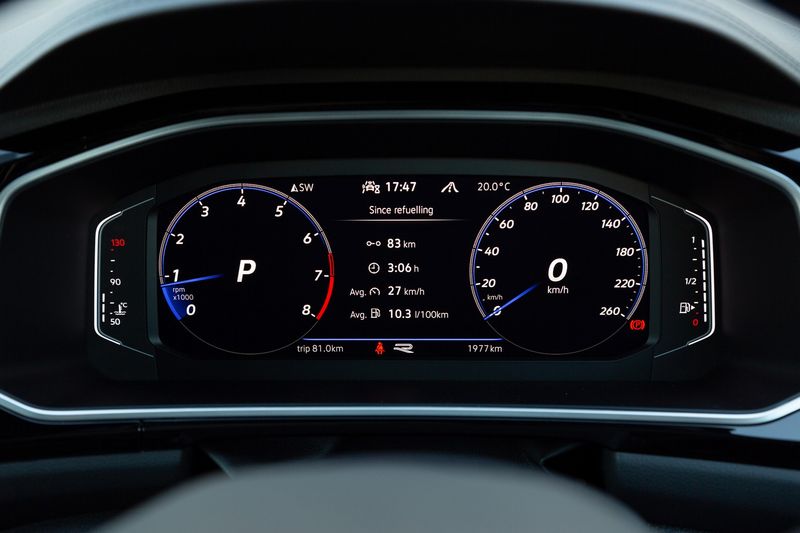
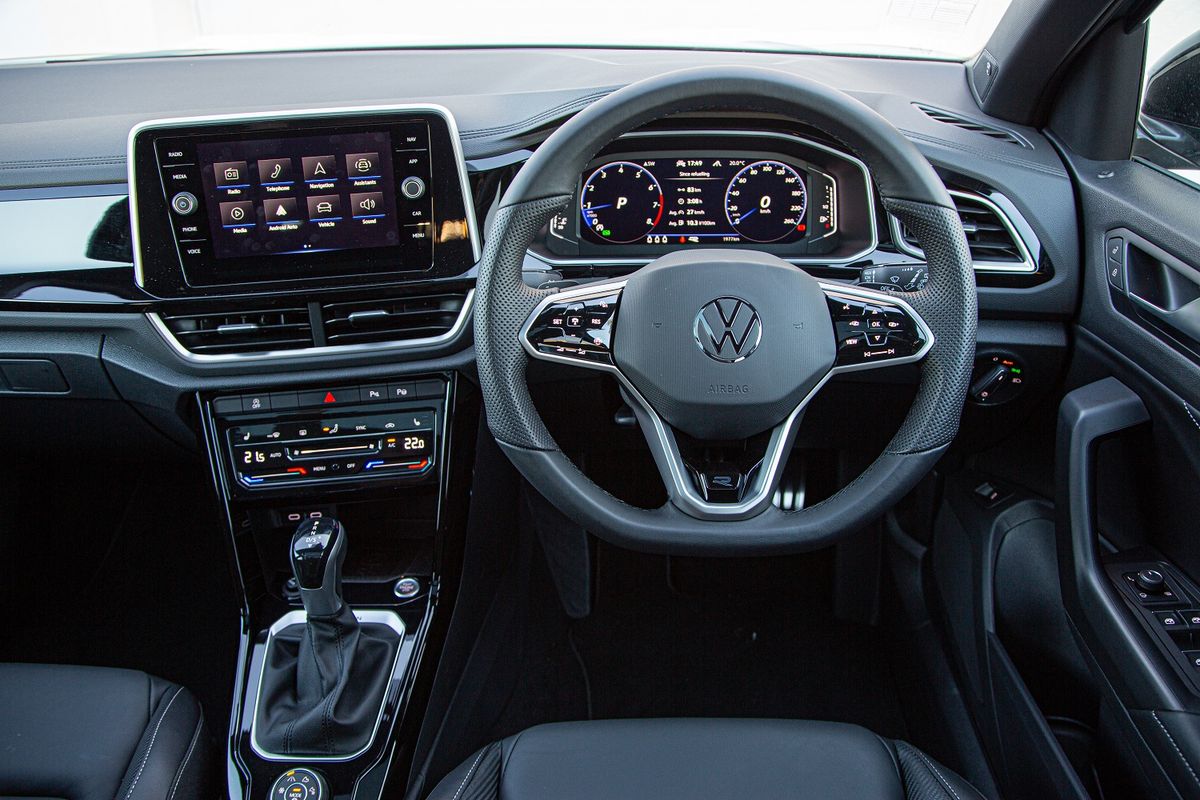
Volkswagen’s Digital dashboard is standard across the range.
But, if you’re willing to fork out more dough, you can really spec up a T-Roc to your heart’s content. The test unit supplied to Cars.co.za, for example, was specified to an as-tested price of just under R740 000.
Indeed, the options fitted to our test vehicle were numerous. They included: a panoramic sunroof (R15 500), Mobile Phone Inductive Charging (R4 200), Beats sound system (R10 300), Smoker’s Package (R500), Reverse-view camera (R4 800), Removal and Lockable Trailer hitch (R9 600), the previously mentioned Adaptive Chassis Control (R15 700), 8.0-inch Discover Media infotainment system with satellite navigation and Wireless App-Connect (R18 800).
Practicality and Packaging
As for the 2.0TSI 140 kW 4Motion R-Line’s cabin, it certainly looks suitably premium, replete with upmarket finishes and an advanced electronic interface. But while most of the interior trim feels as expected of a car with a R600k-plus price tag, some of the cabin elements feel a little cheap to the touch. Our biggest gripe is not with the materials of some of the switchgear per se , but the user experience of the newfangled touch-sensitive controls.
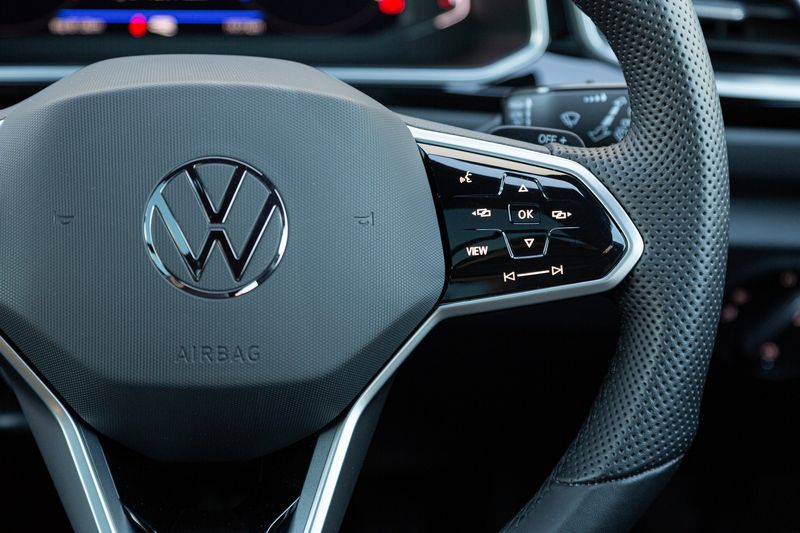
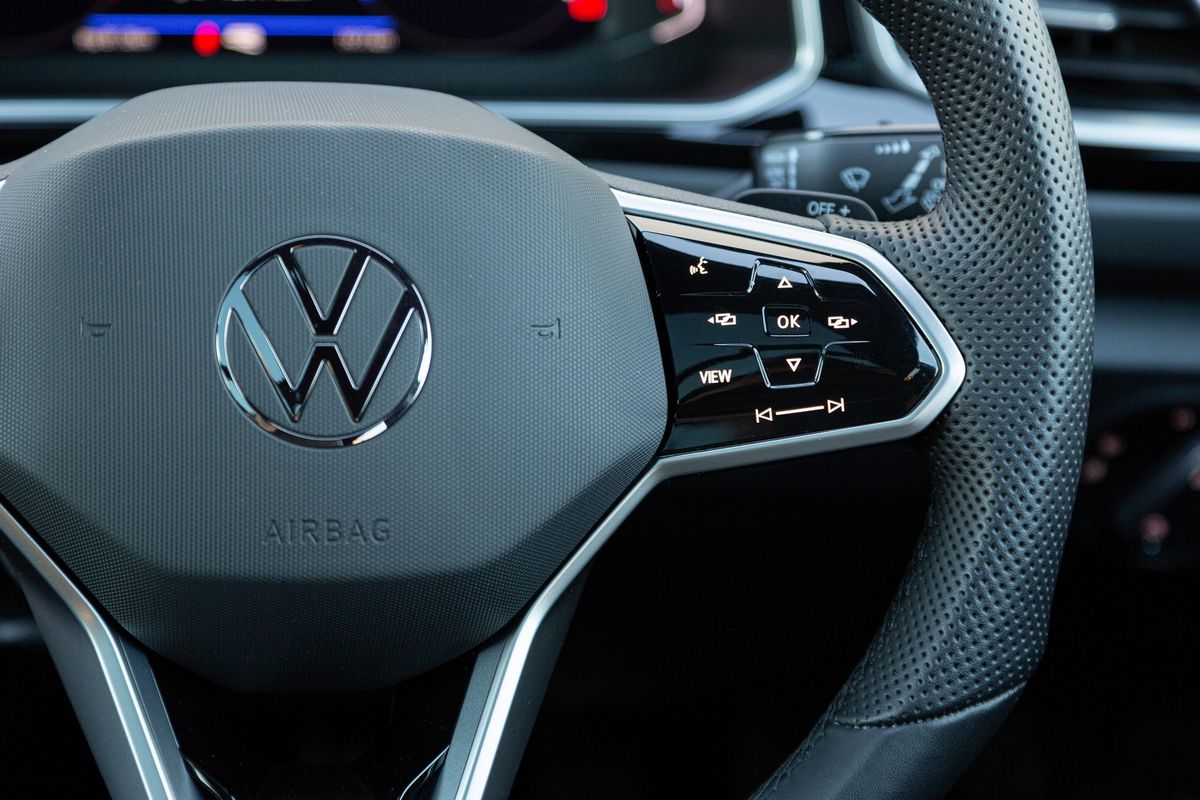
These steering controls are not the most intuitive or accurate.
If you can recall the squishy capacitive touchpads that featured on Blackberry smartphones from yesteryear, that same tech is now on the steering wheel and climate control buttons of several Volkswagen models, including the T-Roc. To change a music track or adjust the volume, there aren’t any buttons to push on the multifunction steering wheel; instead, you slide your finger.
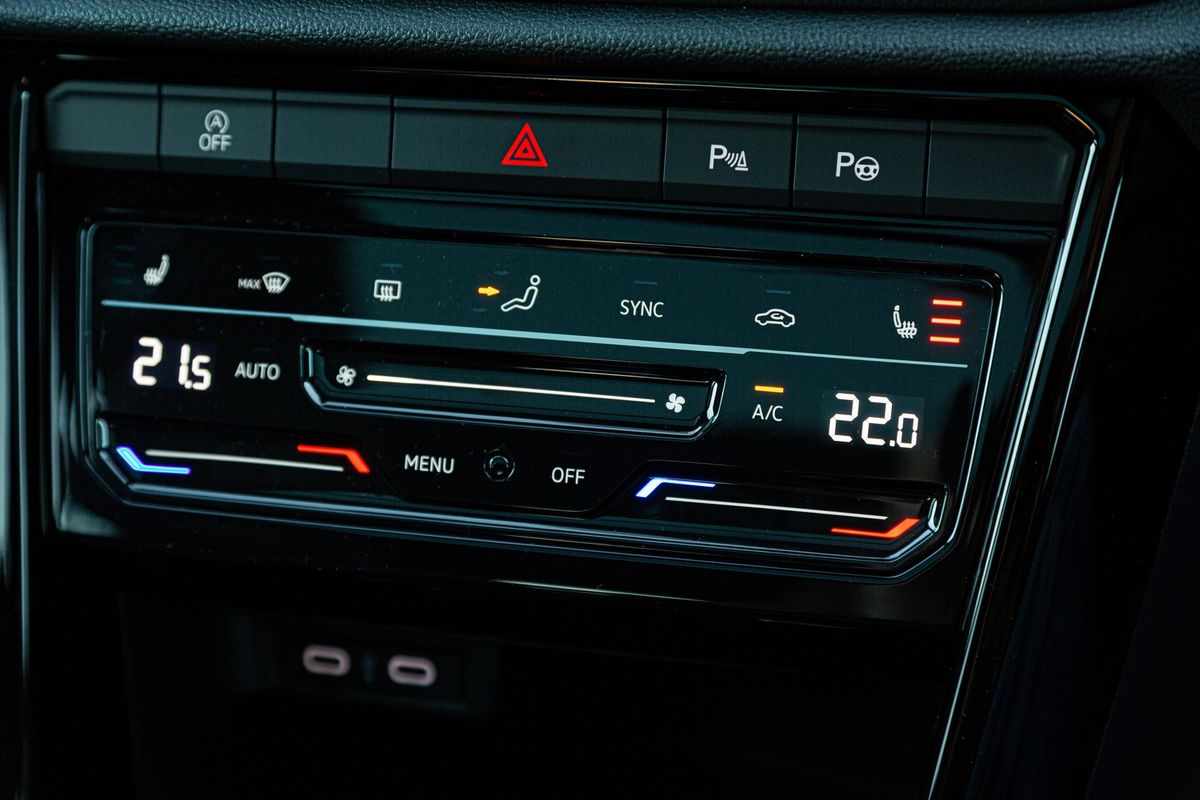
Given the fact your eyes are supposed to be focused on the road ahead of you, you’re unlikely to get the actions right immediately, which then results in frustration and mistakes as you frantically try to skip Spotify’s suggestion of Justin Bieber. Thankfully, with Android Auto and Apple CarPlay, the voice control is excellent, so you can say commands instead. The same issue arose when we tried to adjust the cabin temperature (you slide your finger left and right to go from cold to hot).
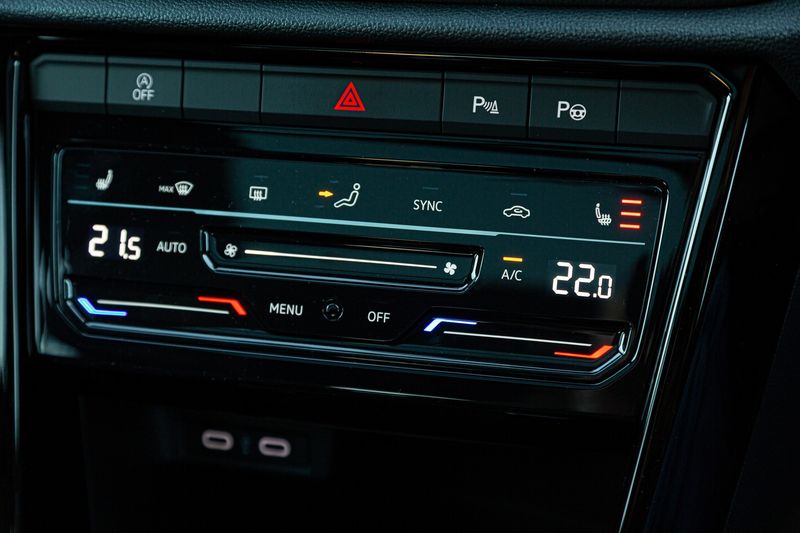
Heated seats are a great feature, but the climate control interface is frustrating to use.
If you don’t get it right the first time and the automatic climate control is on, the car will detect the dramatic change and send Hurricane Ian-strength winds through the cabin at either 16- or 35 °C. We’re hopeful that VW customers will eventually master the slide after a few weeks of ownership.
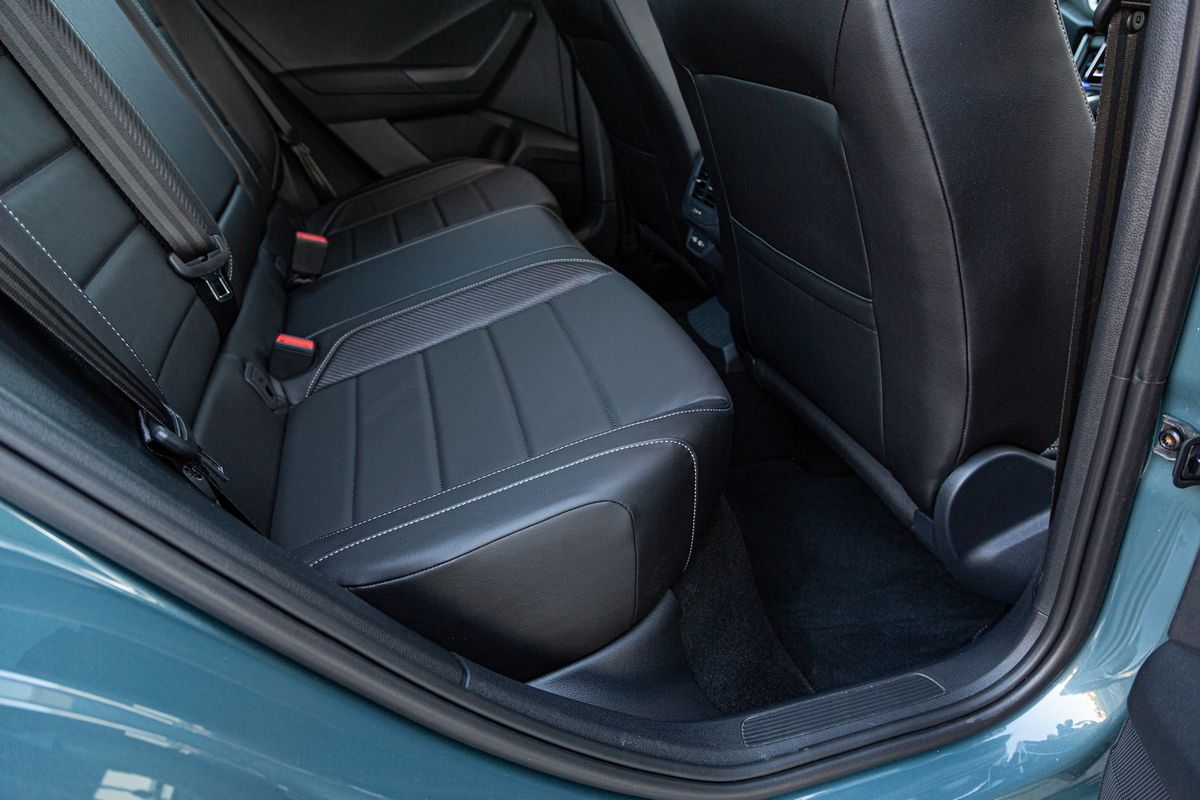
Another minor gripe of the Volkswagen T-Roc package is the relatively limited interior space and practicality. Rear legroom for adult passengers is not the most generous (more suited to accommodating children), and the rear bench cannot move, unlike the T-Cross setup, which allows users to free up more passenger space if needed. Two USB-C ports are located here too.
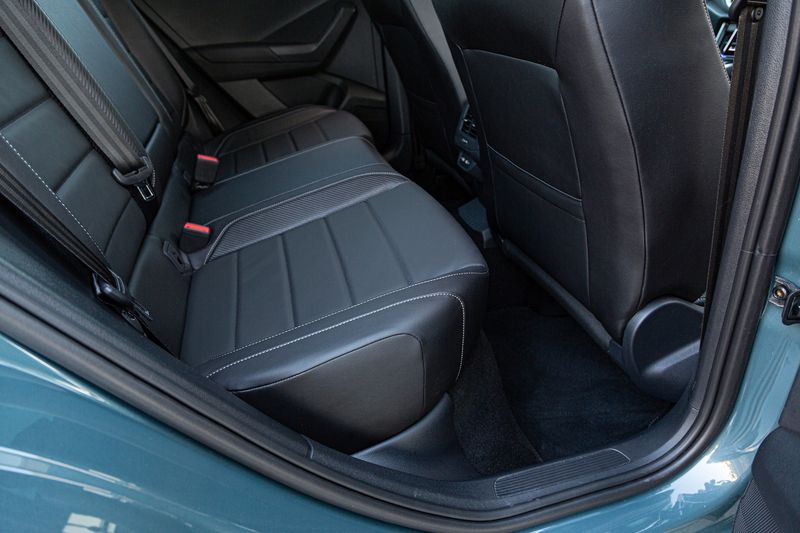
The rear legroom is only suitable for small children.
As far as luggage space is concerned, the bay is said to hold 392 litres, which can be increased to 1 237 litres if you fold the rear seats down. Interestingly, the recently-launched Taigo offers up to 440 litres of space, while a similarly-priced Tiguan has over 520 litres. Neither offer all-wheel drive at this price point, however. Be that as it may, if cargo-carrying capacity is important, the T-Roc may not be the best choice in Volkswagen’s small/medium SUV line-up.
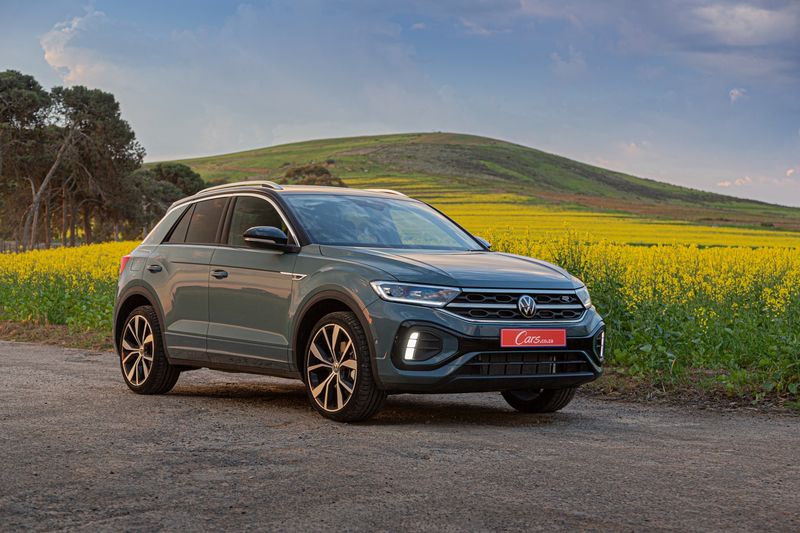
If it’s a stylish and nice-to-drive vehicle you’re looking for, consider the T-Roc.
Volkswagen T-Roc pricing and after-sales support
Prices in the Volkswagen T-Roc range start from R563 800 and go all the way up to R660 400 for this derivative – the 2.0TSI 140kW 4Motion R-Line . There is a non-R model called the Design, which retails for R627 300. The Volkswagen T-Roc is sold with a 3-year/120 000 km warranty, a 5-year/90 000 km service plan and a 12-year anti-corrosion warranty.
Looking to sell your car? Sell it on Cars.co.za for free
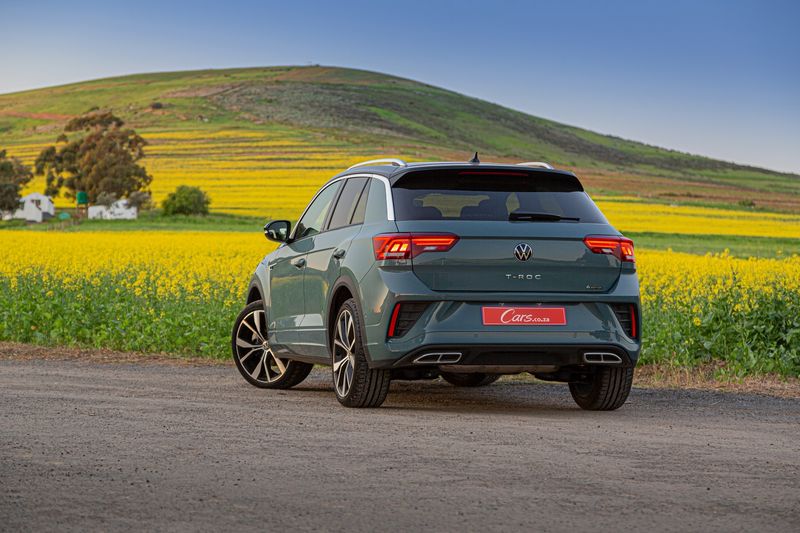
It may not be the most spacious, but the T-Roc offers a dynamic and engaging driving experience.
Verdict
It’s easy to see why the T-Roc would appeal to VW loyalists. It offers a fine driving experience akin to that of a sporty Golf, with the benefits of a slightly raised driver’s position and all-wheel drive. There is a downside: one of the big benefits of choosing an SUV is enhanced practicality, which is something the T-Roc doesn’t offer enough of. For R660k, you could also buy a Tiguan (albeit with less power and fewer features) that comfortably outguns the T-Roc in terms of space.
As a premium-positioned small crossover, however, the T-Roc is not designed to please the masses. As with the Opel Mokka, Mazda CX-30, Hyundai Kona and other offerings, it’s meant to make a bold style statement. Price-wise, however, the 2.0TSI 140 kW 4Motion R-Line sits in an awkward pocket between volume brands and premium marques’ compact crossovers, plus it’s pitched in direct opposition with the larger, arrestingly styled Haval H6 GT – that’s a tough one!
Should you buy one? Unlike most “boutique” small crossovers, the T-Roc 2.0TSI 140 kW 4Motion R-Line offers (all-wheel drive) dynamism and sparkling performance, over and above that oh-so-trendy crossover/SUV image. If you’re also considering mainstream compact family cars that may suit your future needs, VWSA has other models that are more, well, multi-purpose. But if the T-Roc speaks to you and you can afford the R-Line, its added talents are significant.