In a detailed comparison between the flagship variants of the Isuzu MU-X and the Toyota Fortuner, David Taylor highlights the key differences and similarities between the 7-seat, bakkie-based Adventure SUVs, offering insights for potential buyers.
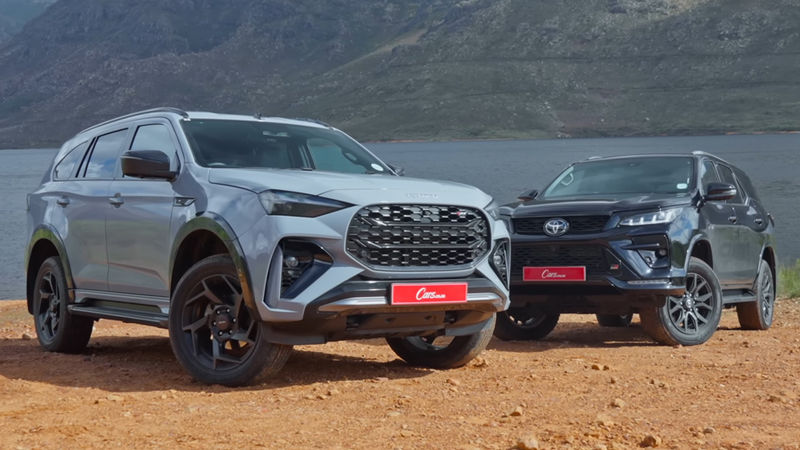
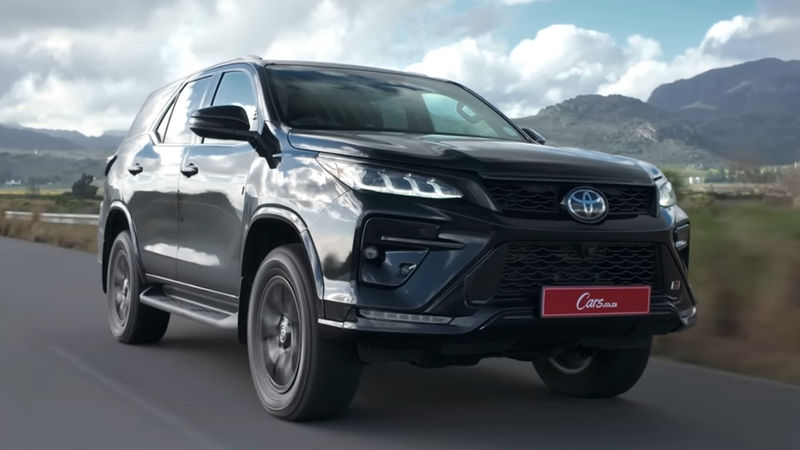
The Toyota Fortuner is a household name and has dominated the 7-seat, bakkie-based Adventure SUV market since the 1st-gen model was launched in 2006. But now that the 2nd-gen model is in the twilight of its product life, who does it compare with the recently updated Isuzu MU-X , of which the 2nd-gen arrived in South Africa in 2021? The combatants in this head-to-head comparison are the Isuzu MU-X 3.0TD Onyx XT 4WD and Toyota Fortuner 2.8GD-6 4×4 GR-Sport , both of which top their line-ups.
MU-X vs Fortuner: Performance & Efficiency
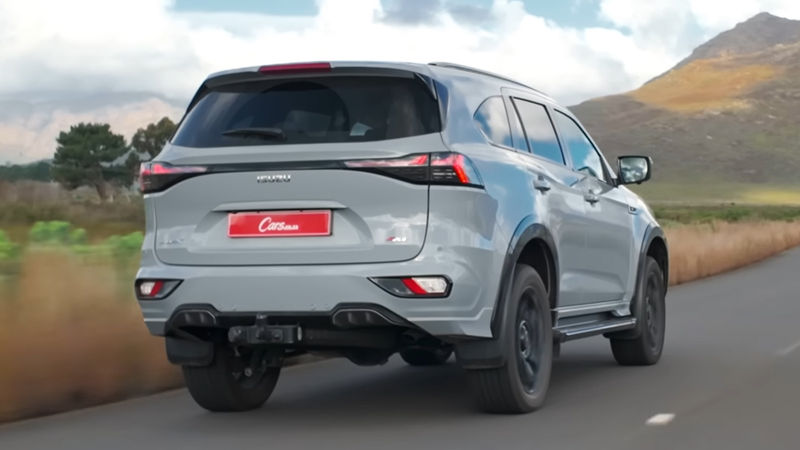
The Isuzu MU-X Onyx is powered by a 3.0-litre 4-cylinder turbodiesel engine that produces 140 kW and 450 Nm of torque, which is mated with a 6-speed automatic transmission.
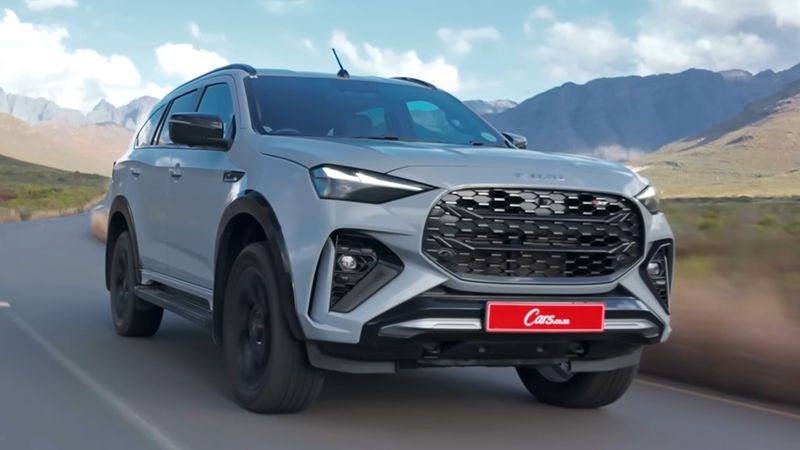
When we tested the Isuzu’s 0-100 kph time, it hit the benchmark in 10.61 seconds ; in terms of in-gear acceleration, it feels a little “lumbering”, even if its transmission shifts admirably smoothly.
Isuzu claims an average consumption of 7.6 L/100 km, but the MU-X averaged 8.6 L/100 km during its tenure in our fleet. Both models have an 80-litre fuel tank, providing a good range for extended journeys.
The Toyota Fortuner GR-Sport has a 2.8-litre 4-cylinder turbodiesel engine that generates 165 kW and 550 Nm of torque in the range’s flagship variant. This also uses a 6-speed automatic transmission, and according to our test equipment, the more muscular Fortuner hit 100 kph from zero in 9.22 second s.

The Fortuner also has 3 drive modes to choose from – Eco, Normal, and Sport – which the Isuzu lacks, adding to its energetic feel. The Fortuner’s motor simply feels more modern and refined. Toyota claims an average fuel consumption of 8.4 L/100 km, though the test vehicle averaged just over 10 L/100 km.
| Isuzu MU-X 3.0TD Onyx XT 4WD | Toyota Fortuner 2.8GD-6 4×4 GR-Sport | |
| Engine | 3.0L 4-cylinder turbodiesel | 2.8L 4-cylinder turbodiesel |
| Max Power | 140 kW | 165 kW |
| Max Torque | 450 Nm | 550 Nm |
| Transmission | 6-speed automatic | 6-speed automatic |
| 0-100 kph | 10.61 seconds (as tested) | 9.22 seconds (as tested) |
| Fuel Tank Capacity | 80 litres | 80 litres |
| Claimed Fuel Consumption | 7.6 L/100km | 8.4 L/100km |
| CO2 Emissions | 200 g/km | 221 g/km |
What are the Isuzu and Toyota like to drive off-road?
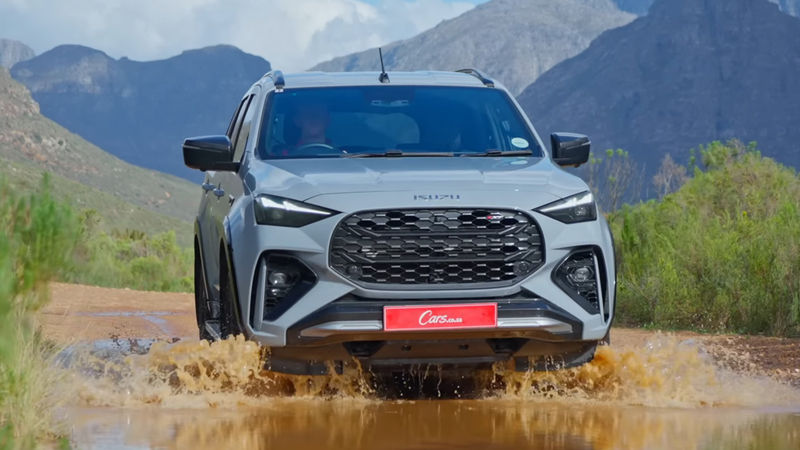
Most people buy these models as family vehicles because they want to be able to drive anywhere, even if only occasionally. Because the Isuzu MU-X and Toyota Fortuner are built on a ladder-frame chassis , a design that prioritises off-road articulation over on-road comfort, they’re very capable off-road.
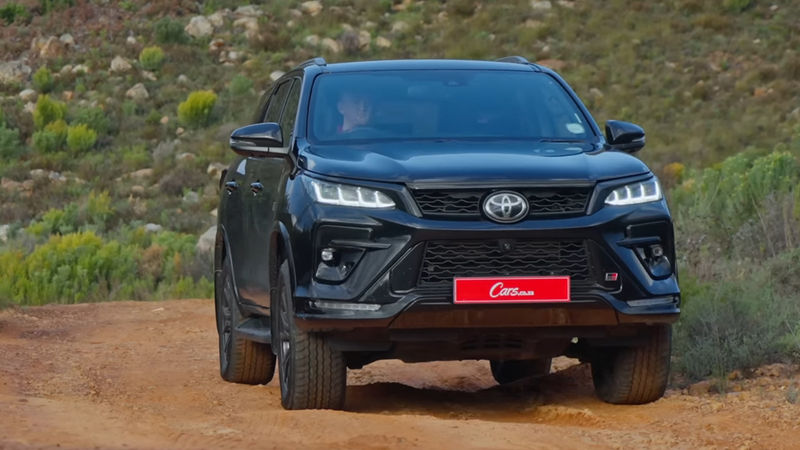
Both vehicles are very closely matched in terms of their 4×4 systems, with both having low range and a differential lock . However, a major difference lies in the tyres. The Fortuner GR-Sport comes standard with all-terrain tyres , which are a significant advantage for off-road use. In contrast, the Isuzu MU-X is sold with low-profile tyres , which look quite sporty, but are not as suitable for serious off-roading.
MU-X vs Fortuner: Interior Features
The Isuzu MU-X Onyx facelift brings significant improvements to the cabin. A new, higher-resolution infotainment screen is a notable update, which includes graphics and a digital instrument cluster. The build quality is good with some soft-touch plastics and attractive contrast stitching on the panels.
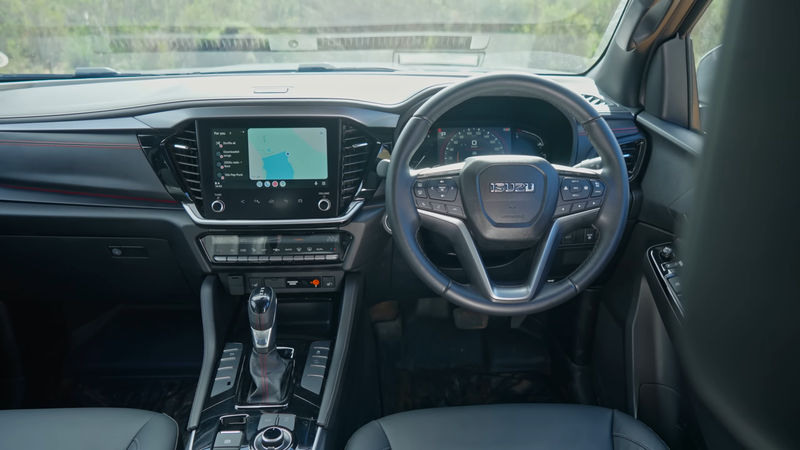
However, some negatives include the glossy plastic on the centre console that is bound to be scratched easily and a slight movement in the door when the window is opened. The MU-X offers standard features like heated seats, wireless Android Auto, and a partly digital instrument cluster.
To distinguish the Toyota Fortuner GR Sport’s interior from those of its siblings, it features a handful of aesthetic touches, including red stitching and sporty seats. However, the cabin feels dated, especially the infotainment system , which is described as “old school” and “antiquated” compared to rivals.
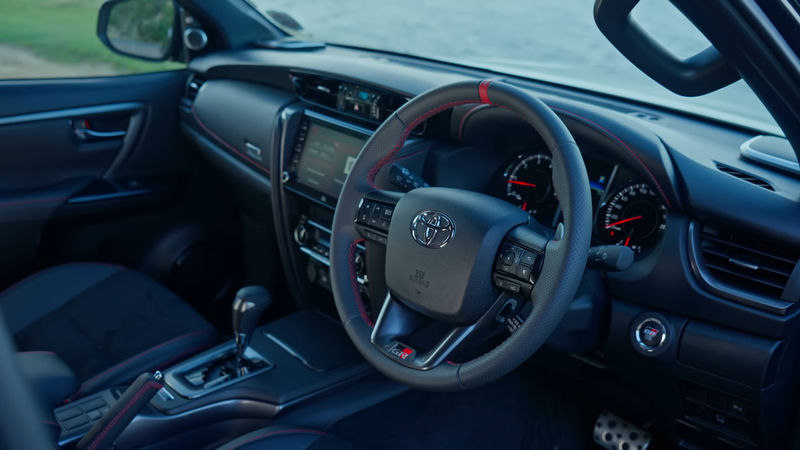
The reverse-view camera is singled out for its particularly poor, low-resolution quality. While the Fortuner has an impressive JBL audio system, the MU-X has a slight, but notable advantage in terms of standard features, including wireless phone connectivity, while the Fortuner requires a cable.
| Isuzu MU-X 3.0TD Onyx XT 4WD | Toyota Fortuner 2.8GD-6 4×4 GR-Sport | |
| Infotainment and Instrumentation | 9-inch touchscreen, digital cluster | 8-inch touchscreen, digital cluster |
| Apple CarPlay, Android Auto Compatibility | Standard, wireless | Standard |
| Bluetooth, Voice Control, USB | Bluetooth, voice control, front & rear USB | Bluetooth, front & rear USB |
| Wireless Charging | Standard | Standard |
| Reverse-view Camera | 360-degree surround view | Reverse-view view camera |
| Front and Rear Park Distance Control | Front & rear PDC | Front & rear PDC |
| Sunroof | No | No |
| Cruise Control | Adaptive | Adaptive |
| Air Conditioning | Automatic climate control | Automatic climate control |
| Upholstery/Electric Seats | Leather, electric front seats | Suede/leather, electric front seats |
MU-X vs Fortuner: Practicality & Space
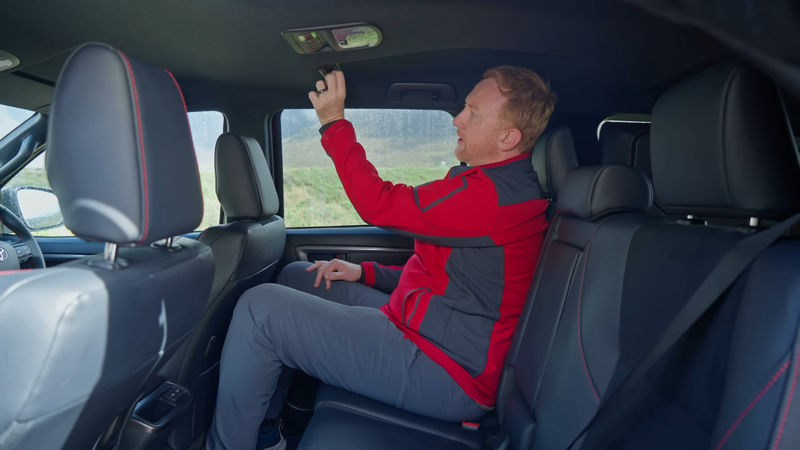
The 2nd-row seating in both Adventure SUVs is a key differentiator. In the Toyota Fortuner , knee room is good, but headroom is a bit tight. The GR-Sport’s 2nd row features USB-C ports, shopping bag hooks, a 220V inverter for charging laptops and roof-mounted ventilation outlets. However, its seating position feels too elevated, and the seatbacks’ reclining function is limited because of the 3rd-row configuration.

The Isuzu MU-X ‘s 2nd row is praised for feeling more spacious and having a more natural seating position. It offers better headroom and a more generous recline function. Like the Fortuner, it has a shopping bag holder, 2 illuminated USB-C charging ports, and (circular) roof-mounted ventilation outlets.
In terms of comfort and convenience, the Isuzu offers a better 2nd-row experience than the Toyota.
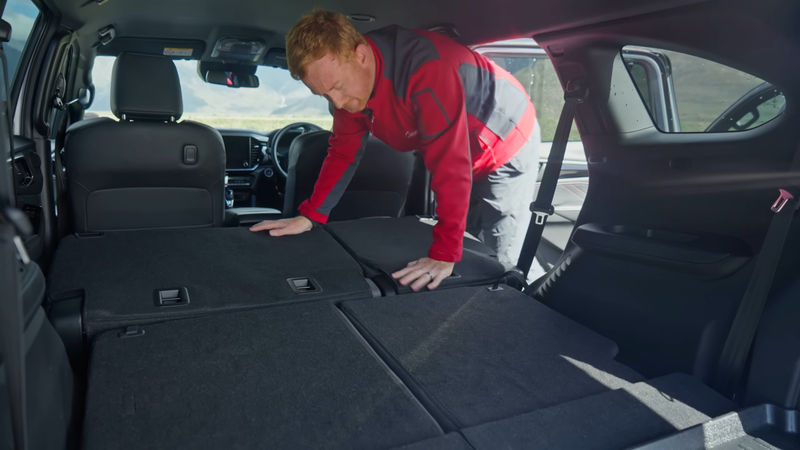
When it comes to the load bay, both vehicles have a powered tailgate. The Isuzu MU-X is favoured for its logical storage of the 3rd-row seats, which fold flat into the floor, creating a large, flat loading space.
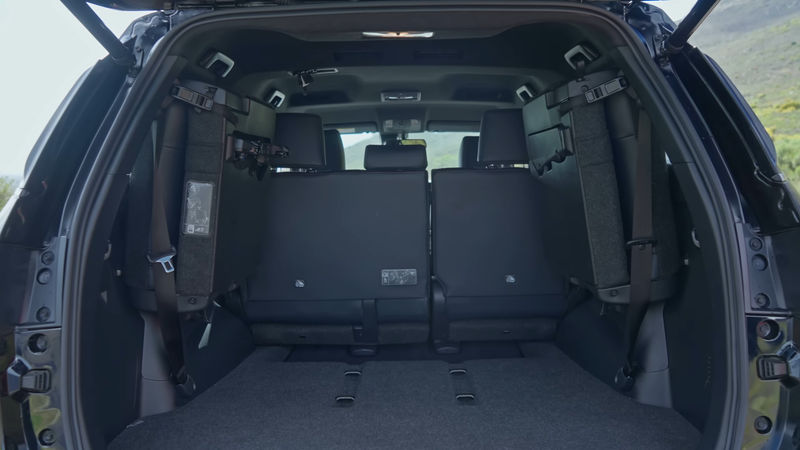
The Toyota Fortuner ‘s 3rd-row seats, however, stow by folding up and to the sides, which impinges on the available luggage capacity (width-wise, anyway), which may (continue to) frustrate some consumers. While the Fortuner’s load floor is slightly deeper, the overall functionality of the MU-X’s bay is broader.
| Isuzu MU-X 3.0TD Onyx XT 4WD | Toyota Fortuner 2.8GD-6 4×4 GR-Sport | |
| Length | 4 850 mm | 4 795 mm |
| Width (excl mirrors) | 1 870 mm | 1 855 mm |
| Height | 1 825 mm | 1 855 mm |
| Wheelbase | 2 855 mm | 2 745 mm |
| Ground Clearance | 235 mm | 279 mm |
| Load Capacity | 311–1 119 litres | Not stated |
| Towing Capacity | Unbraked: 750 kg Braked: 3 500 kg | Unbraked: 750 kg Braked: 3 300 kg |
| Kerb Weight | 2 010 kg | 2 195 kg |
Price & after-sales Support
| Isuzu MU-X 3.0TD Onyx XT 4WD | Toyota Fortuner 2.8GD-6 4×4 GR-Sport | |
| Price (Sept 2025) | R1 026 800 | R999 000 |
| Warranty | 5 years/120 000 km | 3 years/100 000 km |
| Service Plan | 5 years/90 000 km | 9 services/90 000 km |
In terms of after-sales support, the Toyota Fortuner comes with a 3-year/100 000 km warranty , while the Isuzu MU-X has a longer 5-year/120 000 km warranty . Their service plans are comparable, with the MU-X offered with a 5-year/90 000 km plan and the Fortuner a 9 services/90 000 km plan. Both of these models are renowned for reliability, and Toyota is a 5-time Cars.co.za Awards Brand of the Year winner .
New Isuzu MU-X Specs & Prices in South Africa
Find a new/used Isuzu MU-X listed for sale on Cars.co.za
New Toyota Fortuner Specs & Prices in South Africa
Find a new/used Toyota Fortuner listed for sale on Cars.co.za
Summary: Isuzu MU-X vs Toyota Fortuner
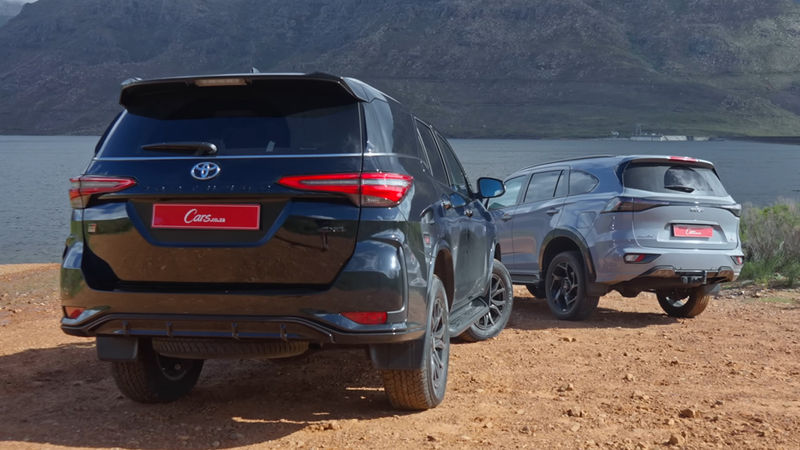
The comparison between the 7-seat Adventure SUVs is not one-sided, as both have their merits. Despite being an older product, the Toyota Fortuner maintains its relevance with a more powerful and refined engine, better in-gear performance, and standard all-terrain tyres, which improve its off-road capability. Its cabin is dated, but it has high-quality touches and feels robust. It’s not a market leader by accident.
The newer Isuzu MU-X , with its recent facelift, brings a welcome sense of modernity to the segment, particularly in its interior. It has a more practical and comfortable 2nd-row seating arrangement and a more logical load bay design with flat-folding 3rd-row seats. Its infotainment system is more up-to-date and offers wireless phone connectivity, while its longer warranty provides peace of mind for buyers.
While both models impress, the final choice depends on whether a buyer prioritises performance and serious off-road readiness or modern comfort, practicality, and a 2-year longer manufacturer warranty. Watch the conclusion of the comparative review video (the player sits at the top of this article) to see which of the 2 accomplished Adventure SUVs our presenter, David Taylor, chose as the winner.
Related content:
Toyota Fortuner GR-S Review (2025) More Power, Worth the Price?
Isuzu MU-X (2025) Launch Review
Ford Everest vs Toyota Fortuner: What to buy?
Frequently Asked Questions
Q: How do the prices of the Isuzu MU-X and Toyota Fortuner compare?
A: The Isuzu MU-X 3.0TD Onyx XT 4WD is priced at R1 026 800, while the Toyota Fortuner 2.8GD-6 4×4 GR-Sport costs R999 000 (as of September 2025).
Q: Which SUV has a more powerful engine?
A: The Toyota Fortuner GR-Sport has a more powerful engine, producing 165 kW and 550 Nm of torque compared to the Isuzu MU-X’s 140 kW and 450 Nm.
Q: How do the warranties of the Isuzu MU-X and Toyota Fortuner compare?
A: The Isuzu MU-X has a longer 5-year/120 000 km warranty, while the Toyota Fortuner comes with a 3-year/100 000 km warranty.