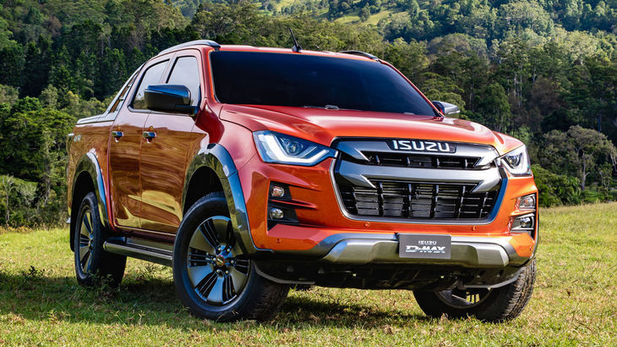
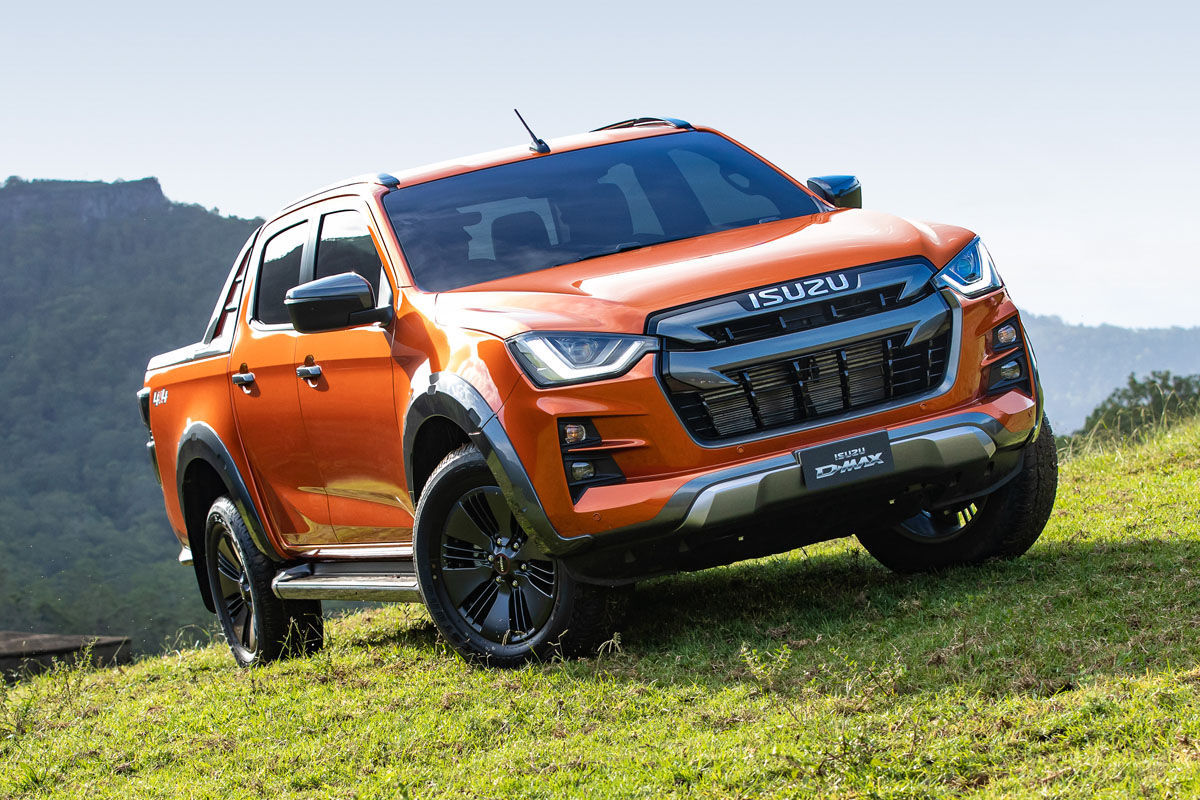
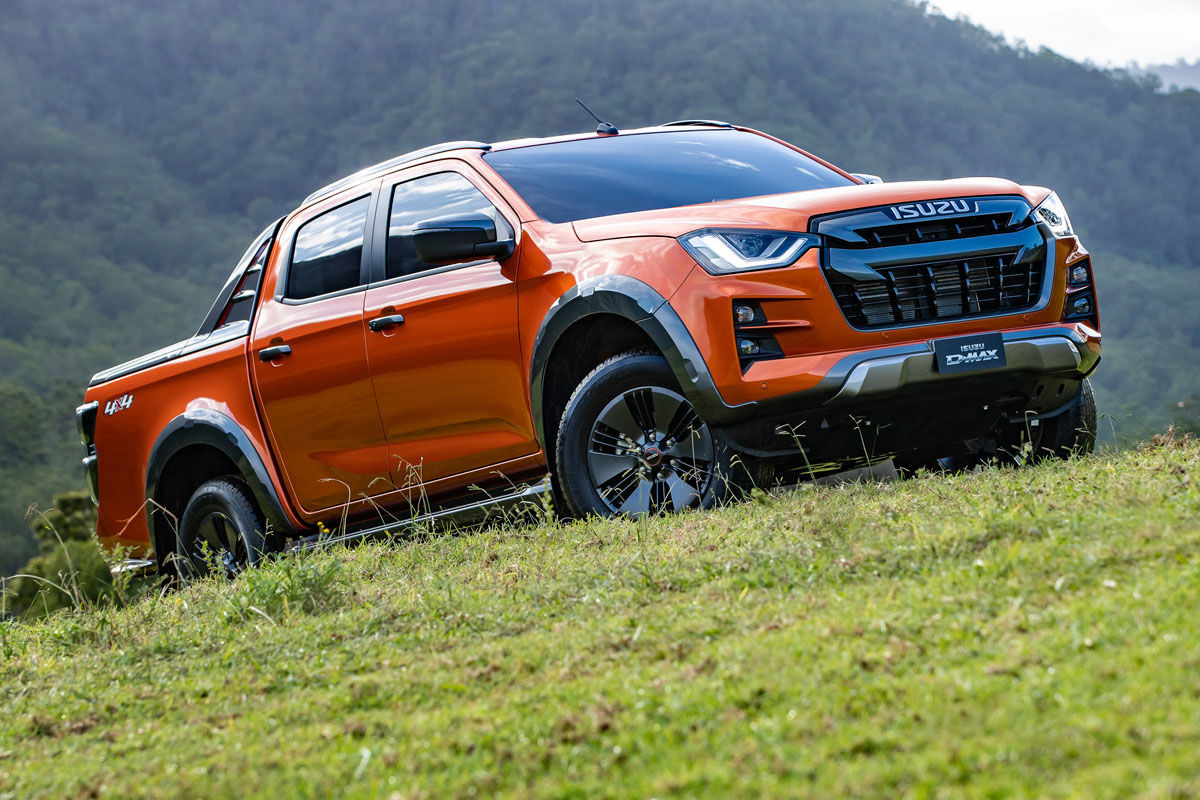
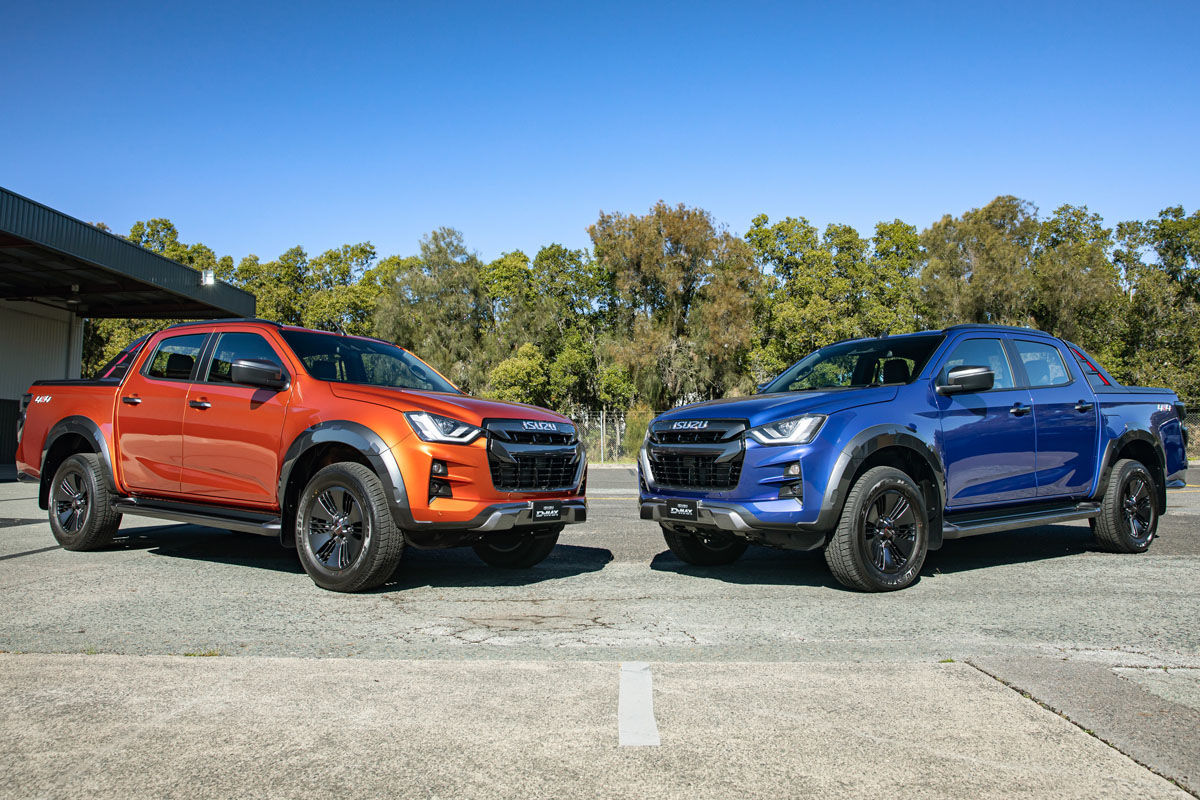
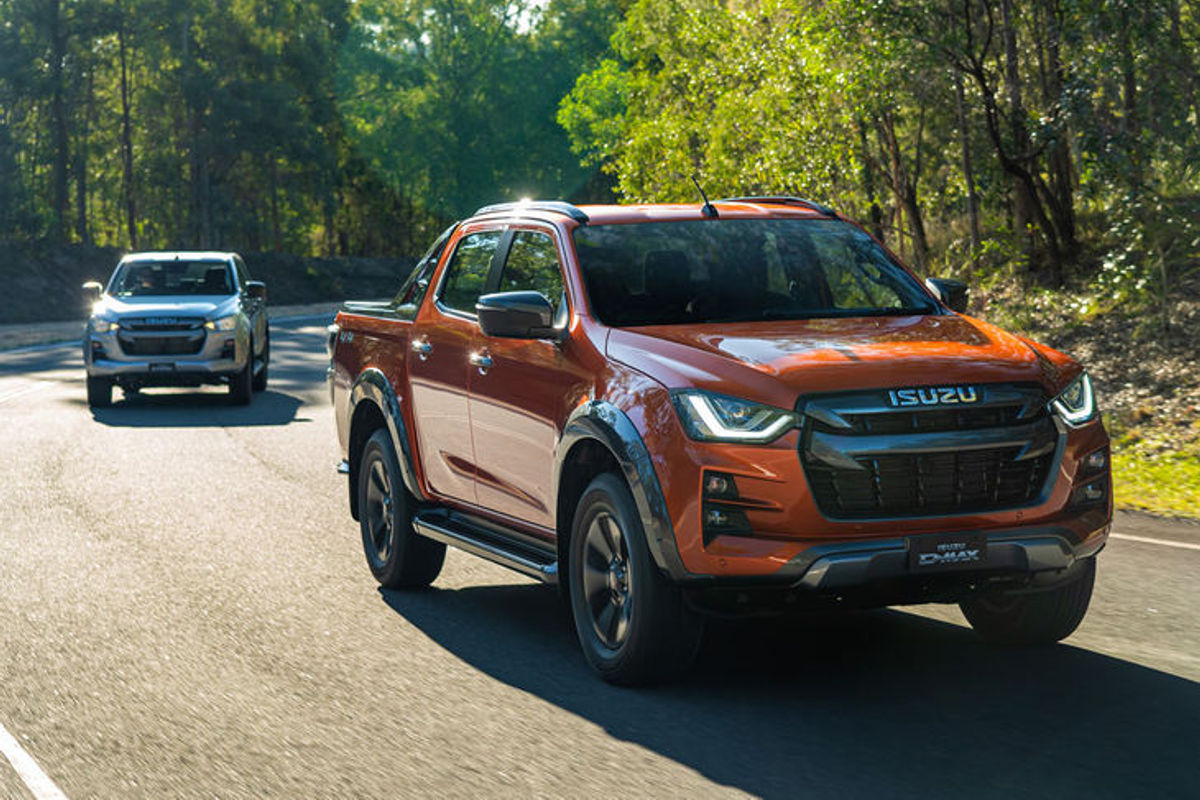
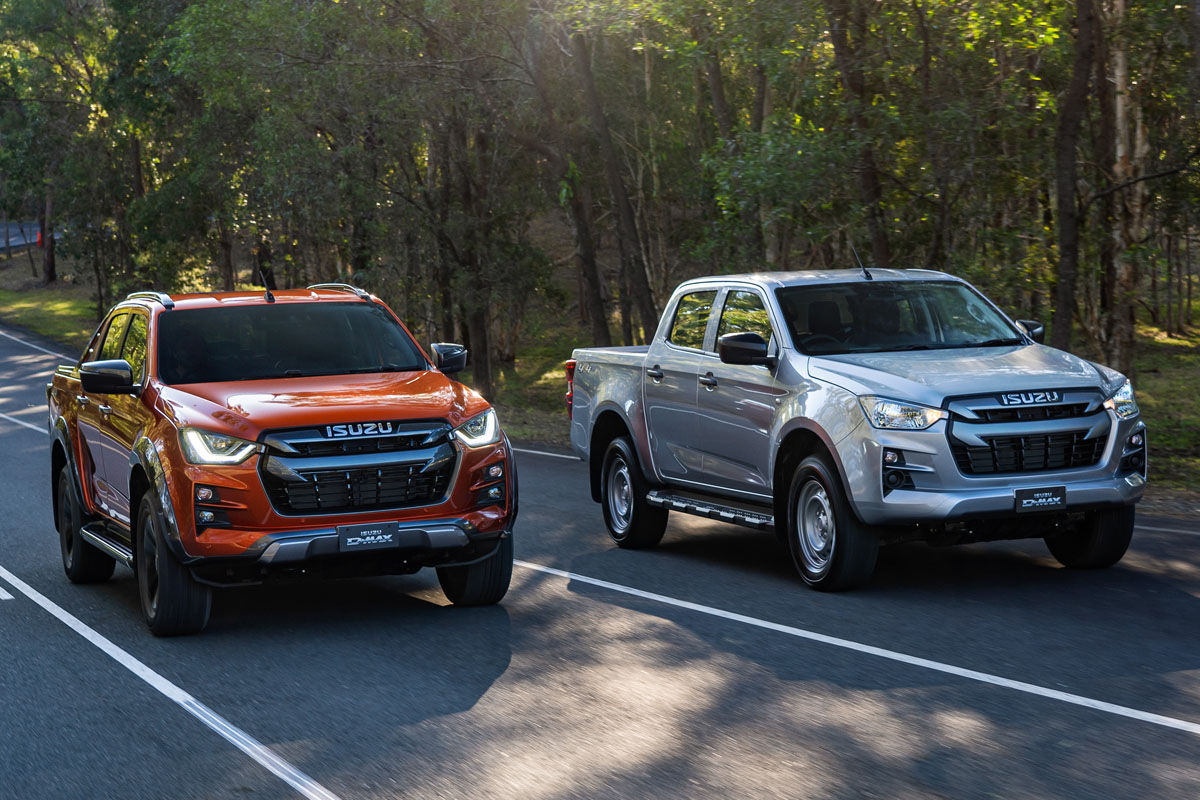
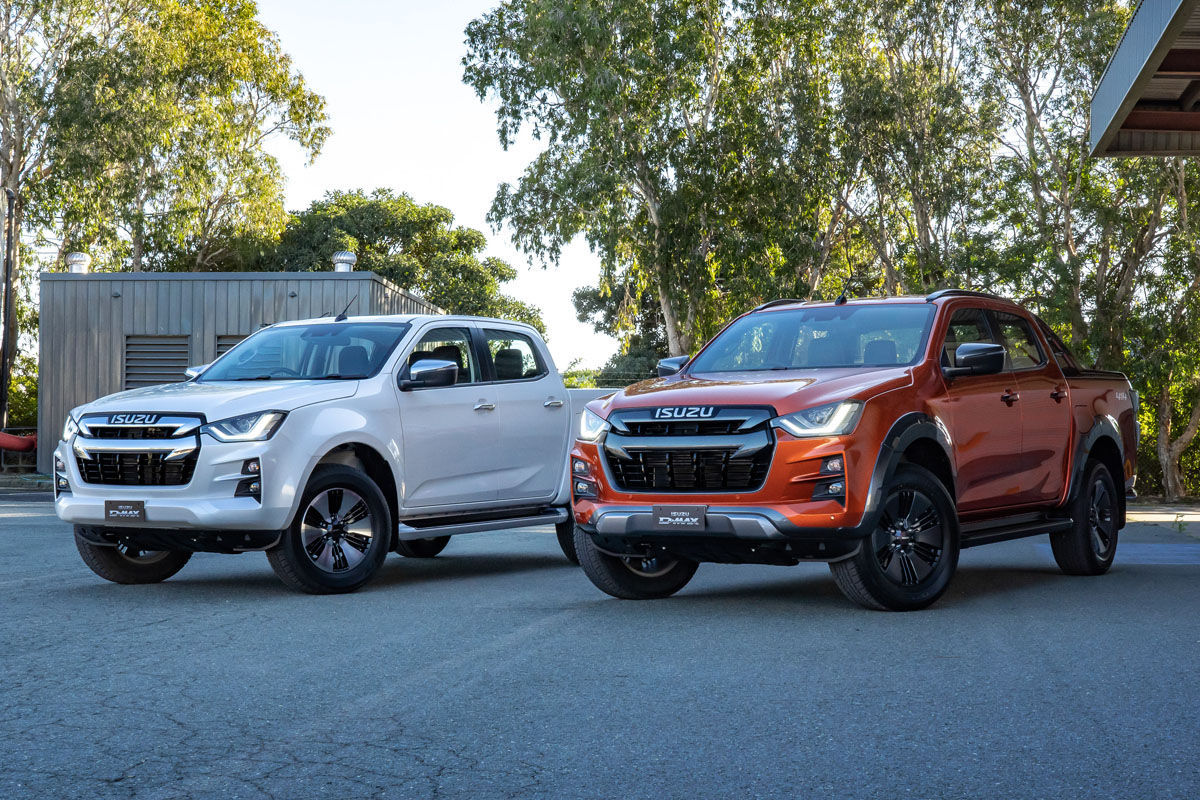
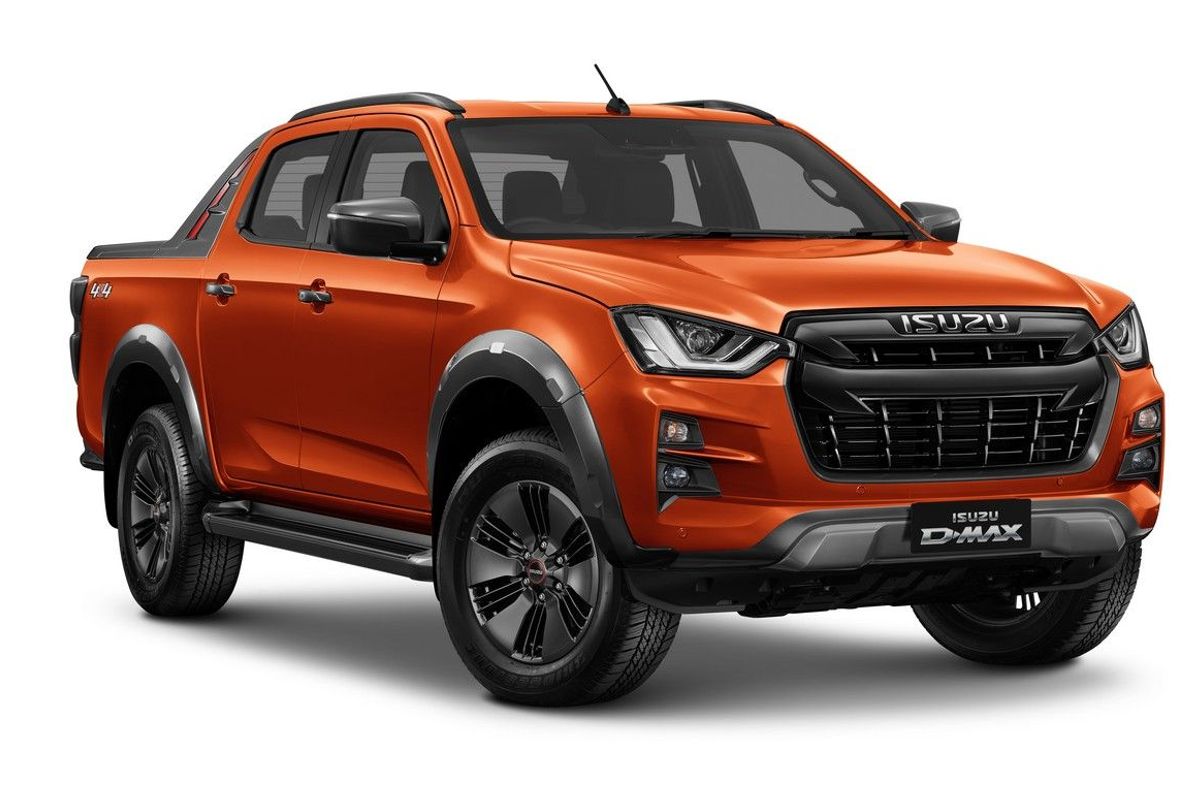
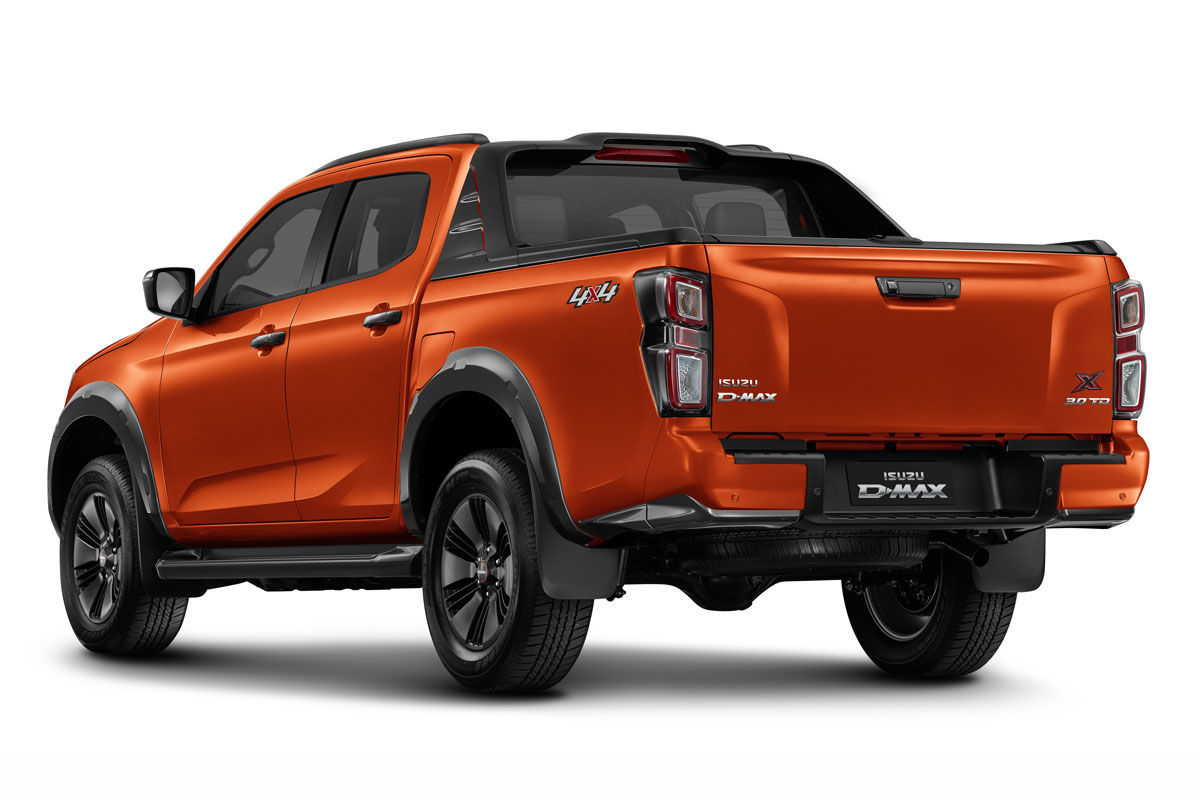
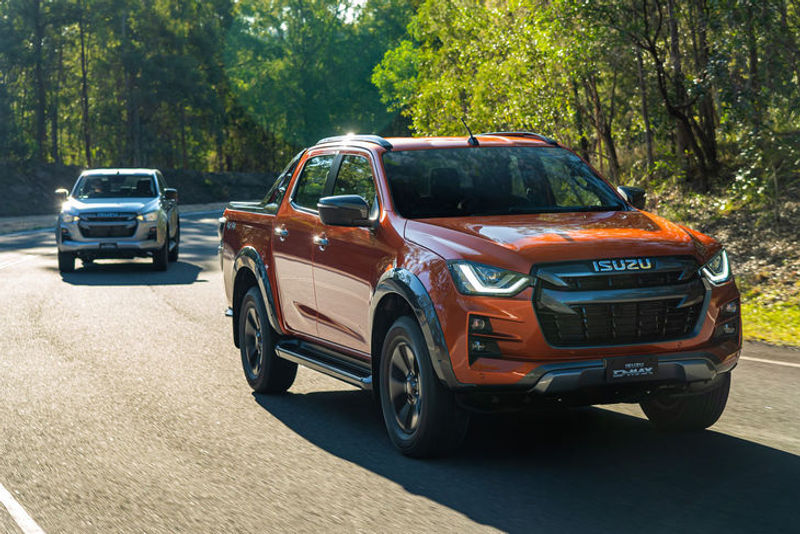
Isuzu will produce the next-generation D-Max in Port Elizabeth from next year and plans to launch the model locally during the 2nd half of 2021. However, the new D-Max, which is also produced in Thailand, has already been released in other markets, which gives us a preview of what the final product will look like.
The Japanese brand recently introduced X-Rider derivatives of the current D-Max in the local market as part of the model’s runout phase. However, in the near future, Isuzu will tool up its Eastern Cape plant as part a R1.2-billion investment programme to produce the next-generation D-Max in Mzansi; it’s expected to generate additional total local content value of R2.8 billion throughout its lifecycle.
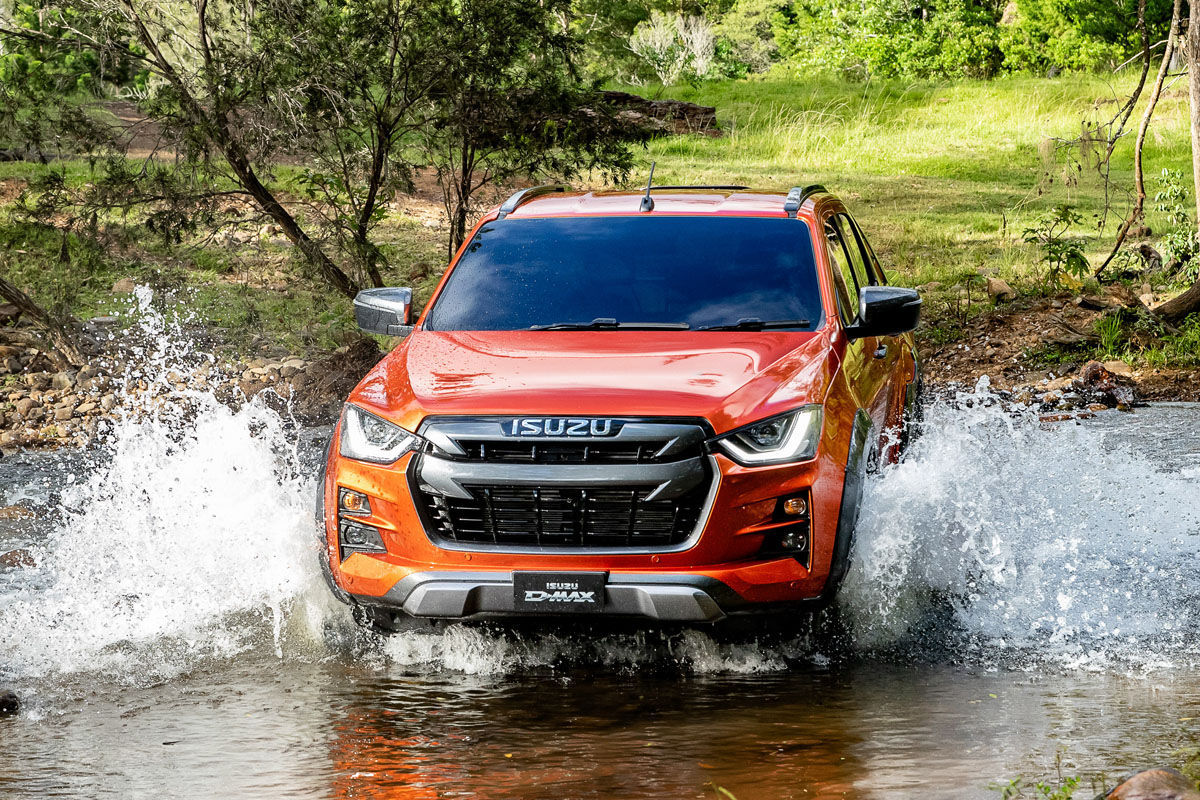
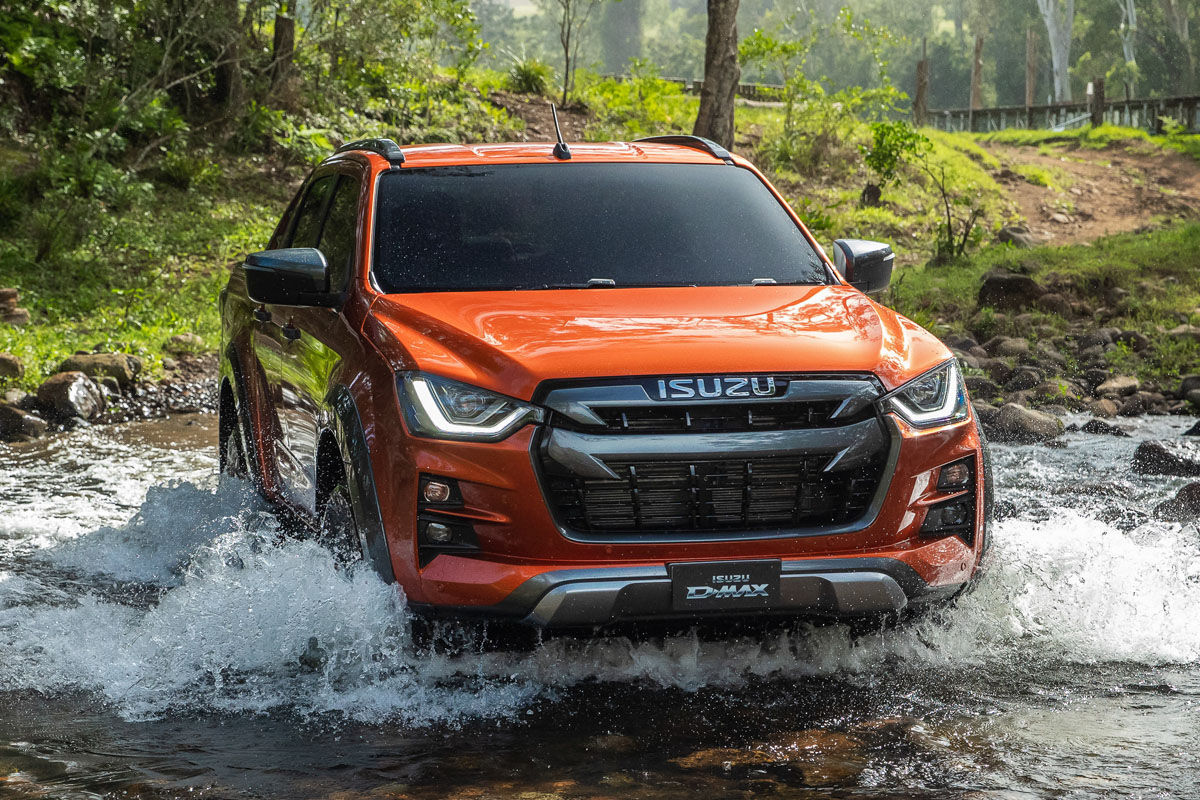
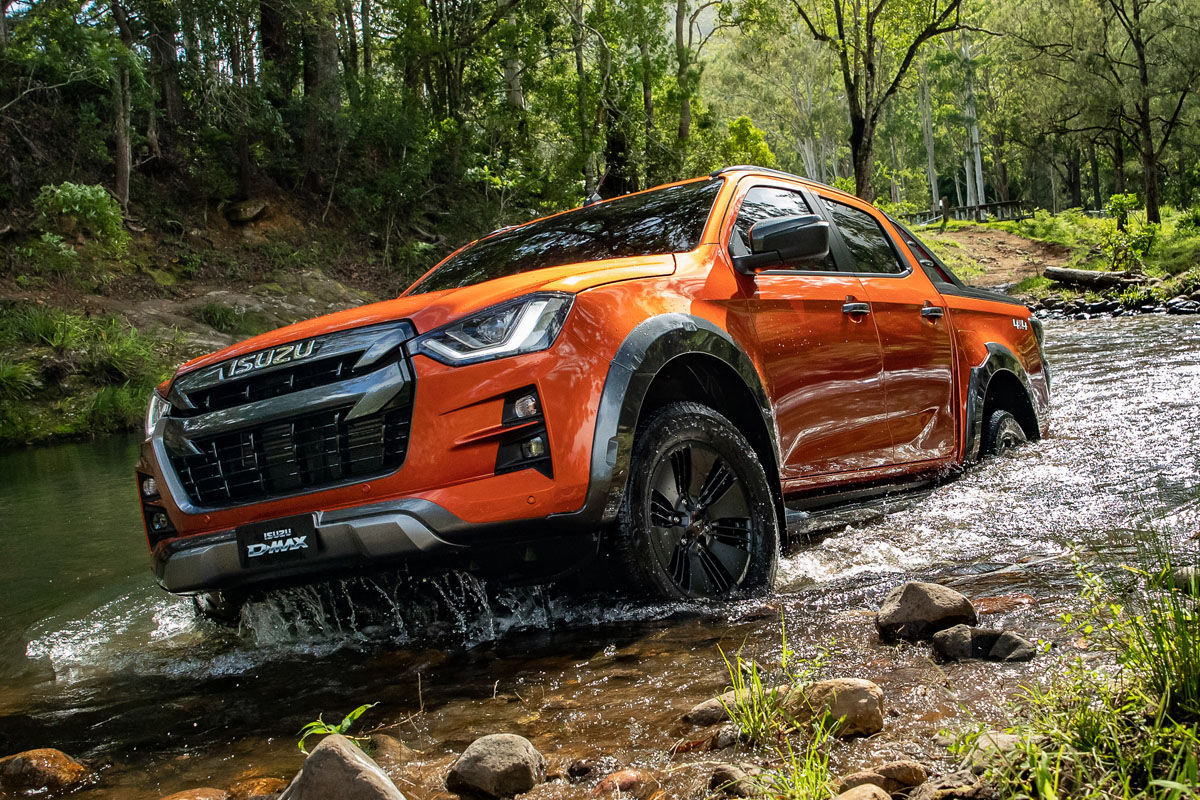
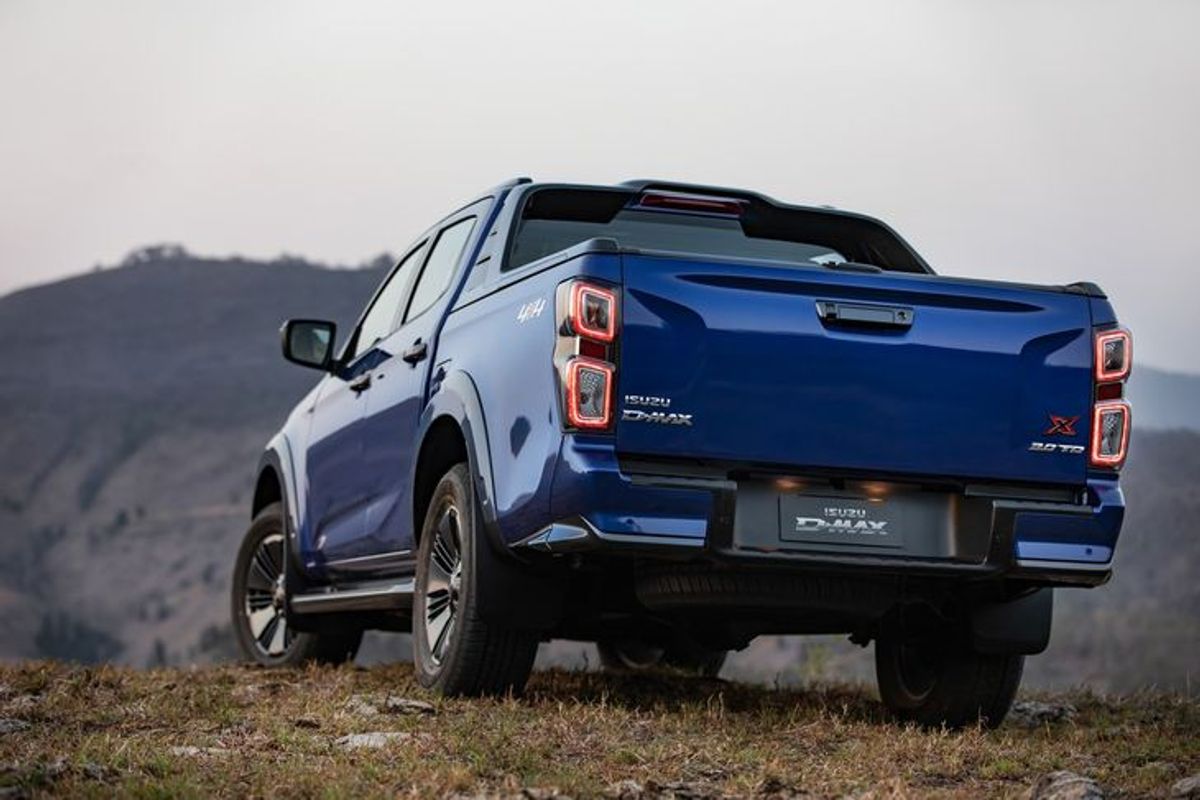
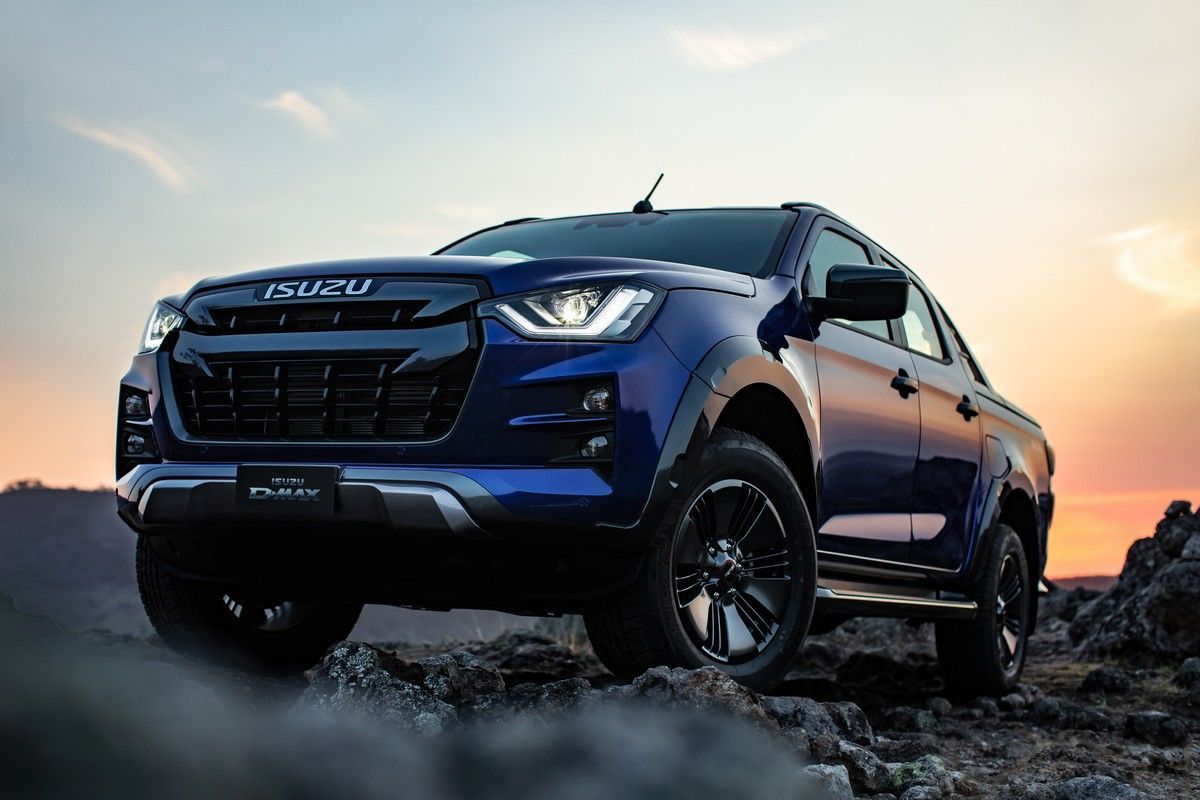
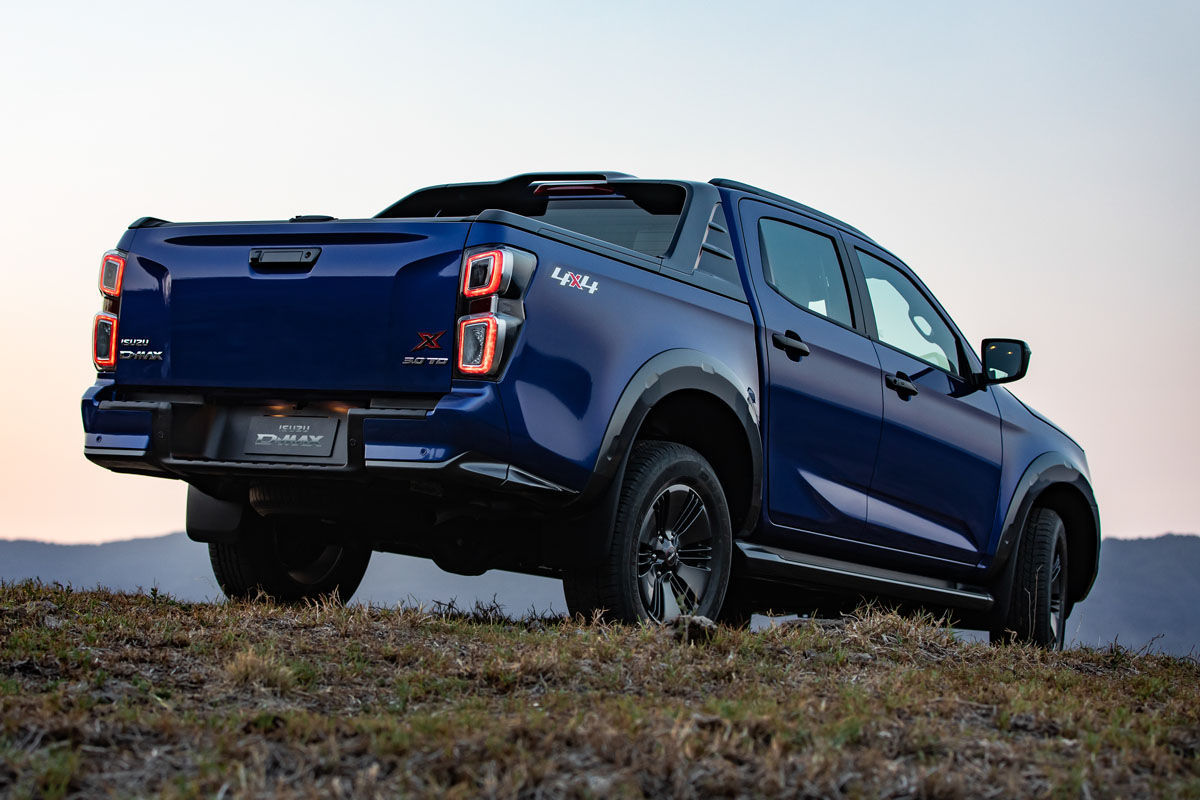
The images that appear in this article depict D-Max's specified for the Australian market, so although the models that will be produced in South Africa will look largely the same as what you see here; their specification will be different – although, to be fair, many of the new model’s improvements will be carried over to SA.
The new D-Max, which underpins the recently-unveiled Mazda BT-50 , is wider than its predecessor, with a longer wheelbase and a larger, deeper load tray. Not only is it much more boldly-styled than the current bakkie, it's also sleeker and more aerodynamically efficient. In fact, Isuzu says it has invested 4 million km's of testing and 6 years of development into the model and you can rest assured that a local development programme is, if not already underway, in the offing!
What will power the new D-Max?
With more power and torque and higher levels of refinement, the new D-Max should find favour with many local buyers.
In terms of its 3.0-litre 4-cylinder turbodiesel engine, the updated 4JJ3-TCX powerplant is said to feature updated internals including an upgraded direct-injection system and electronically controlled variable geometry turbocharger. As a result, it produces 140 kW and 450 Nm from 1 600 to 2 600 rpm in overseas markets and is said to be notably more refined (quieter, with less NVH) than the current 3.0-litre engine.
The turbodiesel will be offered in conjunction with a faster-shifting 6-speed automatic or 6-speed manual transmission.
Other notable numbers include a ground clearance of 240 mm, wading depth of 800 mm and a towing capacity of 3 500 kg (braked-trailer, aided by Trailer Sway Control). The 4×4 derivatives benefit from a solid and lighter one-piece aluminium driveshaft, an electro-magnetic diff-lock and improved approach, departure and break-over angles.
What about the interior?
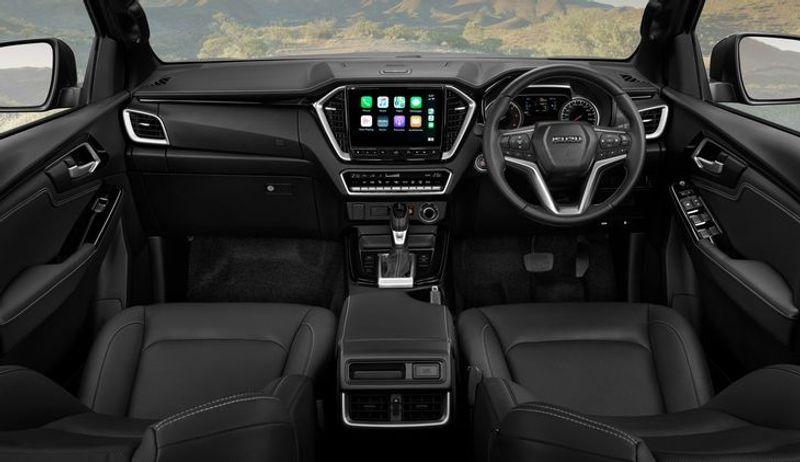
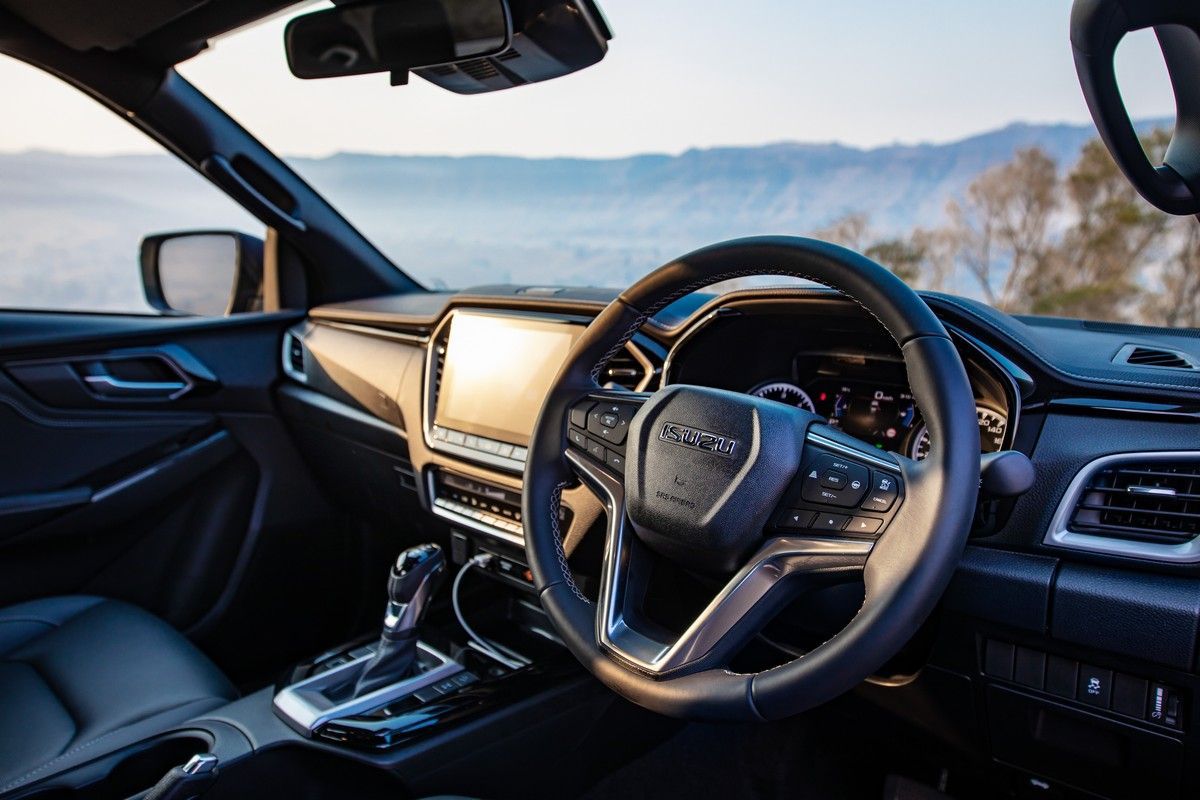
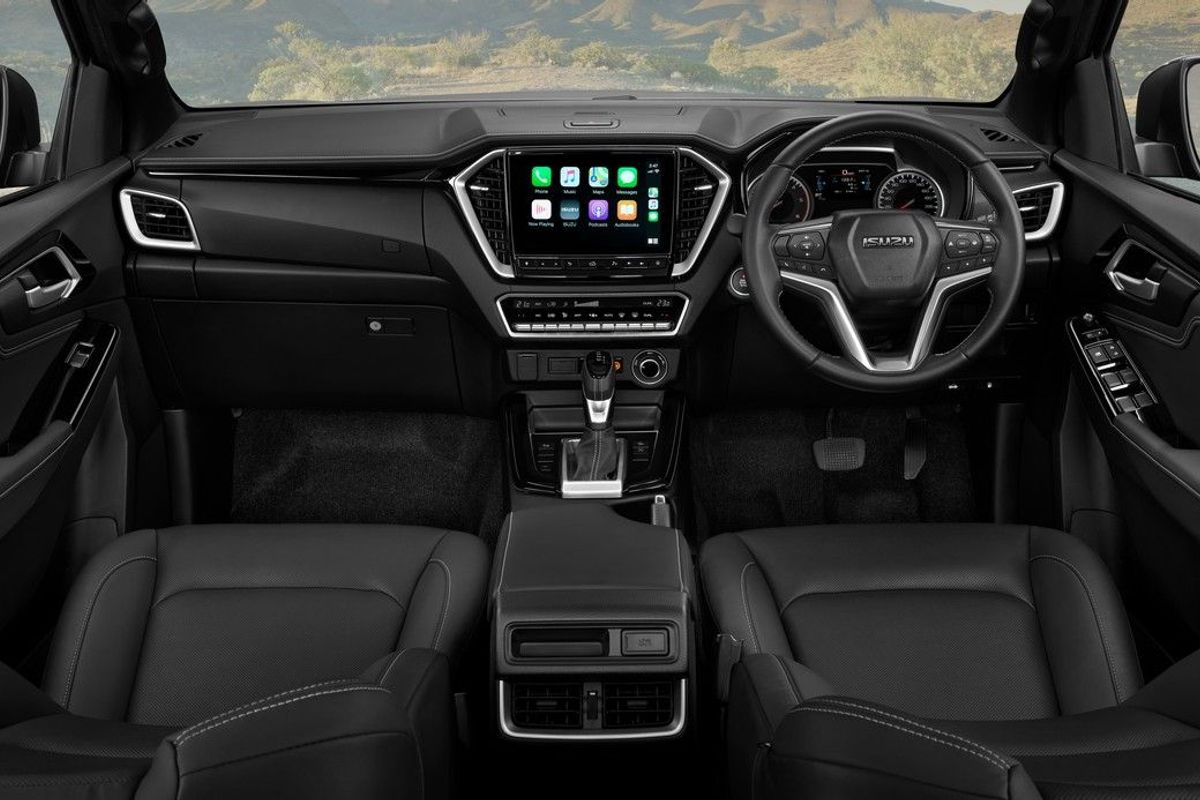
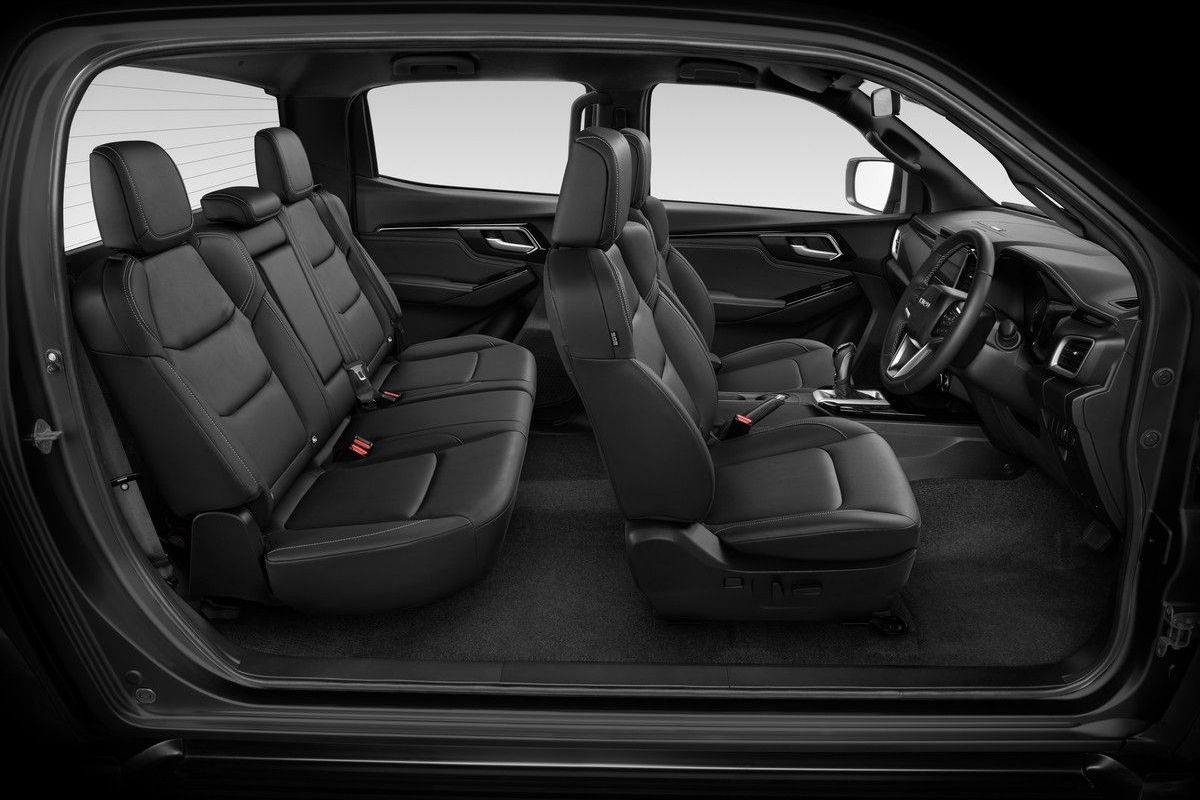
The interior of the new D-Max makes a huge leap forward in terms of design, technology and general comfort features.
Whereas the current D-Max’s interior design well-and-truly shows its age, the new model’s smartly-finished cabin is generously equipped with comfort, convenience and connectivity features. Seeing that the specification of South African-spec D-Max derivatives are not yet finalised, take a look at the highlights…
The instrument cluster, for example, features a 4.2-inch multi-information display with a digital speedometer, which relays, inter alia, Satnav directions on high-end derivatives. A 7- and 9-inch touchscreen infotainment system are available, which are Android Auto and Apple CarPlay compatible with voice activation.
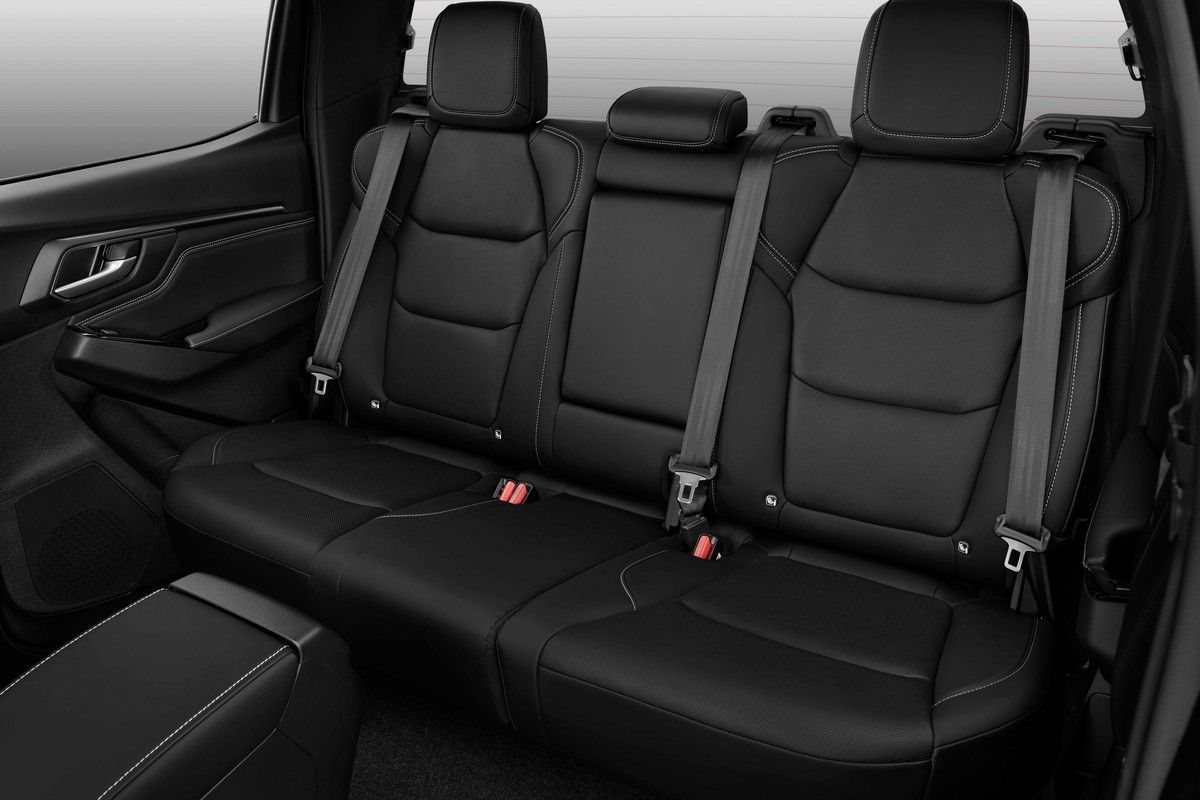
Top-of-the-range D-Max derivatives are likely to feature leather-trimmed interiors adorned with metal-look and piano black accents, an 8-way electrically adjustable driver’s seat (with lumbar support), dual-zone climate control with additional vents for rear occupants and an 8-speaker surround audio system.
Nice-to-have features include a comfort turn indicator function, automatically activated lights and -wipers, the latter with automatic high-beam control. Isuzu has also availed a new Smart Key that provides, remote engine start, keyless entry and push-button start, welcome light and walk-away door locking. Remote engine start allows the driver to remotely start the D-Max, so that the dual-zone air conditioning system can cool/warm the cabin before a journey.
In terms of the safety specification, the new D-Max offers a lot more features than its predecessor – which is to be expected, given how long the current range has been in production! Over and above ABS, EBD with brake assist, traction and stability control, hill-start assist, surround parking sensors and a reverse-view camera with integrated parking lines. The Isuzu can have up to 8-airbags including a knee- and centre airbag.
A standout feature of the Australian-spec model is the Intelligent Driver Assistance System, which utilises a Hitachi 3D stereo camera to offer the following safety systems: autonomous emergency braking with turn assist, adaptive cruise control, traffic-sign recognition, blind-spot monitoring, rear-cross traffic alert and lane-keeping assist.
We'll bring you updates on the local specification of the next-generation D-Max as soon as we have more information. Stay tuned!
Related content:
All-New Isuzu D-Max: SA Details
2022 Volkswagen Amarok: What We Know So Far
Confirmed: Facelifted 2020 Toyota Hilux