How did Ferrari get its first-ever EV, the Luce, so wrong? Or is Ferrari right and we are wrong? Or maybe two wrongs make a right? What’s the question again?
My first response upon seeing the new Ferrari Luce was not one of disgust. In fact, I barely raised an eyebrow. Viewing that first gallery on my Instagram feed over breakfast, I thought it was just more AI slop and not worthy of any emotional investment. But then there was another post. And then a reel. And then another. I started to wonder … surely this could not be real?
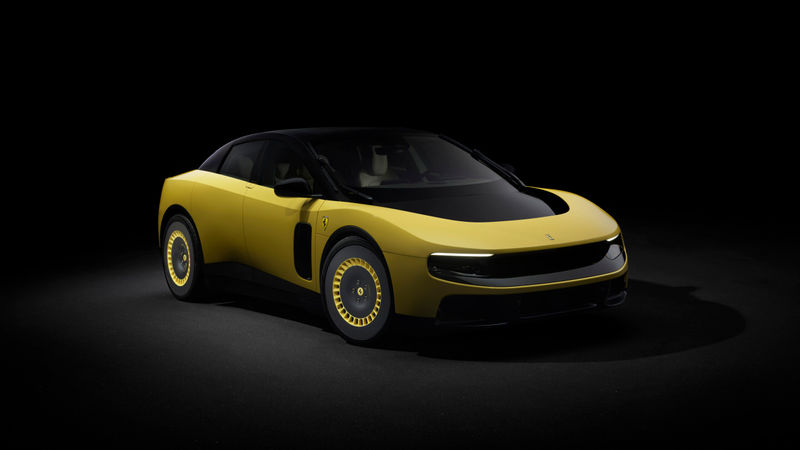
A few minutes later, the authenticity of the posts confirmed, I was immersed in the Internet’s response to Ferrari’s first-ever EV. Between gulps of coffee, I could not help but giggle, until my 14-year old daughter, who has grown up with cars, because she has grown up with me, asked me why. I showed her a picture of the Luce and told her it was the new Ferrari. She giggled, too (not at the picture, but at me, thinking I was joking), then shrugged and said, “But that’s not a Ferrari!”
That kind of response really sums up the situation. Whether we are passionate petrolheads or merely “alive”, we all know what Ferrari represents, and the Luce, quite evidently, is not that .
Ferrari’s share price slumped in the days following the Luce’s reveal, rival brands are mocking the Prancing Horse (even Kitkat and Toblerone joined in), and passionate Ferraristi are up in arms. Perhaps most concerning (for Ferrari) will be the thinly veiled criticism levelled at the Luce by its highly respected former chairman, Luca di Montezemolo. He said; “If I were to say what I really think, it would be unpleasant. I hope someone removes the Prancing Horse from that car. We risk destroying a legend. At least the Chinese won’t copy it!”
Ouch!
Why does the Ferrari Luce exist?
In the days following the Luce’s reveal, I went down many rabbit holes. Design is something that has always fascinated me. Growing up, I had real hopes of becoming a car designer, writing to the likes of Bertone and Pininfarina to gather more information. Though I did not end up designing cars, I am passionate about the subject and have invested considerable time trying to understand it. Perhaps more importantly, in my eventual career as a motoring journalist, I have met and interviewed many of the world’s top designers during the past quarter of a century or so.
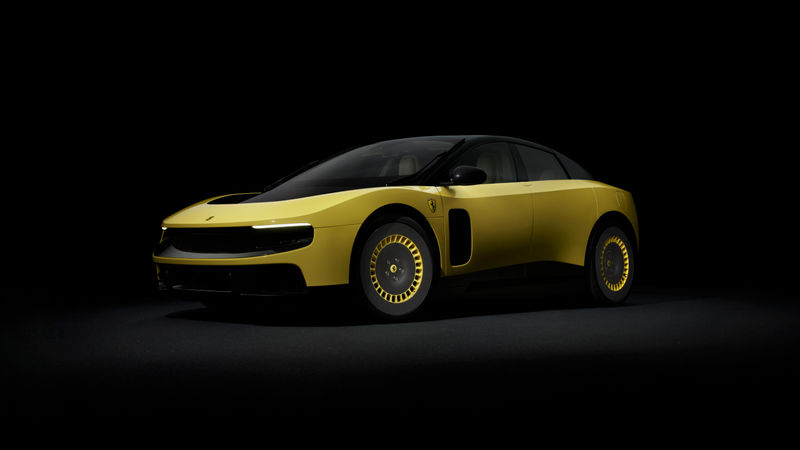
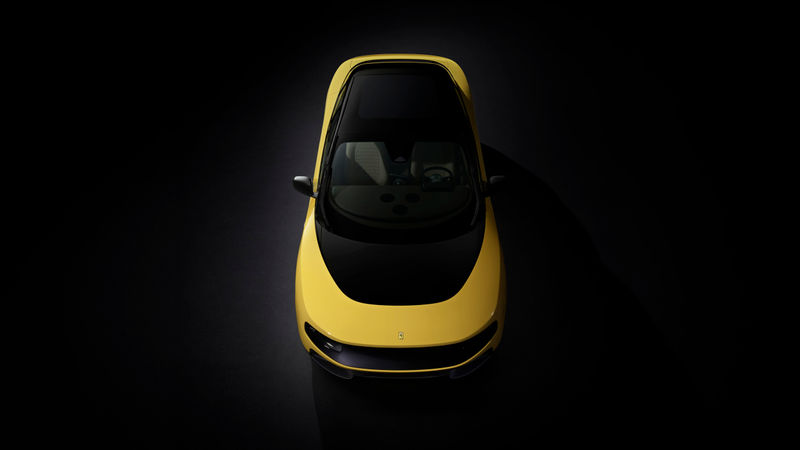
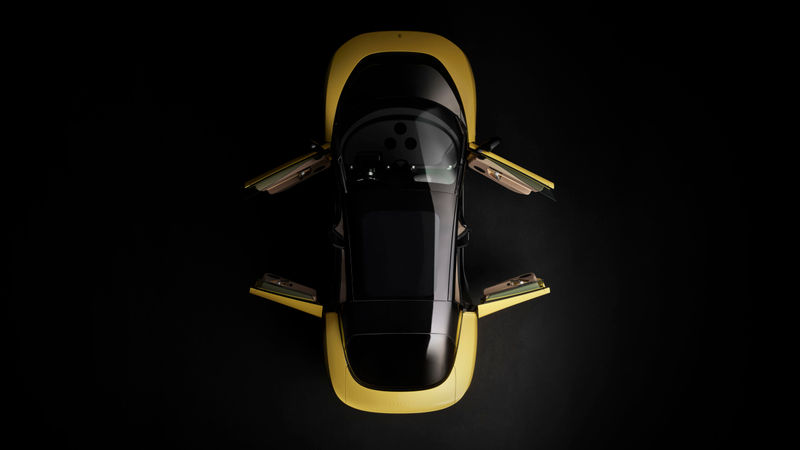
My personal view is the surfacing of the car is too simple, resulting in a lack of visual “tension”. In fact, the design surfacing is so soft and almost pillowy, that it ends up looking more like a Duplo toy car than an exotic supercar. And then there is the shape of the thing… What is it exactly, a sedan on stilts? Somehow, even with massive 23-inch wheels at the front and 24s at the rear, it still looks curiously undertyred.
The Luce also eschews the traditional cab-rearward look of Ferraris, even the Purosangue, in favour of a type of cab-forward, monobox silhouette that is generic. And then, to make matters worse, where Ferrari has added traditional design elements (such as the round rear lights), it was executed quite poorly, like an afterthought. From the rear, it looks like a 360 Modena has been covered in the unfinished clay styling buck of a much bigger car!

Classic Drive: Ferrari 360 Challenge Stradale
Reviewing a car’s design is very much like evaluating art: extremely subjective. In the case of the Luce, however, the condemnation has been near universal. Some commentators have suggested that the Luce design is polarising, which would imply there exists a similarly large support base. This does not appear to be the case; not to me, anyway.
It would seem that much of the furore around the existence of the Luce is ignited by the fact that it is Ferrari’s first-ever EV, as if electric vehicles have to be unattractive by definition. Or, that supercars can simply not be EVs. You don’t have to look very far (mostly to China) to realise that neither of those points of view is correct. BYD ’s Yangwang U9, penned by Wolfgang Egger (previously from Alfa Romeo and Audi, where he also oversaw Lamborghini) has a typical (some may say attractive) hypercar design and is also faster than the Ferrari Luce, while also being a 4-motor EV. Egger previously designed the Alfa Romeo 8C Competizione, one of the world’s most beautiful cars, of all time. That little detail is important to remember when you consider the automotive track record of the team behind the new Luce.
For the price, the Luce is simply not quick enough…
If you equate Ferraris with being the fastest, then the Luce also does not quite hit the target. Not only is the Yangwang faster to 100 kph, but so is the Tesla Model S Plaid. The Porsche Taycan Turbo S is in the same ballpark. And all three of those cars are significantly more affordable. Yes, the Luce has a higher top-end than the Porsche, but how often will you be able to reach that?
And, here’s a major issue: The Luce costs more than double the price of a Yangwang U9, nearly 3 times as much as a Taycan Turbo S, and about 6 times as much as a Tesla Model S Plaid (admittedly, not long for this world). So, if Ferrari supremacy to you means performance, then the Luce misses the mark, particularly at the price.
And yes, price is a particularly important factor here. The Luce will sell from around €550 000, but base pricing in the world of Ferrari means preciously little. We expect optioned vehicles to land in South Africa from around R15.0 million. Even for a Ferrari, that is a lot, and quite similar to the Purosangue, which suddenly seems quite a conventional Ferrari with its V12 engine (even though it caused quite a ruckus itself when it was launched, being the first-ever Ferrari SUV).
So the Luce is not the fastest EV, nor does it offer the best range in the world of performance EVs (around 530 km). Quite clearly, it is also not the prettiest.
Does the Luce exist to guarantee the future of V8s and V12s?
If anything, the introduction of the Luce appears to be a very calculated move taking into account a number of potential market scenarios. Firstly, regulatory pressure is a real and ever-tightening threat. Global emissions mandates, particularly in Europe and China, heavily penalise manufacturers that do not lower their fleet-wide CO 2 averages. The situation could become even more dire and, if a car company is not technologically prepared, it may well not be able to respond in time.
By launching an exotic 122 kWh fully electric vehicle, Ferrari creates “carbon credit” headroom. Every Luce sold offsets the emissions of the high-margin, track-focused V8s, V12s, and hybrids in its line-up. As long as this works, Ferrari can continue developing and selling the cars we all associate with the Prancing Horse brand. I can get behind this approach.
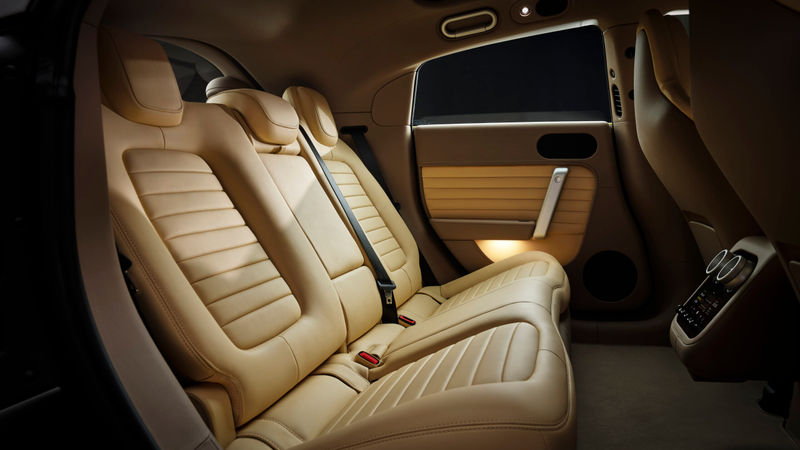
Another reason offered is that the Luce is explicitly aimed at a different demographic. Ferrari has stated that the Luce is designed to draw in buyers who would not necessarily buy a traditional Ferrari. Think wealthy, tech-forward purchasers (particularly in Asia) who demand zero emissions and absolute daily usability (hence the 5-seat layout), but still want extreme luxury and prestige. Manufacturing cars is a business, after all, and I can appreciate that extending your portfolio of customers beyond those wanting a weekend car is attractive. But we are, in my view, starting to tread on thin ice here already…
That said, the above are 2 facts of life that I can live with, even though it is clear that Ferrari is admitting in the process that it can’t match its much more affordable rivals in terms of performance, so instead has focused almost wholeheartedly on offering exclusivity, largely the result of the heady price and, um, “special” appearance.
What I can not accept, however, is that the Luce is just a horrible piece of (exterior) design that is alien to everything that this storied brand represents.
In the absence of Pininfarina
Ferrari first entered into a collaboration with famed Italian design house Pininfarina in 1951. Some of the world’s most celebrated automotive designs resulted from the partnership, including the original 250 Lusso, Daytona , 308 GTB , Testarossa, F40 and many more. The relationship started coming to an end in 2011 with the announcement of Ferrari’s in-house design studio. In 2015, Pininfarina was sold to Mahindra…
At the helm of Centro Stile Ferrari was (and is) Flavio Manzoni, who said, “The presence of the design centre in the factory is really important because there are meetings every day with engineers, aerodynamicists and economists to converge, step by step, on the best shape possible.”
That’s all good and well, but I fear in the instance of the Luce, the economists and, perhaps, the aerodynamicists, have had too much say. More than that, I think the risky nature of the project may have opened up Ferrari to some “foreign” influence.
Enter LoveFrom
LoveFrom is an independent, highly exclusive creative collective founded in 2019 by Sir Jony Ive, the legendary former Chief Design Officer of Apple, alongside his longtime collaborator and renowned industrial designer, Marc Newson.
Composed of a tight-knit, multi-disciplinary group of designers, the firm operates with a cloaked, minimalist mystique. It collaborates, very selectively, with some of the world’s most prestigious brands, including Moncler, King Charles III and, now, Ferrari. For those who don’t know, Ive was responsible for such products as the 2001 iPod, 2007 iPhone as well as the 2014 Apple Watch. The man clearly knows a thing or two about consumer product design. Newson, too, has designed some very desirable products, and has tried his hand at automotive styling before (Ford 021C). He also designed the achingly pretty Aquariva motorboat from 2010.
But LoveFrom is very, very thin on automotive design experience. So, why then, after going through all the trouble of divorcing yourself from the legendary Pininfarina and starting your own design house, would a brand such as Ferrari feel compelled to make use of LoveFrom’s services?
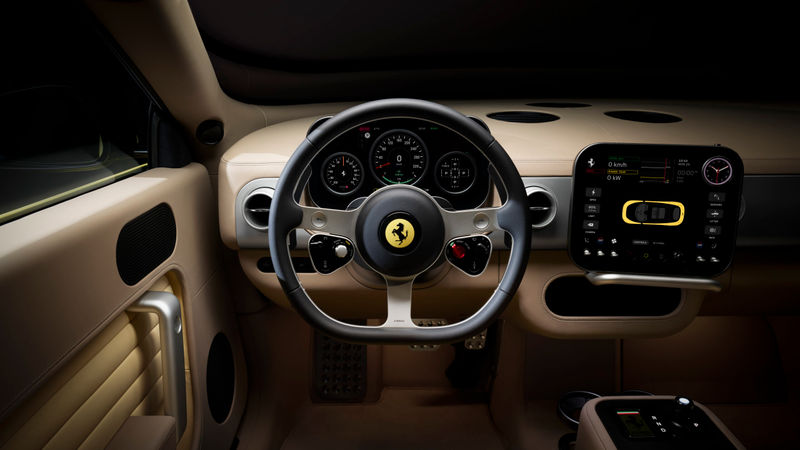
Well, you should know that Ive spearheaded Apple’s ultimately stillborn “Project Titan”, which would have delivered the American tech giant’s first car. While the Apple car was never shown, it is believed that a largely “monobox” design, a cavernous glass-house canopy and a radical interior influenced by the company’s other devices would have been trademark design cues. When I look at the Luce, it does not feel a massive stretch to consider it an Apple car rather than a Ferrari.
The loudest voice in the room
I have never met Ive or Newson from LoveFrom. From what I’ve read, Ive is actually quite reserved and polite, while Newson is reportedly a bit more boisterous, but widely respected. I can imagine, however, that they are both very convincing in a boardroom situation. They also have a lot of “unfinished business” from the Project Titan days.
In a situation where radical change is the request, and you are a storied, legendary brand, I do believe that a proposal by the likes of Ive/Newson would have been incredibly hard to ignore by the Ferrari decision makers. In fact, it reminds me a little of the situation at BMW back in the ‘90s and early 2000s…
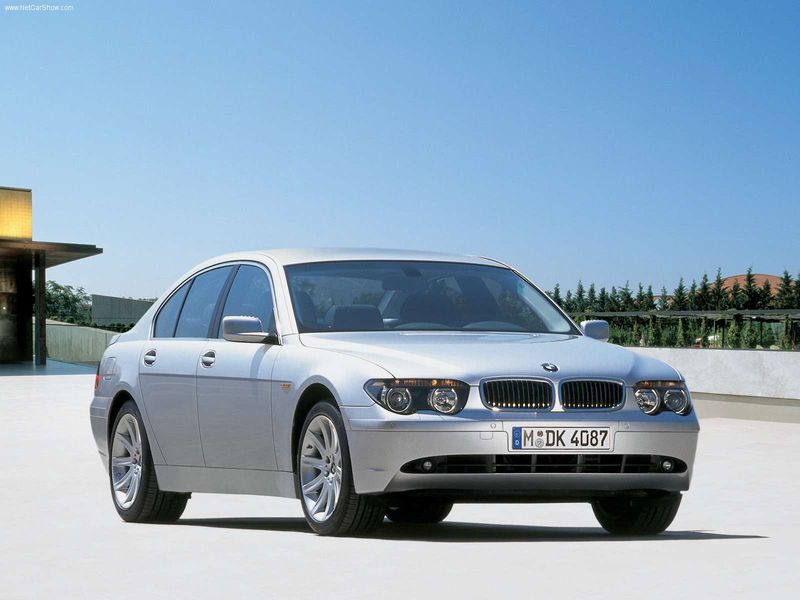
When Chris Bangle joined BMW in the early ‘90s, the German brand’s cars were criticised for always evolving very carefully, and having such conservative, “stoic” horizontal structure. One of my very first overseas car launches was to cover the reveal of the infamous BMW 7 Series E65, the so-called “Dame Edna”. I had seen images of it prior to the night of the big uncovering and was convinced it was appalling.
And yet, as Chris Bangle walked me around the car and explained every line, I felt convinced that he was 100% correct, albeit only for a while. Bangle was a fantastic, convincing talker, a Methodist minister who could, indeed, preach! Back then, co-workers and readers of CAR magazine asked me how BMW could let a car like the E65 become a reality. The truth is that, when accomplished oration, ego and undeniable expertise combine, it can become a very difficult force to resist.
If I look at the Ferrari management right now, seemingly devoid of an equally strong opposing ego (such as former chairman, Luca di Montezemolo) and defined more by cold objectivity than passion, I can understand LoveFrom’s “proposal” getting the nod. On paper, it makes sense. The ingredients are there.
Except for one critical thing: desirability .
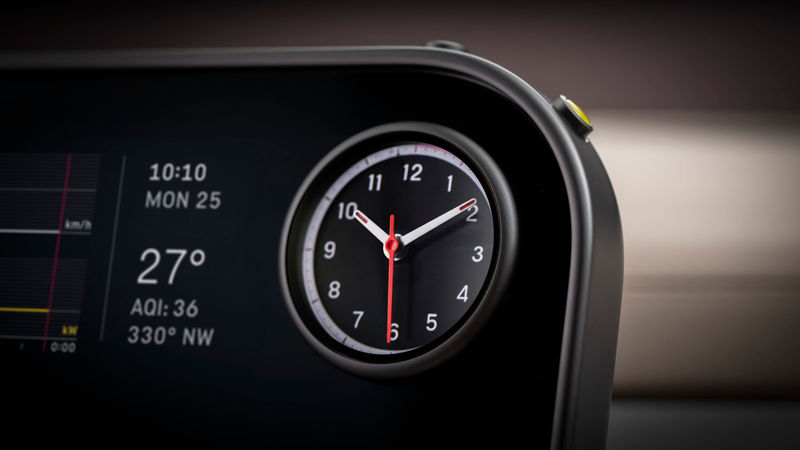
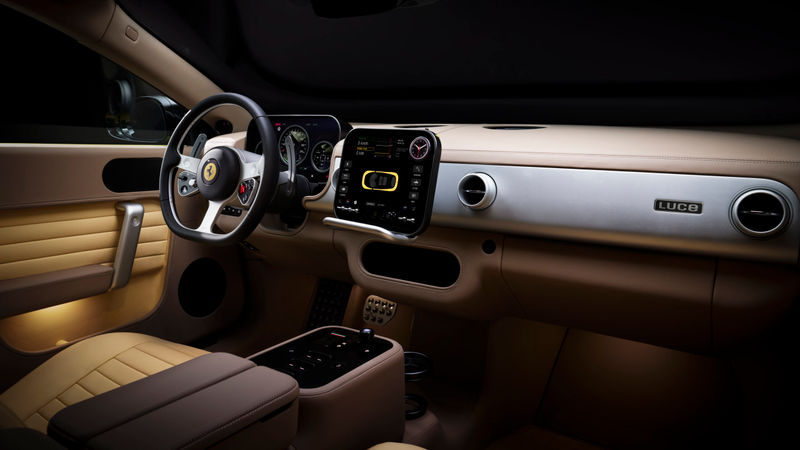
Now, don’t get me wrong; it’s not all bad news. I like the interior of the Luce. It is where LoveFrom’s expertise shines. I wouldn’t mind the Luce’s interior influencing all modern-day and forthcoming Ferraris. It’s that attractive. The way it takes iconic Ferrari design traits and makes them function in a modern way is truly impressive.
The absence of desirability…
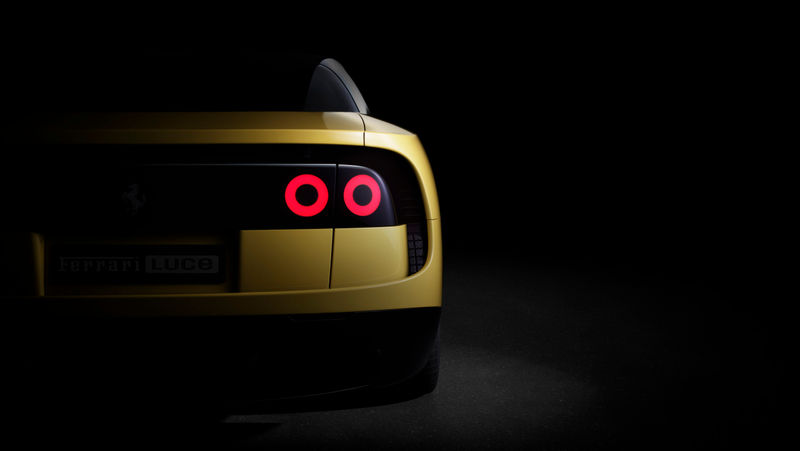
But when it comes to a Ferrari, desirability must also be present on the outside. It’s a non-negotiable.
Leonardo Fioravanti, the designer behind the Daytona, 308 and F40, once said: “A Ferrari must be both art and science, otherwise it is just another fast car.”
I’ll take it a step further. Whether you are an old Italian man, an American influencer, or a 14-year old South African teenager commenting over breakfast, a Ferrari means something very specific, and it is pretty much the same thing to everyone. Very few other brands have this singular brand identity. A Ferrari is not a car. A Ferrari is desire. It is inspiration. It is what we dream about rewarding ourselves with for an incredible achievement. Ferrari is mythical. And much of that is grounded in what a Ferrari looks like.
Yes, beauty may be in the eye of the beholder, but desirability is not something you only observe. It is not merely about aesthetics. It is how those aesthetics make you feel.
And the Luce, I’m sad to say, just makes people feel … meh .