Is there finally an EV that could convince more South African motorists to buy a “fully electric” car?
Few models are as broadly marketed, yet generally unaffordable, as (battery) electric vehicles (EVs). Luxury vehicle brands champion their electric vehicles as transformative – the culmination of corporate mission statements and excellent R&D resourcing. Battery cars are purported to be saviours of humanity and guardians of personal transportation freedom in a future where (tailpipe) carbon-emitting vehicles will ostensibly become impossible to own in most global cities.
But that’s not really true. Not even close. Electric vehicles, especially in South Africa, are outrageously expensive and rare. They constitute 1% of the vehicle market and are only attainable by the elite 1% of earners. What’s the average electric vehicle purchase price in South Africa? Not far off R1.5 million. That’s hardly Volkswagen Polo Vivo or Toyota Corolla Cross money, is it?
Fewer Rands – but more kilometres of range
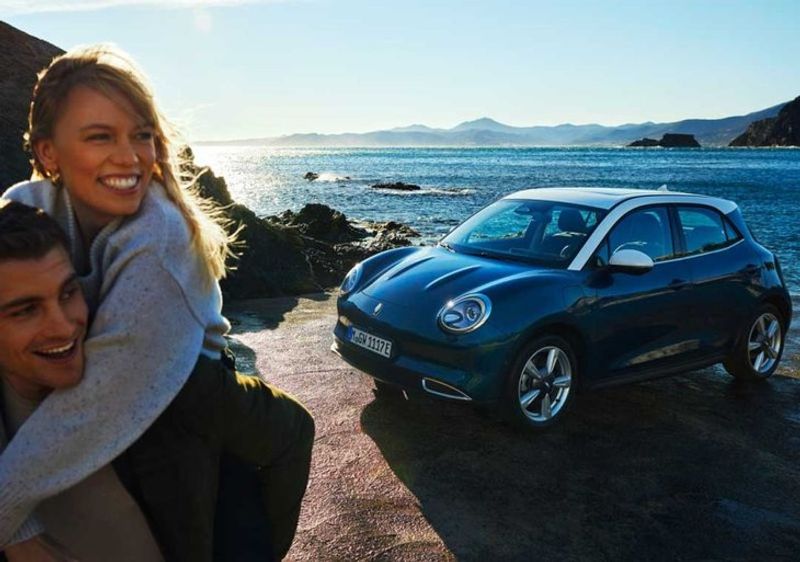
Joy is a cheap(ish) EV, with a proper range for driving beyond the city limits.
Would South African middle-class buyers embrace an affordable electric vehicle? Five years ago, the answer to that question was “maybe?” But even as the Eskom power crisis escalates, triggering greater self-generation independence, South Africa has an increasing number of motorists that are interested in buying hybrid and battery-electric vehicles .
What’s a reasonable electric-vehicle price point? The most affordable electric car in South Africa is Mini’s Cooper SE , which retails for R723 000 before on-road costs. But it has a limited range (a claimed 217 km). What if there was an electric vehicle that’s potentially cheaper than Mini’s Cooper SE EV, with more than double its range? Wouldn’t that be the ideal model to finally power authentic domestic demand for battery vehicles?
The most likely product candidate for an affordable South African market EV is Chinese . That’s hardly surprising, as China is by far the world’s largest EV market and a technology leader in battery-powered vehicles.
GWM, Haval and now… Ora
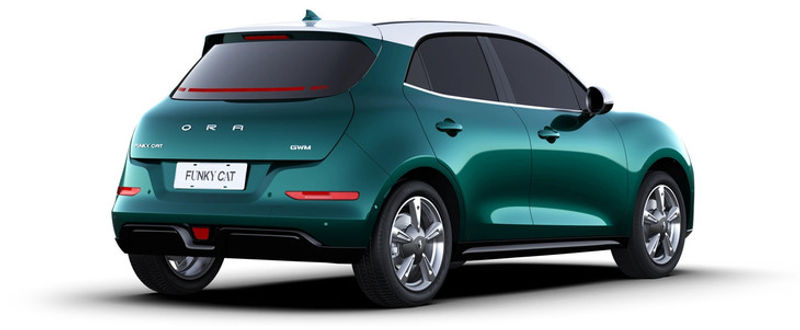
Looks decent, rolls on 18-inch wheels and comes with a lot of kit.
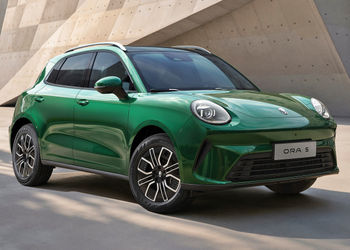
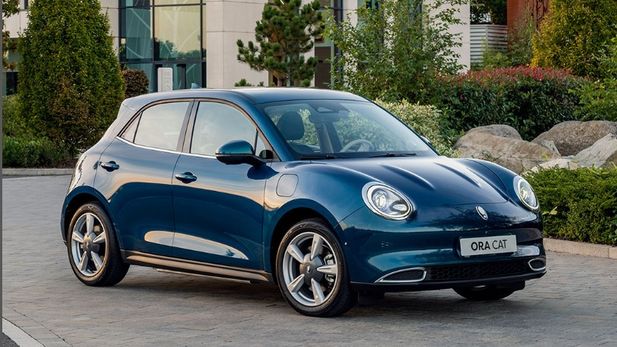
Ora Cat – a new product venture from GWM’s electric vehicle division – is the hatchback in question. It is about the same size as a Volkswagen T-Cross and built on a dedicated EV platform instead of being a converted ICE design. That means it boasts an optimised cabin architecture and excellent space utilisation, for enhanced passenger comfort. It doesn’t look terrible, either, with more than a trace of Porsche 911 regarding the headlamp design and frunk proportions.
But the Ora Cat’s technical specifications are authentically convincing. GWM’s product planners and design engineers scrutinised true EV usage and found that performance was notably less important than range. This is something that many of us already know, but the motor industry is finally recognising it too: the overwhelming majority of consumers that are considering EVs are not interested in supercar-rivalling 0-100 kph times; they want to know how far they can drive.
The Ora Cat isn’t a light vehicle for its size (1 540kg), but that’s about the same weight as a turbopetrol-powered small SUV. Power and torque outputs are mild, at 126 kW and 250 Nm; performance is sedate, but the range is impressive.
EV buyers more concerned about range than performance
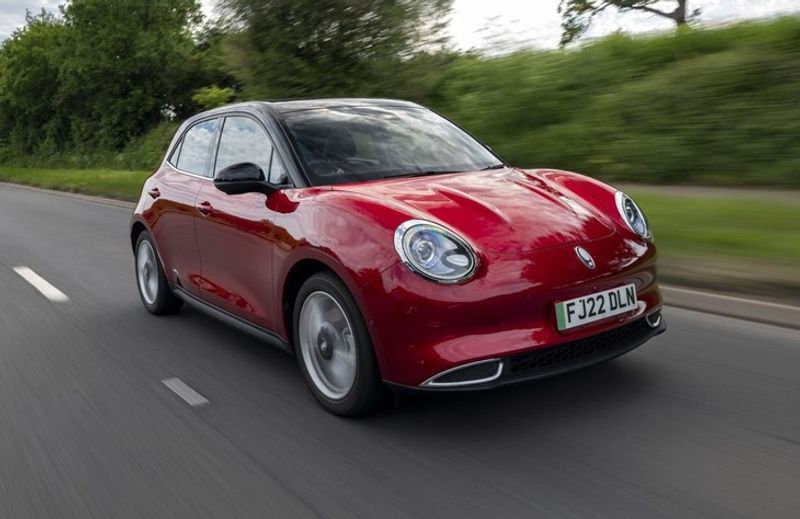
The Ora Cat has some Porsche 911 cues at the front. That’s probably what VW should have done – adopts a retro DKW design.
GMW’s Ora Cat is configurable with two battery pack sizes, 47.8- or 59.7 kWh, which provide estimated ranges of 400- and 500 km respectively. Even the smaller battery option delivers a WTLP driving range of 310 km. To contextualise how impressive that is, consider that, according to those who have first-hand knowledge, the Mini Cooper SE’s real-world driving range is well under 200 km.
The Cooper SE is smaller and less practical than an Ora Cat. Granted, the Mini offers superior performance, but its range is significantly shorter than that of its Chinese rival. And in the market for EVs, range is currency.
An energy source designed for durability
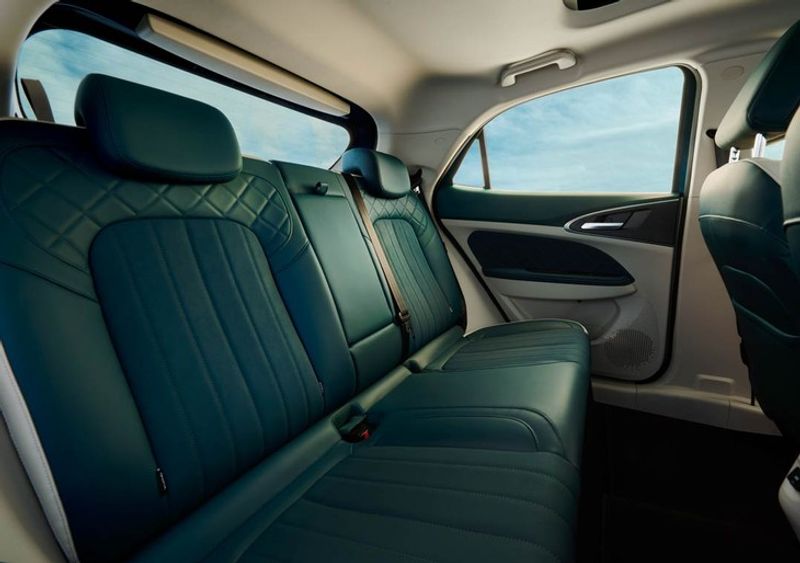
A contrasting roof and cabin colours are the only options with this Chinese EV.
And then there’s the Ora Cat’s battery chemistry. What trick camshaft phasing and variable geometry dual-stage turbocharging was to petrol and diesel engines, battery chemistry is to EVs. And if you are a car fan, it’s time to recognise that variances in battery chemistry have an enormous influence on the efficiency of an EV powertrain.
Unlike European luxury-brand EVs , which mostly run on lithium-ion battery packs, the Ora Cat uses a lithium iron phosphate chemistry. And yes, that’s the same chemistry that Tesla pivoted to earlier this year. What’s the advantage of lithium iron phosphate? Reduced cell degradation over time.
Disadvantage? The power density is less potent than lithium-ion. That matters if you are marketing a 300-kW luxury EV, but not so much when it’s an affordable family EV with mild performance expectations.
Battery confidence at a low price
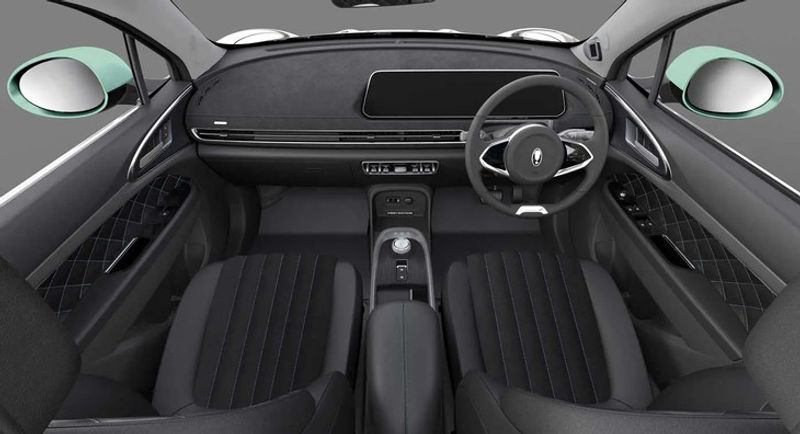
The Ora Cat cabin is simple and roomy, for passengers. But a bit tight, on luggage space.
Potential customers for GMW’s Ora Cat will be more mindful of recharging speeds and battery-cell life over time, than a few missing kilowatts of power, due to the hatchback’s lithium iron phosphate chemistry. GWM is so confident of its battery sourcing quality that the Ora Cat is marketed with a 5-year unlimited mileage warranty, with the battery warrantied for 8 years/160 000 km.
At what price point would the Ora Cat be offered if it was delivered to your local GWM dealer tomorrow? In the UK, the 47.8 kWh battery version sells for the equivalent of R600 000, which is much less than Mini’s Cooper SE EV , which retails for the equivalent of R700 000, before options. And, as is customary for most Chinese-made passenger vehicles (some bakkies too), the Ora Cat has a rather comprehensive standard specification.
Based on the model offered in the UK, the Ora Cat comes with inductive smartphone charging, a pair of 10.25-inch display screens (one for infotainment, the other for driver information), and full Apple CarPlay and Android Auto integration. Comfort features include dual-zone climate control and over-the-air vehicle updates, preventing the administrative burden of unnecessarily visiting a dealership.
Driver-assistance and safety technology features include adaptive cruise control, surround view cameras, autonomous braking with pedestrian and cyclist detection, LED headlights (with high beam assist) and lane keep assist. The only option? A dual-tone paint finish.
Is this the perfect South African EV spec?
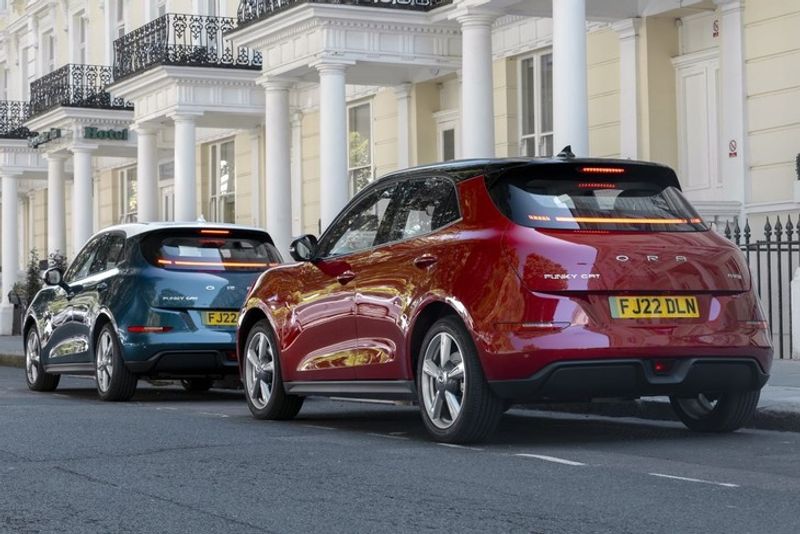
There are no exposed taillights; the Ora Cat’s brake and indicator illumination are all behind the tailgate glass. Clever.
The GWM Ora Cat has cute styling and very impressive claimed ranges. Its 0-100 kph performance of 8.3 sec isn’t startling, by EV standards, but should give the hatchback a decent turn of speed when required, for urban driving.
Recharging performance is great, too, with the battery levels rechargeable from 15-80% in only 40 minutes, when using an 80-kW DC fast-charging station.
Debits? The luggage space could be better. Although the Ora Cat is built on a dedicated EV architecture, 228 litres of luggage space isn’t amazing for a vehicle 4.25m in length and about the same size as the T-Cross, which has 385 litres of luggage capacity.
If GWM can market the Ora Cat at its R600 000 European launch price in Mzansi, South Africa’s EV market could easily quadruple in a year…
Related content:
Toyota RAV4 vs Haval H6: Which is the better hybrid?
Chinese brands that have thrived since returning to SA
How Hyundai became the world’s 3rd-biggest car company
Rising interest rates hike up car payments, but depreciation’s the killer