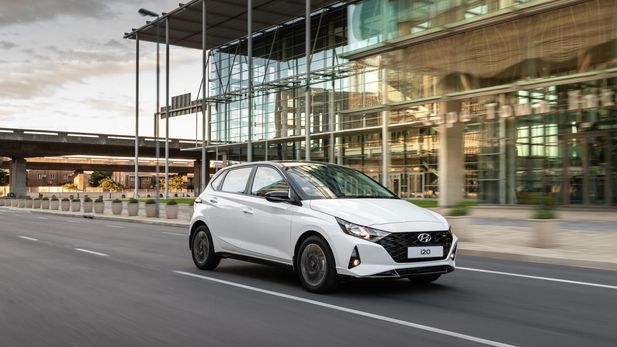

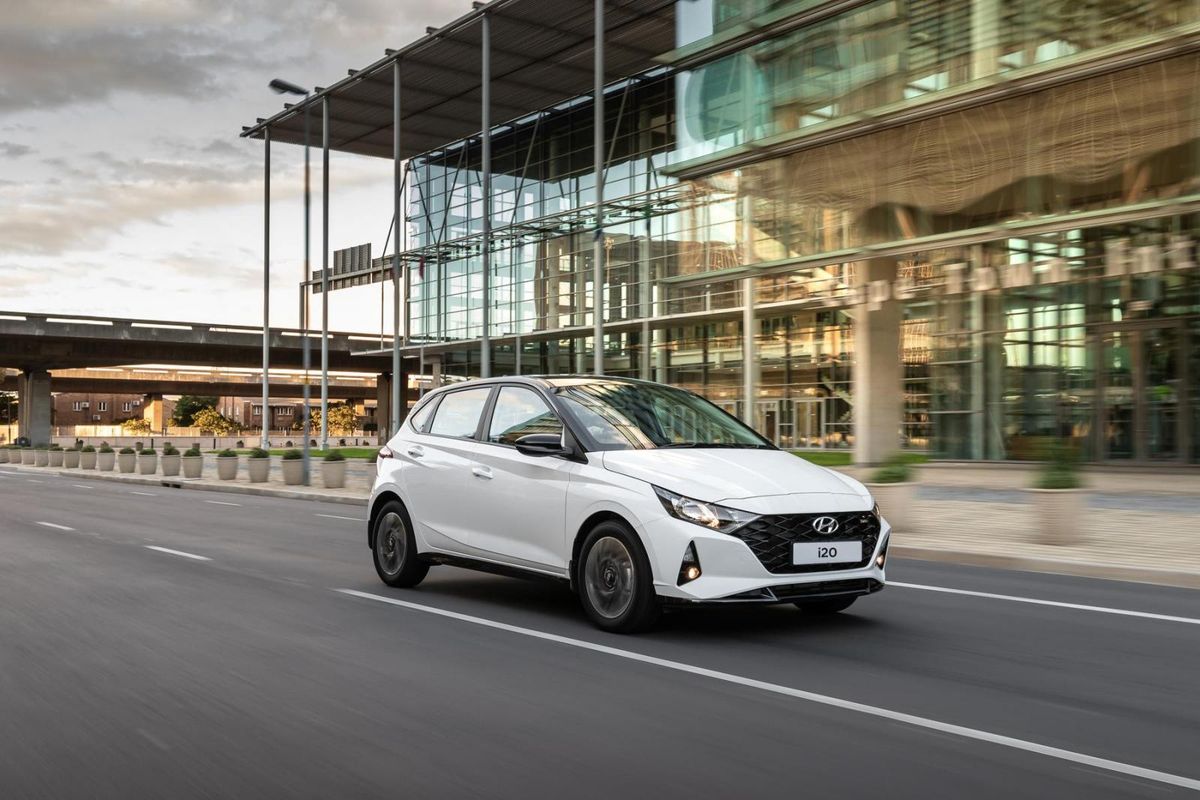


Hyundai has launched its new i20 compact hatchback in Mzansi. We got behind the 'wheel of the Korean firm's Volkswagen Polo fighter to see if it's any good.
Since 2009, when the Hyundai i20 debuted in South Africa, the Korean firm has sold a staggering 106 712 units of its compact hatchback in the Republic. Sales of the 1st-gen model, which was offered until 2014 , alone totalled 67 539. The 2nd-model that replaced it has now been superseded by the all-new, distinctively styled i20, which features an expanded line-up, including turbopetrol derivatives.
The 5-door compact hatchback segment still represents a considerable chunk of the new vehicle market; there are quite a few fresh contenders in the shapes of the newly-arrived Opel Corsa, Peugeot 208 and Citroen C3, but Hyundai nonetheless has the segment leader, the Volkswagen Polo, in its crosshairs. Other noteworthy rivals include the Ford Fiesta , Kia Rio , Mazda2 , Nissan Micra and Toyota Yaris .

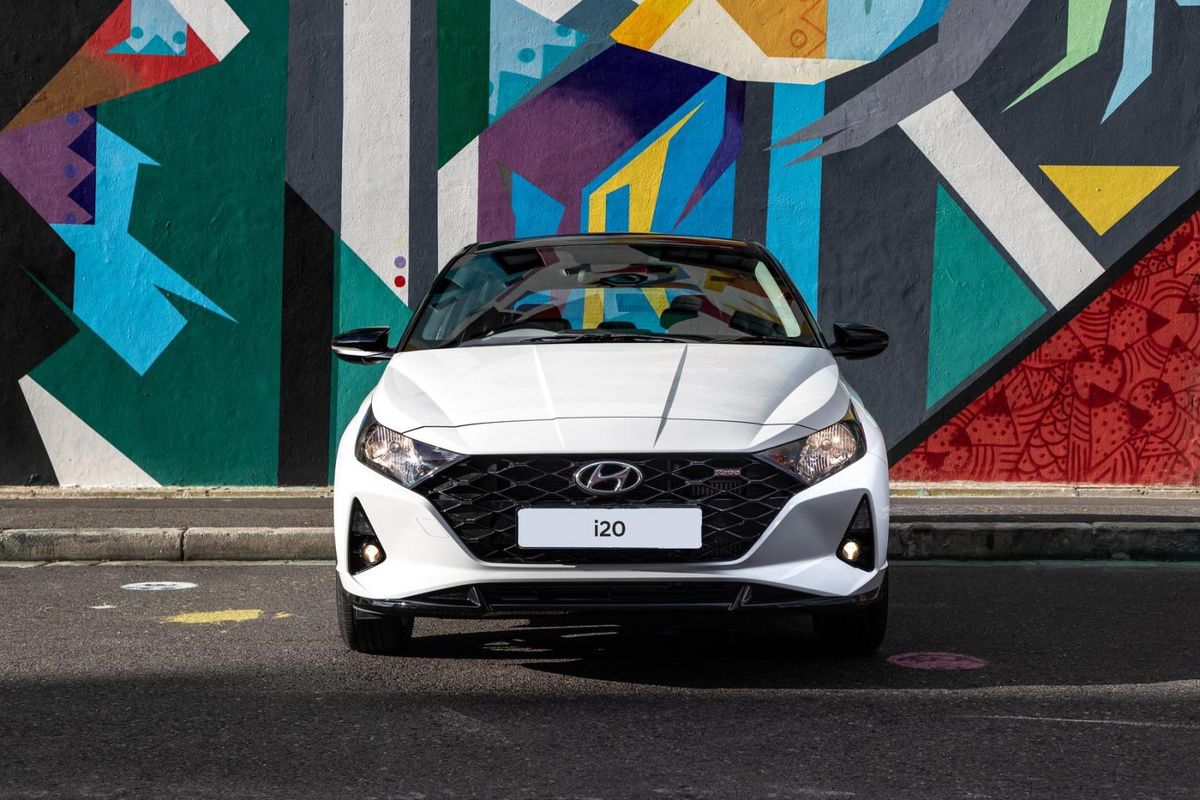
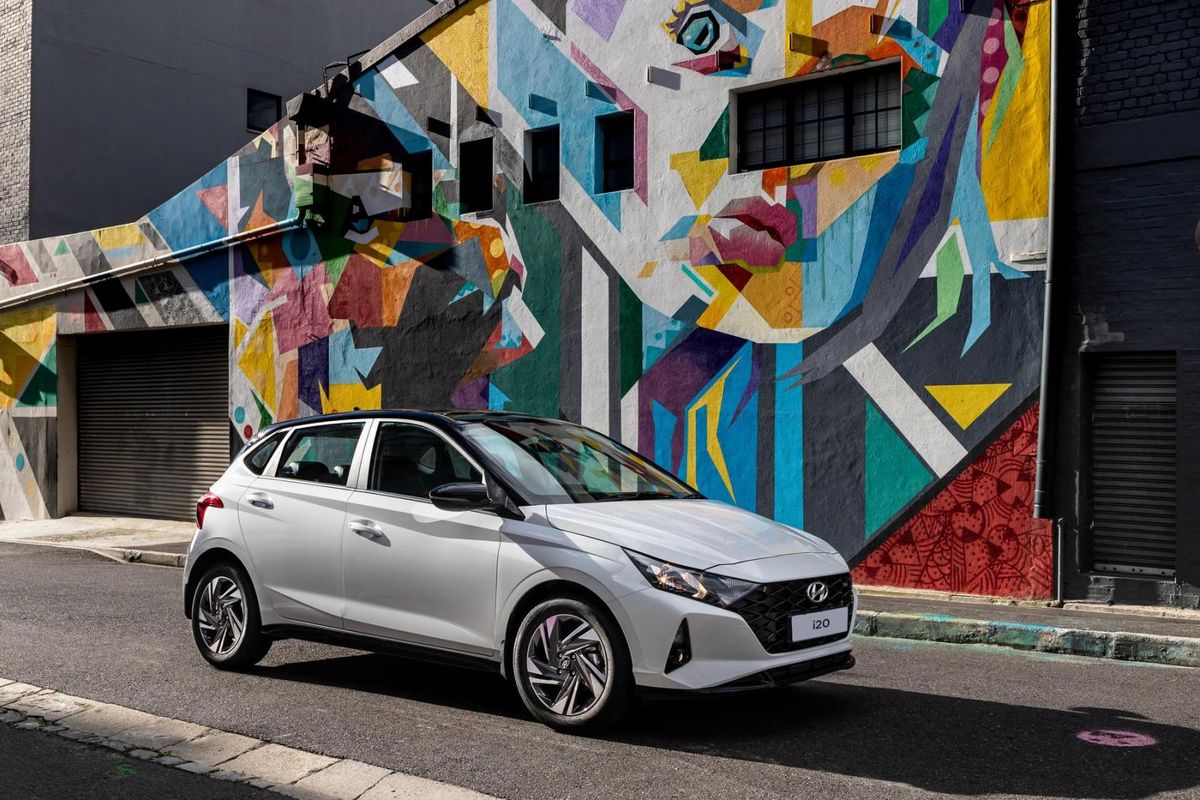
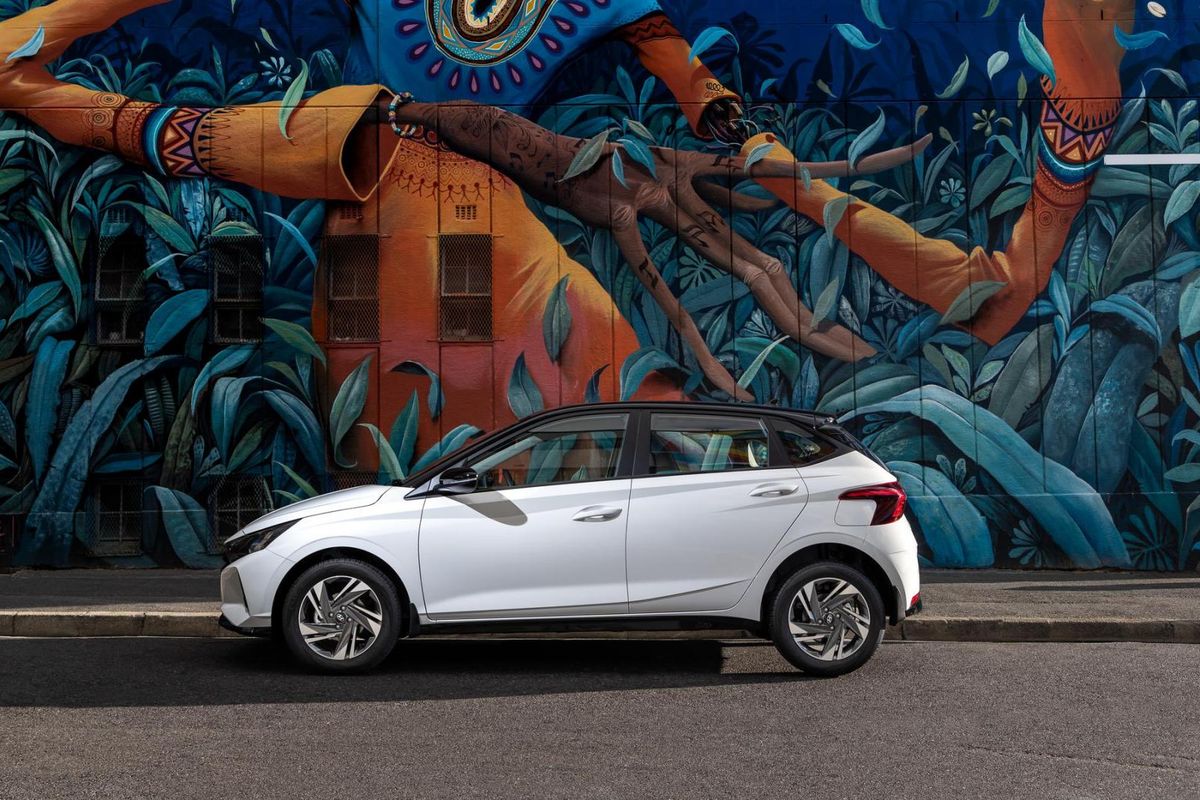
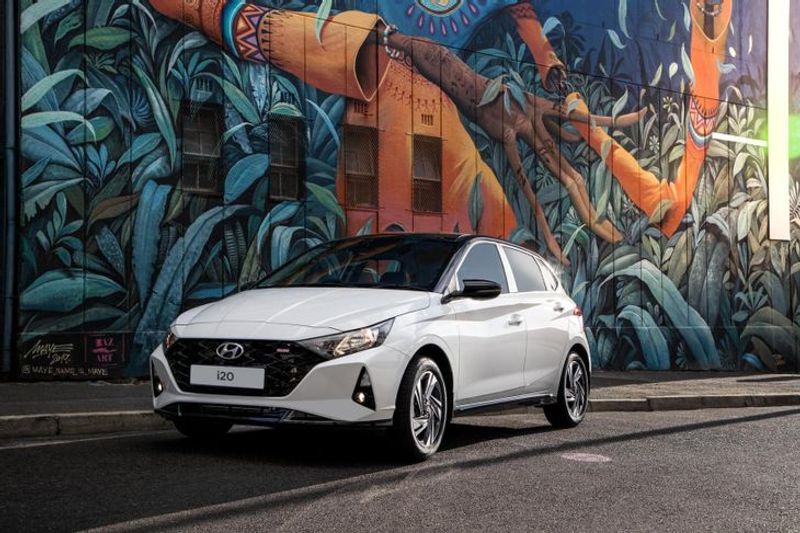
The styling of the Hyundai i20 is quite out there compared to the predecessor.
Like its comparatively conservative predecessor, the new Hyundai i20 is built in India. The newcomer is longer, wider and offers a bit more ground clearance than before. The cabin dimensions have also increased slightly (to free up more shoulder room and rear legroom for occupants), while the load bay capacity has grown to a claimed 311 litres by virtue of offering more depth, width and height.
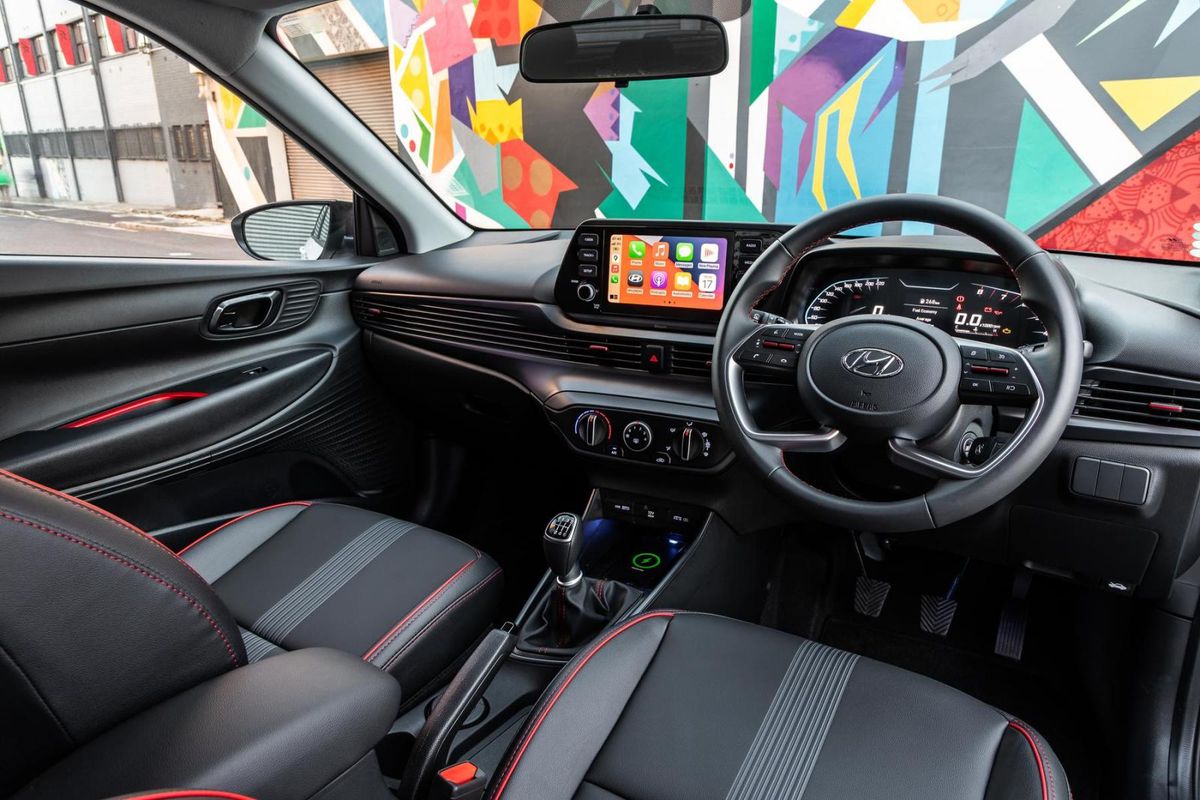
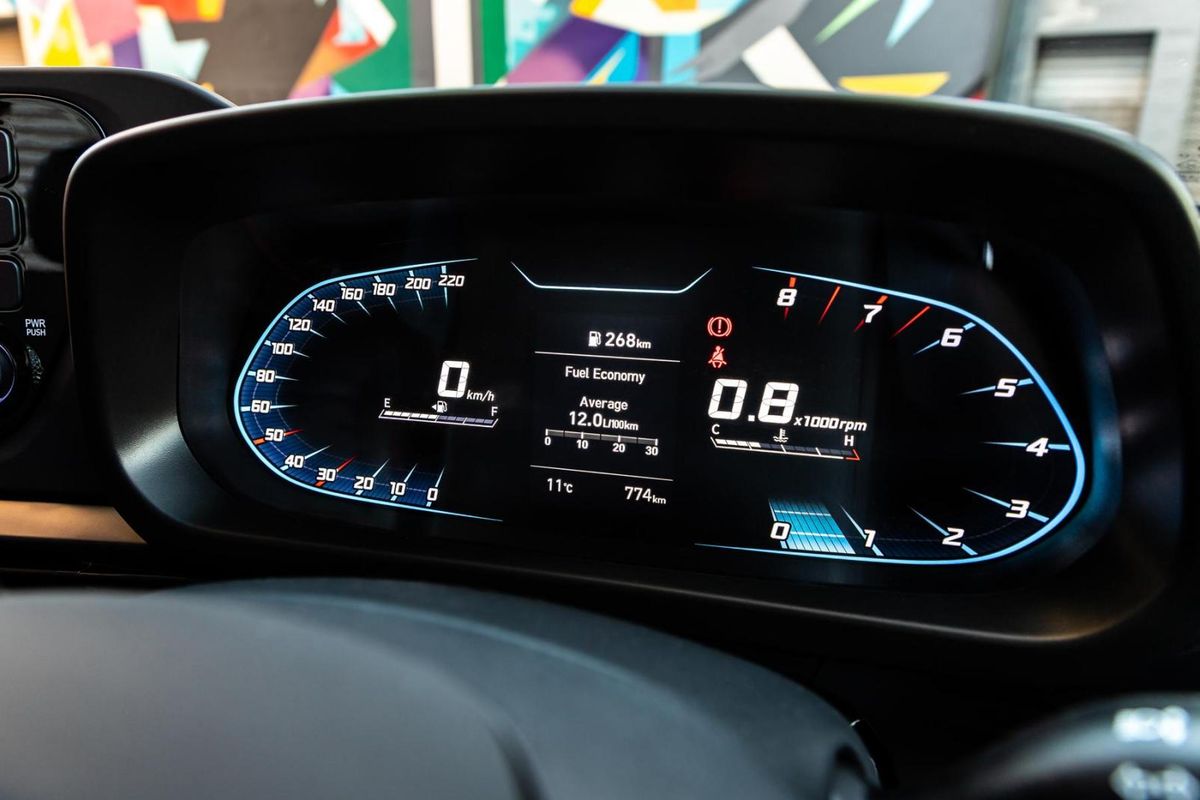
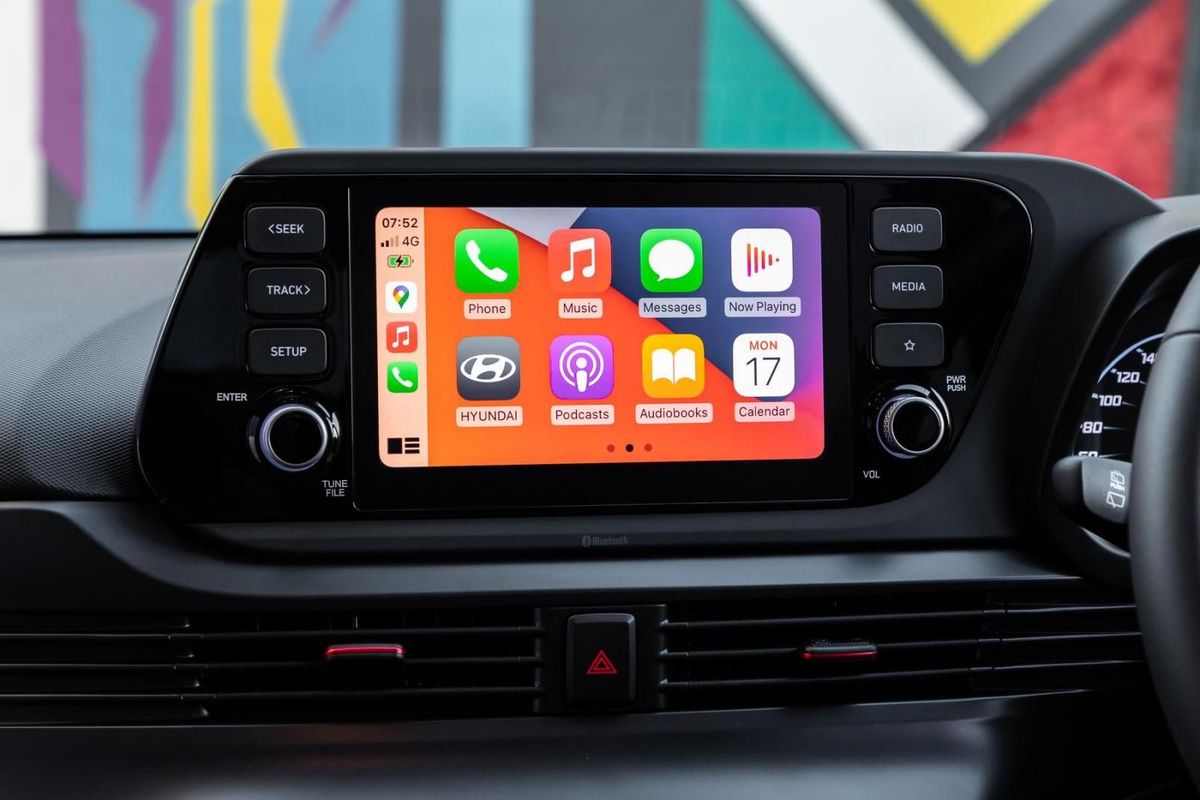
The cabin, especially the fascia, has been significantly modernised. The dashboard looks very sophisticated thanks to the neat integration of Hyundai's proprietary infotainment unit, which neatly flanks the instrument binnacle. The touchscreen, meanwhile, is complemented by digital instrumentation, which has replaced the previous i20's traditional analogue dials.
There are 2 grades on offer: Motion and Fluid. All derivatives come with daytime running lights, electric windows, Apple CarPlay/Android Auto compatibility, rear parking sensors, a reverse-view camera, auto headlights and aircon.
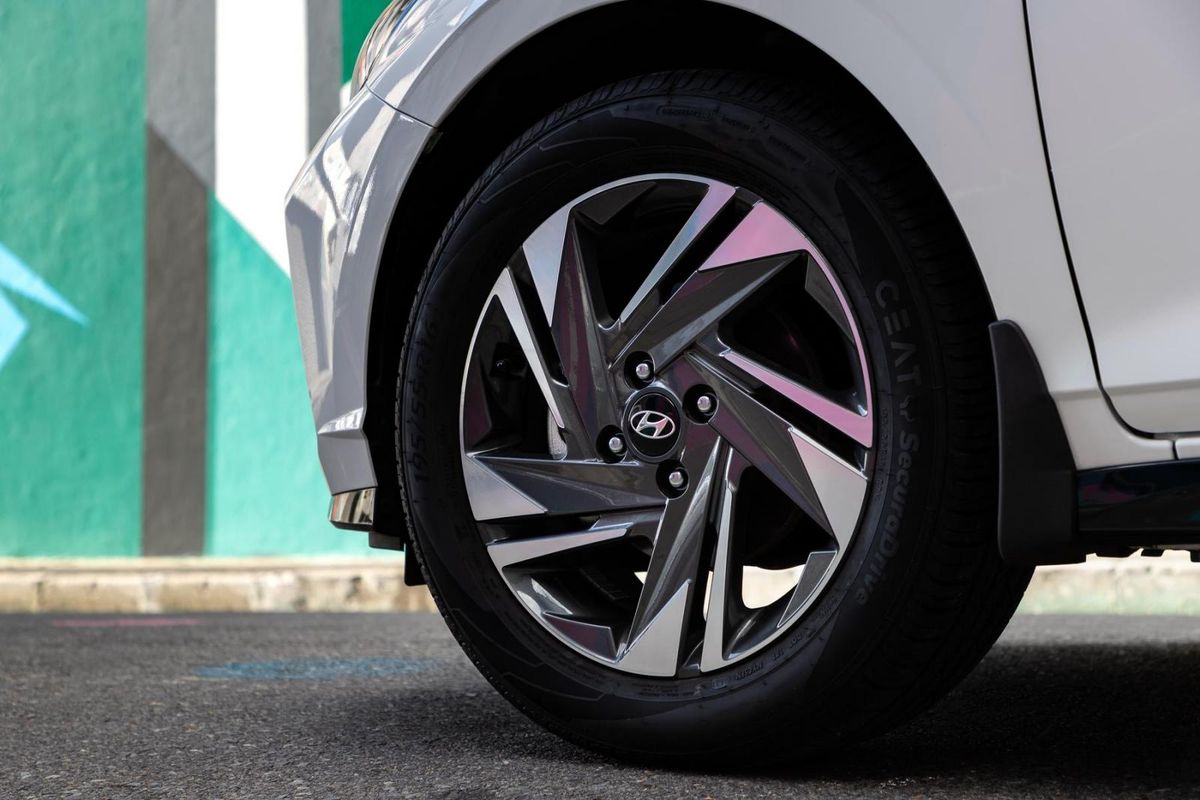
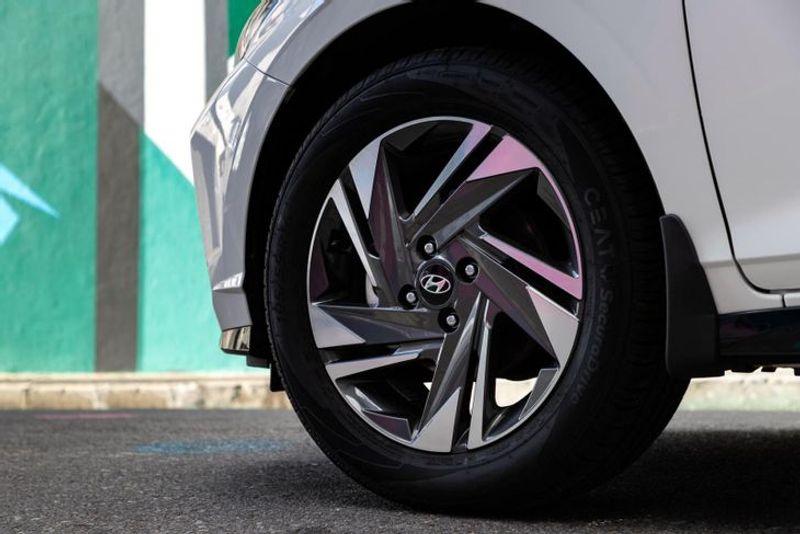
The Motion has 2 airbags and 15-inch steel wheels, while the Fluid features 16-inch alloys, another 2 airbags, front fog lights, a wireless charging pad, cruise control, electric folding side mirrors, leather upholstery and leather-trimmed steering wheel and gear knob.
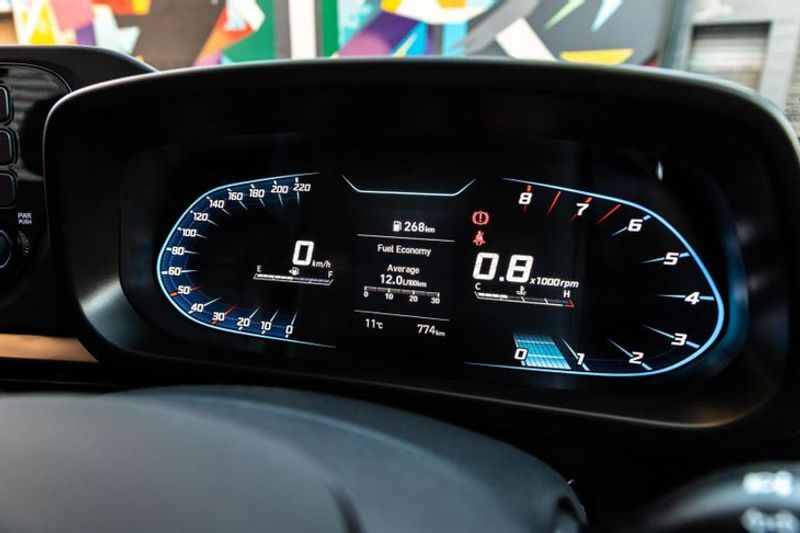
A digital dashboard is available across the range
Hyundai i20 engine line-up
Hyundai offers its new i20 hatchback with a range of petrol engines. The 1.2- and 1.4-litre naturally aspirated 4-cylinder petrol engines are carried over from the previous model. These two powertrains produce 61 kW and 115 Nm, and 74 kW and 133 Nm respectively. The 1.2-litre is paired with a 5-speed manual gearbox, while the 1.4-litre is sold exclusively with an automatic transmission.
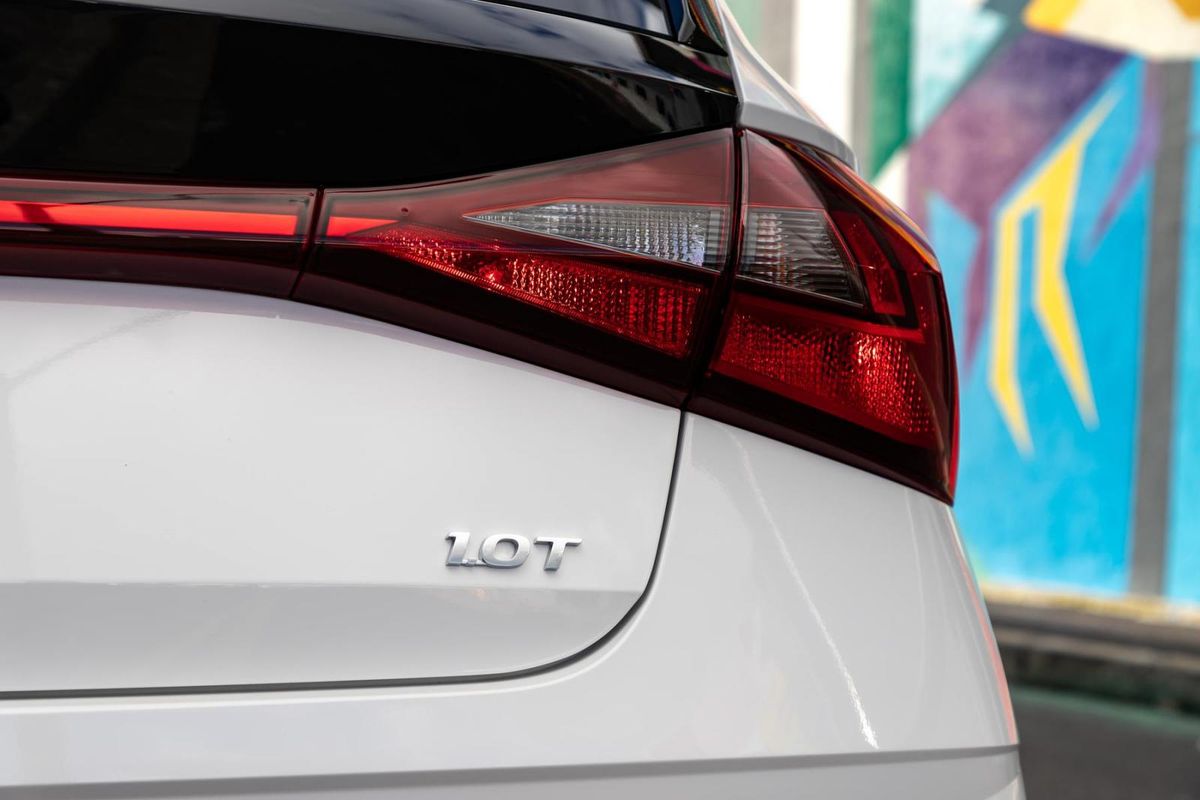
However, a new 1.0-litre turbocharged 3-cylinder engine, which develops 90 kW and 172 Nm, has been added to the range to take the fight to the forced-induction segment leaders. The motor is offered in conjunction with either a 6-speed manual 'box or a 7-speed dual-clutch automatic transmission. Whereas the previous-generation i20 couldn't match the mechanical sophistication of rival offerings, many of which had more flexible downsized turbocharged powertrains, this is no longer the case… The all-new i20 looks advanced and the new motor in the top derivatives delivers more than enough performance.
What's it like to drive?

There's far more engagement when it comes to driving the Hyundai i20
We drove both manual and auto versions of the 1.0-litre 3-cylinder turbopetrol derivatives. It's a very willing (even spirited) engine and if it wasn't for the driving rain we encountered on the launch route, we would have driven much more enthusiastically! There's a trademark 3-pot growl towards the top of the motor's rev range, which gives it a sporty sound, but it's refined and quiet when you're driving normally.
The manual gearbox has a pleasingly light shift action and the clutch pedal is simple to modulate. In fact, there's a handy shift light to tell you when to swop cogs to achieve optimal fuel efficiency, which was useful as we often forgot to change into 6th gear on long open sections of road. We did note the engine had a touch of hesitation (lag, if you will) at low revs, but this is a trait exhibited by most small turbocharged motors; once the bar on the rev counter sweeps upwards, progress is smooth and linear.
As for the automatic, Hyundai's first dual-clutch transmissions (DCT) weren't the best – the Korean brand develops and produces its own gearboxes (in case you didn't already know that), but the marque seems to have caught up nicely since then. The self-shifting 7-speed transmission in the new Hyundai i20 changes up and down effortlessly and, provided you don't make staccato throttle inputs, forward momentum is silky smooth. Shifts are quick, albeit but not as lightning-quick as those of VW Group DSG units . What's great about this setup is that the DCT ably keeps the engine in its sweet spot.
Given how automatics are becoming increasingly popular in our market (especially for those urbanites who brave congested traffic conditions every day of their working lives), we'd say the DCT is a more logical choice than the 6-speed manual. That being said, we were nonetheless pleasantly surprised by the engagement offered by the manual version of the 1.0 TGDI.
The driving characteristics of the newcomer represent a marked improvement over those of its, not to be cruel, so-so predecessor. The all-new Hyundai i20 tips the scales at just over 1 000 kg and feels nimble and sufficiently wieldy, which is refreshing. Granted, the ride quality is a bit on the firmer side, but given the softly-sprung vagueness of its predecessor, we prefer the new model without question.
It's just that much more entertaining to drive by comparison, but without being too taxing or overly involving to drive. The suspension's responses are measured and predictable, even on i20s shod with the sportier 16-inch wheels and tyres. Our test route was a genuinely perfect stretch of tarmac with very few bumps, so we'll defer the final verdict to our road test, but first impressions were good.
After we'd completed the launch route in the manual version, the indicated fuel economy figure on the i20's instrument cluster was 6.6 L/100 km, which we'd say was impressive, given our bouts of enthusiastic driving. After our stint in the DCT (automatic) derivative, we saw a figure of 7.1 L/100 km – which was also a fair result.
Flaws? Well, we would have liked a greater range of height adjustment on the driver's seat, which doesn't quite go down low enough; you end up with a feeling of sitting on the car, as opposed to in it, so the driving position isn't ideal for taller drivers. Some of the cabin materials used don't quite feel as premium as the i20's list prices suggest, but this is a criticism we often level at cars in this segment.
Summary

It's a marked improvement all round for the Hyundai i20. Game on!
While the new Hyundai i20's looks won't appeal to everyone – its bold appearance represents quite a departure from that of the previous model – the newcomer does move the game along significantly. Not only has it finally received an energetic and punchy engine to keep pace with those of its rivals, but its specification (at the price) comfortably eclipses the competition in terms of outright value.
The i20's driving manners have improved dramatically too. Indeed, this Korean compact hatchback offers a modicum of genuine driver involvement and feels far more involving to pilot than before; it's a veritable quantum leap from the 1st-generation model's insular driving experience. A sporty Hyundai that doesn't have an N badge? What is the world coming to? We like this place.
Combined with the substantial warranty and after-sales back-up (including a 4-year/60 000 km service plan) offered by the Korean brand's local subsidiary, we think there might be a short-term stock shortage of the new i20. Hyundai South Africa said that no fewer than 45 units drove off showroom floors on the first official day of sales – a strong indication of things to come, perhaps?
Evidently, Hyundai has come out swinging with its new i20. It knows that while its SUV models bring in significant sales, it still needs to have a strong offering in the compact hatchback segment and the latest generation i20 will certainly nick more than a few sales from its rivals. Whether it can match the segment-leading Volkswagen Polo remains to be seen, but that's what group tests are for, right?
How much does the new Hyundai i20 cost in South Africa?
The new Hyundai i20 is sold with a 5-year/150 000 km manufacturer's warranty and an additional 2-year/50 000 km powertrain warranty, a 5-year/160 000 km perforation warranty, 7 years' (or until 150 000 km) roadside assistance, as well as a 4-year/60 000 km service plan with intervals at every 15 000 km.
| 1.2 Fluid Manual | R289 900 |
| 1.2 Fluid Manual Two-tone | R294 900 |
| 1.4 Motion Auto | R305 900 |
| 1.0 TGDI Fluid MT | R330 900 |
| 1.0 TGDI Fluid MT Two-tone | R335 900 |
| 1.0 TGDI Fluid DCT | R355 900 |
| 1.0 TGDI Fluid DCT Two-tone | R360 900 |
Further Reading
Hyundai i20 (2021) Specs & Price in SA
Full Reveal: Hyundai i20 N with 150 kW!