
Local production of the new Isuzu D-Max was made possible by a R1.2-billion investment in the Japanese marque’s assembly facility in Gqeberha. Isuzu has a lot riding on the success of its 7th-gen bakkie, but is the newcomer good enough to rival the frontrunners in the double-cab market? And what about the upcoming arrivals from Ford and Volkswagen?
We like: Off-road ability, build quality, cabin space, efficiency, warranty
We don’t like: Not quite at the cutting edge of “lifestyle” tech, engine might not represent a big enough step forward
FAST FACTS
- Model: Isuzu D-Max 3.0TD Double-Cab 4×4 LSE
- Price: R771 700
- Engine: 3.0-Litre, 4-cylinder, turbodiesel
- Power/Torque: 140kW/450 Nm
- Transmission: 6-speed automatic
- Fuel consumption: 7.9 L/100 km (claimed)
- Payload: 995kg
Serious about buying/selling?
Some Isuzu dealerships regularly offer great deals. See our New Car Specials!
Looking to sell your car? You can sell your car to SA’s biggest dealer network
Search for a new or used Isuzu
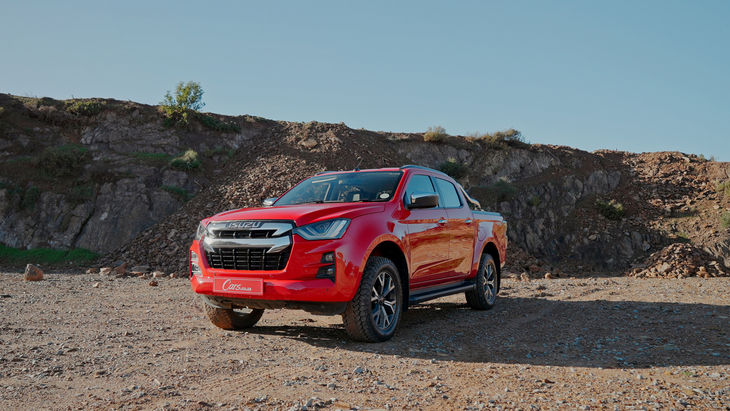
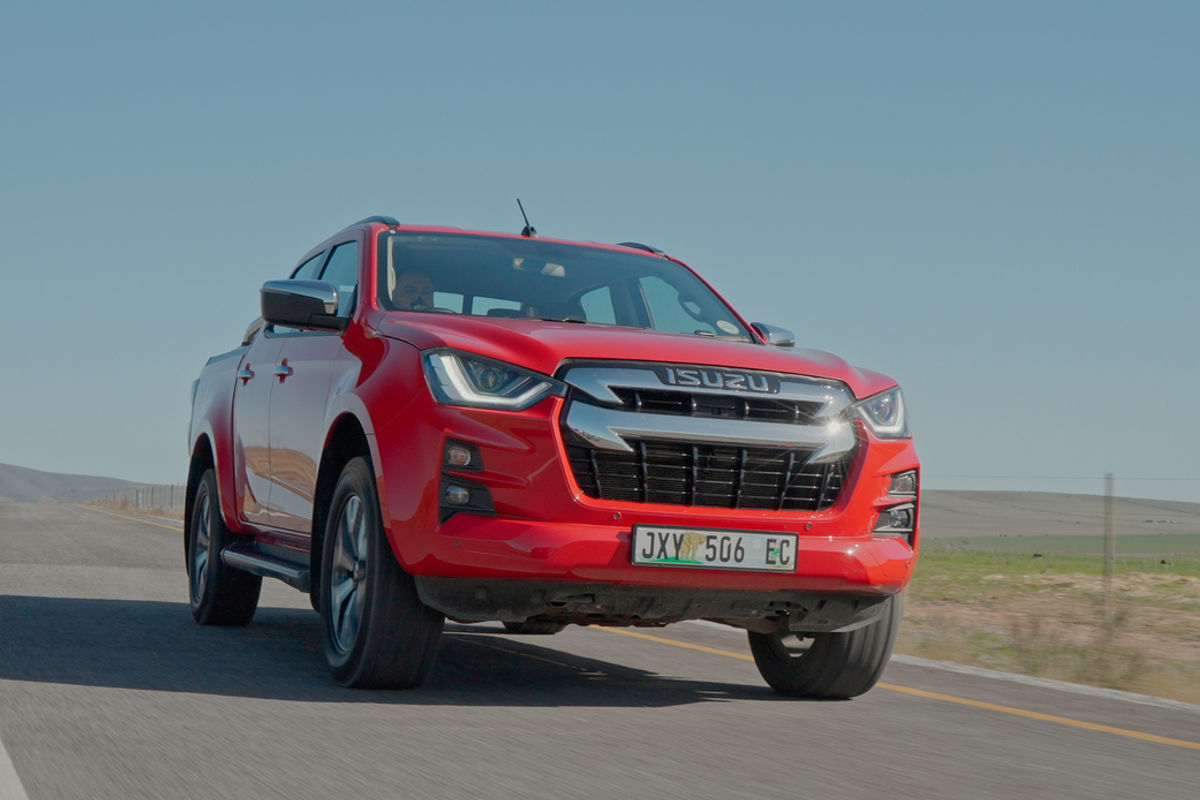
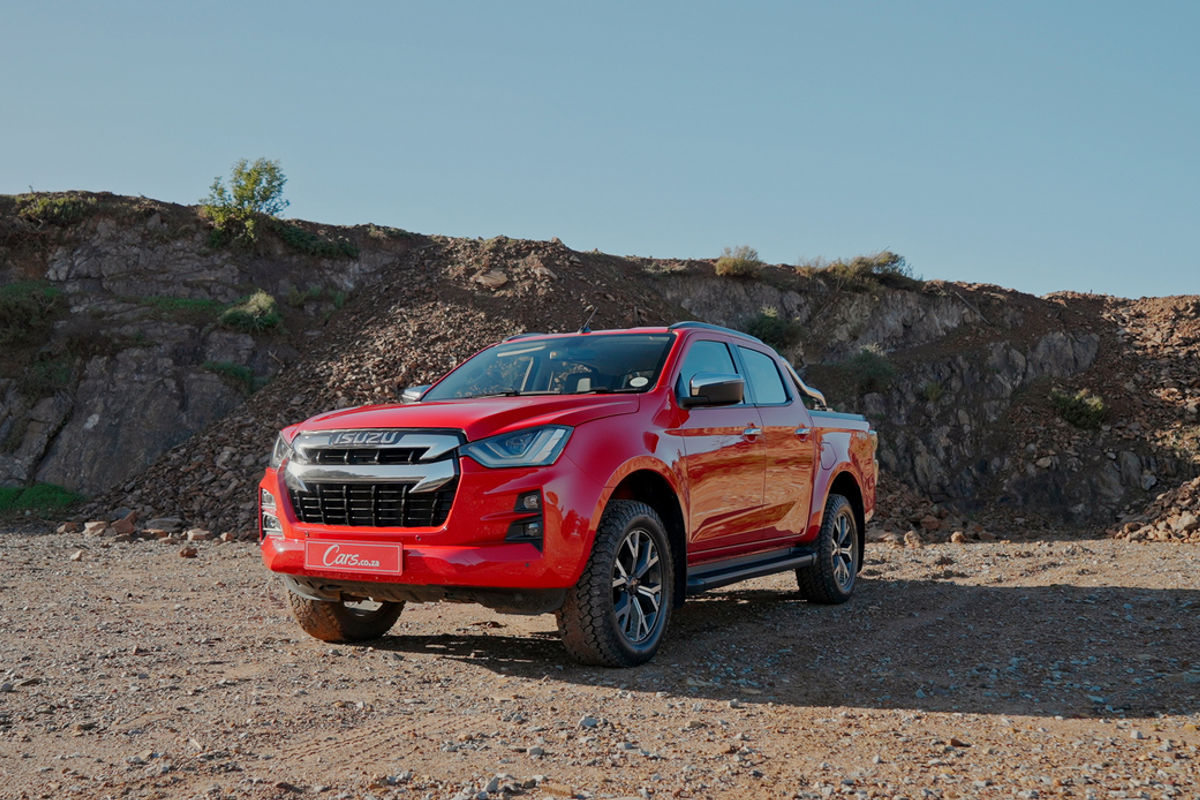
The new generation D-Max’s front-end design drew many admiring glances – especially from Isuzu owners!
Where does the 2022 Isuzu D-Max fit in?
While the neverending battle on the sales charts between the Toyota Hilux and outgoing Ford Ranger regularly grab headlines, those who take a deeper interest in the sales figures will have noted the continued support for Isuzu’s outgoing (6th-gen) D-Max, right up to the time of its replacement. Its enduring popularity was fueled by a reputation for dependability, as well as a clever spread of derivatives that appeared to cater to every kind of new-bakkie buyer out there.
With the new D-Max, Isuzu has come out all guns blazing once more, with a range that includes no fewer than 24 single-, extended- and double-cab derivatives. And while ruggedness and reliability are core product strengths that Isuzu has been careful to maintain, it is also acutely aware that the D-Max had started to lag the market leaders in certain respects, particularly when it comes to the leisure/luxury aspect of Double-Cab motoring. As such, the major focus areas for the new D-Max were its cabin design, fit and finish, on-board tech, safety and refinement.
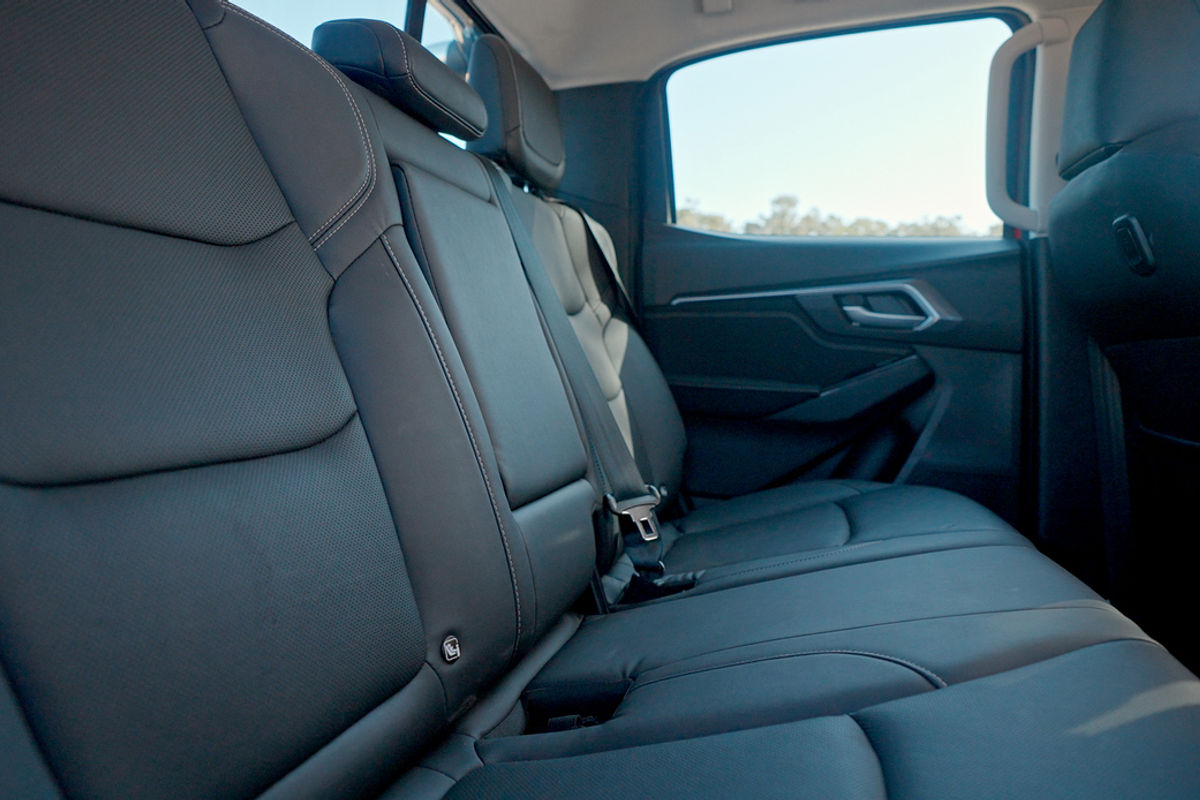
Although the 7th-generation D-Max isn’t much longer than its predecessor, its rear occupant space is much improved.
Our test unit is the second-from-the-top LSE derivative, so it doesn’t feature all the bells and whistles of the V-Cross flagship. Nonetheless, it should provide us with a good sense of the extent to which Isuzu has raised its “leisure game”. Furthermore, this LSE 4×4 is priced to compete against some of the fastest-selling double cabs on the market, most notably the Toyota Hilux , in Raider specification.
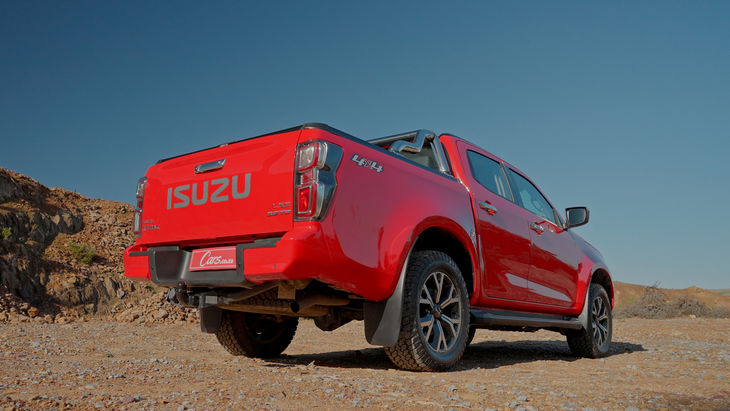
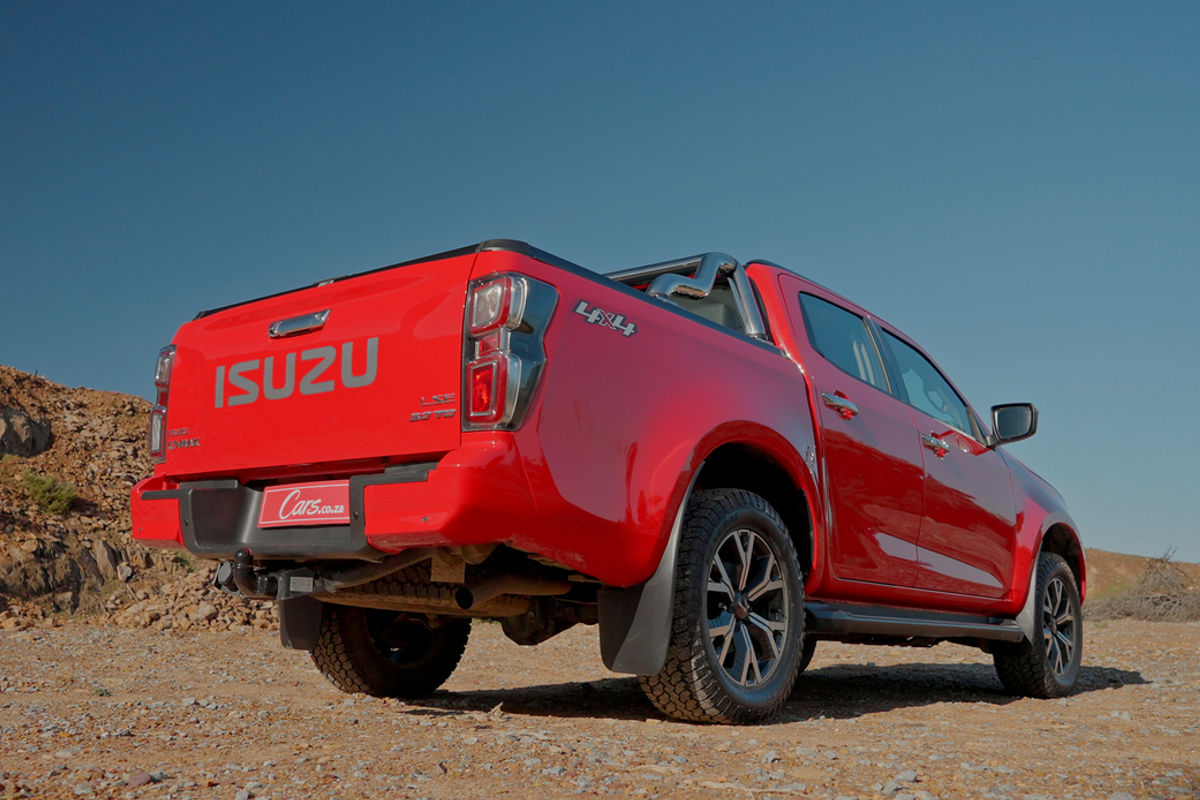
The Isuzu’s shapely (by bakkie standards) tail-lamp clusters are very on-trend.
How the 2022 Isuzu D-Max fares in terms of…
Design and Packaging
The new D-Max is a handsome pick-up, with a particularly striking grille/headlamp treatment, enhanced through the fitment of LED headlamps, LED daytime running lights and LED foglamps. It lacks the V-Cross’s striking fender blisters and skid plate, among other items, but is nevertheless an attractively styled offering that turned quite a few heads during our test period, particularly those of other Isuzu drivers!
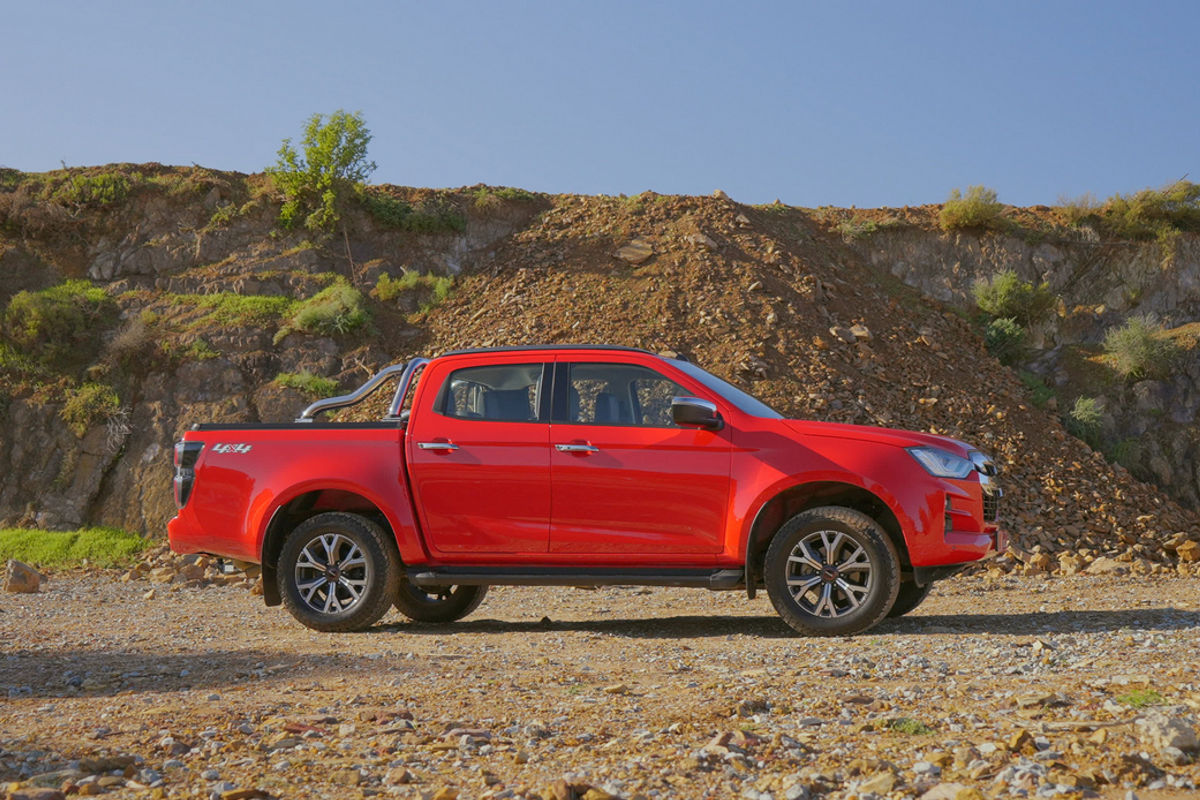
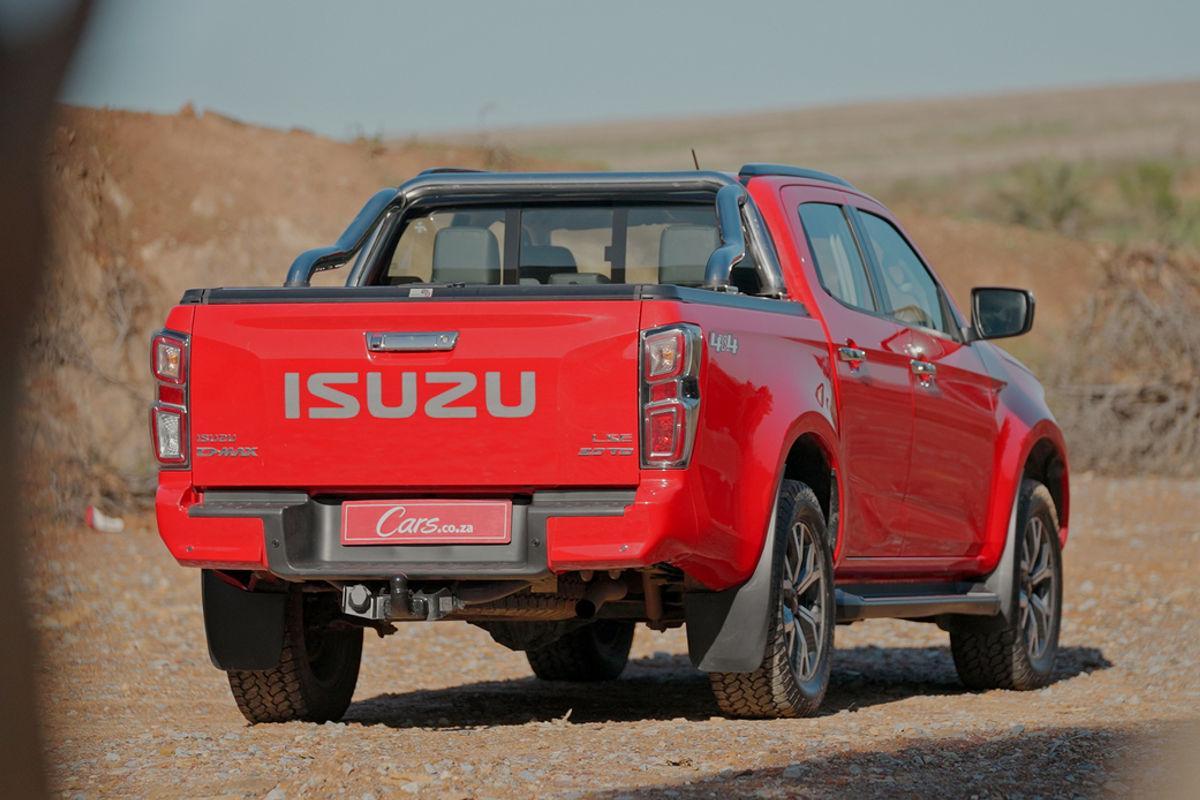
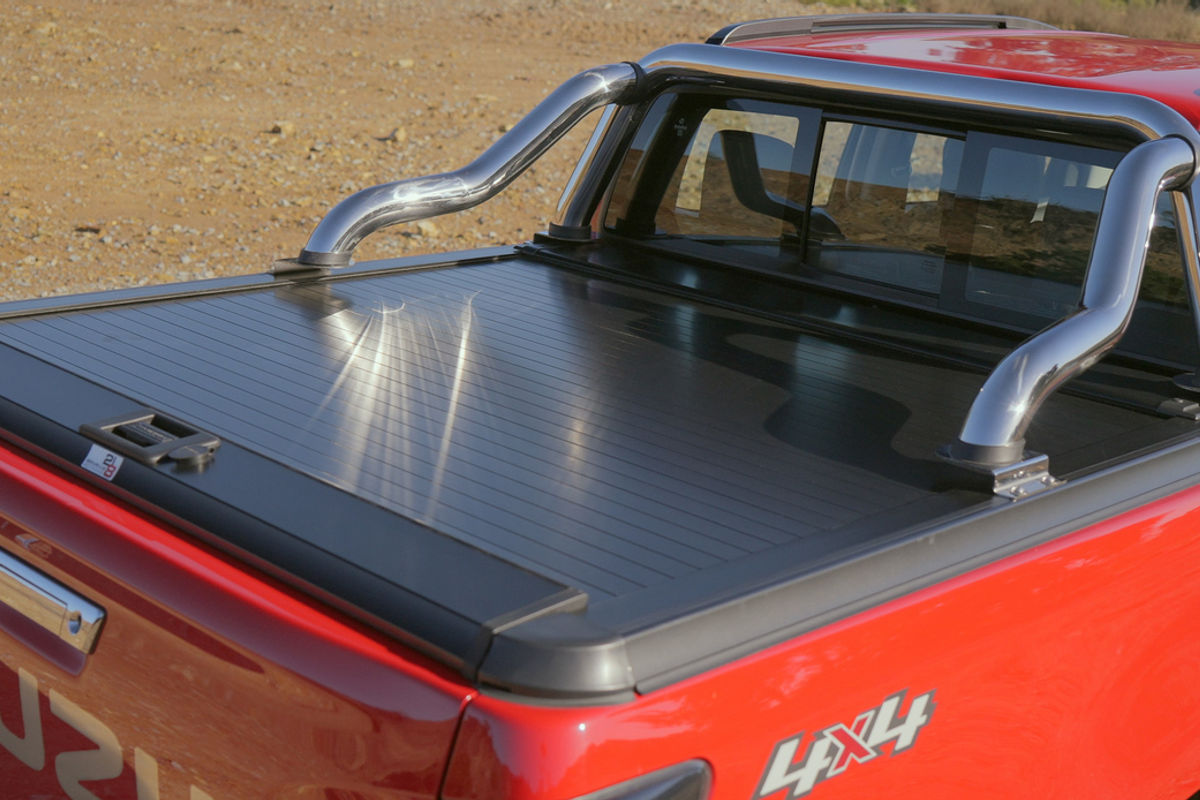
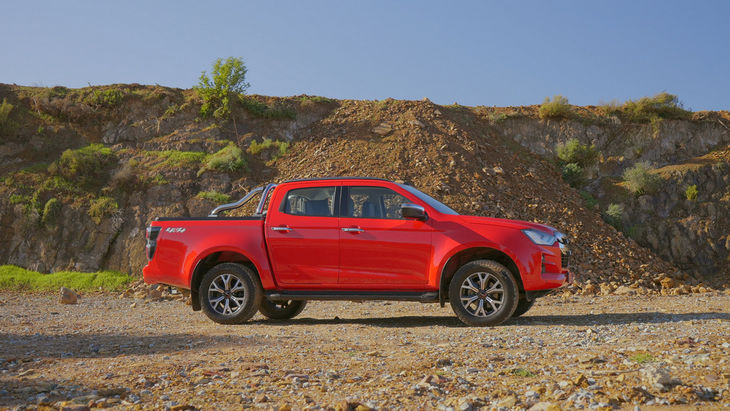
This LSE derivative rides on stylish 18-inch wheels shod with chunky 265/60 General Grabber tyres. At the rear, the stylish LED taillamps catch the eye and the chrome tubular sports bar is standard fitment (if purely cosmetic). A nice touch is the standard fitment of a towbar – the D-Max has a 3 500 kg tow rating (braked). The load bay is nice and deep (30 mm more than before) and the tailgate is wide (1 530 mm). This particular derivative has a payload rating of 995 kg.
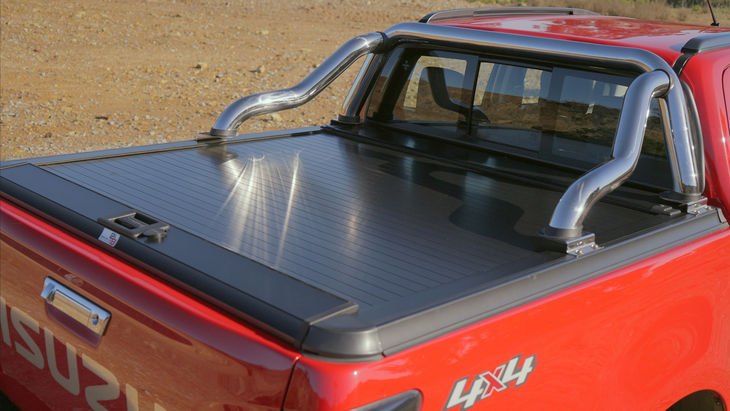
The LSE-spec test unit was specified with an optional lockable roller shutter.
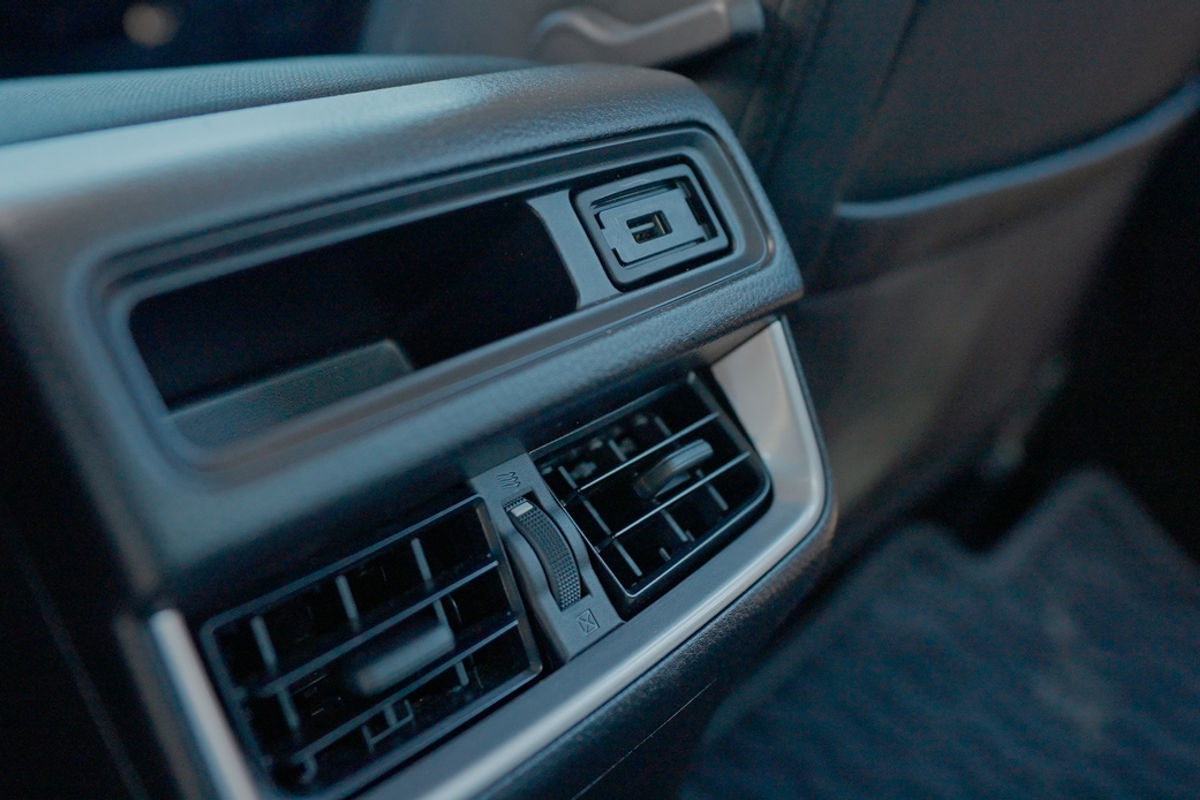
Despite being slightly lower than before (by 10 mm), the D-Max’s other key dimensions have increased all-round. The wheelbase is (a seemingly negligible) 30 mm longer, but nevertheless, cabin space in the rear has been markedly improved. In fact, the Isuzu now ranks as among the best when it comes to rear occupant comfort. In addition to the extra legroom, the less upright angle of the backrest further boosts comfort levels. Rear passengers also have access to a USB charging point and ventilation outlets. If you want to transport something in the rear of the D-Max’s cabin (such as a bicycle), you can flip up the seat cushions and latch them onto the rear headrests, which opens a usefully large open space.
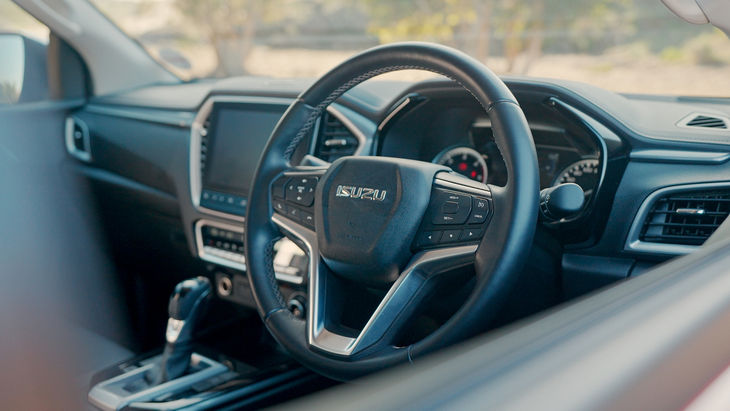
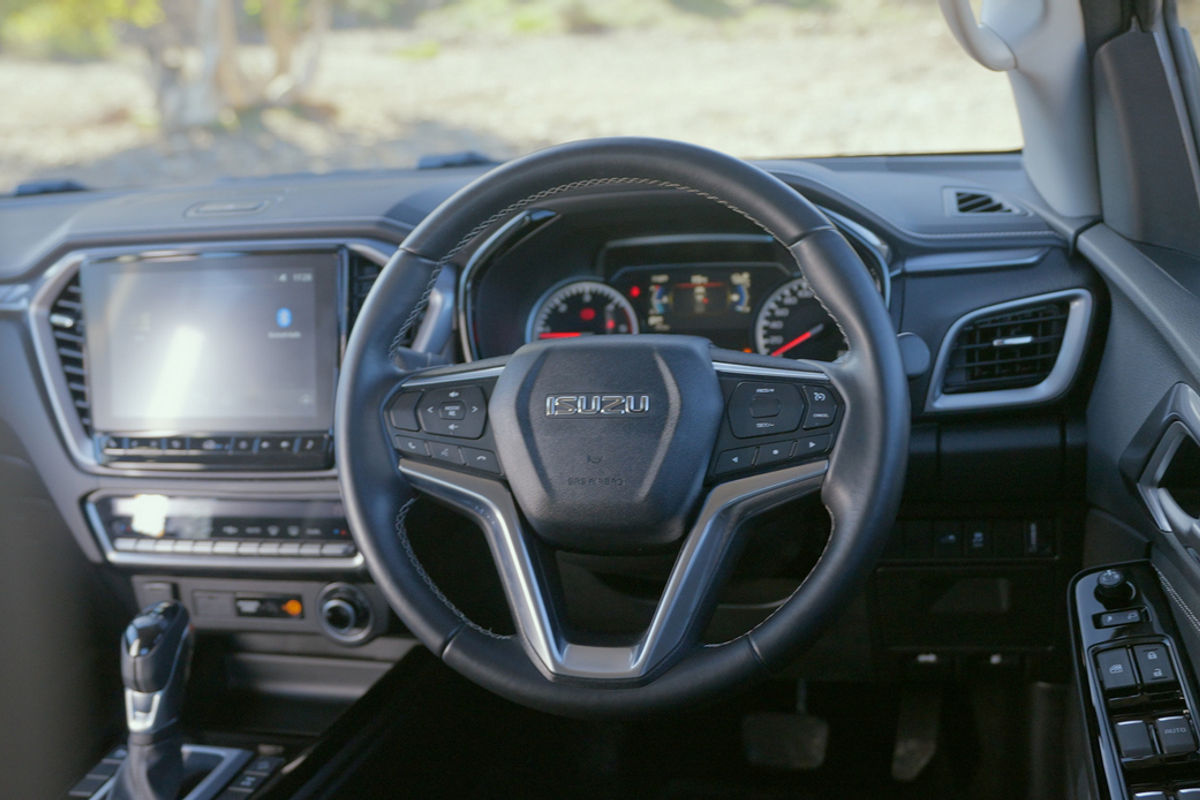
The outgoing D-Max’s cabin architecture was in dire need of an update; the new model’s fascia is modern and well-made.
Owners of the previous D-Max are always in awe when they see the fascia of the new Isuzu for the first time. Indeed, compared with its comparatively rudimentary predecessor, the new D-Max looks upmarket, with neat finishes all round and good quality materials. It’s also worth noting that the D-Max’s cabin emitted neither a rattle nor a squeak during its tenure in our test fleet, during which time it was used for gravel- and off-road driving. It seems very well screwed together.
Leather upholstery is standard on LSE-spec D-Maxes, and the driver’s seat offers height adjustment (manual), plus lumbar support; combined with the rake- and reach-adjustable steering column, it’s easy to find a comfortable driving position.
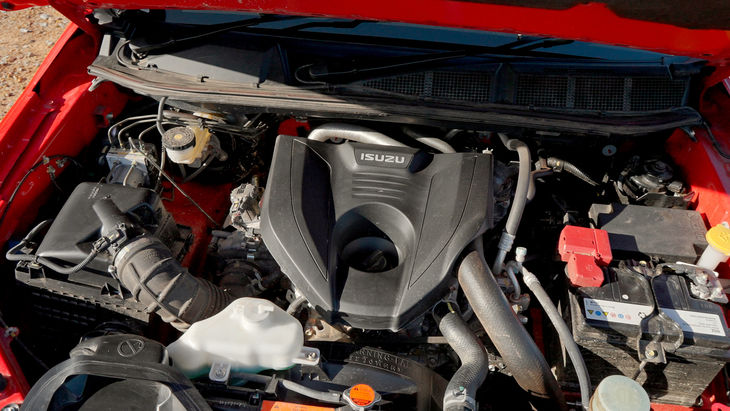
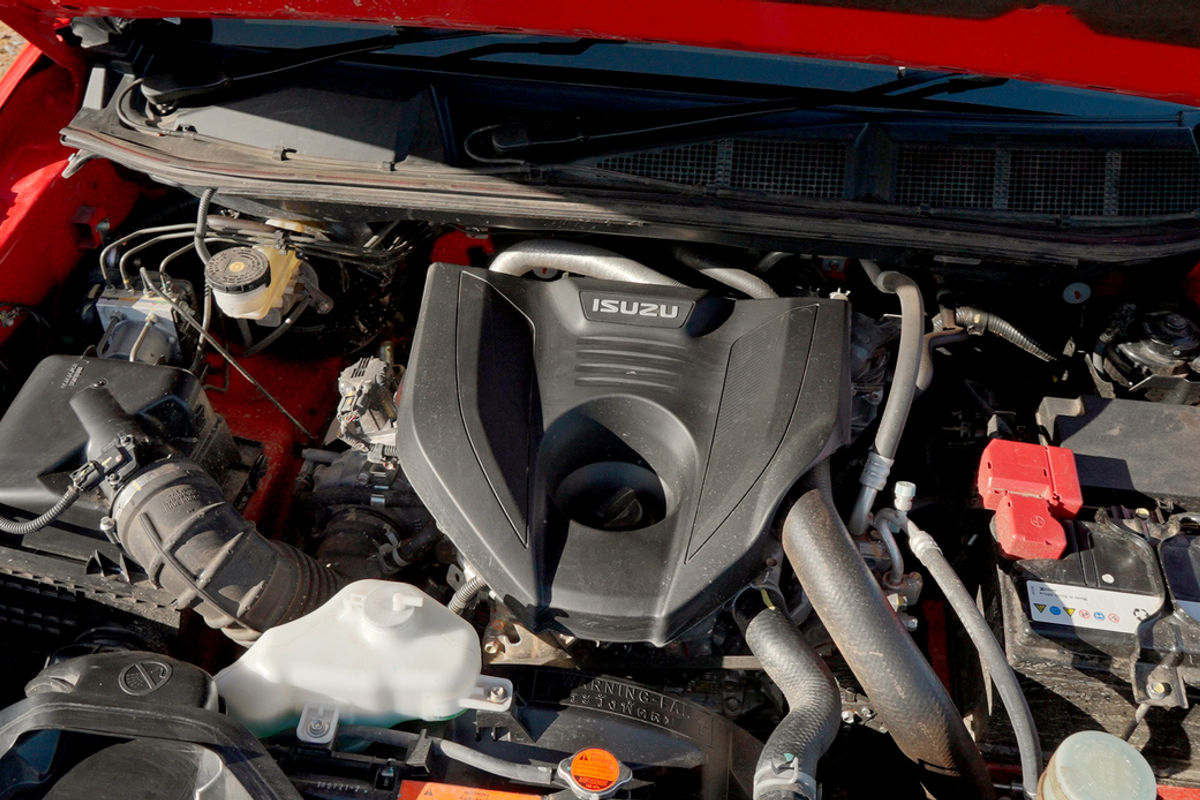
The D-Max’s 3.0-litre turbodiesel is still not a benchmark engine in the bakkie segment, but it HAS been improved.
Performance and Efficiency
The D-Max is powered by what Isuzu calls an “upgraded” version of the Japanese marque’s tried-and-tested 3.0-litre 4-cylinder turbodiesel engine, but most of it is, in actual fact, all-new. Isuzu’s goals were to achieve improved low-down torque, less noise, better fuel efficiency and superior pull-away performance. It has to be said that its predecessor was a particularly “lazy” powerplant, at least within the context of what else is on offer in the market.
In this LSE 4×4 derivative, the engine is mated with a six-speed automatic transmission. Quoted outputs are nothing staggering: peak power of 140 kW is class-competitive, but nothing more, and the maximum torque of 450 Nm is about on-par with the opposition. Both outputs are beaten by, for example, those of the current Toyota Hilux 2.8GD-6, and the forthcoming Ford Ranger and Volkswagen Amarok will have those numbers beaten as well…
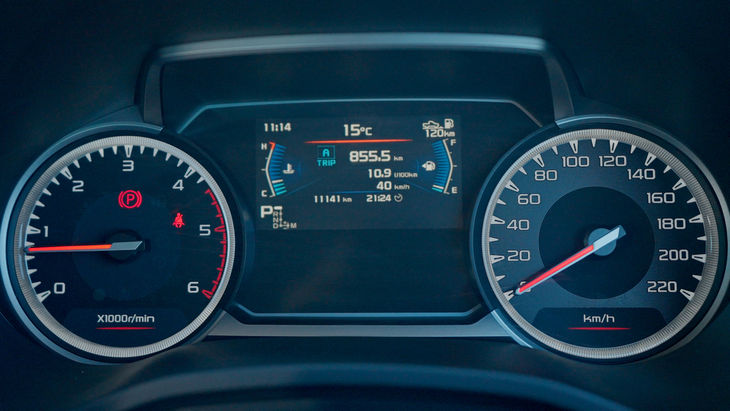
Despite the 3.0-litre motor’s so-so peak outputs, the Isuzu’s powertrain performs better than expected.
Still, on the road, the D-Max does indeed feel a bit more eager from the get-go and a shove of torque is available from 1 600 to 2 600 rpm. The transmission is well-calibrated with the engine’s performance characteristics (it does not resort to hunting for the appropriate ratio) and, best of all, it shifts almost unobtrusively. The engine does, however, retain that typical “grumbly” Isuzu sound, but push down on the throttle pedal and there’s generally more performance to unlock than what the strained engine sound may lead you to suspect. So while the Isuzu is more refined than before, we wouldn’t rate its “perceived” mechanical refinement as being on par with, for example, the Toyota Hilux’s 2.8-litre 4-cylinder unit.
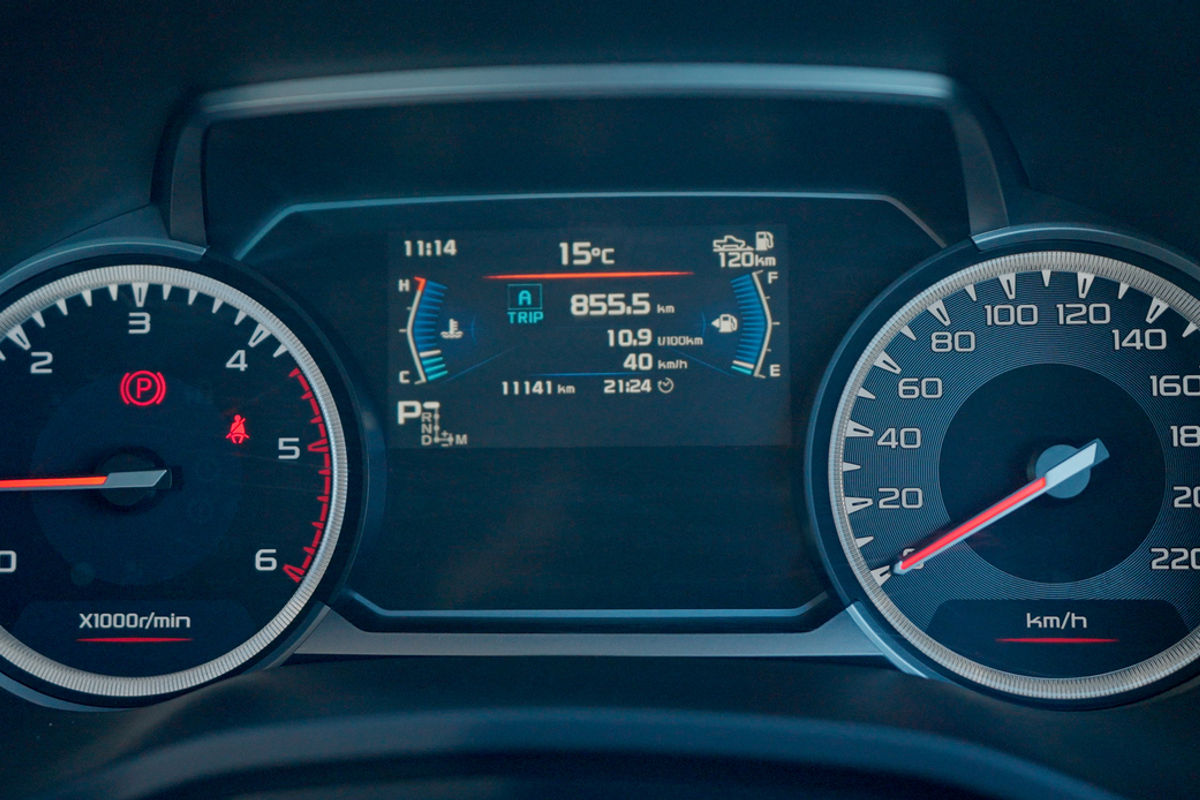
Isuzu claims an average fuel consumption of 7.9L/100 km, which is among the lowest in this category, and during this test, we averaged around 10L/100 km (indicated), which is impressive for this type of vehicle.
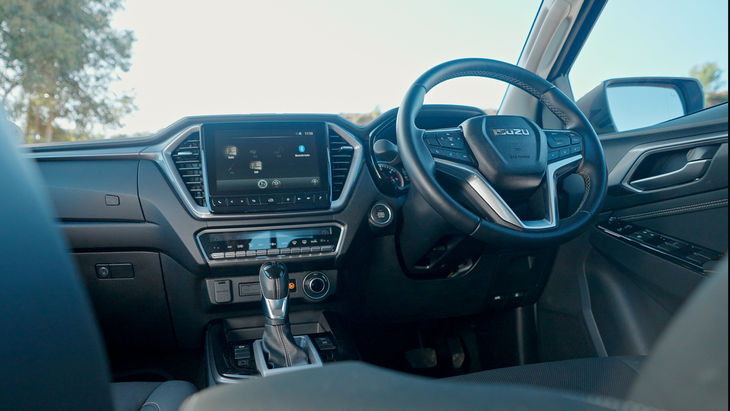
The D-Max’s interior has been updated with a smarter infotainment system and switchgear, but the tech race is merciless.
Comfort and Features
Priced at near the R800 000 mark, LSE specification is comprehensive – as it should be. Dual-zone climate control, cruise control, rain-sensing wipers, front and rear park assist, tyre-pressure monitoring and a 9-inch touchscreen infotainment system, which is Apple CarPlay and Android Auto compatible, are among the highlights. On the safety side, the D-Max also gets blind-spot monitoring and cross-traffic alert (very handy on a sizeable vehicle), in addition to 7 airbags.
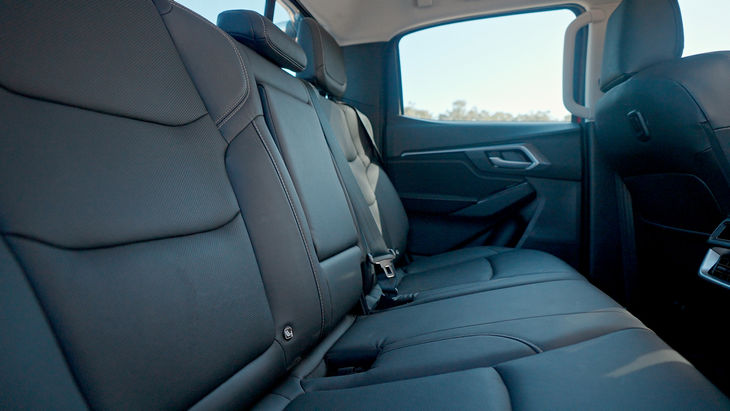
Isuzu’s newcomer offers more rear legroom than several of its competitors.
And yet, we feel it might all just not be enough… The game is moving quickly in the leisure double-cab segment, and the upcoming new Ford Ranger and Volkswagen Amarok are likely to set heady benchmarks in the cabin-tech space. The D-Max LSE does have a reverse-view camera, but that in itself is no longer terribly impressive (when there are far more affordable vehicles available that offer 360-degree camera systems as standard). It may seem like we’re nitpicking, but the reality is that a 360-degree camera (or multi-angle views) would notably boost the D-Max’s off-road credentials. It’s not just for show, and we feel a wireless charging pad will also soon become the norm in this segment.
If you want truly advanced safety features such as autonomous emergency braking, lane-keep assist and adaptive cruise control, you will have to fork out extra for the V-Cross flagship.
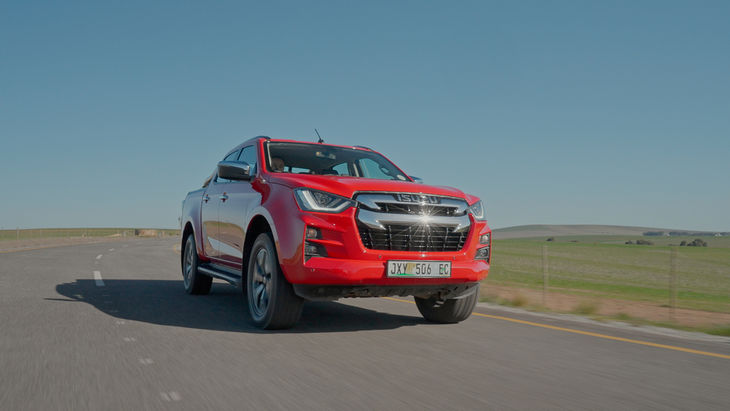
Isuzu prides itself on offering a good ride quality (for a bakkie) and the latest D-Max proudly continues that tradition.
Ride and Handling
The D-Max has always delivered one of the more forgiving (absorbent) ride qualities in the double-cab market, and this latest model continues the tradition. We have a particularly nasty few speed humps in our office complex, and they usually send tremors down the chassis of any ladder-frame-based vehicle that traverses them – in a bakkie, a little jump from the rear axle is to be expected. The D-Max, however, cruised over those bumps without as much as a hint of drama.
Similarly, on our gravel-road test, the D-Max’s ride and road holding impressed. On tar, it’s a smooth operator as well, with much lower NVH (noise, vibration and harshness) compared with its predecessor and notably more precise steering.
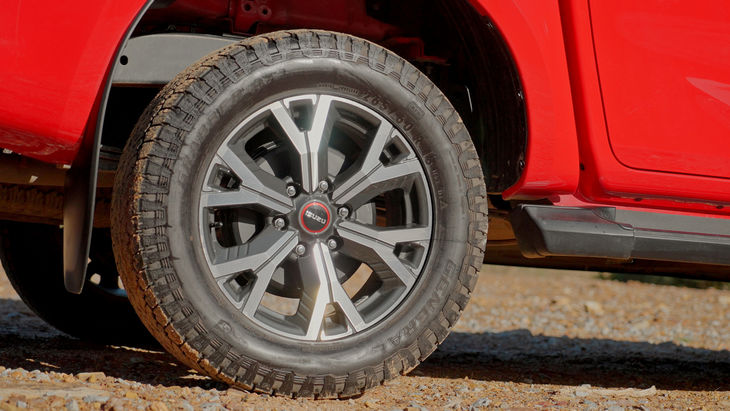
Even though its ground clearance is less than that of the Hilux, for example, the D-Max excels in off-road conditions.
And then we headed off-road. On paper, the D-Max’s ground clearance of 232 mm is not particularly impressive (Toyota claims 286 mm for the Hilux), but we didn’t experience any “bottoming out” during our off-road test, plus the bakkie’s approach and departure angles (30- and 18 degrees, respectively) appeared to be quite sufficient. Isuzu claims a wading depth of 800 mm for the D-Max.
In general, the D-Max feels unstoppable and virtually unbreakable off-road. Selecting 4H or 4L requires no more than a twist of a rotary knob on the fascia, and a rear diff-lock is standard. Combine all of this with loads of torque from low in the rev range, and you have a vehicle that feels capable of crawling up – and over – anything.
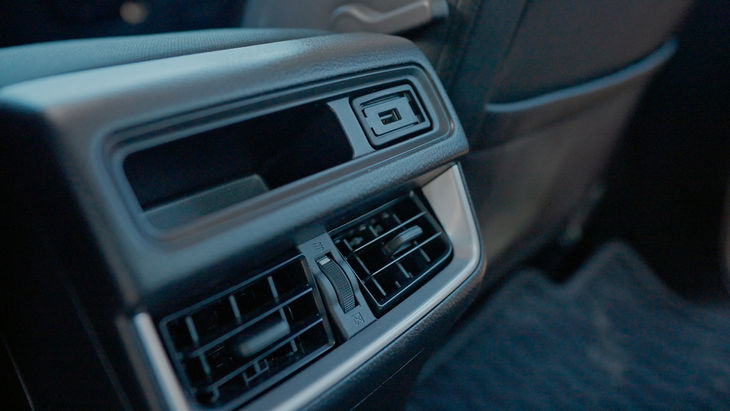
Rear occupants are afforded a USB port to charge electronic devices – always a boon on a long-haul road trip.
Price and After-Sales Support
The Isuzu D-Max 3.0TD Double-Cab 4×4 LSE sells for R771 700 (before options, July 2022) and is backed with a 5-year/120 000 km warranty and 5-year/90 000 km service plan. Services are scheduled for every 12 months/15 000 km.
Some Isuzu dealerships regularly offer great deals. See our New Car Specials!
Looking to sell your car? You can sell your car to SA’s biggest dealer network
Search for a new or used Isuzu
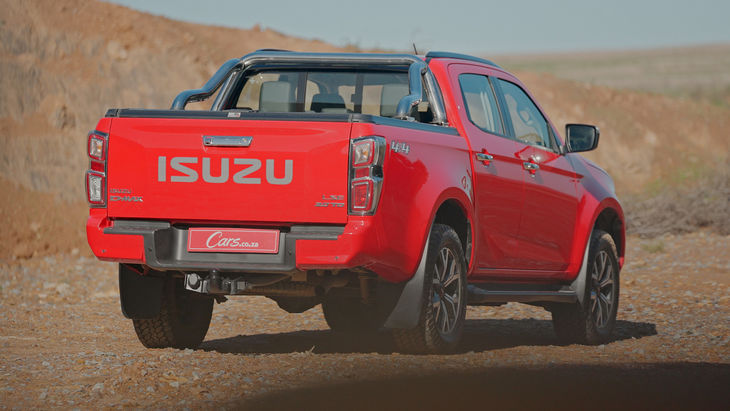
The 7th-gen D-Max offers several improvements over its predecessor – and has lost none of its charms – but is that enough?
Verdict
Compared with its long-serving (and widely adored) predecessor, the 7th-gen Isuzu D-Max is more spacious and comfortable inside, with greater drivetrain refinement, good looks and impressive off-roading talents. Indeed, the Japanese bakkie ticks many boxes. We’re sure the Isuzu faithful will love it, as it also retains that typically Isuzu “rugged” character. Is it good enough, however, to steal some sales away from the other brands? On that question, we’re not so sure.
Make no mistake, there’s little amiss with the D-Max, it’s just that the leisure double-cab game will move quickly in the coming months, and we wonder whether Isuzu has made big enough strides in terms of particularly cabin infotainment tech and engine power. On the other hand, some D-Max diehards will argue that they prefer Isuzu’s simpler approach, which could result in greater reliability in the long run. Either way, this is a well-built, attractive product that deserves to do well.