There might not be that many models in the bakkie-based SUV segment, but it shifts significant volume, largely due to the ongoing – and staggering – success of the Toyota Fortuner. Armed with its handsome 2nd-generation MU-X, Isuzu wants a much bigger slice of that pie…
We like: Spaciousness and practicality, build quality, much-improved on-road behaviour, safety features, off-road ability
We don’t like: Pricey at flagship level, given that it lacks some luxury features. The engine could do with a bit more grunt.
Fast Facts
- Model: Isuzu MU-X 3.0TD Onyx 4×4
- Price: R860 500 (January 2022)
- Engine: 3.0-litre 4-cylinder turbodiesel
- Power/Torque: 140 kW/450 Nm
- Transmission: 6-speed automatic
- Fuel consumption: 7.6 L/100 km (claimed)
- Load capacity: n/a (not stated by the manufacturer)
- Tow rating : 3 500 kg (claimed, braked)
Serious about buying?
Some Isuzu dealerships regularly offer great deals. See our New Car Specials here !
Why is the new Isuzu MU-X a big deal?
The new Isuzu platform has been much anticipated as the brand only seems to release a new one every decade or so.
Even though Isuzu’s outgoing MU-X was relatively long in the tooth compared with most of its rivals by the time its replacement arrived last year, the 1st-gen model still sold remarkably well up to the point that it was replaced. This was a testament to the fact that the Isuzu brand is very highly regarded (and trusted) in the South African market. Of course, Isuzu has been very consistent with its bakkie offering in this market, but less so when it comes to SUVs… Though it arguably created the modern-day bakkie-based segment back in the ‘90s with the KB-based Frontier, there was no follow-up, which allowed Toyota to steal the march and introduce the Fortuner in 2006, which has gone on to not only dominate the Leisure SUV segment, but become one of the most popular vehicles in South Africa, full stop.
In Australia, Isuzu is the market leader in terms of bakkie-based (D-segment) SUVs and, with the new MU-X, Isuzu South Africa will be hoping for far better sales than what it achieved with its late-to-the-local-market predecessor. Bigger, bolder, more tech-laden and equipped with advanced safety features, could the MU-X trounce the Ford Everest, Mitsubishi Pajero Sport and even the Fortuner?
How does the Isuzu MU-X fare in terms of…
Design & Packaging
The interior feels more luxurious and the infotainment system represents a more modern tech upgrade.
We had the pleasure of spending the Festive Season with the new Isuzu MU-X on the Cape Garden Route and in the surrounding areas – an area where Isuzu bakkies are apparently very popular, at least based on the sheer number of them we saw on the roads at the time. Consequently, Isuzu diehards frequently plucked up the courage to approach us and ask questions about the MU-X. Interest in Isuzu’s new 7-seat SUV from the brand’s current customer base certainly appears to be at a high. And, without fail, they were bowled over by the newcomer’s looks and its cabin execution, in particular.
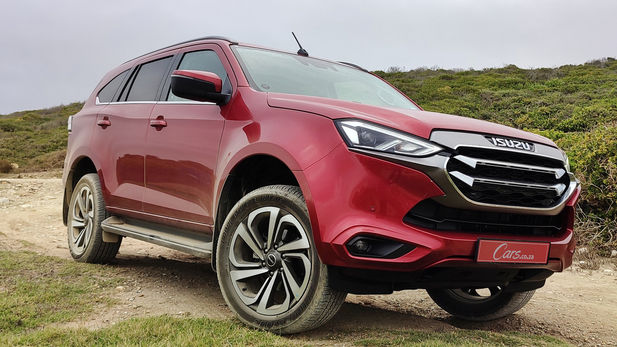
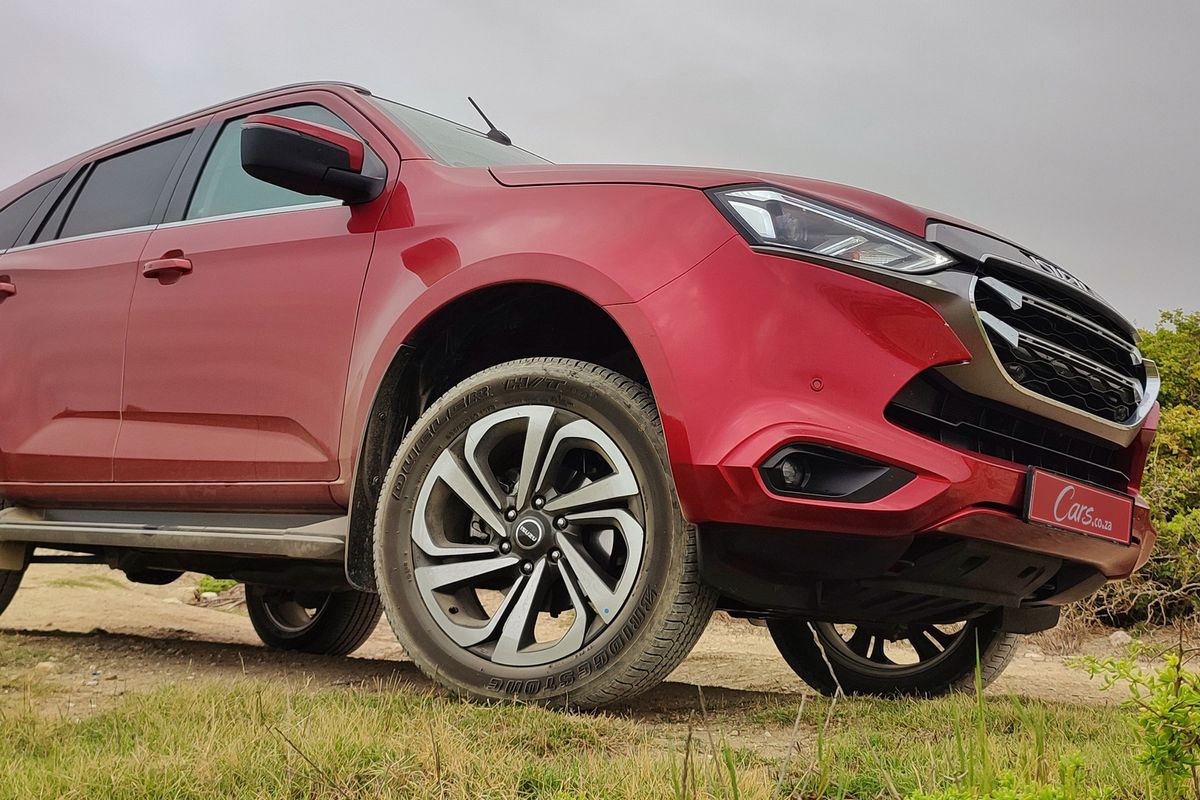
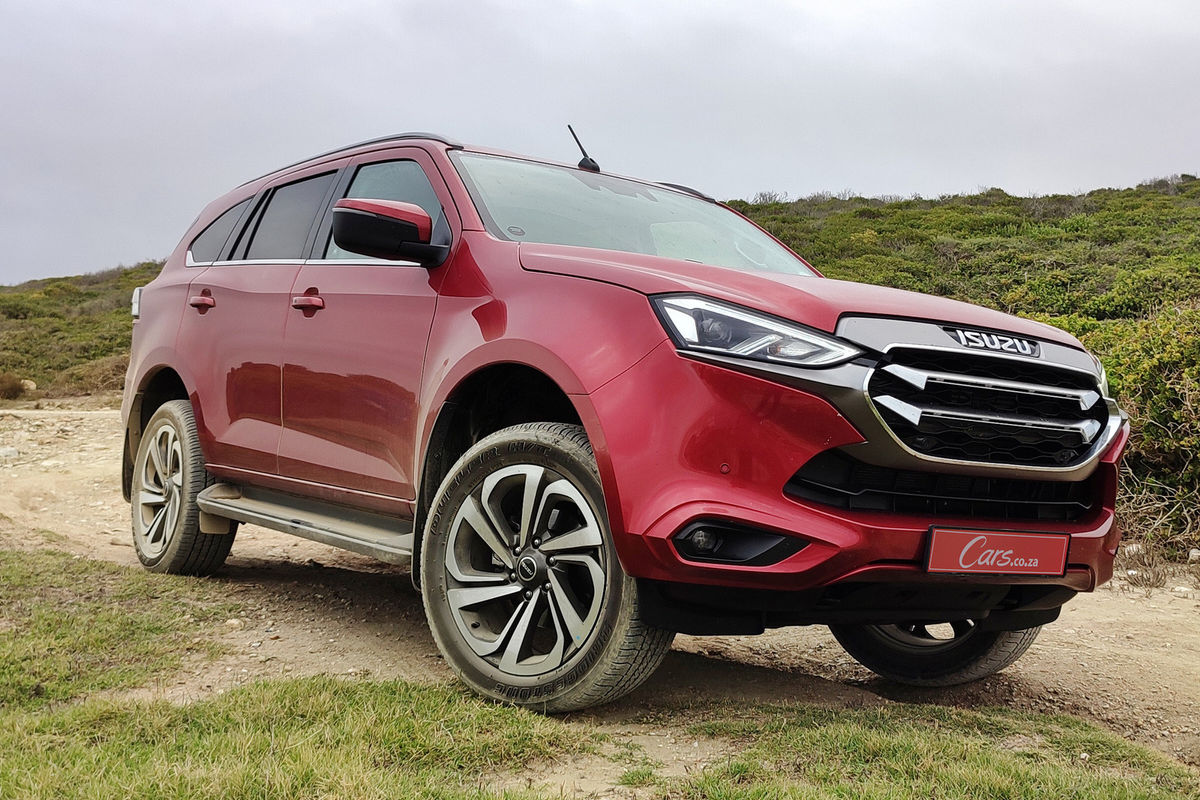
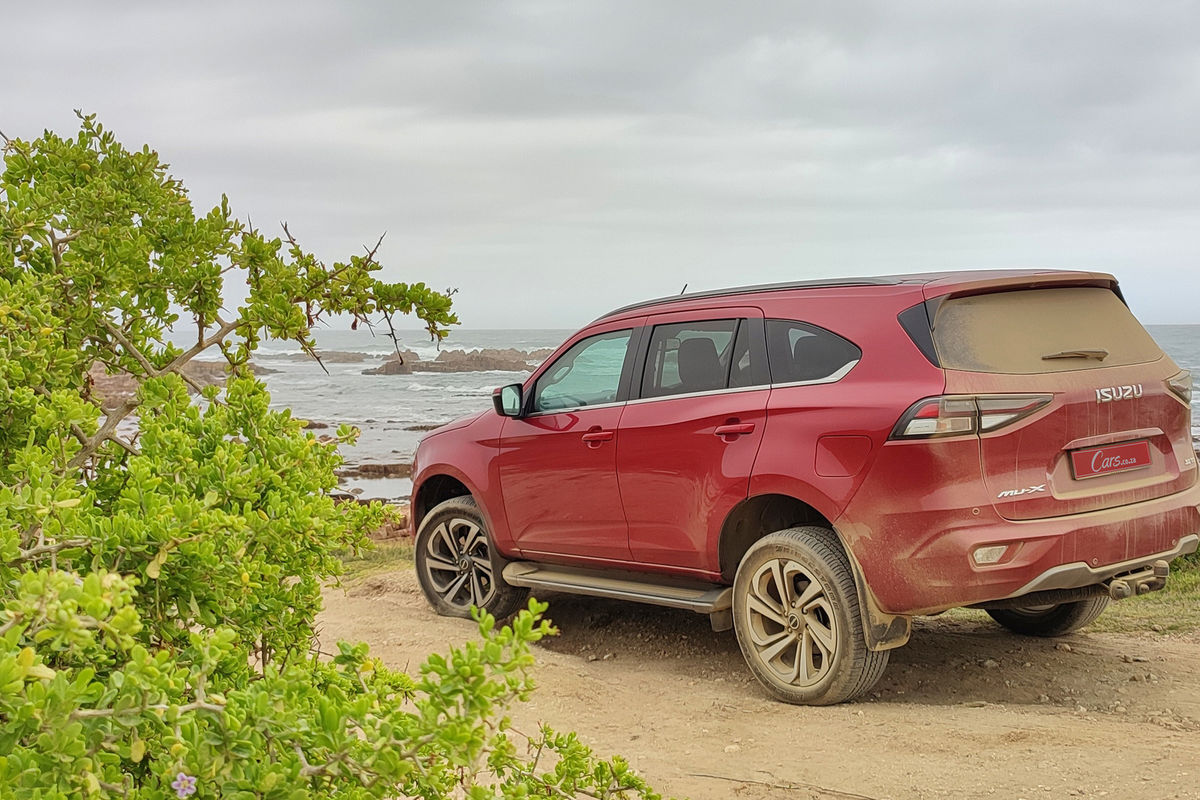
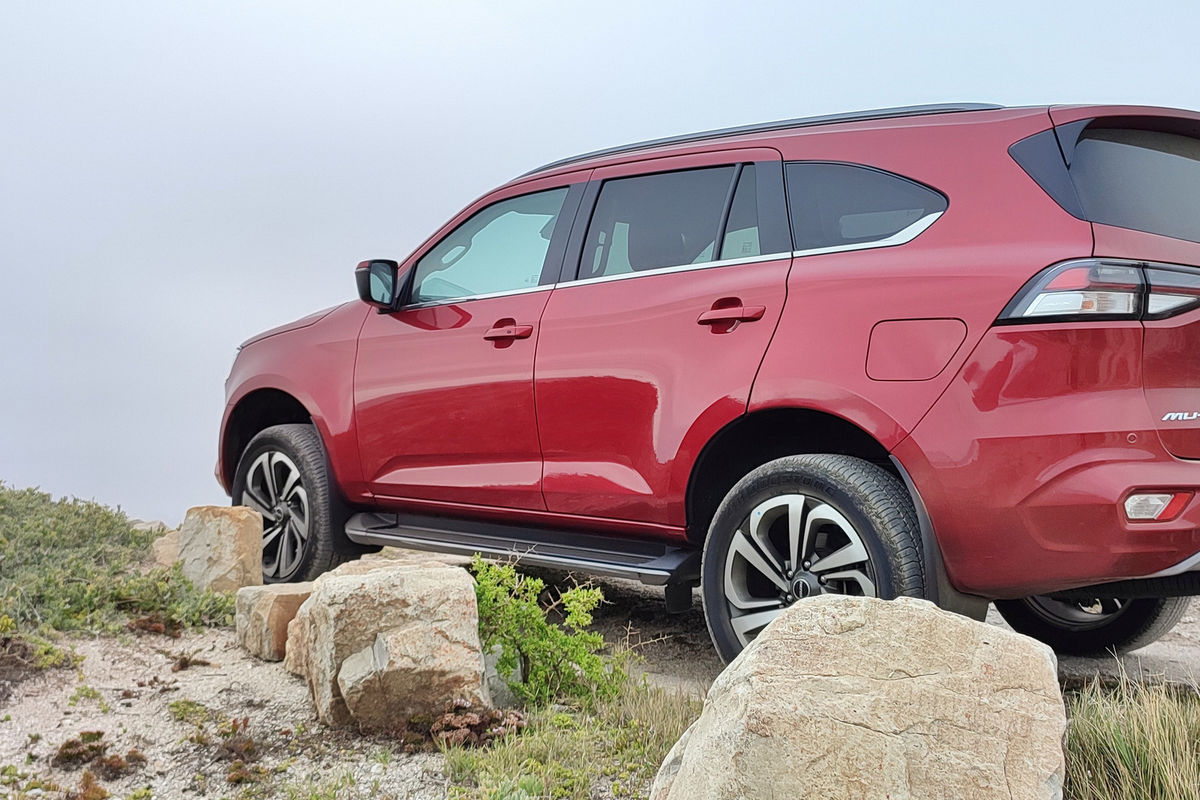
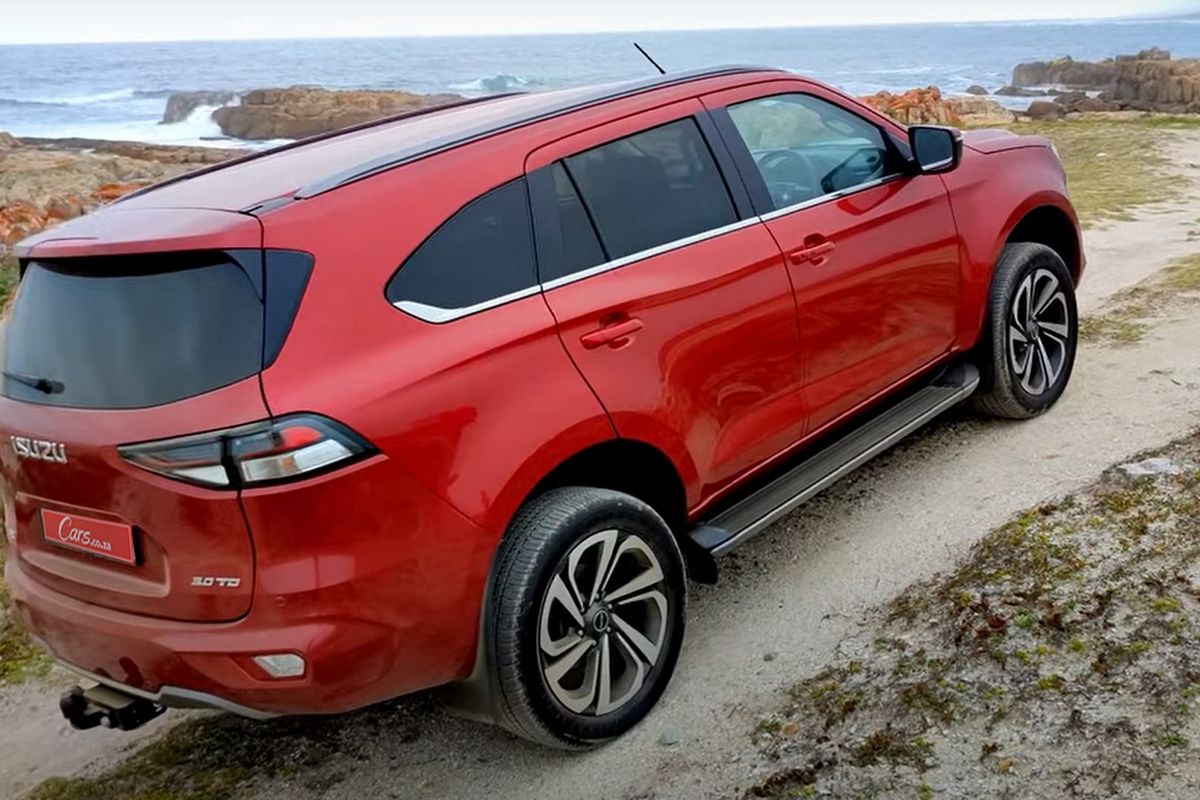
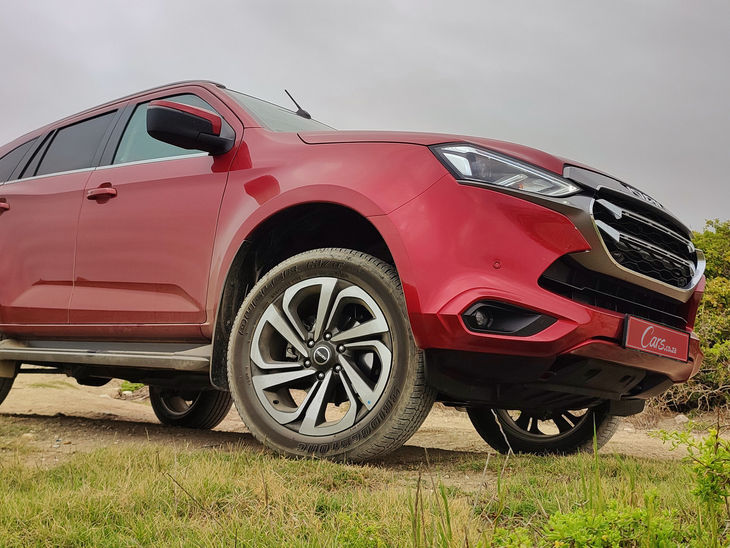
This test unit that was made available to us was the flagship Onyx derivative and, therefore, it looked extra smart with its large dual-tone 20-inch alloy wheels, but, to be fair, all of the new MU-X derivatives are attractive. The grille is bold and the headlamps feature striking LED detailing. Along the side, there is a nice “kick” in the waistline around the rear door handle area and at the rear end, the narrower tail lamps (also with LED details) represent a big improvement from the somewhat generic posterior its predecessor had. The Red Spinel colour of our test unit also drew many favourable comments.
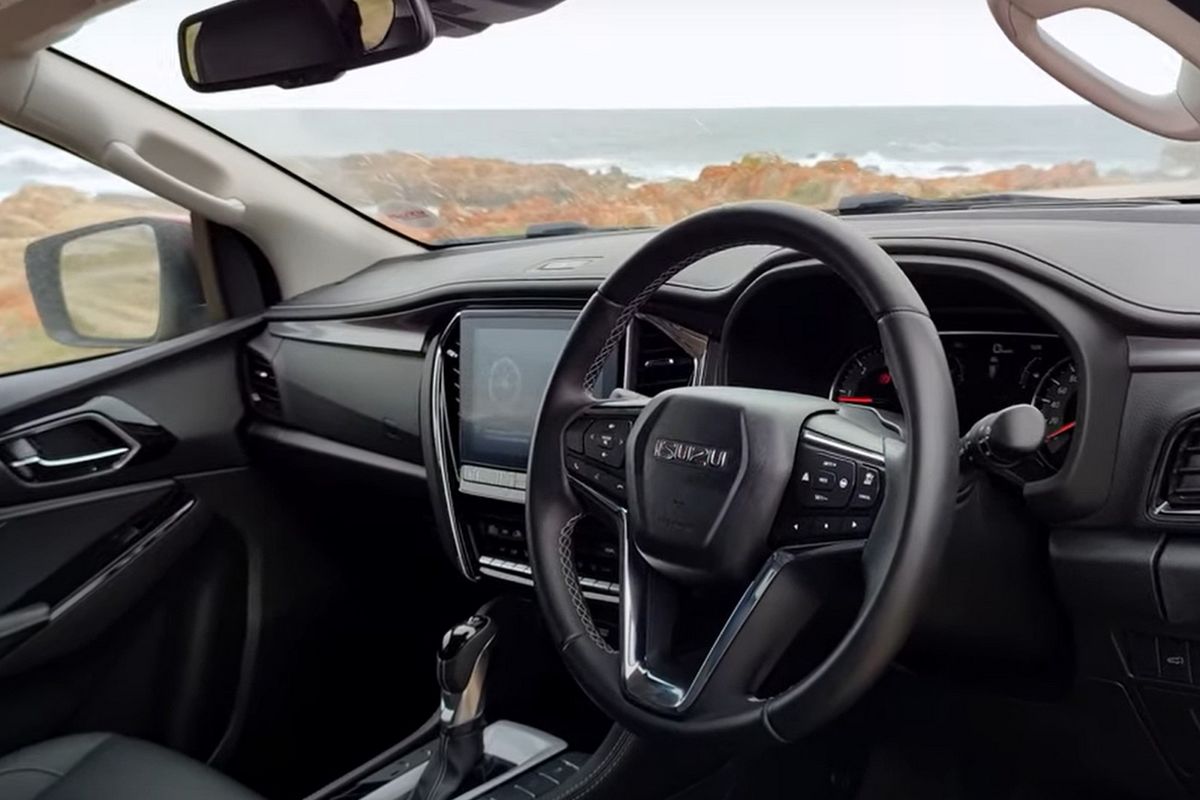
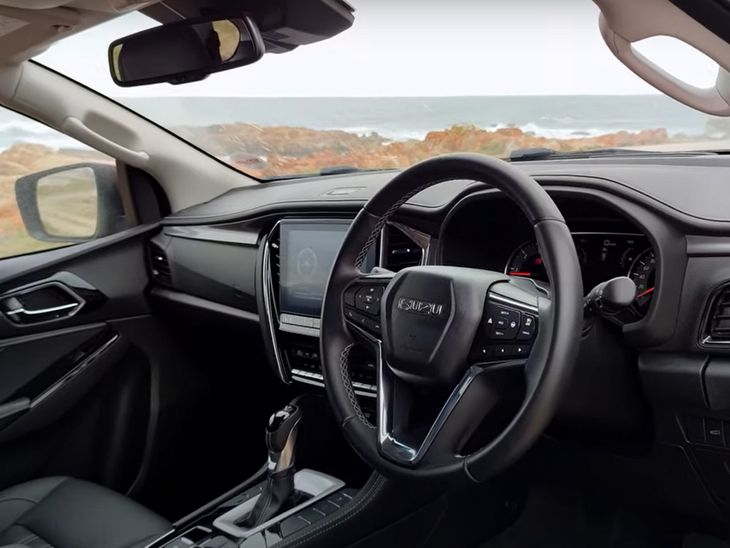
Though Isuzu upgraded the previous MU-X late in its model lifecycle, it could never quite shake its utilitarian roots and, when the Japanese marque eventually added a bigger infotainment screen, for example, it looked a bit like an afterthought. There are no such qualms with the new MU-X, however – its cabin has moved significantly upmarket in terms of design, features and material quality.
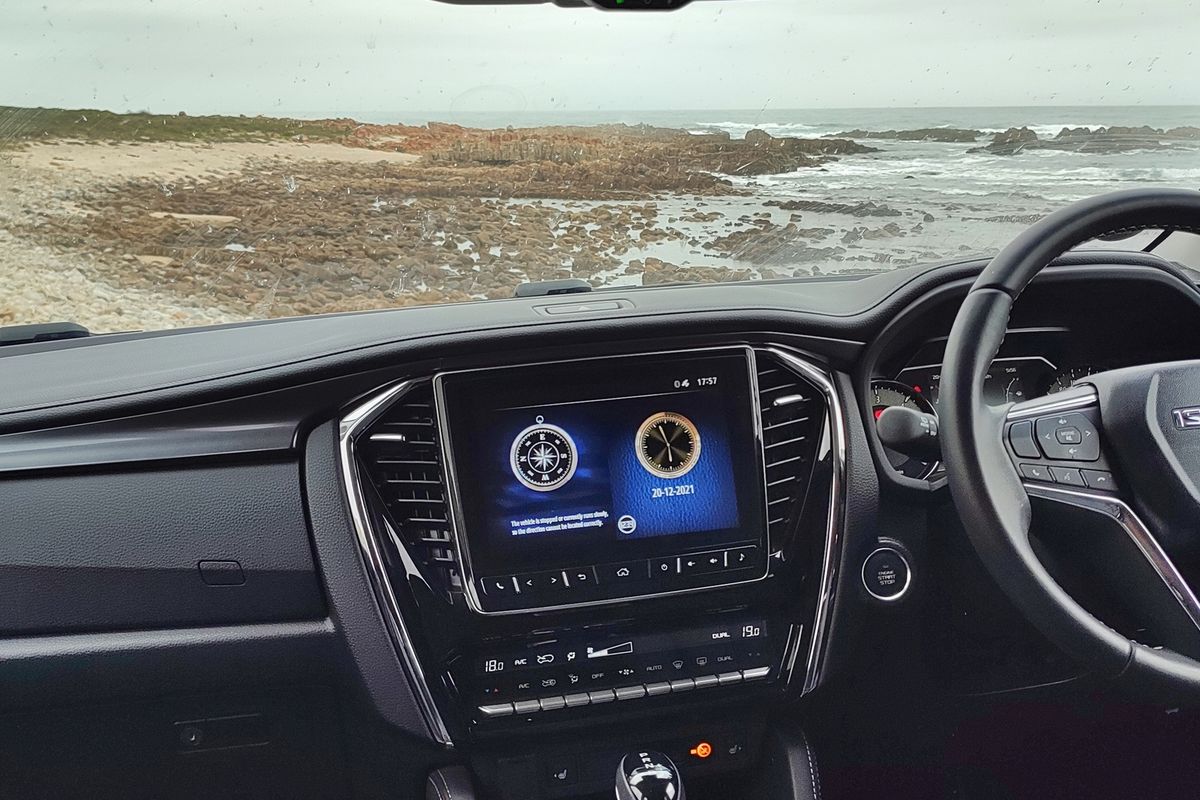
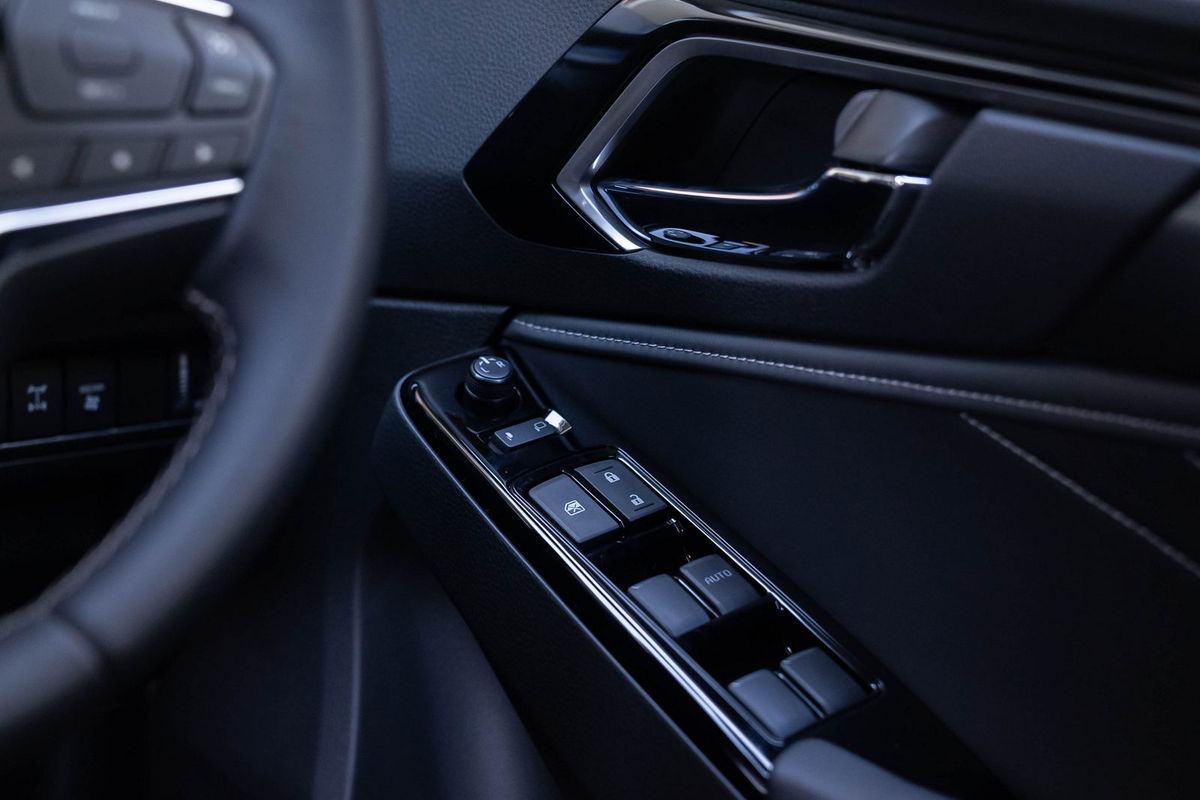
The design is far more coherent than before, with the large (9-inch) infotainment screen neatly integrated into the centre of the fascia. With a lovely stitched-leather dashboard upper covering, soft-touch materials just about everywhere, as well as piano-black surfaces and chrome detailing, the MU-X’s cabin looks and feels more like that of a luxury vehicle than an off-road-oriented “workhorse”. That’s not to say it’s become soft (see the off-roading comments below), but throughout the near 2 000-km we travelled with the vehicle (much of it on gravel), there wasn’t a single rattle or a squeak to be heard.
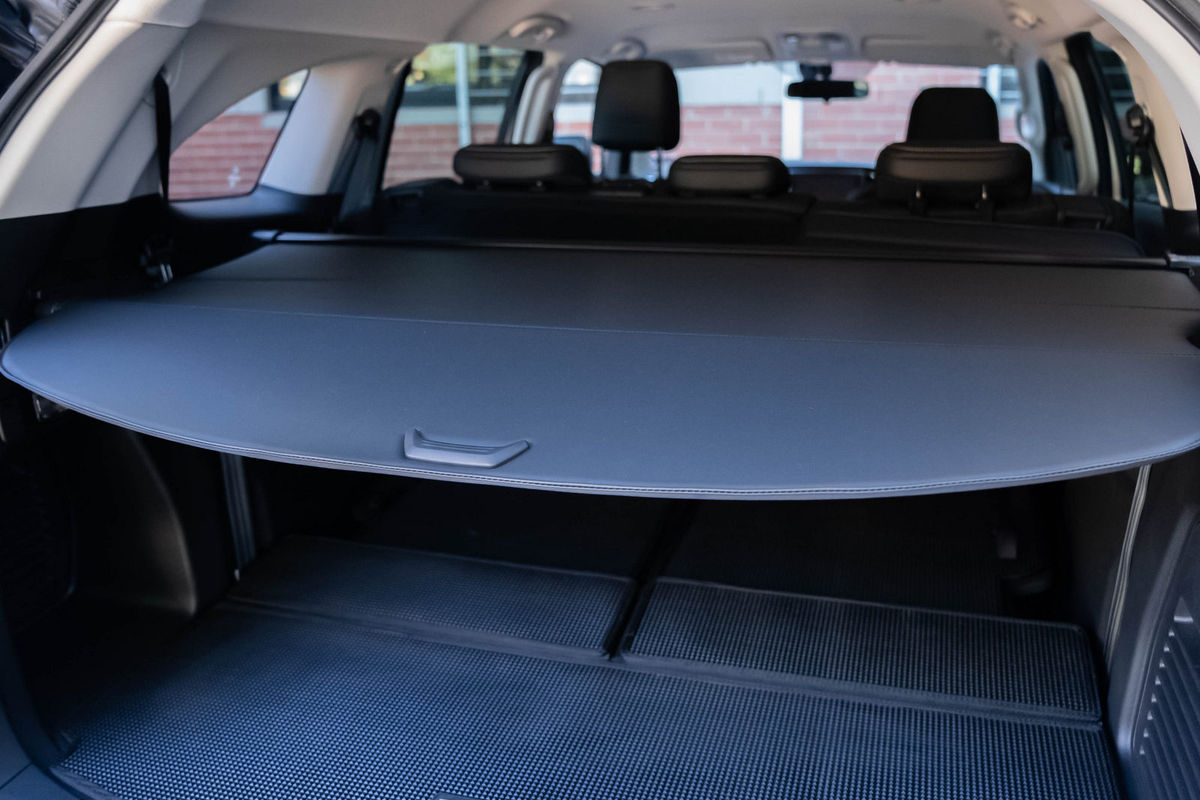
Isuzu claims the new MU-X has the largest cabin in its segment, but the firm hasn’t released volumetric figures. Based on our experience with this vehicle, its predecessor and several of their rivals, we would suggest that the newcomer is certainly “one of the biggest” in terms of interior space. The only figures Isuzu has released suggest there is 915 mm of legroom for 2nd-row occupants and that the 2nd-row seats are 30 mm wider than those of its predecessor. Perhaps more impressively, an adult of 1.8 metres in height can sit in the third row, which is quite a rare achievement in a 7-seater SUV – of any variety and price. Of course, the load-bay capacity is extremely limited when all seats are occupied, but there is a hidden compartment in the boot floor that can be used to store smaller items out of sight.
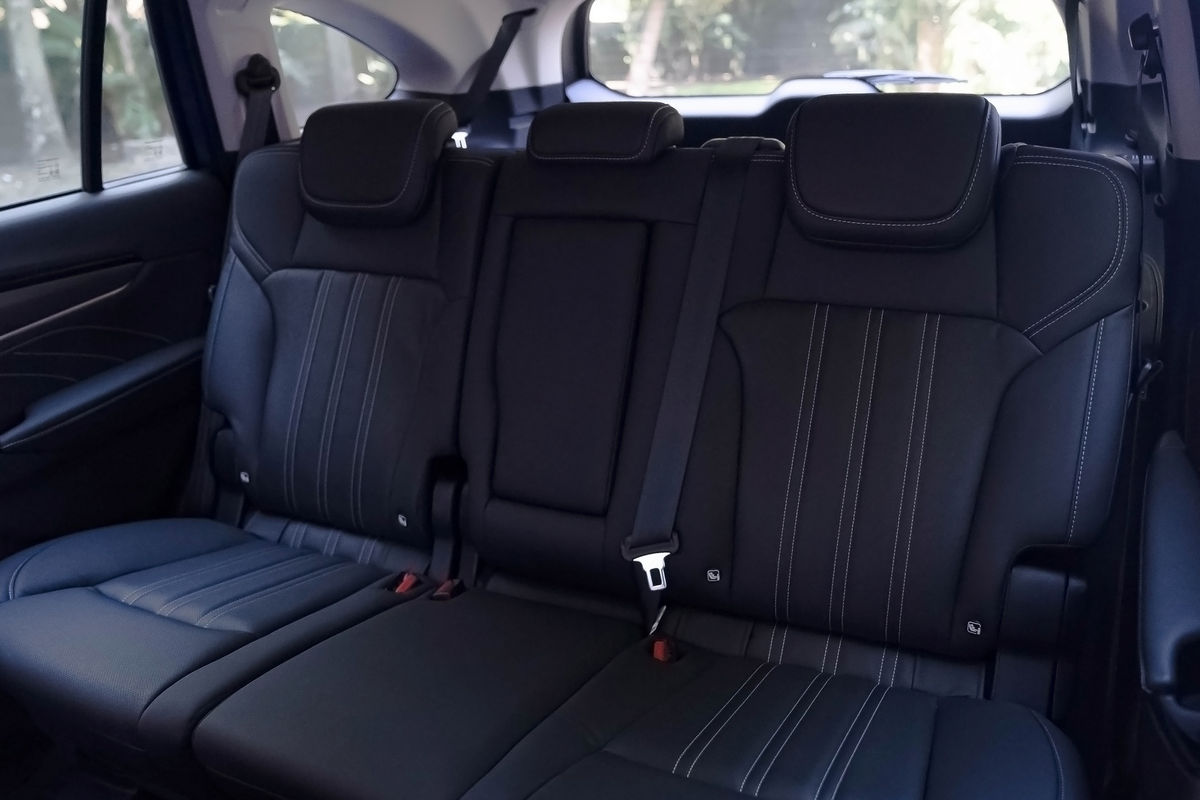
Access to the third row is easy – all you need to do is lift a lever to tumble the second row forward – and, if you want maximum load-carrying ability – the second and third rows fold completely flat, resulting in a long, uninterrupted space that’s ideal for carrying bulky/long items such as furniture.
Performance & Efficiency
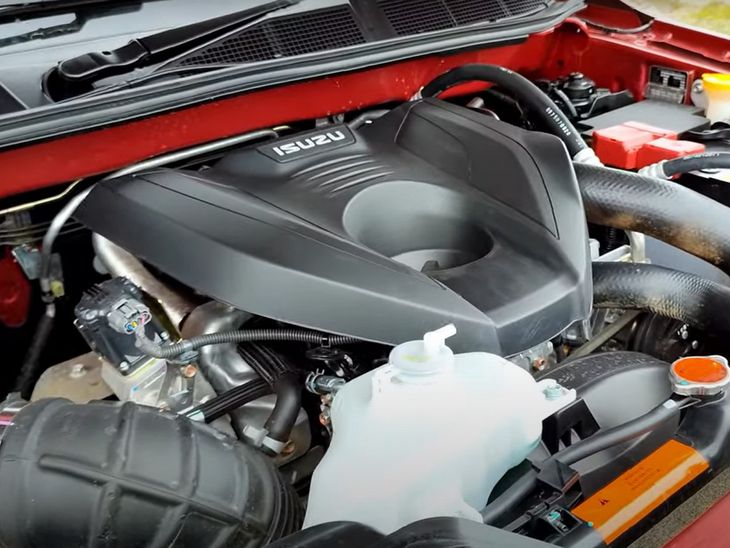
Much has been made of the new Isuzu engine, it’s still quite rumbly but delivers better power/torque and fuel gains.
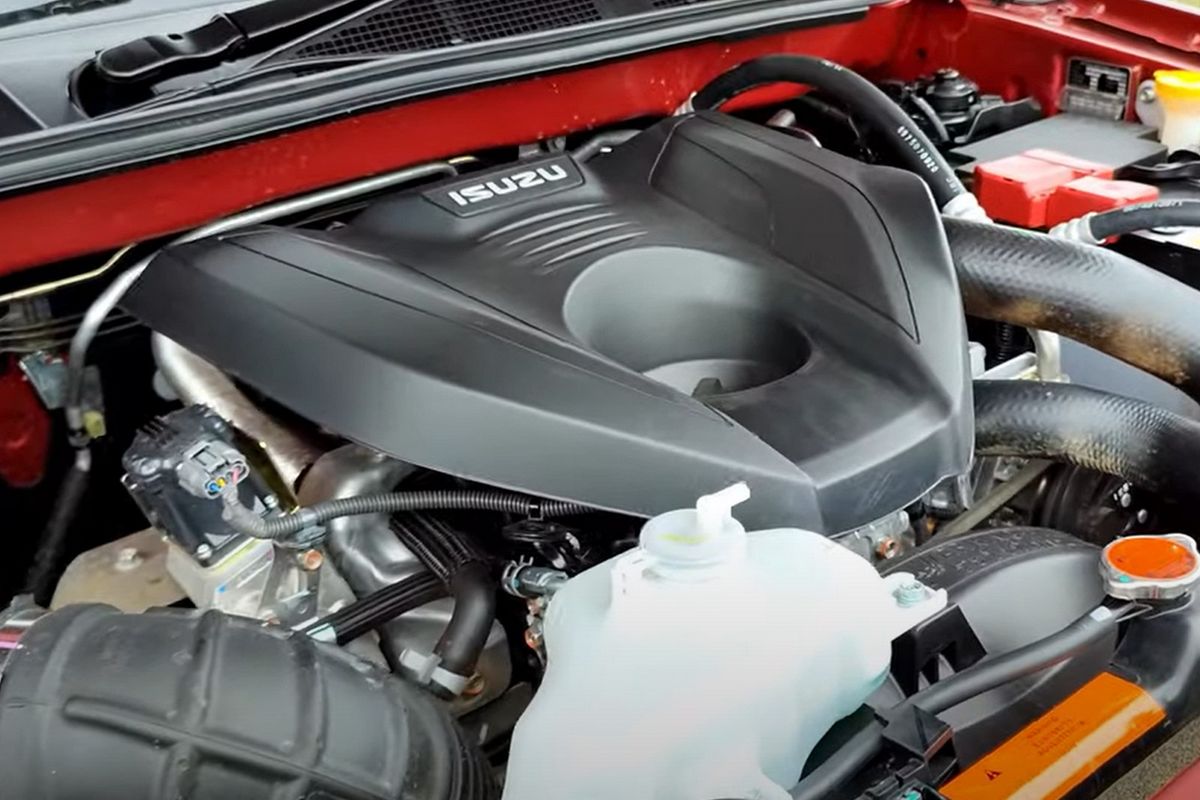
All MU-X derivatives are powered by Isuzu’s “new” 4JJ3 3.0-litre 4-cylinder turbodiesel engine. Just how new the engine is, however, is a matter of some debate, seeing as Isuzu South Africa refers to it as a “new version” rather than an all-new powerplant. From what we can figure out, however, everything is new, except for the conrods, well, supposedly. Power and torque figures have risen to 140 kW and 450 Nm respectively, which represent modest gains compared with the vehicle’s predecessor, which also had a 3.0-litre engine. With more than 4 million kilometres of durability testing completed, there is no reason why this, seemingly unstressed engine should not be able to continue the legacy of reliability that the Isuzu brand has built during the past few decades.
It is worth noting, however, that the Isuzu’s outputs are still lower than those of the 2.8-litre turbodiesel motor in the Fortuner as well as those delivered by the 2.0-litre bi-turbodiesel in the Ford Everest . Nevertheless, Isuzu claims a class-leading tow-rating for this vehicle (3 500kg braked). In general driving, we’d argue that the “new” engine feels very similar to the old one, particularly in that it has that “rumbly” sound that is so typically Isuzu and it does still feel relatively “lazy” compared with, for example, the Ford, when you suddenly flatten the accelerator pedal. Having said that, our experience with the same powerplant in the new Mazda BT-50 , which shares its underpinnings with the new D-Max and MU-X, has shown that the 3.0-litre motor is livelier than it feels; the Mazda has proved surprisingly pacy.
The engine is mated with an Aisin 6-speed automatic transmission that even offers manual shifting via paddles located behind the steering wheel. The transmission is very nicely matched with the engine’s torque-delivery characteristics and, barring the aforementioned scenario (where you make sudden, severe throttle inputs), it generally responds briskly and slickly. We spent a lot of time out on the open road in this vehicle and it never lacked sufficient overtaking acceleration, even when fully laden. It feels more refined than before too, but is that a big enough step forward for the drivetrain, however?
In terms of fuel efficiency, Isuzu claims a class-competitive average fuel consumption figure of 7.6 L/100 km. Usually, one should add roughly 20% to claimed figures to get a more accurate real-world view, which, in this instance, is 9.12 L/100 km. At the end of our test term, we calculated an average of around 9.6 L/100 km, which is fair given the fact that the vehicle was often heavily laden, while surfboards that were strapped to the roof played havoc with the aerodynamics… and that’s in addition to the bicycles that were mounted on a rack at the rear!
Ride & Handling
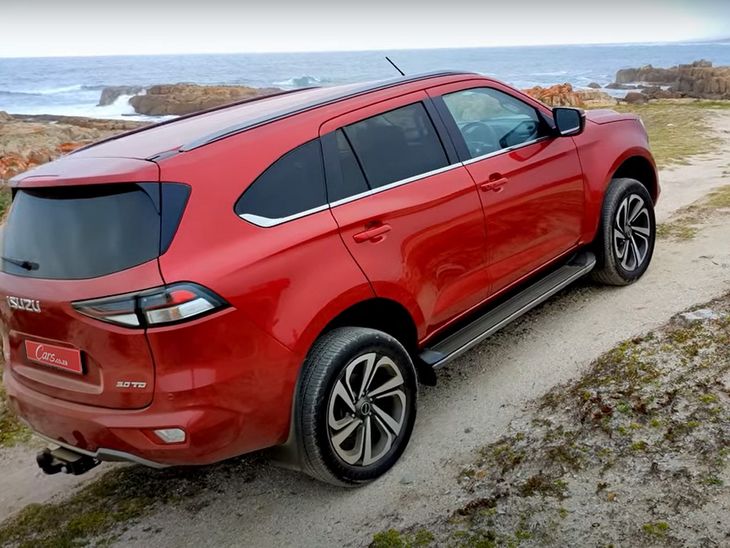
The top-spec Onyx gets 20-inch wheels but still has excellent cabin insulation and proper off-road ability.
Bakkie-based SUVs are often criticised for their iffy ride and handling characteristics, but this is an area in which the new MU-X has been significantly improved, arguably to the point where it is now a comfortable class leader. Although many South Africans take these vehicles off the beaten track, the reality is that most bakkie-based SUVs will spend most of their lives on tar. The new MU-X is more stiffly sprung than before, but the ride remains really good on the road (despite those big wheels), and it resists body roll far better than its predecessor (and, in particular, the Fortuner). Of course, it’s no “sports” SUV – its centre of gravity remains high, for example – but the improved dynamics and quieter cabin endow the MU-X with a near-premium driving feel on the road… without compromising it off-road.
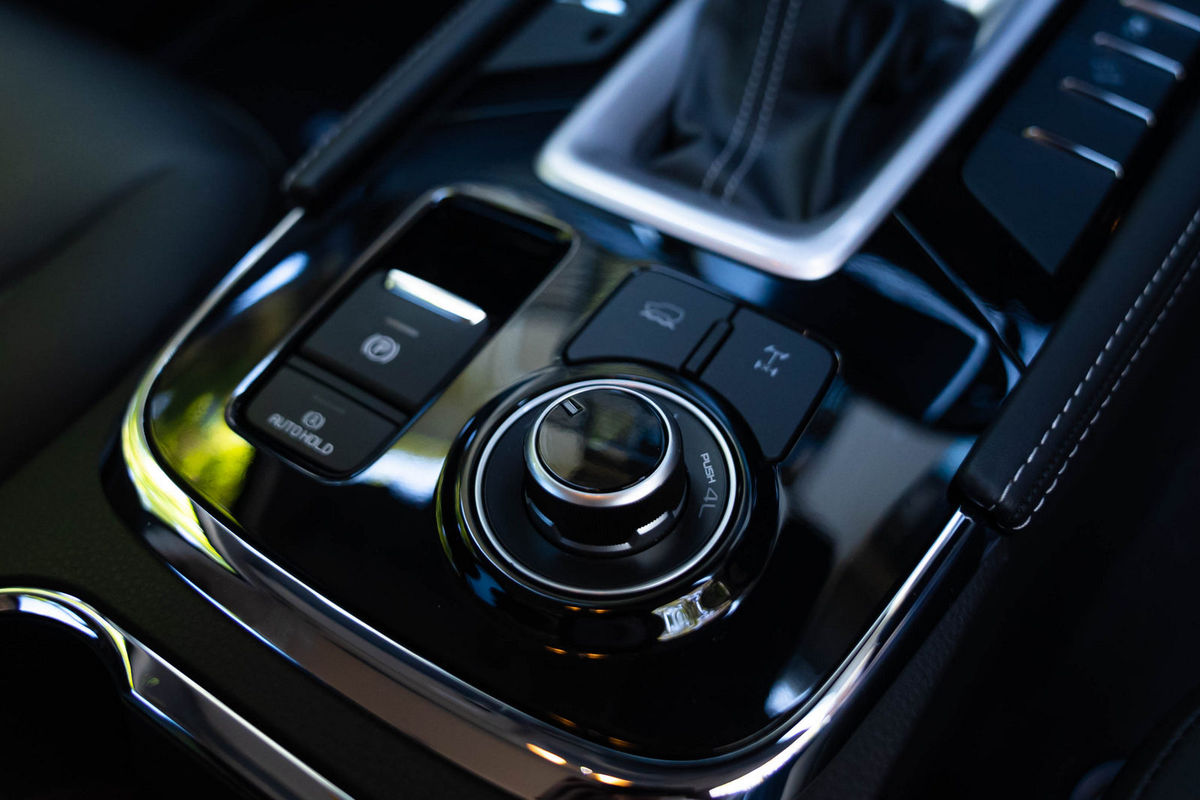
In response to customer demand, Isuzu added a rear diff-lock to the previous-generation MU-X late in its model life, but there’s no omission this time round. The MU-X features the usual rotary selector for high- and low-range 4-wheel drive, a rear diff-lock and a Rough Terrain mode which, when activated, adjusts the Isuzu’s traction control and electronic stability control settings to ensure enhanced traction and handling ability. In general, the newcomer is superb when travelling on gravel, although it does get a bit skittish on heavily corrugated surfaces (perhaps because of the stiffer suspension).
It has generous ground clearance (235 mm) and bests its 2 main rivals (the Fortuner and Everest) in terms of approach and departure angles, albeit only slightly. Owners who will be heading onto the really rough stuff will need to ponder the suitability of the side steps, of course, and should perhaps also exchange the road-biased tyres for chunkier examples, but the MU-X already has underbody protection guards for the sump, transfer case and oil pan as standard. Its wading-depth rating is a class-best-equalling 800 mm.
In our experience, the MU-X is now at least as good, if not better, than its rivals in most off-roading scenarios. The transmission and low-range settings combine to provide excellent control and traction in really tricky situations. It’s a pity that the MU-X doesn’t feature a more advanced camera system, because a 360-degree view (with the ability to zoom in on specific sides/areas) would make placing the big SUV far easier. Given that its asking price is nearing R900k, the top-of-the-range MU-X is an expensive vehicle and one wouldn’t want to needlessly scratch a rim – or that lovely red paint finish…
Comfort & Safety features
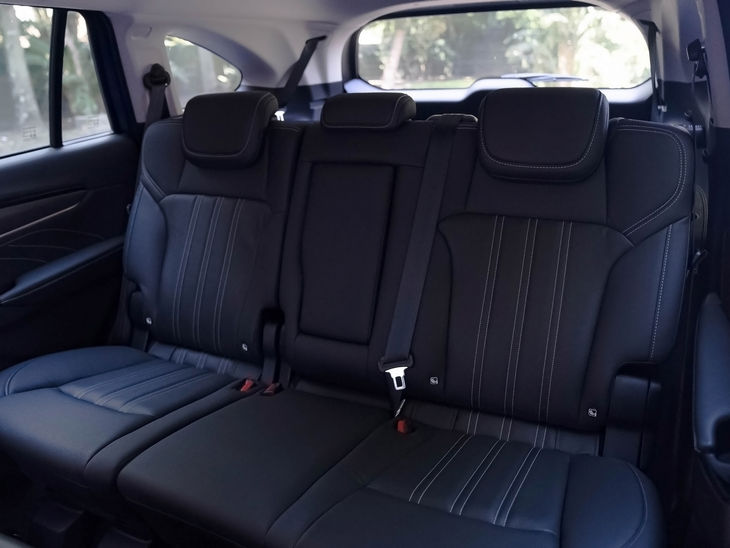
The rear seats can fold flat as well as tumble and turn if you require.
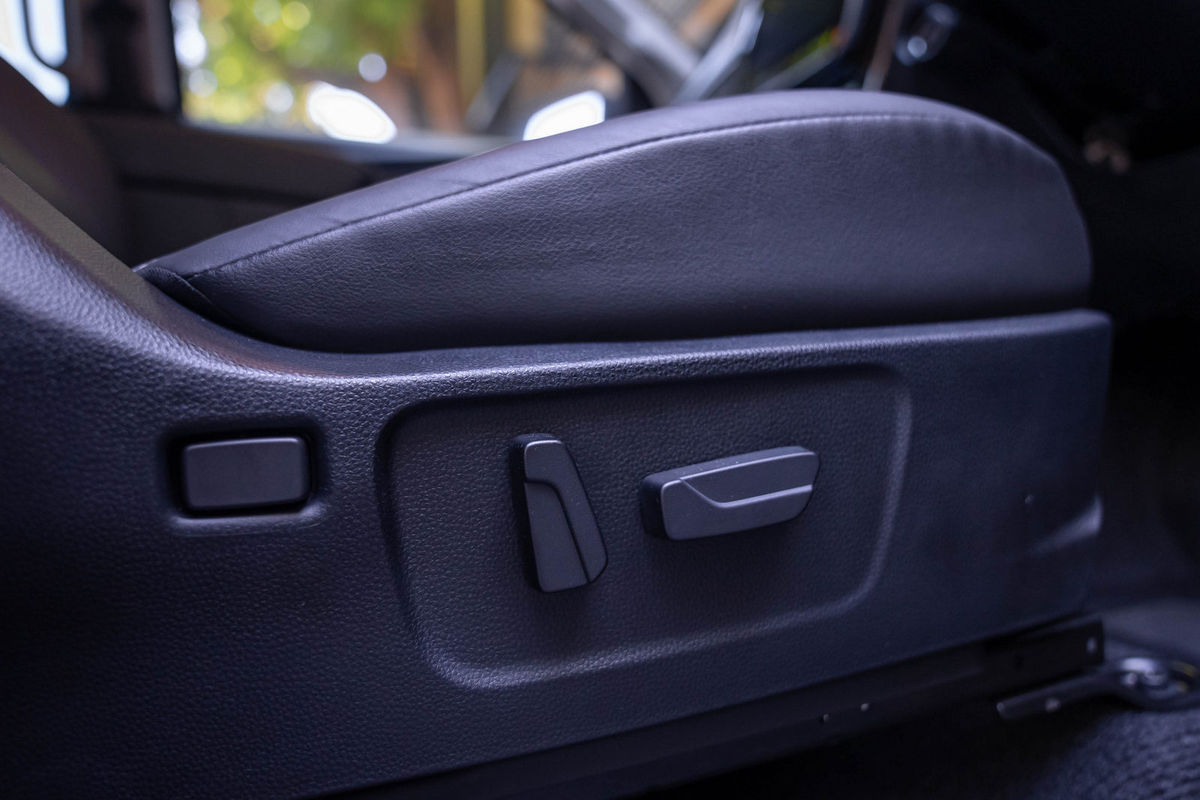
Given the fact that the Onyx is the flagship of the range, one may reasonably expect a full-house of standard features and, for the most part, Isuzu didn’t drop the ball in this regard. You get electric seat adjustment (and heating) for both front chairs (8-way for the driver, 4-way for the passenger), dual-zone climate control (with rear fan-speed control), a rake/reach-adjustable steering column, quality leather upholstery (it feels very smart), a powered tailgate and rear “privacy” windows (tinting).
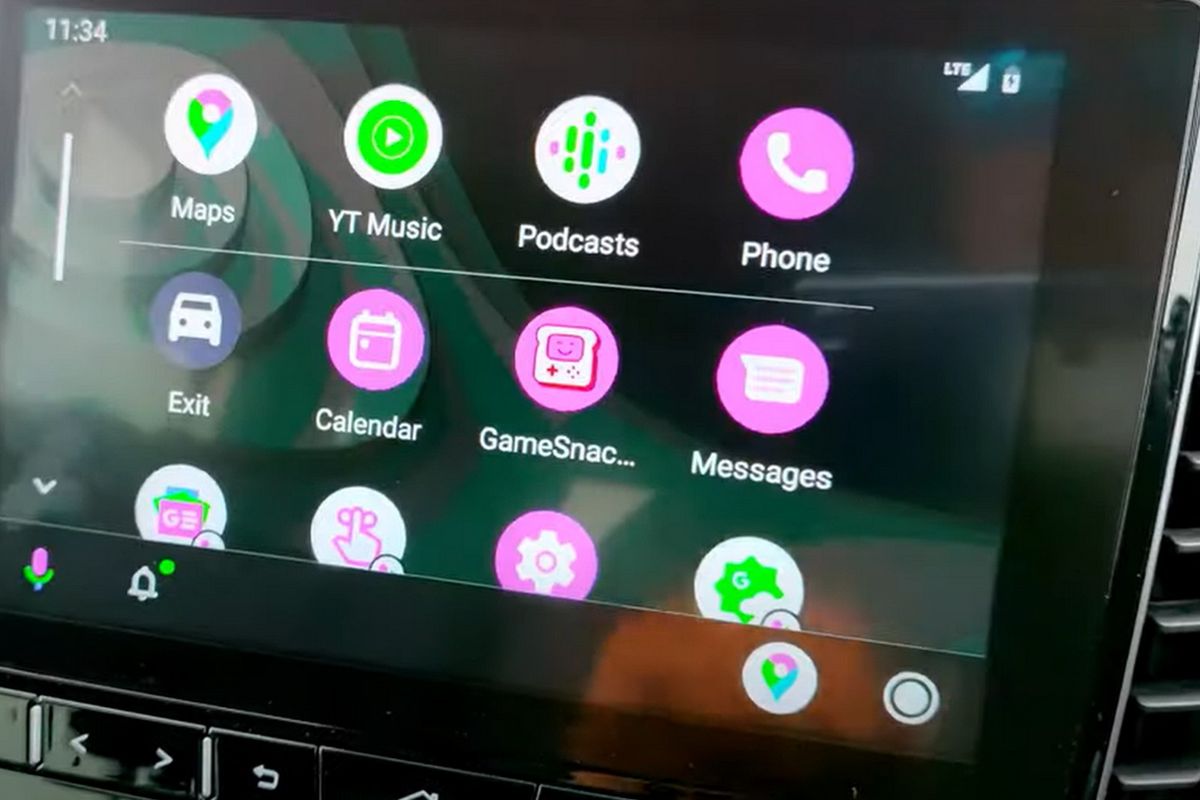
Moving on to infotainment, there is the aforementioned 9-inch screen in the centre of the fascia, which also doubles as the display for the rear-view camera. While the resolution of the screen is good, and it’s easy enough to find your way through its menu system, the reality is that there’s not a heck of a lot going on in there in the first place. Sure, because you have (wireless) Apple Carplay and Android Auto, perhaps you don’t need anything more, but given the vehicle’s flagship status, we think the provision of at least a surround-view camera system would have been a nice touch.
There’s no wireless charging pad, either, with a single USB outlet in the front of the cabin, and another two at the rear (in addition to a very useful 2-point 12V power socket). In front of the driver is a pretty generic mix of analogue and digital instrumentation, with the rev counter and speedometer flanking a smaller digital trip computer (including tyre pressure monitoring).
In terms of standard safety features, however, the MU-X is undoubtedly at the cutting-edge of passive and active safety features in this segment. First, let’s just list the expected features: it gets, inter alia, 7 airbags, ABS with EBD and BAS, stability control, hill-start assist, hill-descent control, ISOfix child-seat anchors, blind-spot monitoring and front and rear park distance control (with rear-view camera).
What’s more, the Onyx avails adaptive cruise control, autonomous emergency braking, forward-collision warning, rear cross-traffic alert, lane-keep assist and lane-departure prevention. Some of these features (particularly the lane-keep assist) can be a mite too intrusive at times, but with familiarisation, they do, admittedly, become less intrusive. Isuzu should be applauded for not holding back when it comes to safety features and, consequently, the MU-X has achieved a 5-star rating in the rigorous ANCAP (Australian) crash test/safety programme.
Price and After-Sales support
The Isuzu MU-X 3.0TD Onyx retails for R860 500 (January 2022) and the price includes a 5-year/120 000 km warranty, as well as a 5-year/90 000 km service plan. Service intervals are scheduled for once a year or every 15 000 km, whichever comes first.
Verdict
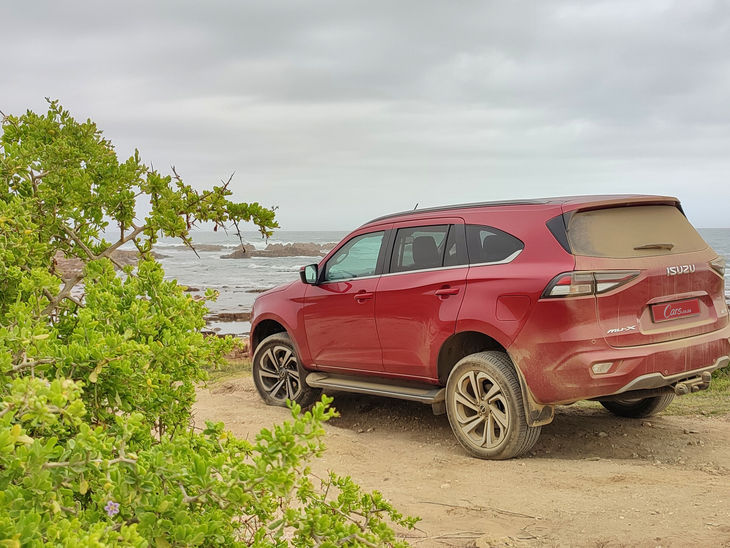
The price tag on the Onyx model might be a bit high, but it’s now a worthy contender in the segment.
This very handsome new MU-X represents a vast improvement over its predecessor and should significantly improve Isuzu’s chances of increasing sales in the bakkie-based SUV segment. Remember, Isuzu is essentially a 2-model brand and, therefore, can’t afford to get a product’s packaging or specification wrong. The new MU-X simply must improve its sales performance in the D-SUV segment and we can’t see why it couldn’t achieve exactly that. It may appear pricey at this Onyx specification level, so consider one of the lower trim levels if you don’t need the really advanced safety features. Overall, given the overall package’s competitiveness in terms of presentation, on-road prowess, off-road ability and general comfort, this is now a vehicle that should be on the radar of any shopper in this segment.