
SA’s advertising watchdog has ruled against a Kia advert for the Tasman bakkie, saying it’s “likely to cause sectoral offence to those affected by neurological conditions”…
- TV advert for Tasman attracts complaint
- Advertising watchdog rules against Kia SA
- Kia SA ordered to “remove or amend” ad
South Africa’s advertising watchdog has ordered Kia South Africa to “remove or amend” a television advert for the Tasman bakkie, ruling that its content is likely to cause offence to “those affected by neurological conditions”.
In its ruling, the Advertising Regulatory Board (ARB) explained it had received a complaint about a local TV commercial for the Tasman. The advert in question – which Cars.co.za understands was created by the Cape Town-based OFyt advertising agency and produced by Patriot Films – opens on a man entering a shop carrying various boxes. He is shaking and a few smaller boxes fall from the pile.
The ad for the bakkie – a model that hit the market in SA in April 2026 – then cuts to a man trying to weigh bird seeds. He is likewise shaking and seeds falls from his scoop. According to the ARB, various scenes follow, each showing individuals finding it difficult to complete tasks – from reading a newspaper to drinking a cup of coffee – because they are shaking.
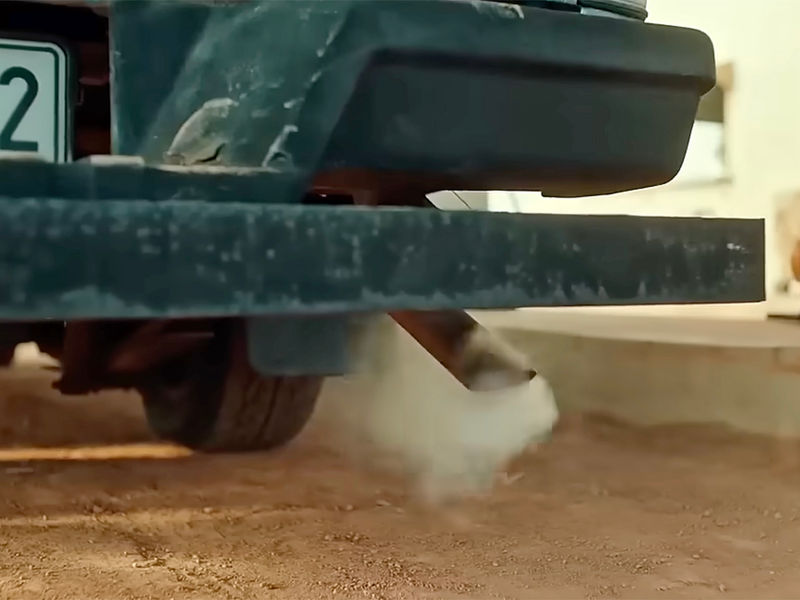
A shaking exhaust pipe is then shown. One of the shaking people sits in a bakkie, which itself is shaking, and watches a man crossing the parking area carrying some piping. The latter individual is not shaking, climbs into his Tasman (which doesn’t shake) and drives away, while the shaking people look on. The text “Built for rough” and “Tuned for smooth” appears on the screen, before the Tasman driver is shown enjoying a smooth ride.
Consumer complaint against the Tasman advert

According to the ARB, the complainant stated the commercial depicts individuals shaking uncontrollably in a manner that “closely resembles” symptoms associated with Parkinson’s disease and other neurological disorders. As someone who has a close family member suffering from Parkinson’s disease, the complainant found the advert “deeply upsetting, insensitive and inappropriate”.
The complainant further stated that Parkinson’s disease is a “serious and debilitating medical condition” that affects not only those diagnosed but also their families and caregivers who witness the daily struggles associated with the illness. According to the complainant, using movements that resemble such symptoms for entertainment or comedic effect can be perceived as “mocking or trivialising those conditions”.
Kia South Africa’s response to the complaint

According to the ARB, Kia SA responded that the shaking of the various individuals in the advert represents the “rough, uncomfortable ride experience that those vehicles deliver on South African roads”. This, the advertiser said, is directly attributable to the bakkies they drive. The rattling exhaust pipe is shown as a deliberate visual connector, “making the causal link between the vehicle and the physical experience explicit and unmistakable.”
Kia furthermore told the ARB that before being aired, its advertising agency had “voluntarily submitted” the commercial to an experienced legal practitioner who assessed that the treatment constitutes hyperbole and raised no concern that the depiction “could be misconstrued as representing Parkinson’s disease or any other medical condition”.
In addition, Kia SA referenced the Code of Advertising Practice, which permits parody in South African advertising, emphasising that the shaking of the individuals (along with the shaking of the bakkie’s exhaust) explicitly shows why they shake. The shaking, Kia SA said, is multidirectional – forwards, backwards and lateral – which are “precisely the axes of vehicular movement over uneven terrain”. In the same environment, however, the Tasman driver does not shake.
The South Korean brand’s local division said this “provides a visual logic” against which a viewer would have to work to reach the complainant’s interpretation. The company furthermore stated the shaking depicted is “physically distinct from a Parkinson’s tremor”, that the commercial “makes no reference to any medical condition” and that “there are many other possible causes for extreme trembling beyond the complainant’s interpretation”.
The ARB’s ruling against Kia SA’s Tasman advert
In the matter, the ARB said it had considered Clause 1 of Section II of the Code of Advertising Practice, which states: “No advertising may offend against good taste or decency or be offensive to public or sectoral values and sensitivities, unless the advertising is reasonable and justifiable in an open and democratic society based on human dignity, equality and freedom”.
Though the ARB said it “accepts” there is no intention to depict Parkinson’s or any other neurological disorder (and that viewed as a whole the reasonable consumer will understand that the characters are not suffering from such a disorder), it added that this context is not set up from the beginning of the commercial.

“Given this, the Directorate considers the inadvertent outcome of the depiction of individuals shaking severely may reasonably be understood for at least part of the commercial to be a neurological disorder. A reasonable viewer of this commercial is likely to wonder why the individuals are shaking,” explained the ARB.
“The effect of this shaking on ordinary activities like carrying a box, reading a newspaper or drinking coffee is not immediately apparent. Before the later context provided by the shaking bakkie, the initial most likely impression is that the individuals are experiencing some form of neurological disorder.”
The ARB said the subsequent explanation for the individuals’ shaking “does not retrospectively dispel the initial impression created by the commercial”. It also points out it does not regard the “depiction of a neurological condition as offensive in and of itself”.
“Rather, when the apparent symptoms of such a condition are used as the basis for humour, and the product being sold is offered as an antidote to those symptoms, the Directorate finds that the commercial may be perceived as making light of those symptoms.

“Because the commercial is likely to create an initial impression that the individuals depicted are suffering from a neurological condition, the directorate concludes that it is likely to cause sectoral offence to those affected by neurological conditions. This is prohibited by Clause 1 of Section II of the Code, and the complaint is upheld,” the ARB said.
In its 8 July 2026 ruling, the ARB instructed Kia South Africa “to remove or amend the commercial depicting shaking individuals immediately as deadlines permit”. At the time of writing, the 45-second advertisement was still showing on Kia SA’s YouTube channel, with a 30-second version likewise still up on the brand’s Facebook page.
Frequently Asked Questions (FAQ)
Q: Why did South Africa’s advertising watchdog rule against the Kia Tasman TV commercial?
A: The Advertising Regulatory Board (ARB) ruled against the advert because the initial scenes depict individuals shaking uncontrollably while trying to complete daily tasks (such as carrying boxes, weighing bird seeds, reading a newspaper and drinking coffee). The ARB found that without immediate context, these severe physical tremors could easily be mistaken for a neurological condition like Parkinson’s disease, thereby making light of the symptoms for commercial gain and causing sectoral offence.
Q: What was Kia South Africa’s defence of the Tasman “Built for rough, tuned for smooth” campaign?
A: Kia SA argued that the shaking was a hyperbolic visual representation of the rough and uncomfortable ride experienced in competitors’ bakkies on South African roads, contrasted against the smooth ride of the Tasman. They noted that the shaking was multidirectional to mirror a vehicle’s movements, a shaking exhaust pipe was used as a visual connector and prior legal review concluded the content was clear parody with no reference to any medical illness.
Q: What action has the ARB ordered Kia South Africa to take and what is the current status of the advertisement?
A: In its ruling on 8 July 2026, the ARB instructed Kia South Africa to immediately remove or amend the commercial. While the regulator accepted that there was no malicious intent to mock neurological disorders, the lack of immediate context meant the initial impression remained offensive. Despite the directive, the 45-second video and its 30-second cutdown initially remained accessible on the brand’s official YouTube and Facebook channels.
Related content
Kia Tasman (2026) Launch Review