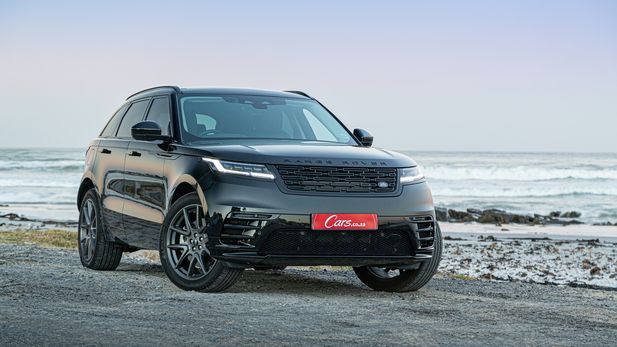

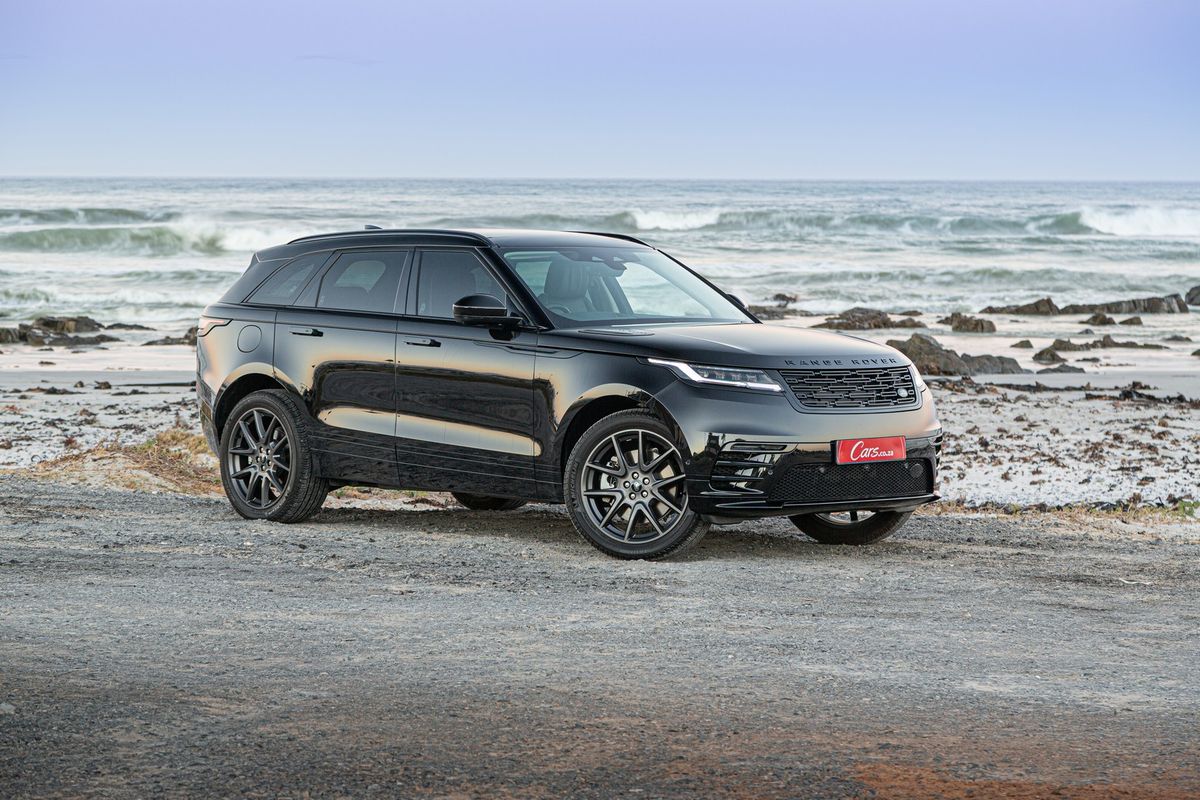
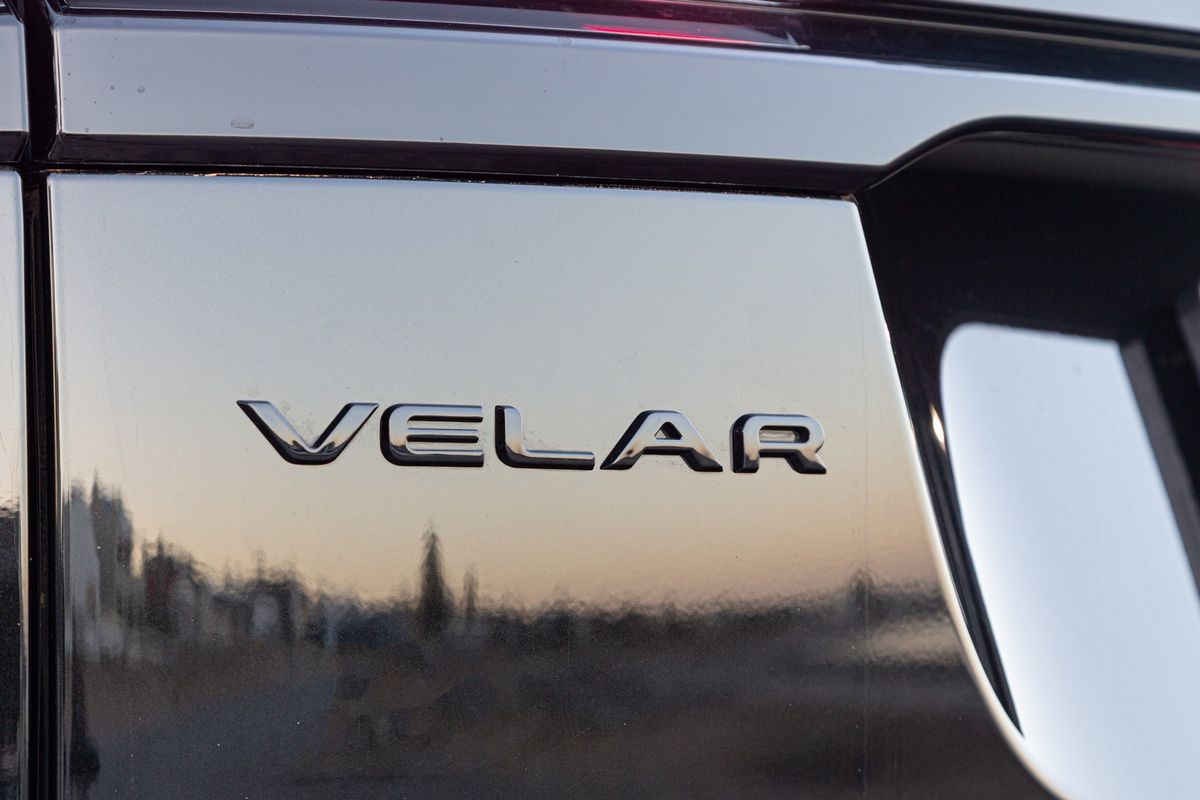
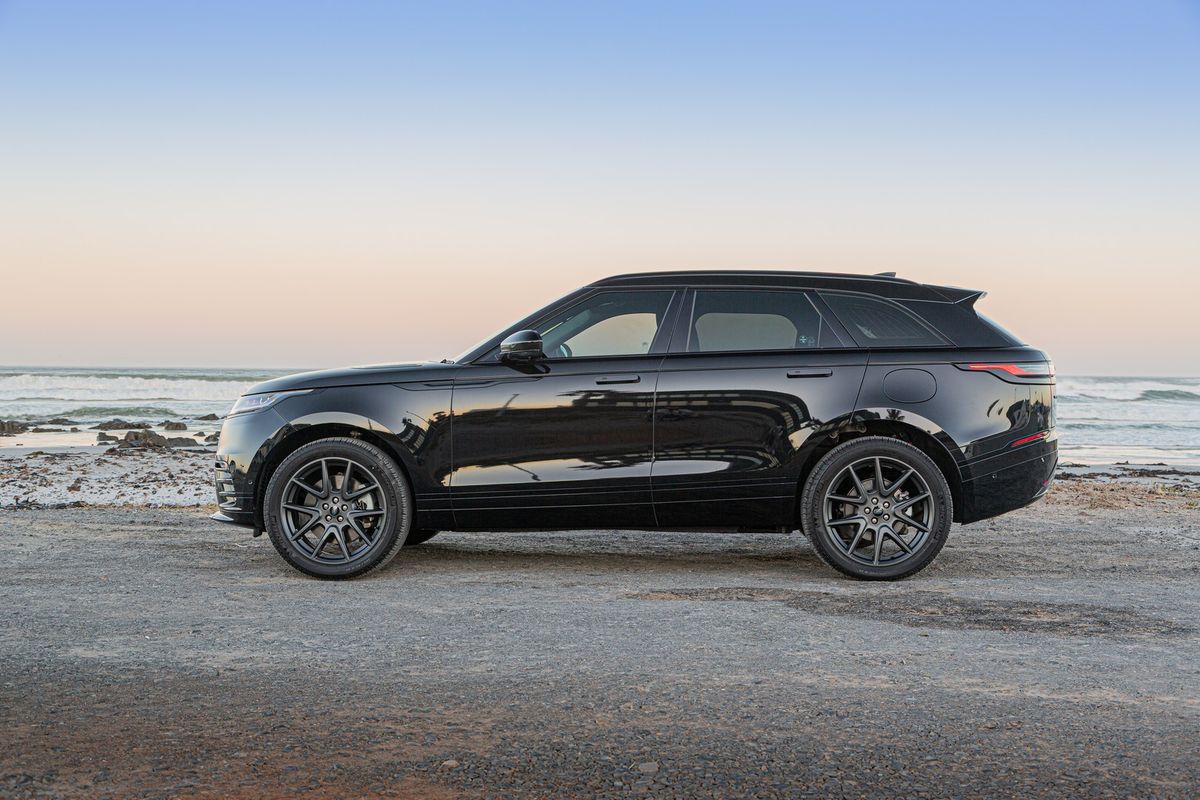
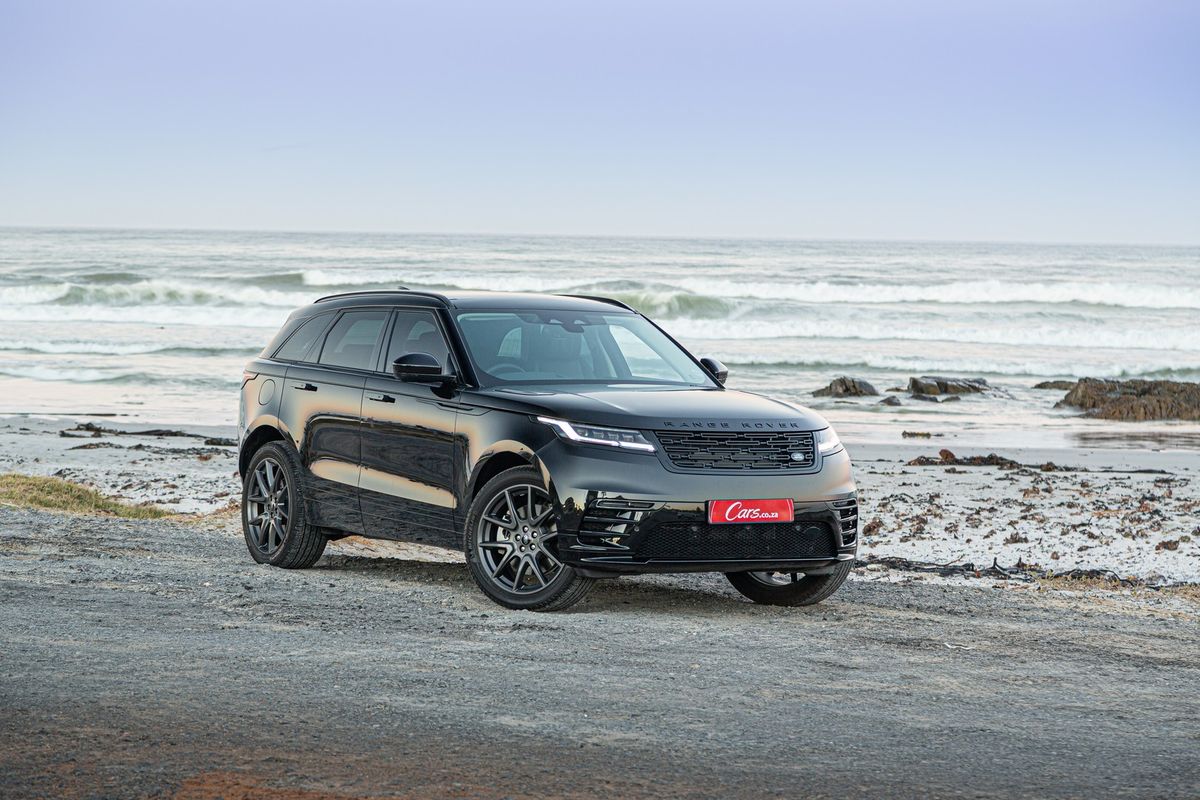
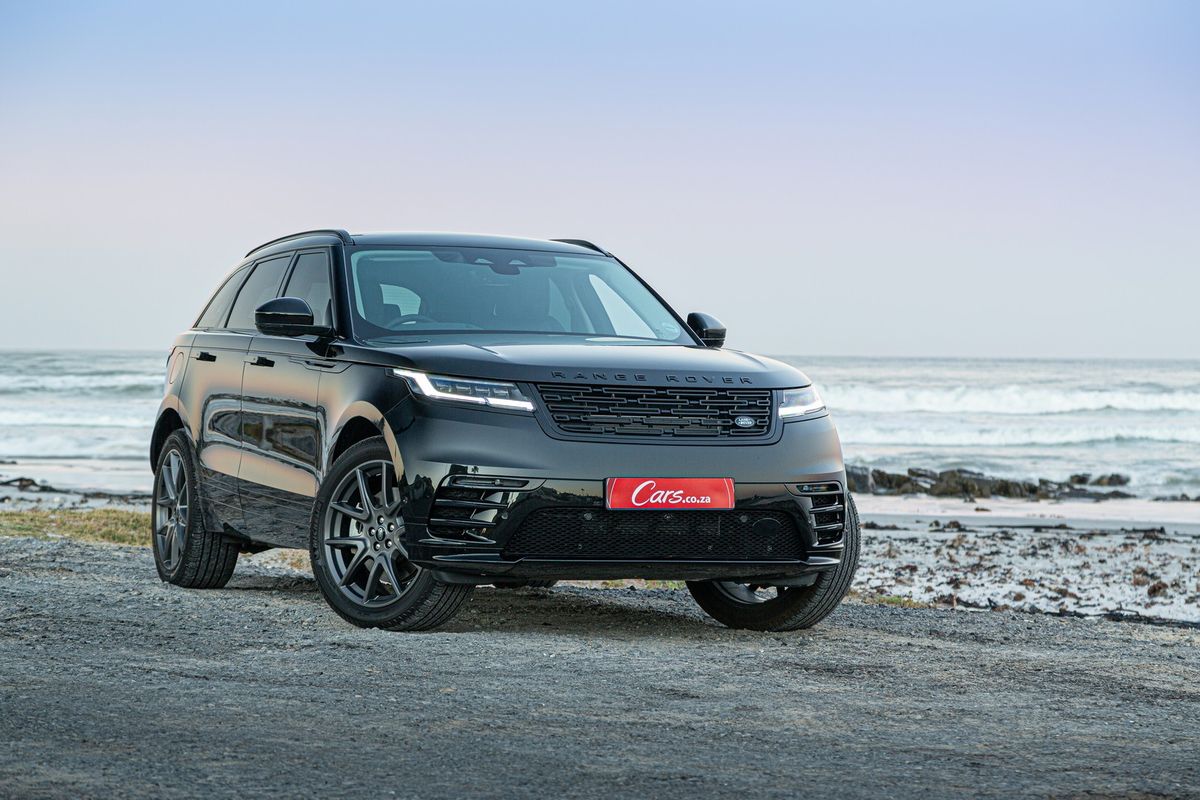
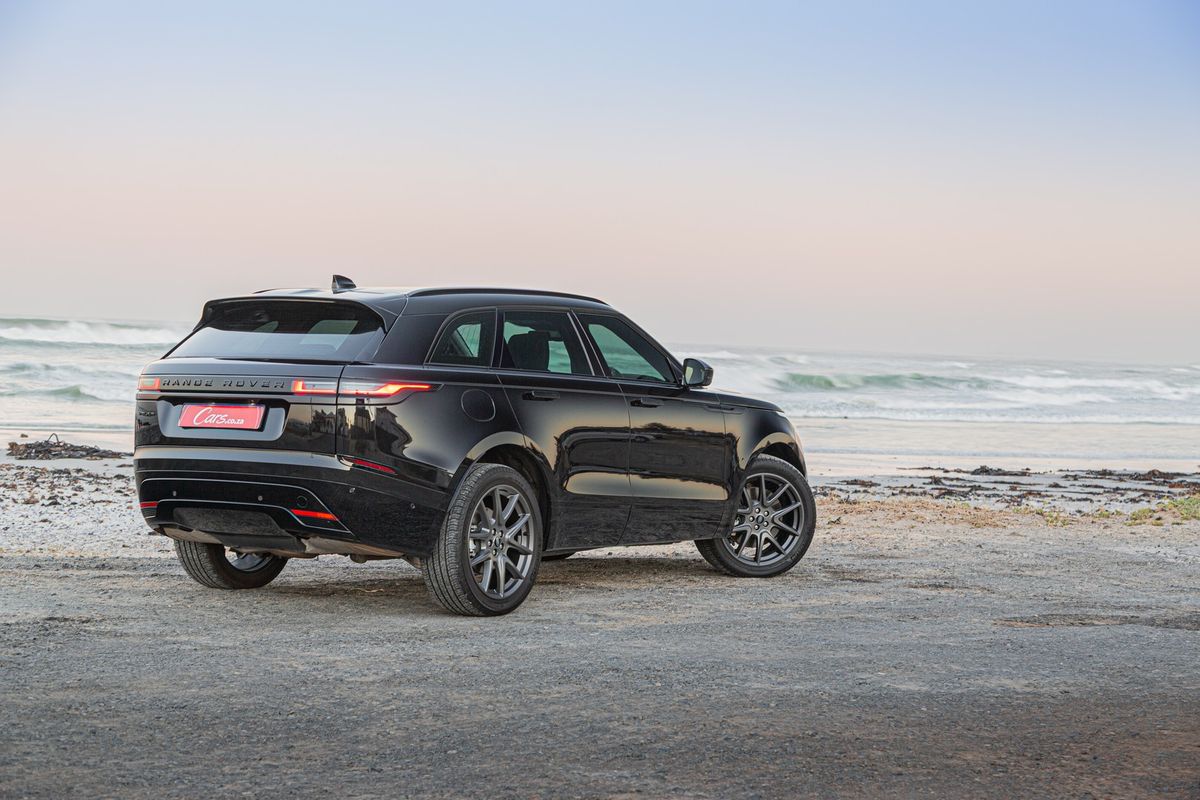
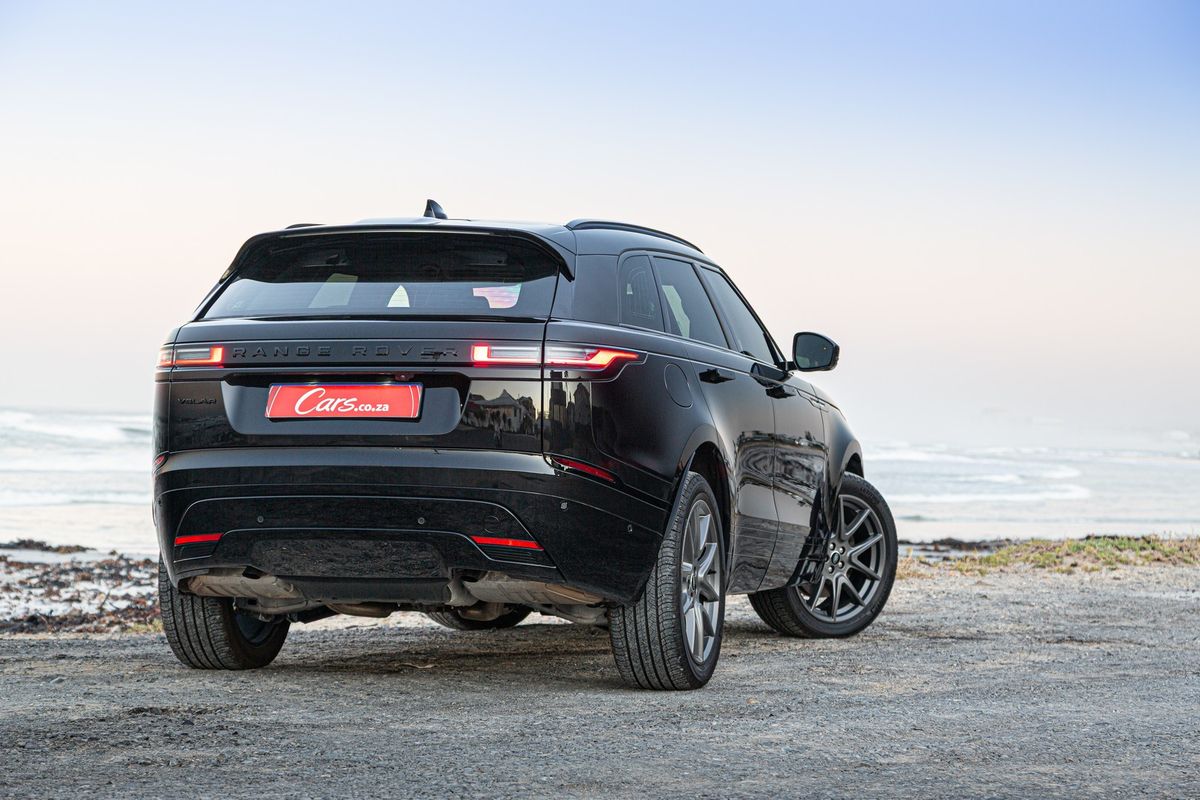
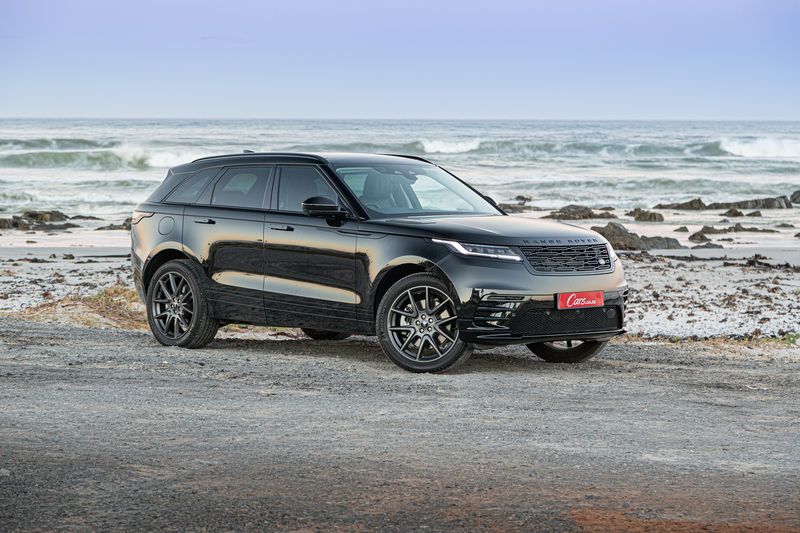
The Range Rover Velar PHEV, which sits at the summit of the British marque’s Premium SUV range, attempts to combine efficiency and performance in an eminently stylish – let alone luxurious – package. Is it worth its lofty price tag? Let’s find out.
We like: Styling, brilliant infotainment system, refinement, fuel efficiency.
We don’t like: Thirsty once the hybrid battery’s charge level is depleted, limited rear legroom, pricey.
FAST FACTS
- Model: Range Rover Velar P400e Dynamic SE
- Price: R2 098 300 (March 2025)
- Engine: 2.0-litre 4-cylinder turbopetrol with electric assist
- Transmission: 8-speed automatic
- Power/Torque: 297 kW/640 Nm
- 0-100 kph: 5.4 sec (claimed)
- Claimed fuel consumption: 2.2 L/100 km when hybrid battery charged
- Luggage capacity: 673-1 731 litres
Serious about buying/selling?
Some dealerships regularly offer great deals. See our New Car Specials!
Looking to sell your car? Sell it on Cars.co.za for free
Where does the Range Rover Velar PHEV fit in?

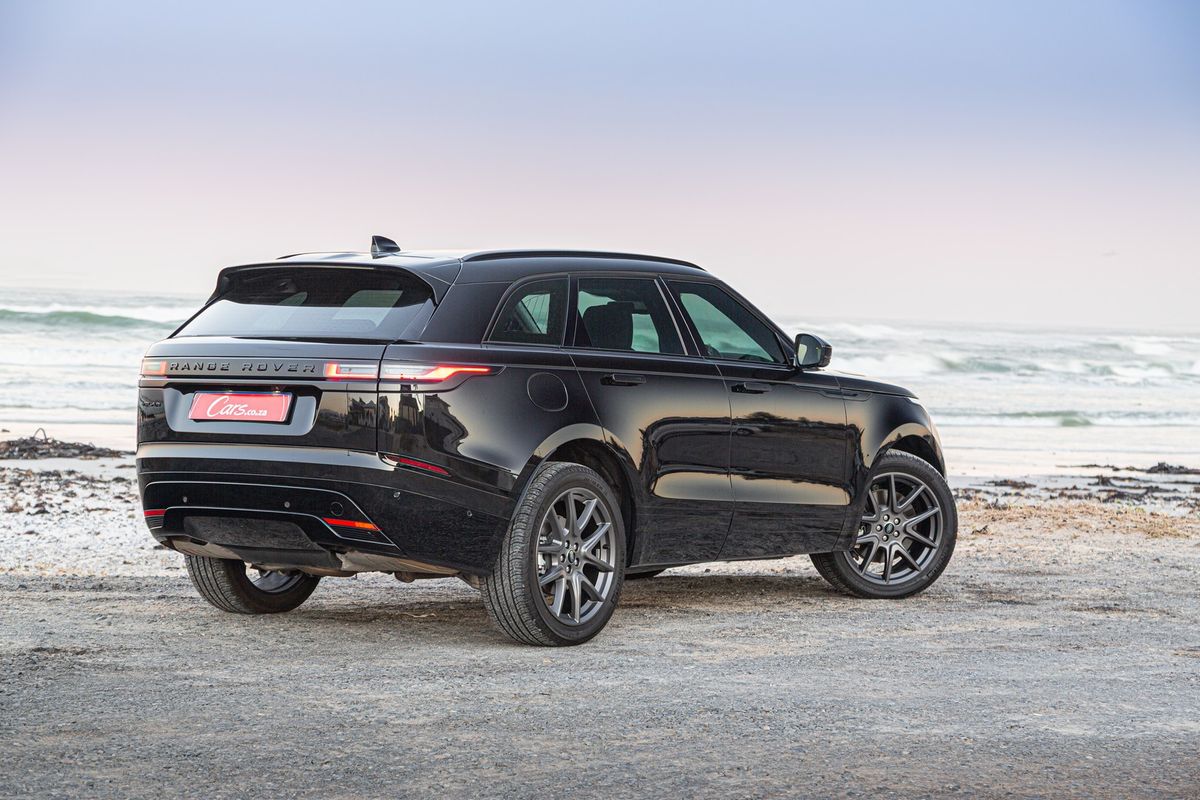
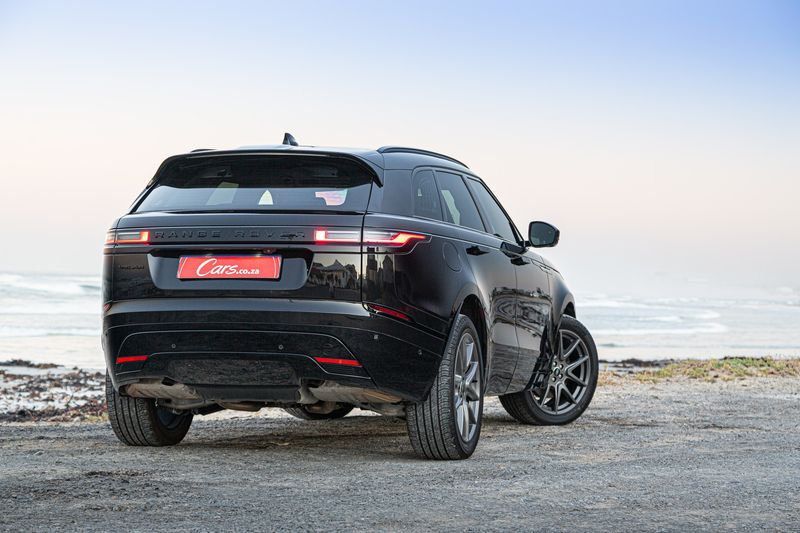
There’s so much allure to Range Rover’s brand image and design language. JLR’s pre-eminent brand produces several desirable models and despite its age, the Velar still manages to turn heads.
A raft of updates to, and enhancements of, the Velar have kept it relevant in an ever-changing market. The most recent tweak sees the introduction of a larger infotainment screen, powered by the latest Pivi Pro operating system. The range comprises a trio of diesel derivatives, plus this – the plug-in hybrid.
There are only a handful of plug-in hybrid premium SUVs available in South Africa (if you’re shopping around the R2 million price point). Your first port of call should be the multiple CarsAwards category-winning Volvo XC90 T8 . Sure, it’s getting on a bit and lives in the shadow of its accomplished 30d sibling (also a CarsAwards winner), but a few subtle updates have kept the XC90 PHEV relevant in its segment.
Another venerable contender – and the 2025 CarsAwards winner in this category – is the BMW X5 . It is also available as a PHEV (in X5 50e guise, but we haven’t tested that variant). If you want something different, the Lexus RX 450h+ is very accomplished – it’s not as flashy, but much more affordable – and, of course, don’t forget about the Porsche Cayenne e-hybrid , even if it’s even pricier than the Velar.
Compare the Range Rover Velar’s specs with those of the Volvo XC90 T8 and BMW X5 50e
How the Range Rover Velar PHEV fares in terms of…
Performance and Efficiency
A plug-in hybrid electric vehicle (PHEV) utilises an internal combustion engine and an electric motor mated with a hybrid battery, which is topped up by harvesting kinetic energy and can be fully recharged at home – or a charging station. Cleverly, the various elements of the power unit are integrated to deliver an uninterrupted and automated driving experience; owners can run the vehicle on either powertrain.
In the case of the Range Rover Velar PHEV, a 2.0-litre 4-cylinder turbopetrol engine and electric motor work together to produce combined outputs of 297 kW and 640 Nm. And, like most PHEVs, the P400e Dynamic SE offers brisk acceleration. Range Rover states a 5.4-sec 0-100 kph time for this variant and, when we put the Velar through its paces, our test gear confirmed a time of 5.99 sec. So, yeah, it’s quick!
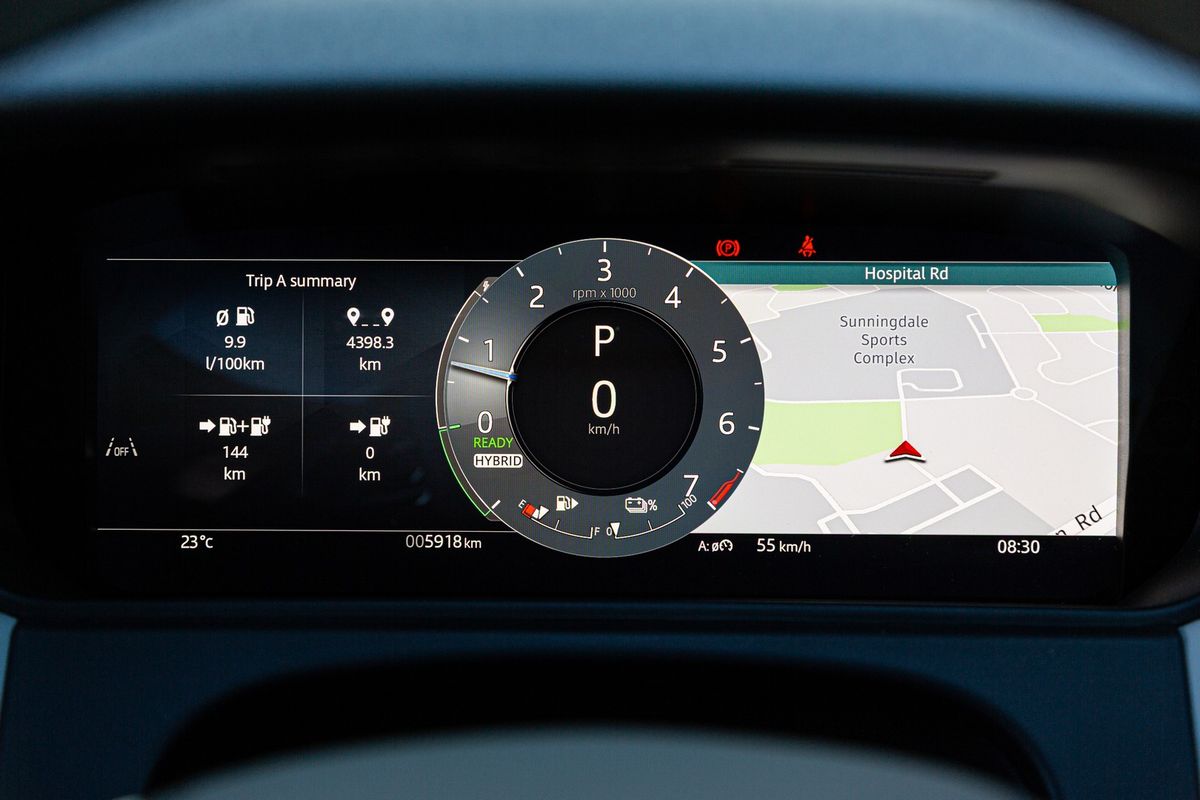
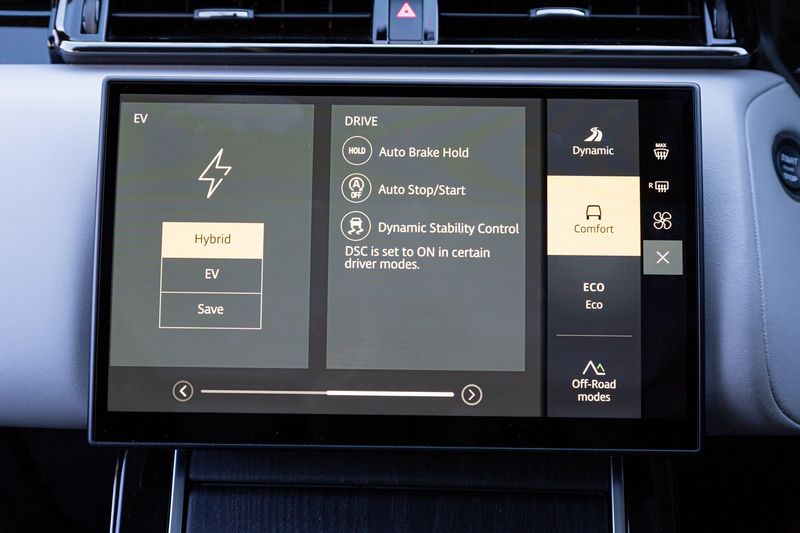
The real strength of a PHEV is its ability to operate in either hybrid or pure-electric mode; it’s tailor-made for those markets that tax motorists based on emissions. Without the petrol engine, 15.4 kWh of usable hybrid-battery capacity is good for about 65 km, but we found it best to utilise the Velar’s hybrid setting.
The SUV will run “on battery” at low speeds (such as when you’re wading through congested traffic) and then seamlessly transition to petrol power at higher velocities. When you lift off the accelerator to coast to an intersection, the petrol engine will deactivate while the brakes harvest energy to top up the battery.
The fuel consumption figures claimed for PHEVs sound too good to be true; the Velar, a full-size family car with a kerb weight above 2.2 tonnes, is claimed to use just 2.2 L/100 km. So, just how miserly is it?
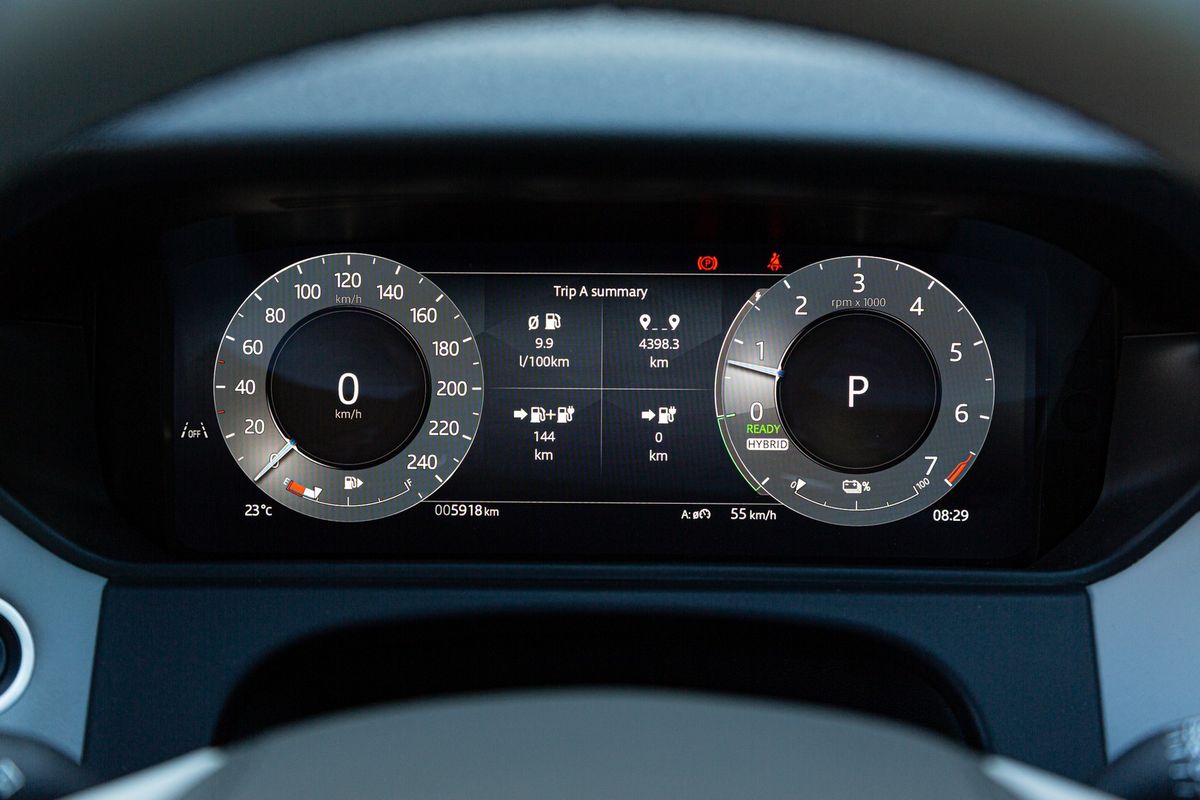
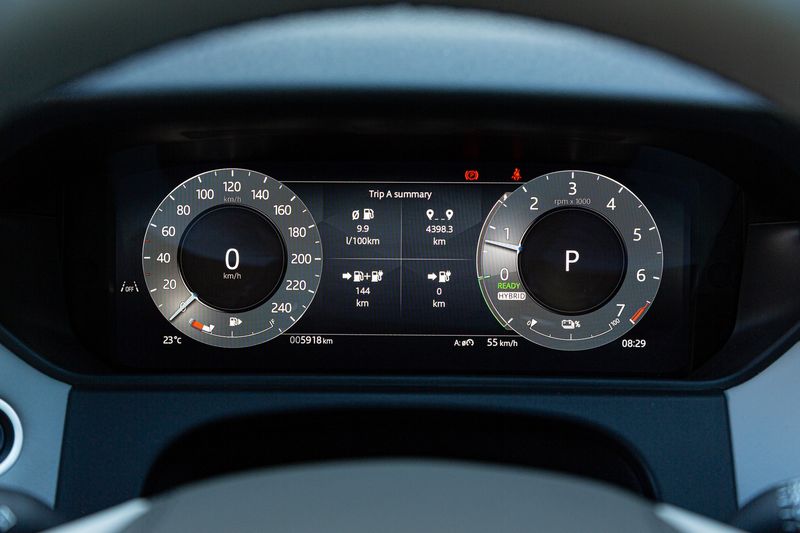
Well, 1 of our testers saw an indicated figure of under 2 L/100 km on his commute to the office (granted, it was on a level road, in slow-moving traffic, so the Range Rover’s electric motor did most of the work). But, bear in mind that when that hybrid battery is depleted, the P400e Dynamic SE’s consumption will increase notably when the petrol engine provides the propulsion and replenishes the battery’s charge level in Save mode. When driving on the open road with the battery near depleted, we saw 9.9 L/100 km.
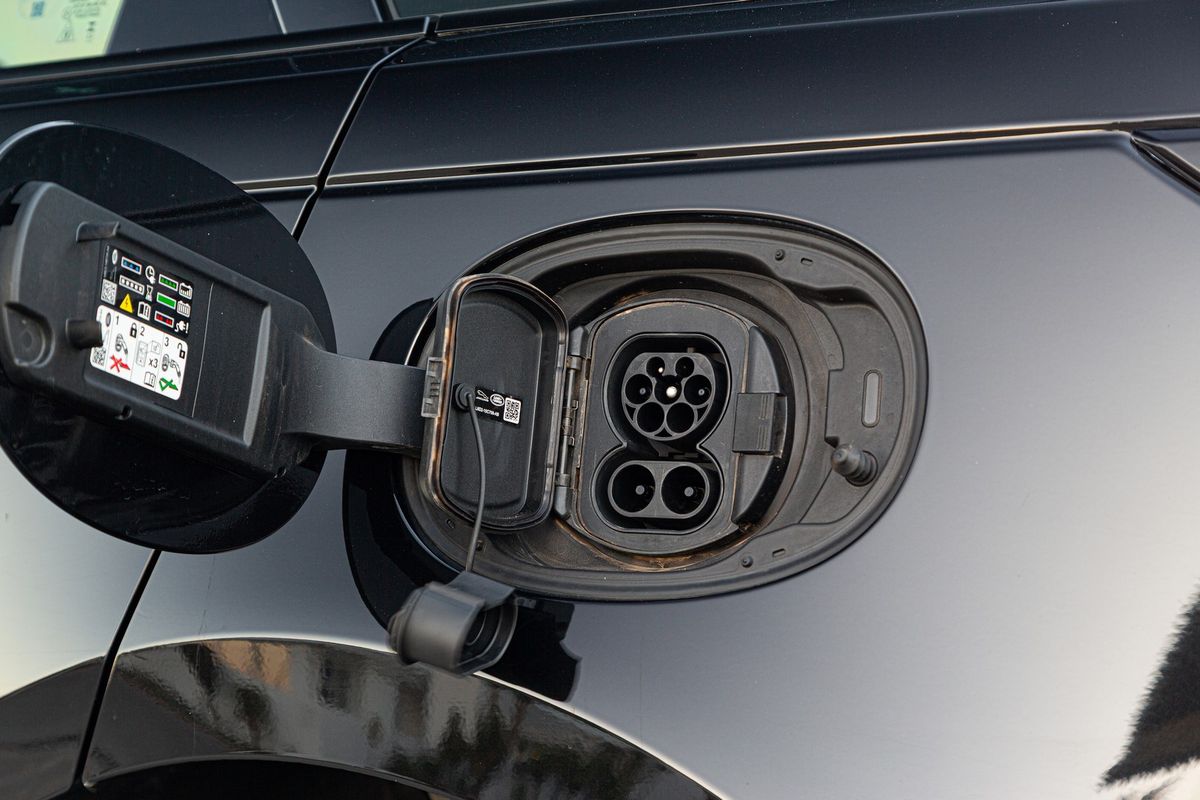
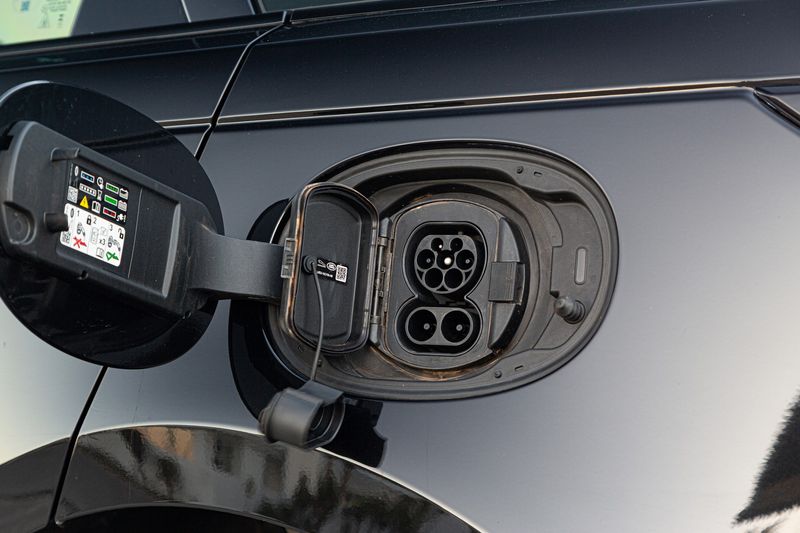
As for recharging, the Range Rover Velar PHEV is one of the few vehicles in its class that supports fast (DC) charging at 50 kW, which means you can rapidly “top up” at public charging stations. You can also charge via AC power, but at a slower rate; this method is best suited for “plugging in overnight” at home.
The driving experience is whisper-quiet – and ultra-refined. The key to the near-silent running is clever active noise cancellation that dials out the exterior noise and cabin vibration. Despite its nomenclature, this P400e Dynamic HSE’s on-road demeanour is laid-back. The throttle response is leisurely; only when you fully depress the accelerator pedal does the Velar PHEV come alive to deliver a brisk turn of pace.
You wouldn’t want to “hoof it” too often though: the engine note is not particularly pleasant at high revs.
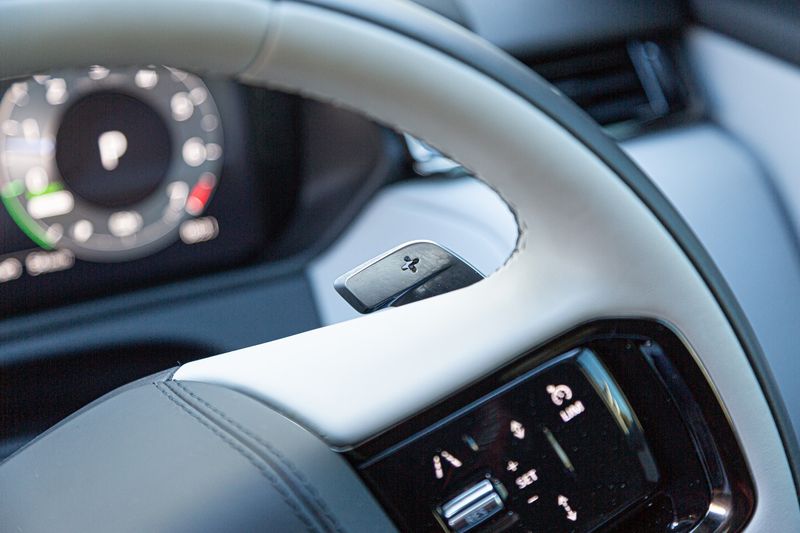
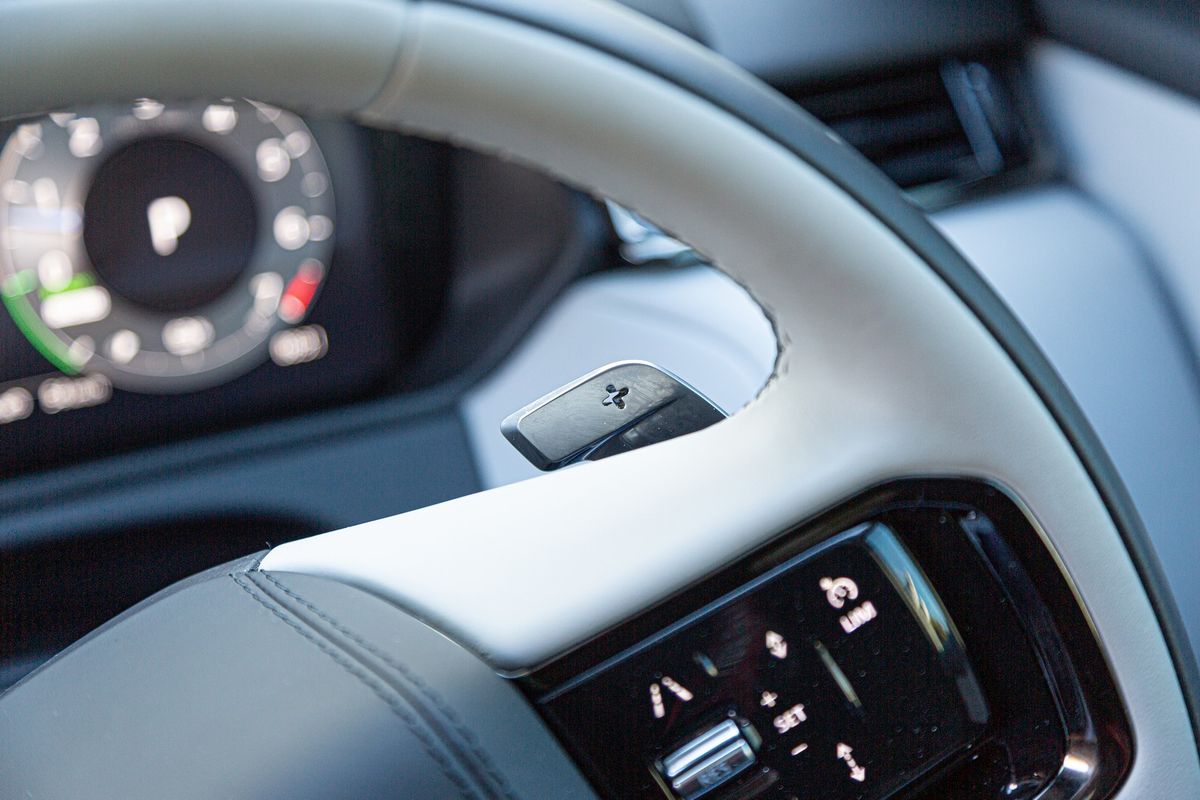
The 8-speed auto transmission can hesitate, especially at lower speeds, when the car toggles between electric and petrol propulsion, but you quickly learn to adapt your driving style to negate this. Beautifully crafted ‘shift paddles are affixed to the back of the steering wheel and they’re lovely to touch, but we found the powertrain/shift mapping was efficient enough that we hardly ever felt the need to use them.
Ride and Handling
Our test unit came with its standard adaptive suspension, but it’s a little surprising that such a premium offering isn’t offered with air suspension, at least not in the South African market. The Velar PHEV’s ride quality does depend on which drive mode you’ve selected, but the default setting is on the supple and pliant side of things, which is just how a Range Rover should be: gentle, comforting and cossetting.
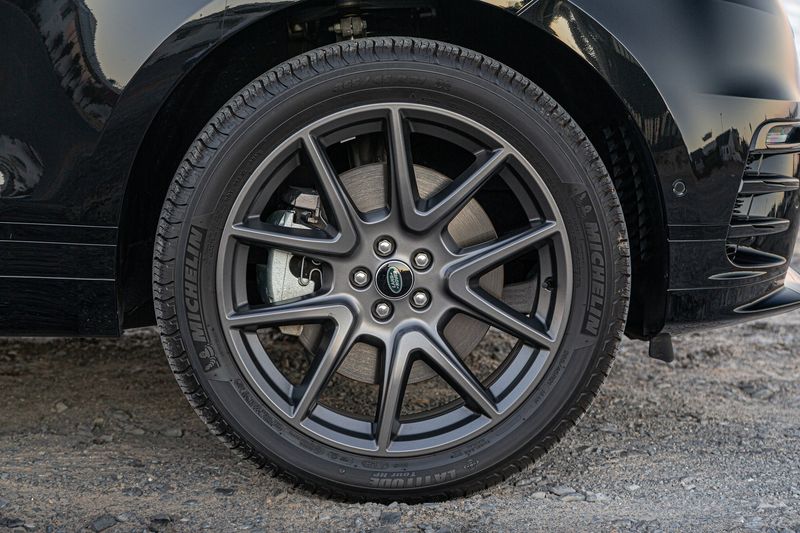
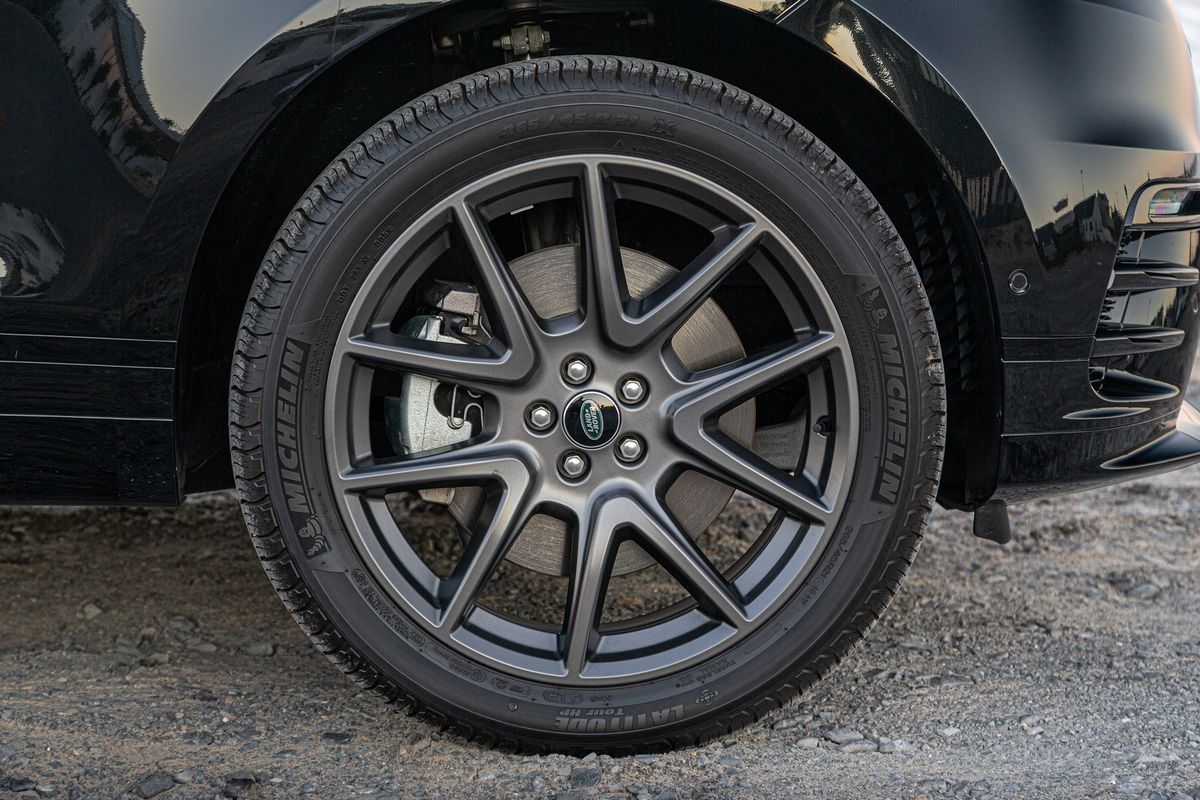
When travelling on poorer-quality tarmac, some jolts from bump- or dip impacts translated to the cabin, but we believe the test unit’s oversized wheels exacerbated them. The 21-inch alloy wheels (wrapped in all-terrain Michelins) looked great, but given the varying road quality in the Republic, perhaps smaller wheels, fitted with higher-profile tyres, may provide peace of mind and optimise ride/occupant comfort.
When it comes to handling ability, Range Rovers tend to favour “effortless luxury” over “engagement and athleticism”, which is why the Velar is surefooted but less than nimble. That said, Range Rover does know how to produce a fun-to-drive large premium SUV – just consider the superb current-gen Sport range .
When you’re driving in narrow streets and on tight roads, you’ll appreciate the Velar PHEV’s light steering setup, which makes it effortless to place the sizeable – and hefty – premium SUV on the road. At higher speeds, it still retains some directness and engagement, but not at BMW X5 or Porsche Cayenne levels.
And, thanks to the additional hardware of the hybrid system, this hefty variant doesn’t feel as light on its, um, wheels as some of its rivals. At least it makes up for it with off-road ability; although few Range Rover owners will venture “far from tar”, it’s good to know the Velar has notable capability on the rough stuff.
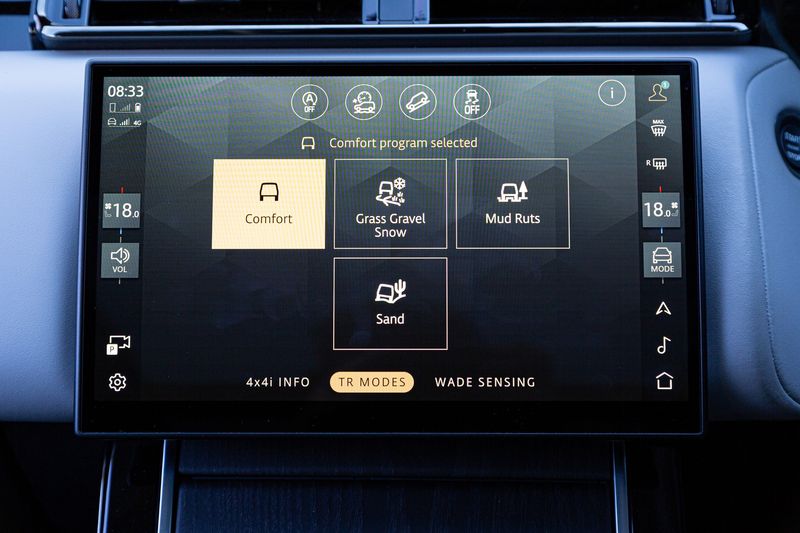
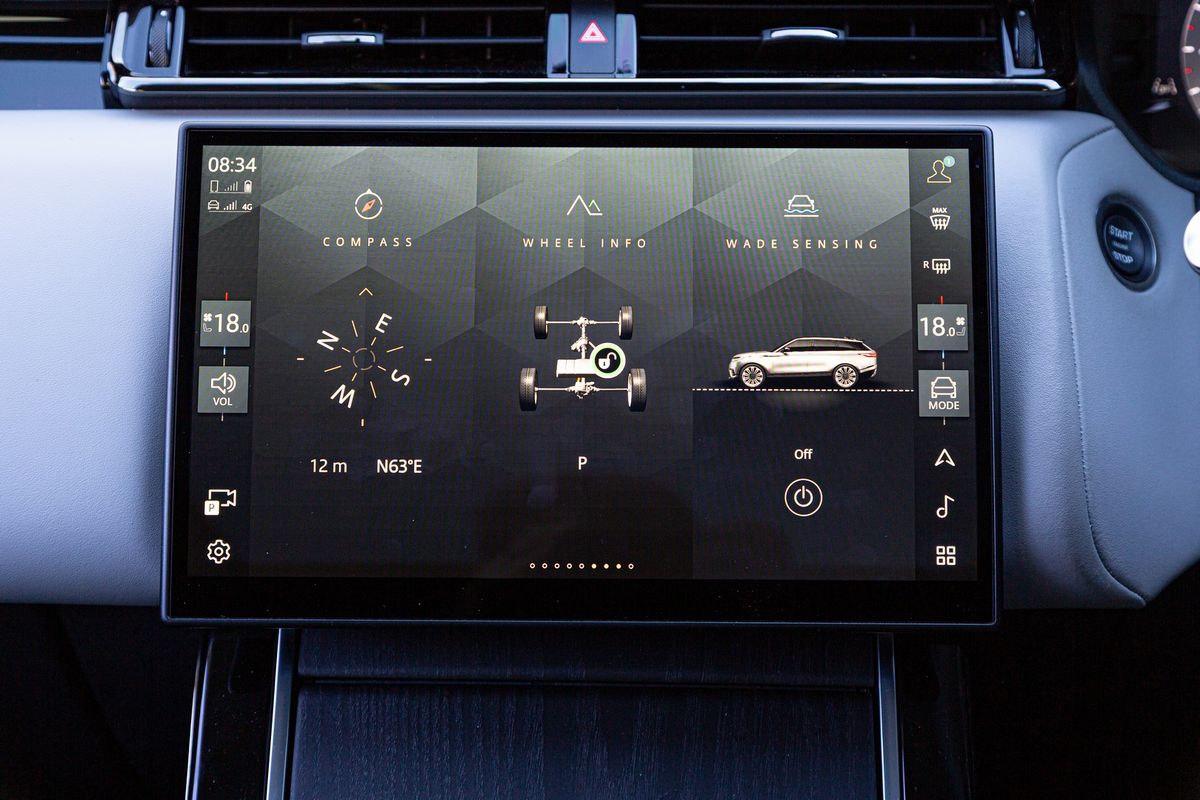
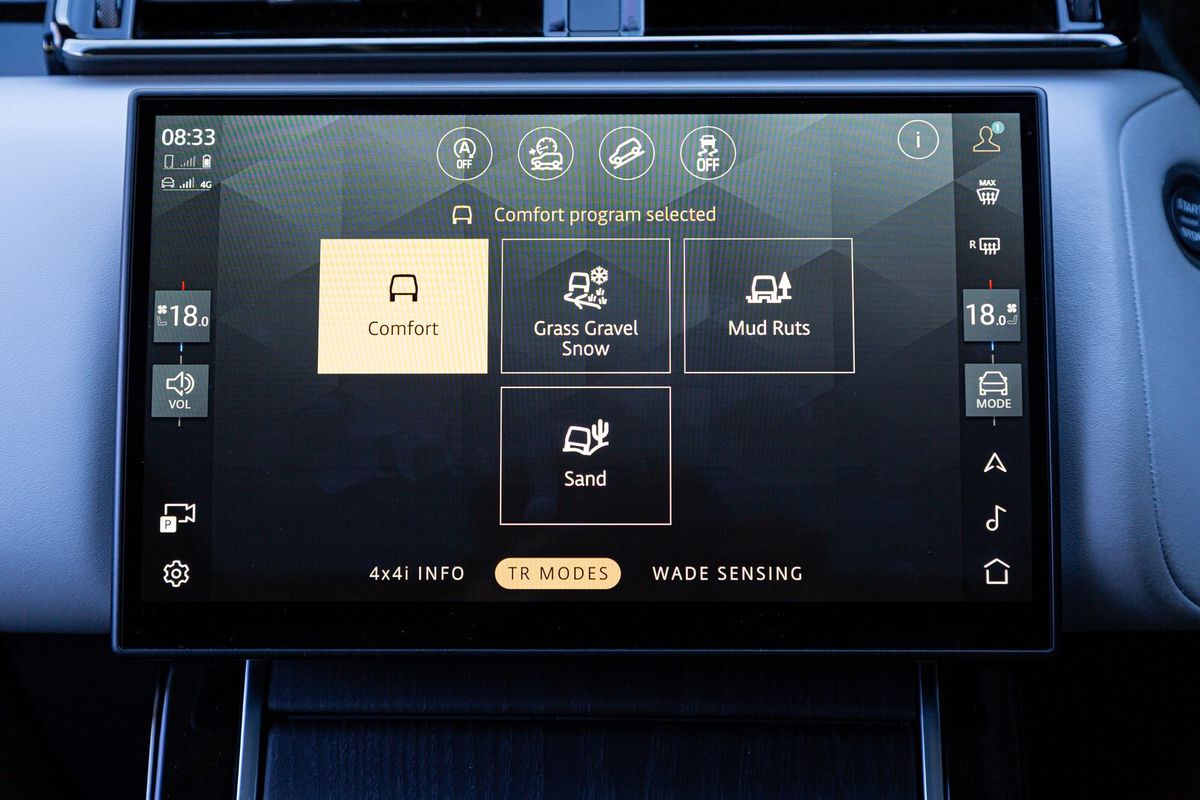
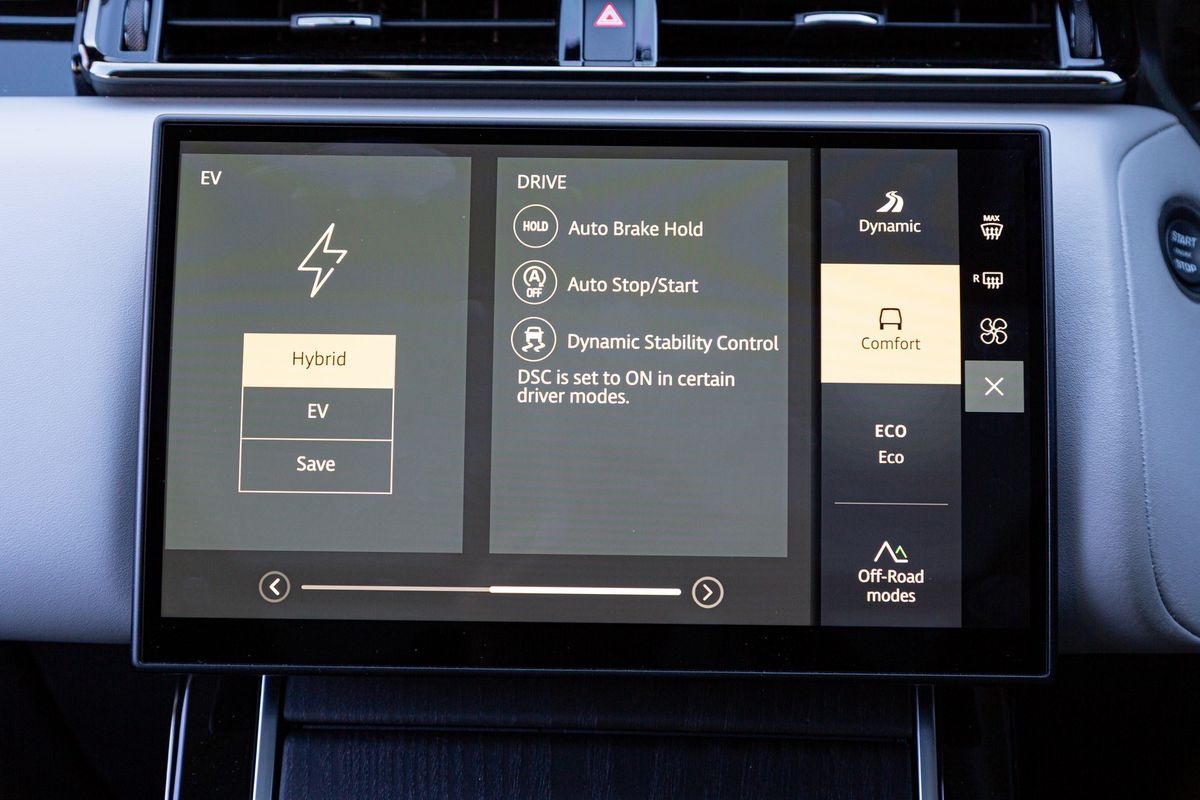
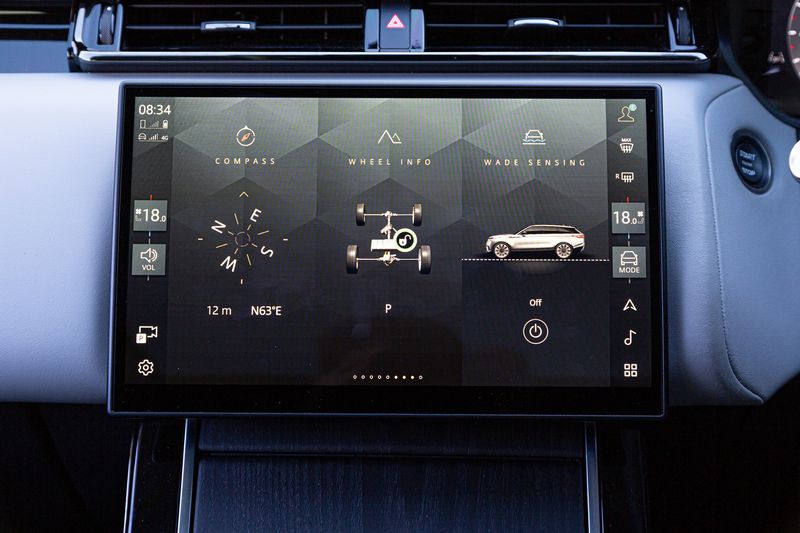
With a wading depth of 530 mm, a 213-mm ground clearance and a host of off-road drive modes, the Velar is surprisingly capable off-road. Of course, you can let the SUV’s Terrain Response figure out on which type of surface you’re driving and let it adjust the vehicle settings for you, but it’s more effective to utilise the drive modes; there are even some fun, if frivolous, readouts that add to the sense of occasion.
Practicality and Features
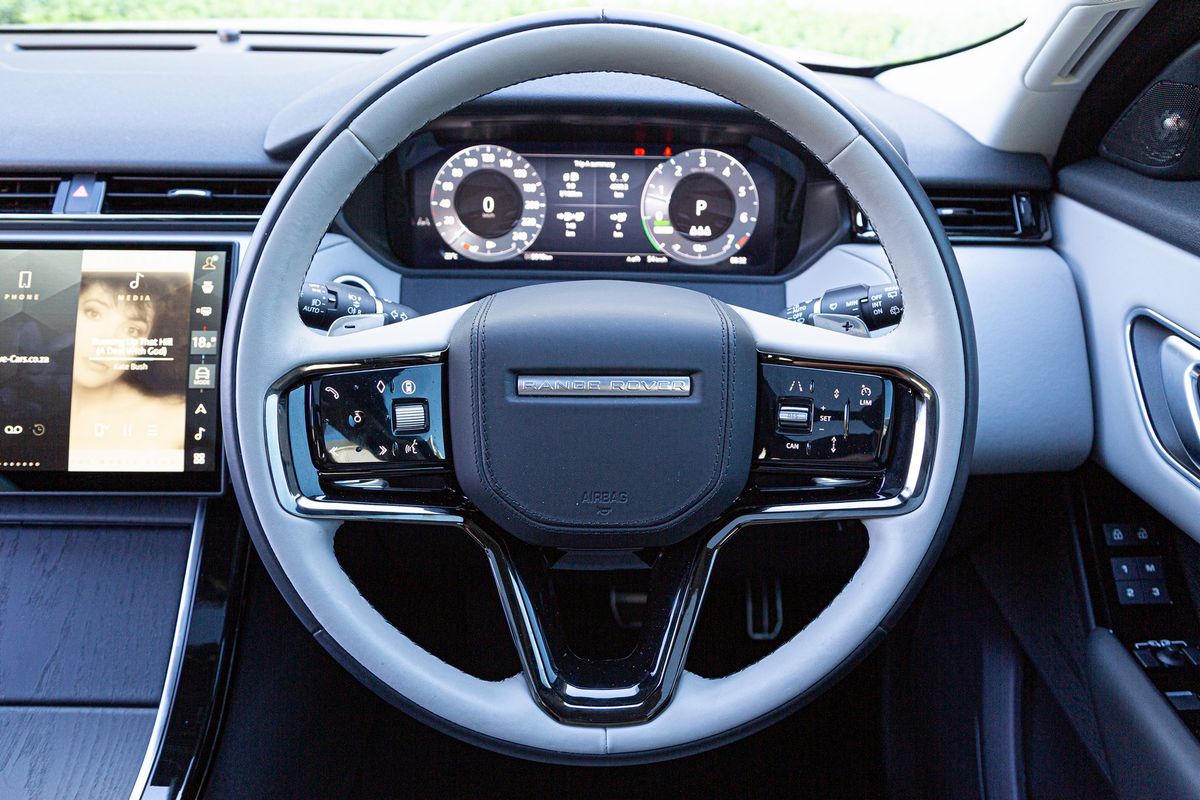
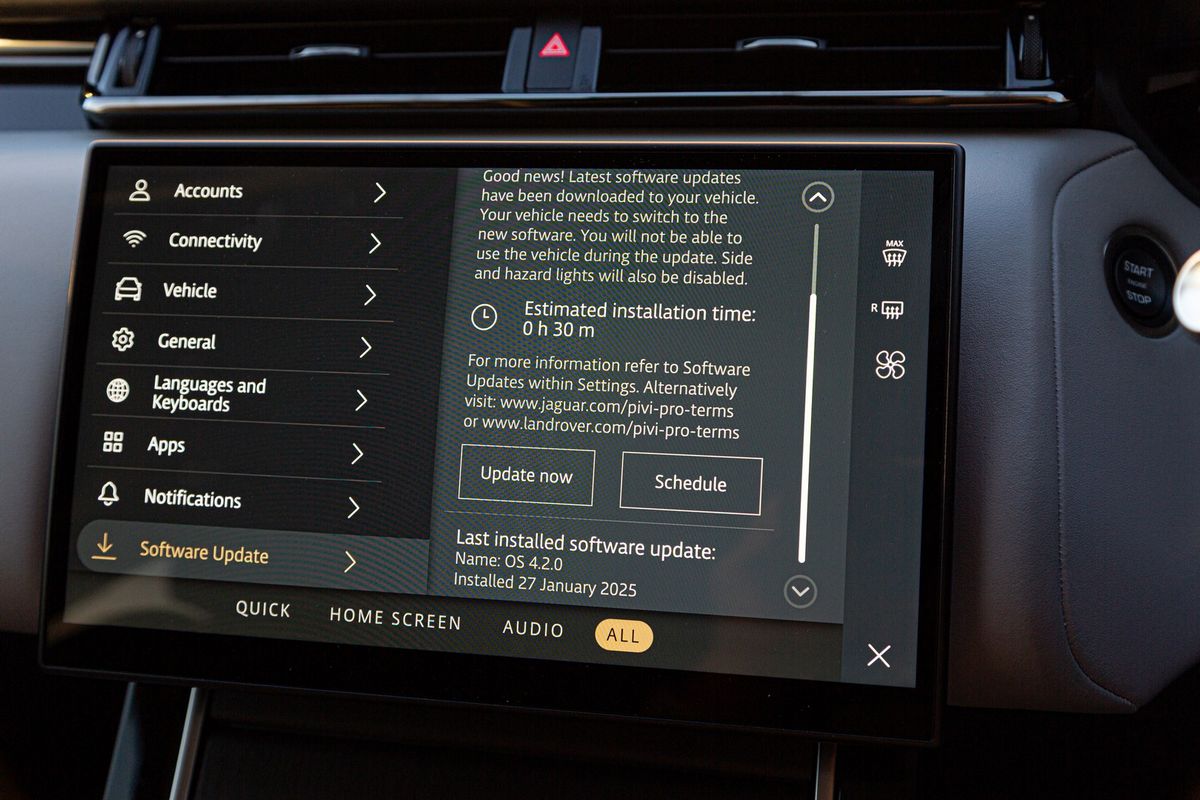
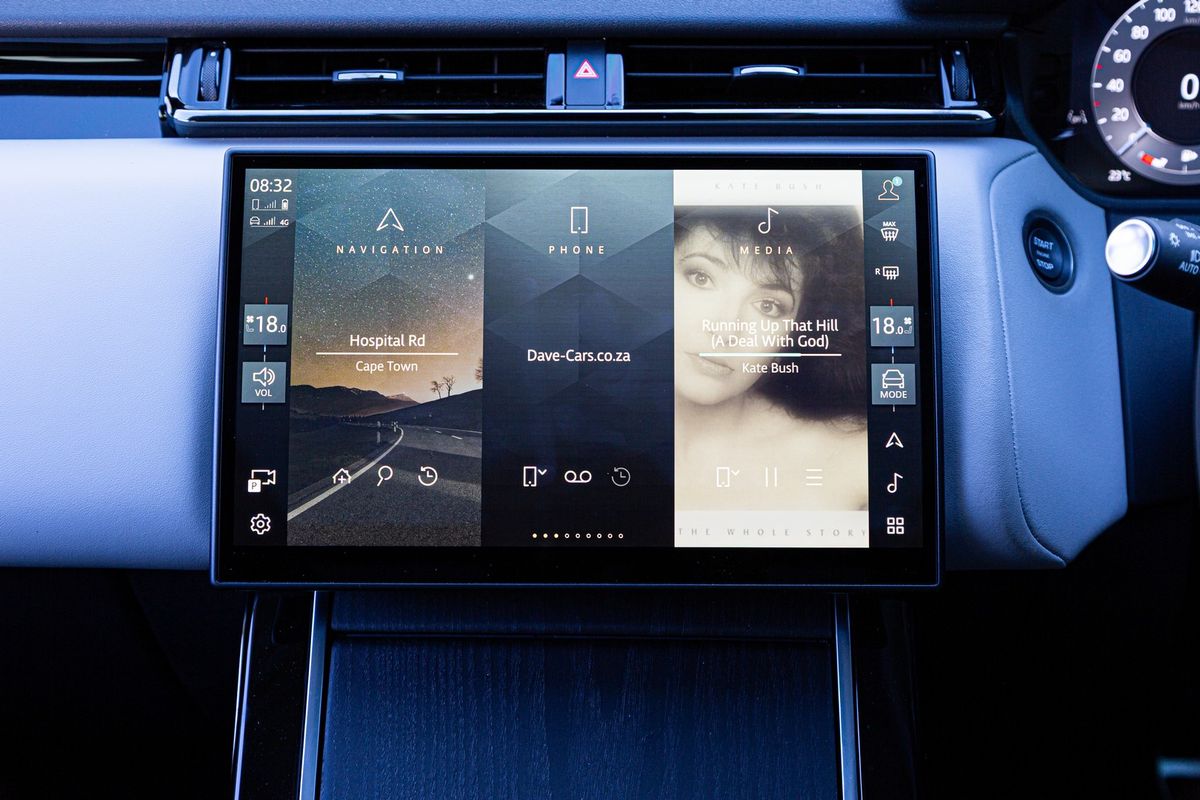
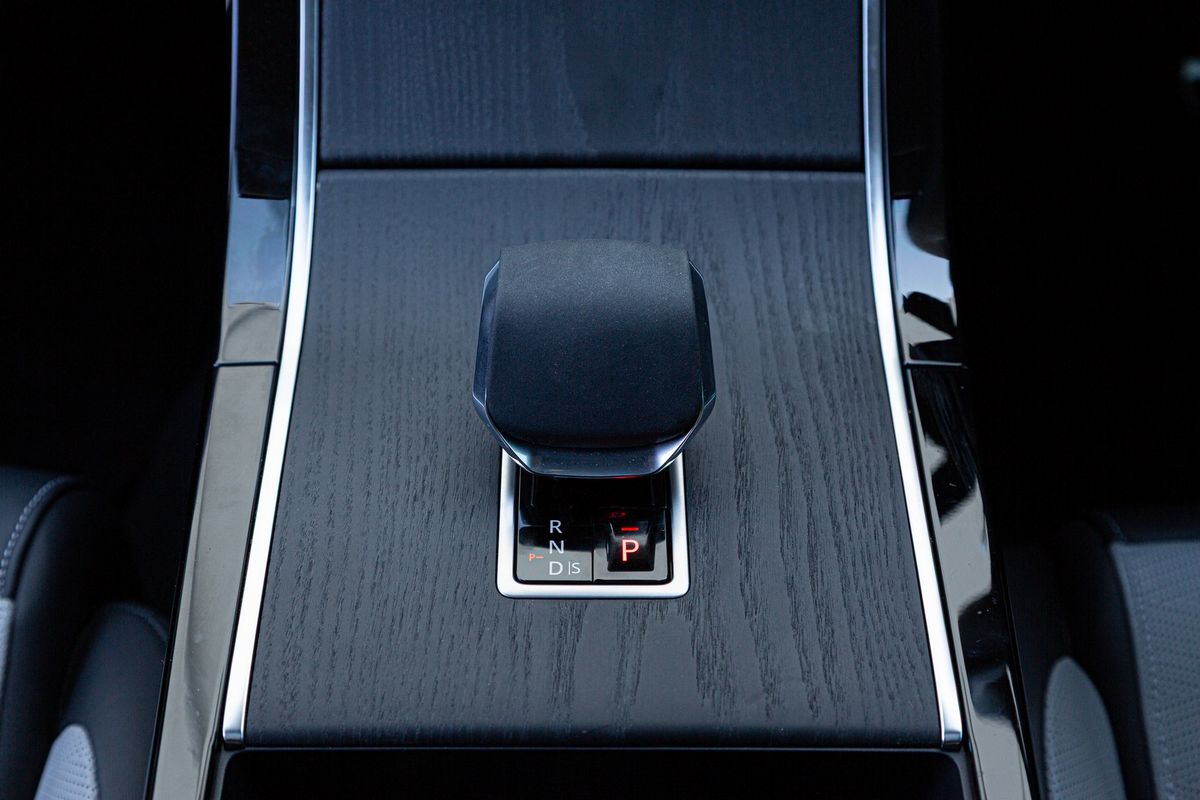
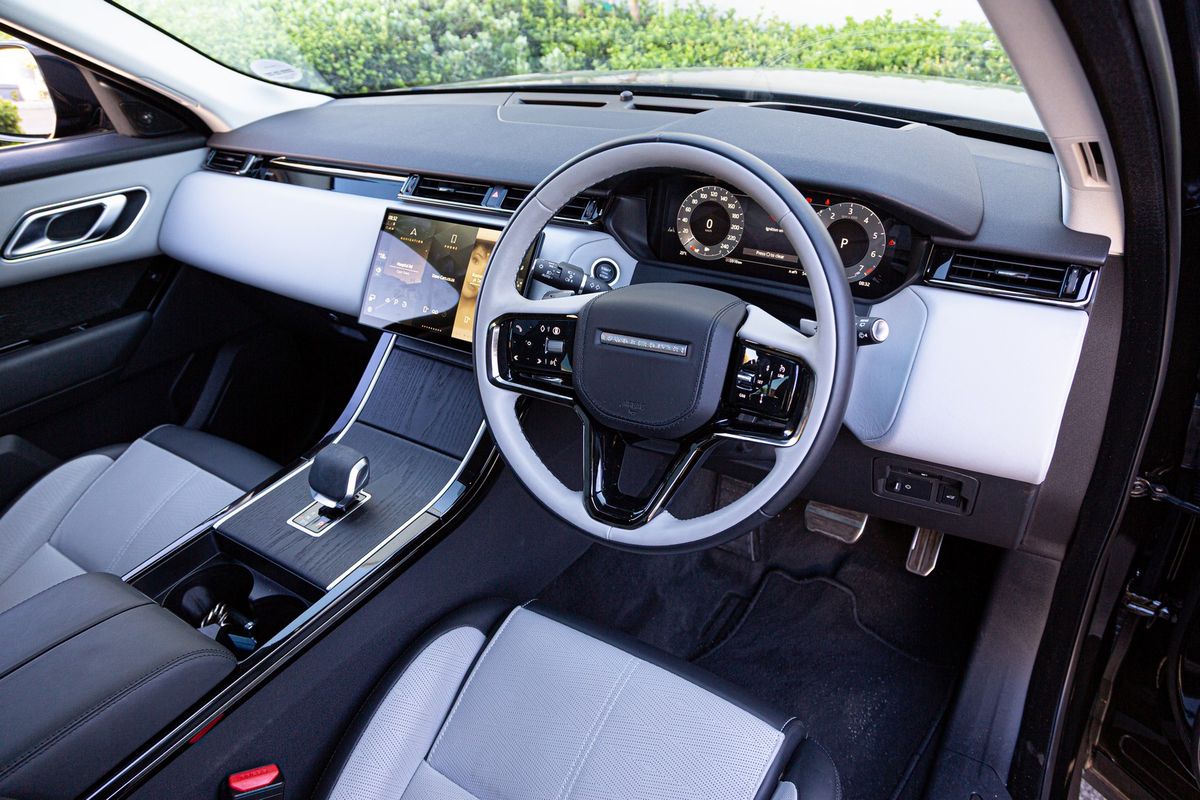
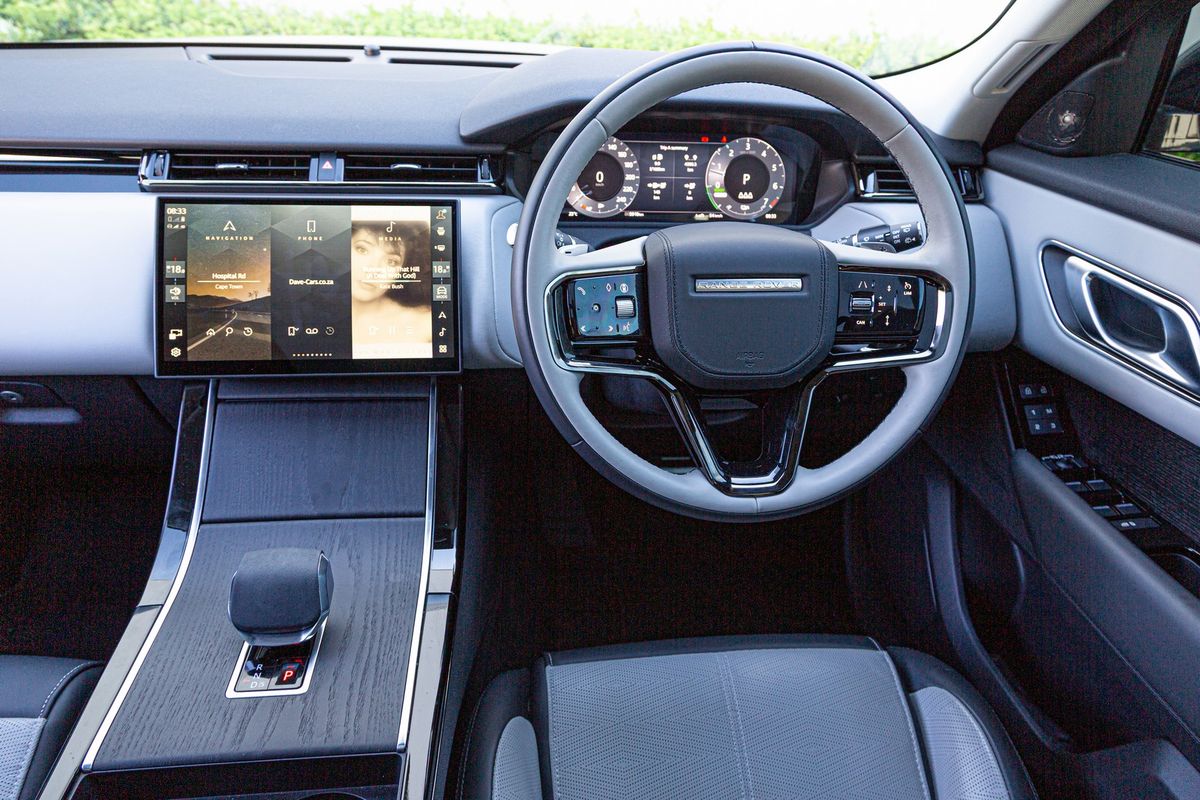
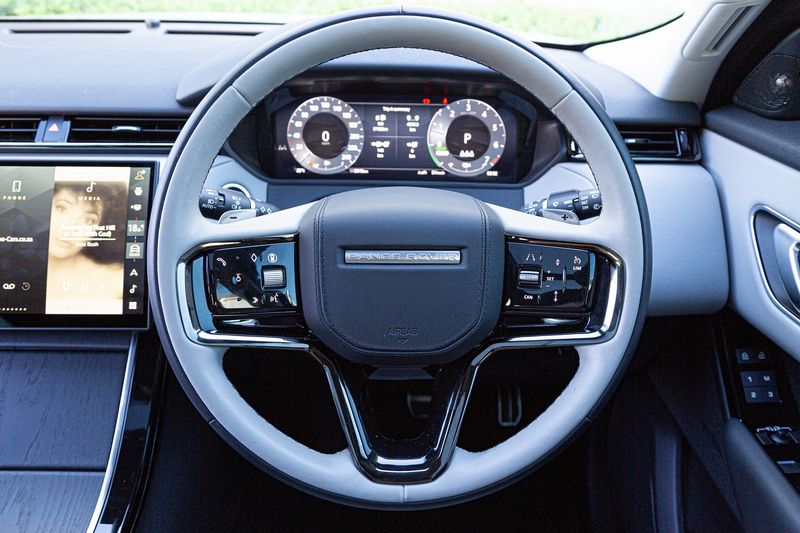
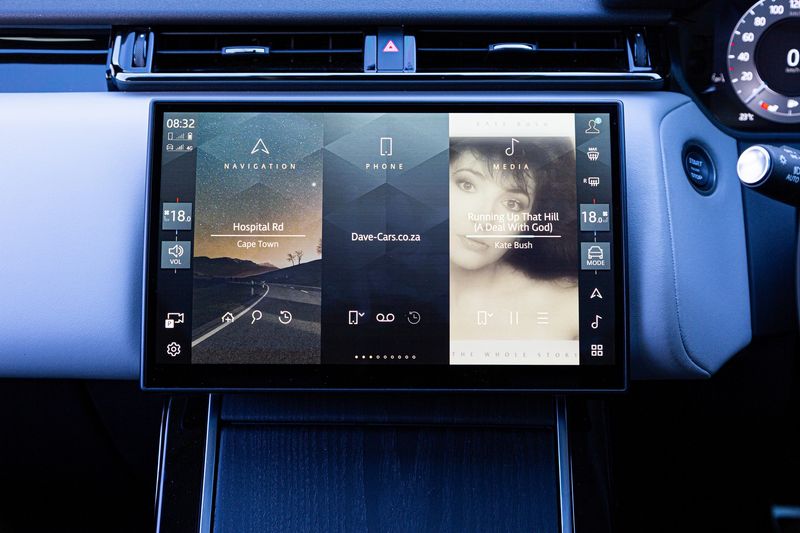
When you climb inside the Range Rover Velar PHEV, you’re greeted by a classy minimalist cabin. With the latest upgrade, many of the in-car controls were transferred to/consolidated in an 11.4-inch infotainment touchscreen. The centre console is almost bare and the only fascia-mounted button is for hazard lights.
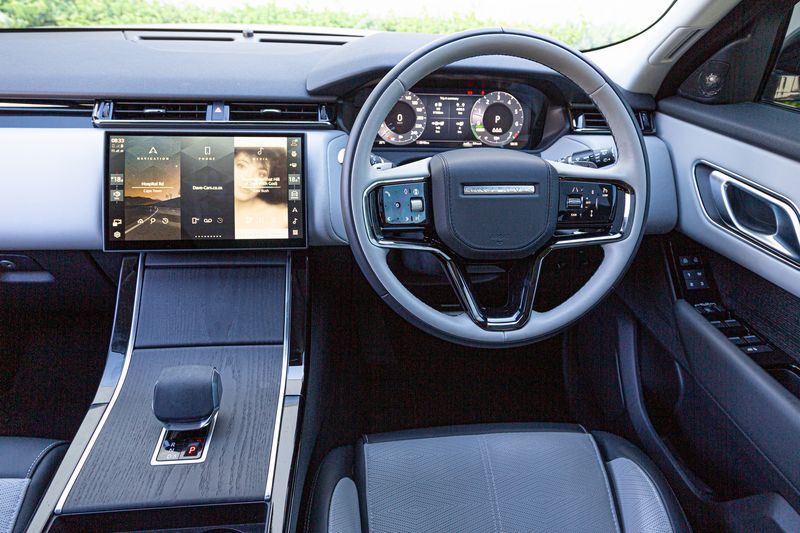
This raises an interesting dilemma. We certainly appreciate a neater cabin (the freed-up space is now used for connectivity and wireless charging) and we maintain the Pivi Pro is arguably the best-in-class in terms of responsiveness and user experience, but is the overall setup all that user-friendly? Not quite.
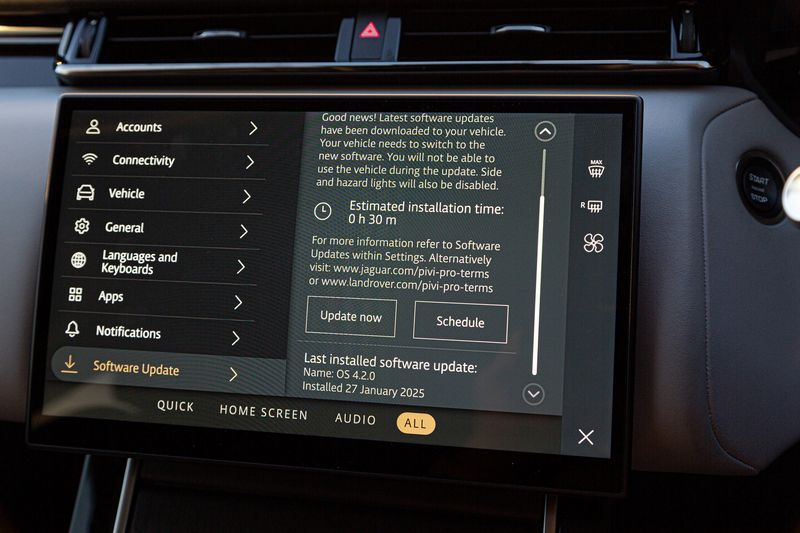
Yes, the Pivi Pro system is refreshingly easy to learn, lag-free and simply laid out, but in our experience, climate controls (to name just 1 example) don’t work efficiently on a touchscreen. It’s a schlepp to tap the climate option, then select a zone, and then adjust the temperature setting, while you’re driving.
Also, new-for-2026 Euro NCAP rules will penalise vehicles that have critical features integrated into their touchscreens (they’re deemed distracting), so expect some buttons to return to brands’ new cars soon.
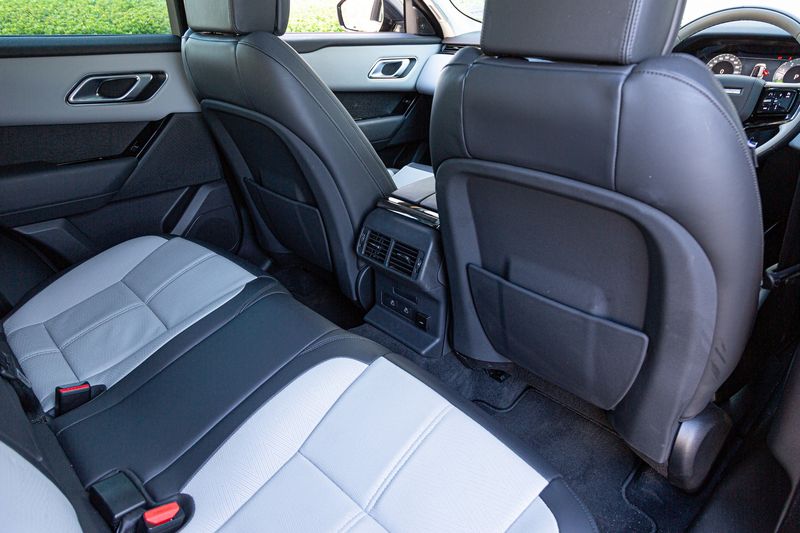
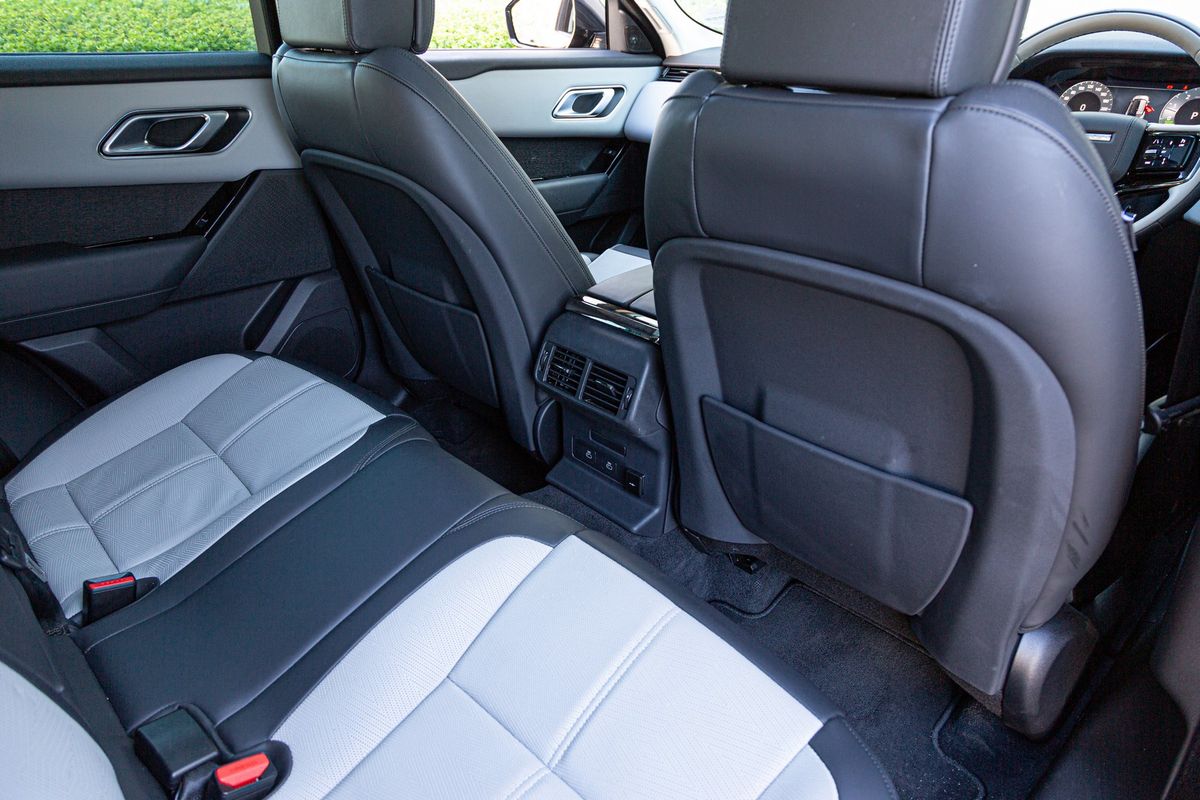
Despite its 2 874-mm wheelbase and 4 797-mm length, the Velar isn’t all that spacious inside. Using our comparison tool, we noticed the Range Rover’s key rivals have longer wheelbases (by about 11 cm) and that makes a significant difference in terms of how much more rear legroom they offer by comparison.
This author, accompanied by his wife and parents, travelled to a weekend getaway location in the Velar. During the trip, the rear occupants were surprised by how little legroom they had, considering they were in “a big Range Rover”. For convenience, their devices could be recharged from a pair of USB-C ports.

Impressively, unlike some PHEVs, the P400e Dynamic SE’s luggage capacity isn’t too compromised by the fitment of the hybrid power unit’s additional hardware (including the battery). Compared with plug-in versions of the Volvo XC90 and BMW X5 , the Velar’s load bay is fairly sized: it is said to hold up to 673 litres, which balloons to 1 731 litres if you fold down the 2nd row, which has a 40:20:40 configuration.
In terms of interior build quality and visual appeal, Range Rover often gets it spot on and the Velar’s cabin is no exception. Granted, there are 1 or 2 common touch areas that feel “of marginal quality”, such as the buttons on the steering wheel, but the extensive use of soft-touch materials easily compensates for that.
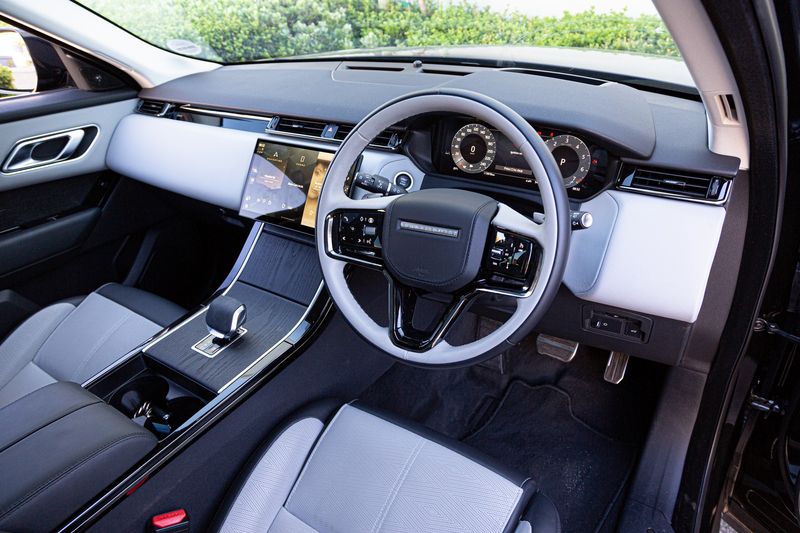
When you’re forking out R2 million for a premium SUV, you expect comprehensive spec, but our test unit still had a few extras that pushed the asking price to just over R2.3 million. The biggest line item was the 22-speaker Meridian audio system that dovetailed nicely with the wireless Android Auto/Apple CarPlay.
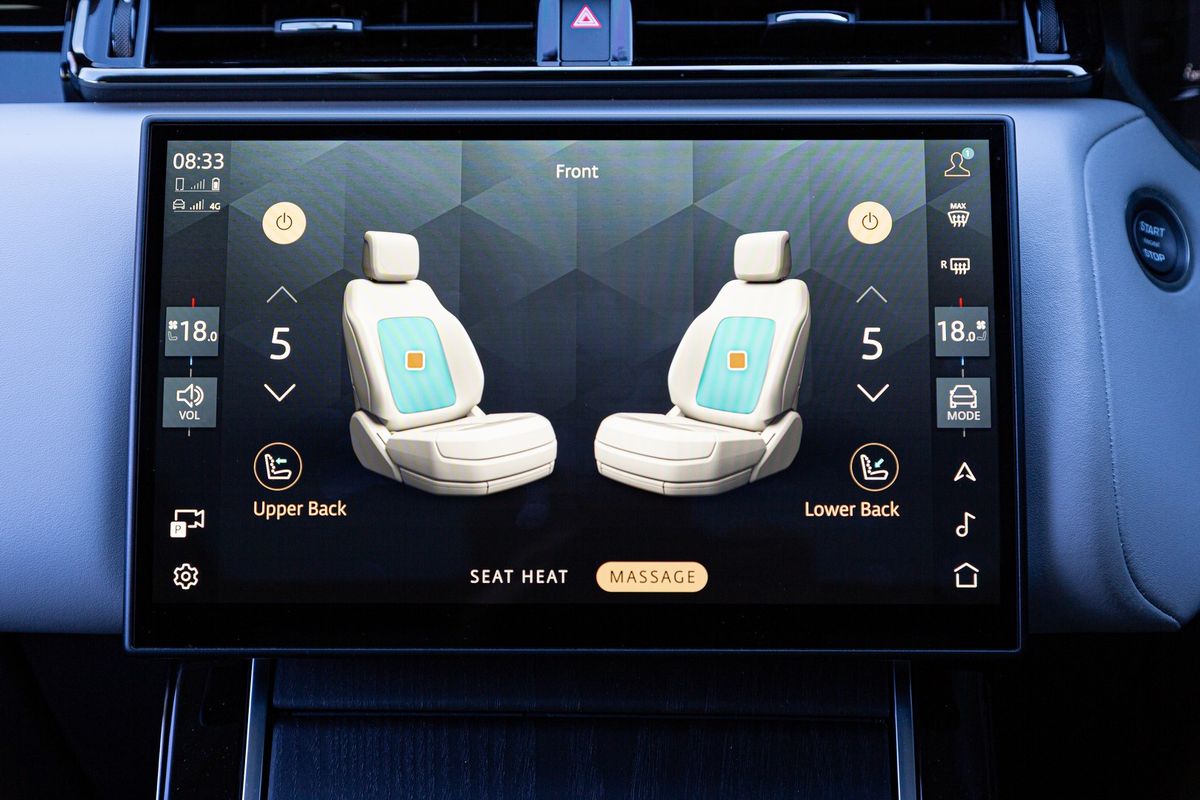
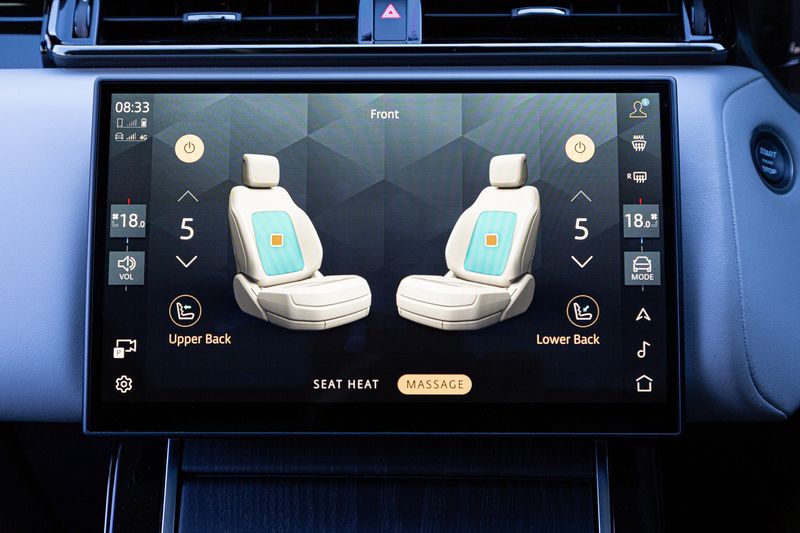
The Tech Pack (R32 640) added features such as a head-up display, 360-degree surround view, park assist and wade sensing. Massaging-, heated- and cooled front seats and a panoramic sunroof were also specced, but at the time of writing, the online configurator was no longer listing prices for those options.
Meanwhile, the Velar features an array of passive and active safety features. The latter grouping includes adaptive cruise control, autonomous emergency braking, blind-spot monitoring and lane-keeping assist (among others), all of which are fitted as standard on this model. Six airbags, tyre-pressure sensors, electronic stability- and hill descent control, plus trailer stability assist round off the safety suite.
Price and After-sales support
The Range Rover Velar P400e Dynamic SE retails for R2 098 300 (March 2025), which includes a 5-year/100 000 km vehicle warranty, an 8-year hybrid battery warranty and a 5-year/100 000 km maintenance plan. With the options fitted to our test unit, its final price came to R2 315 507.
Range Rover Velar prices and specifications
Find a new/used Range Rover Velar listed for sale on Cars.co.za
Verdict
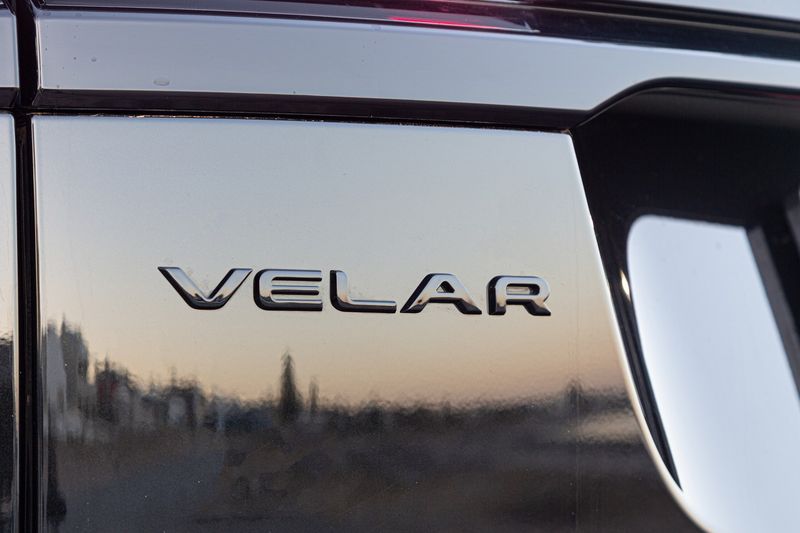
Despite its age, the Range Rover Velar is still a striking and desirable premium SUV. However, its alluring looks, efficient powertrain and off-road capability are overruled by a high list price and a cramped cabin.
Should you buy a Range Rover Velar PHEV? In this sub-genre (plug-in Premium SUVs), its rivals offer more space and -performance at lower prices, so this SUV is a heart-over-head purchasing proposition!
That said, there’s better value in the rest of the Velar range and, while the local new-vehicle market has only just entered its plug-in hybrid era, turbodiesel premium SUV variants still make more logical sense.
Further Reading:
All the latest Land Rover news and reviews
Want to purchase a new or used Land Rover? Browse vehicles for sale