
We spent a week with the recently facelifted Renault Duster. Are the changes enough to ensure this popular model’s continued success?
The Renault Duster has been a sensation on the local market with strong sales from the word go. Its success, along with the Clio 4’s popularity, has boosted Renault’s market share in this country significantly. Keys to the Duster’s appeal have been its disturbingly low pricing and no-fuss, solid mechanicals. Now theres a facelifted model available with minor exterior and interior enhancements. We had the turbodiesel 4×4 variant on test.
Whats changed?
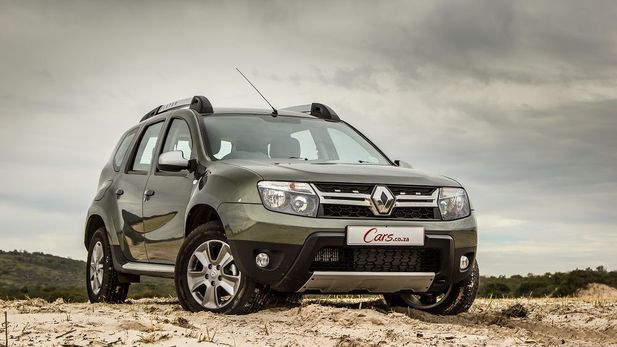
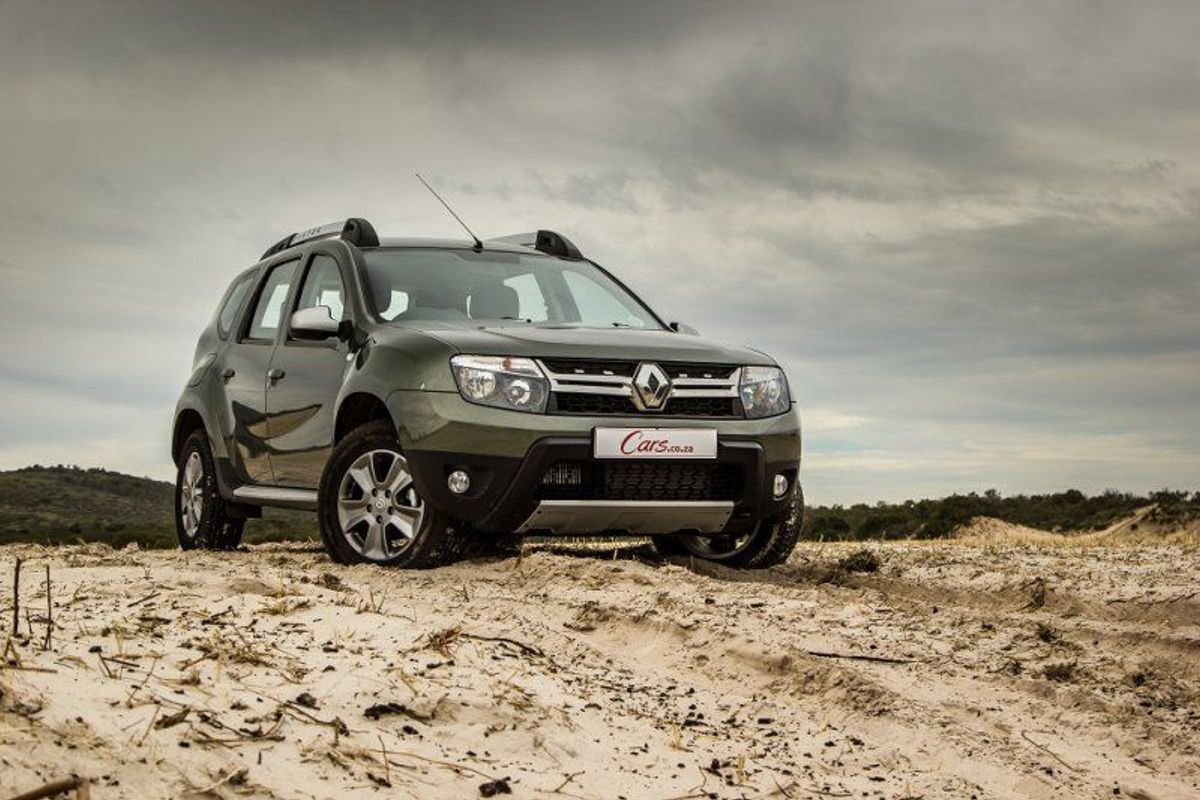
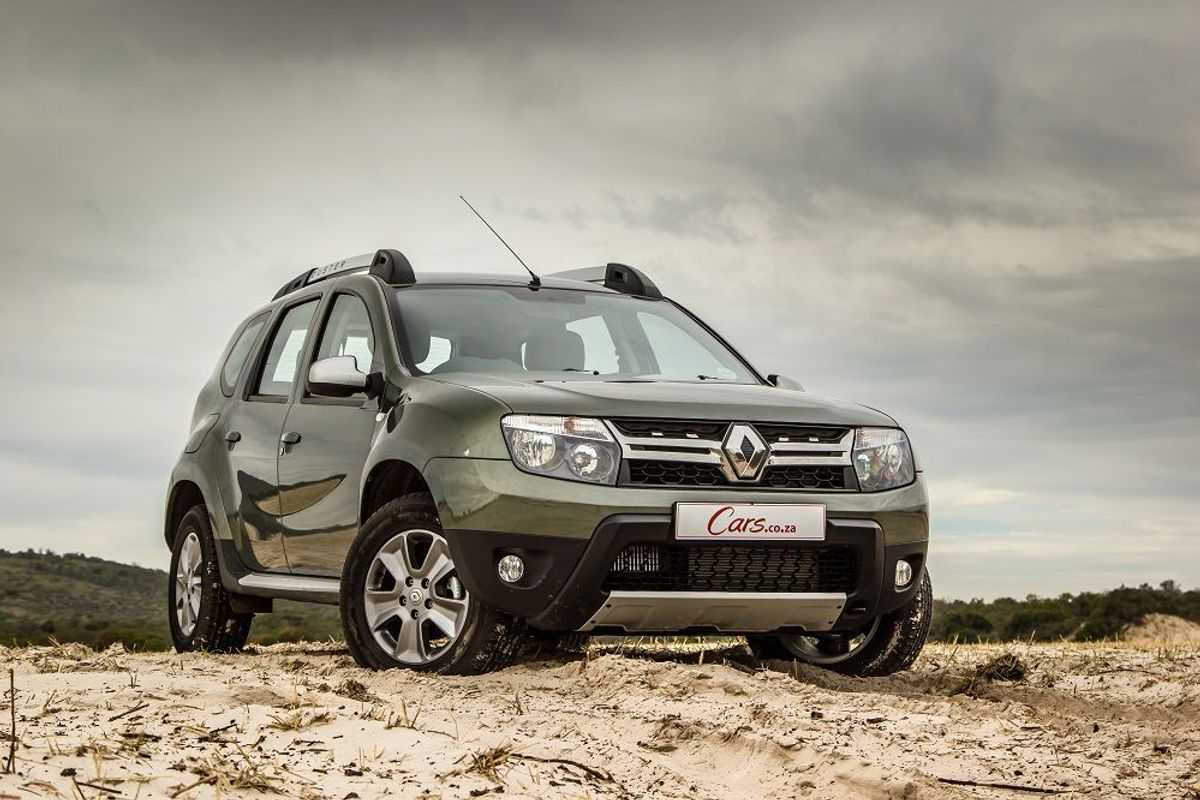
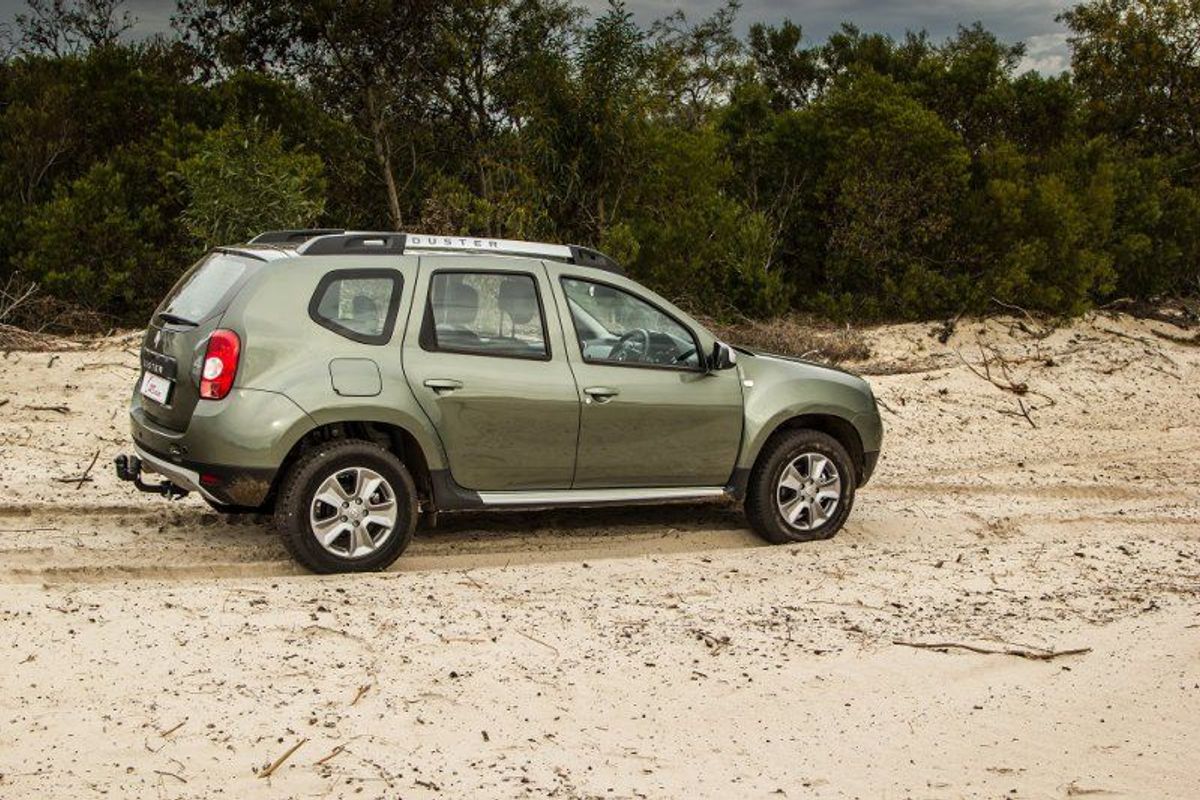
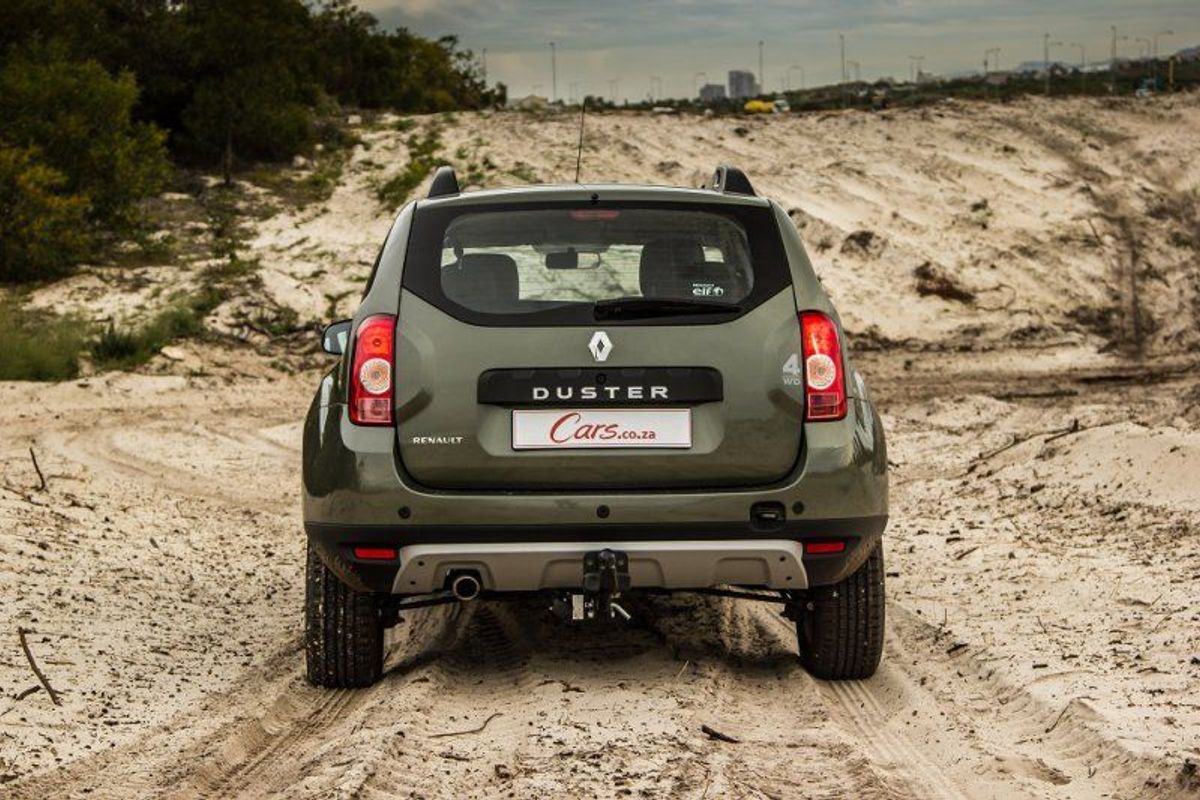
Its a rather modest facelift, to be honest, and instead Renault is punting the fact that the manufacturing is now done in Romania instead of India. The company expects quality as well as availability to improve because of this production swap. From an exterior perspective, theres less chrome and shiny bits, including the new two-tier front grille and rear nameplate. The roof bars are new along with different alloy wheels.
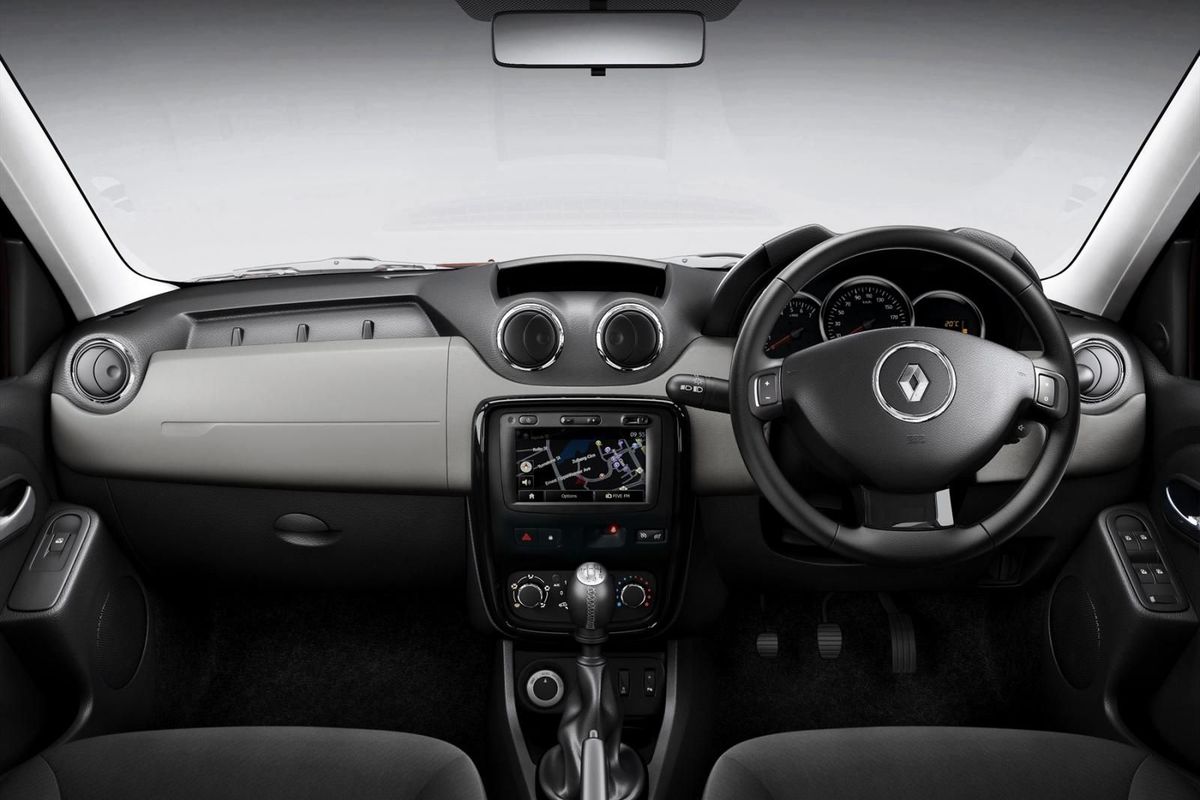
Turning to the interior, theres been an upgrade to some of the materials. Star attraction is a seven-inch touchscreen that has been carried over from the Clio range. Cruise control is standard across the range as are rear parking sensors. As a final touch, navigation is available on the Dynamique variants (including our test unit).
Engine
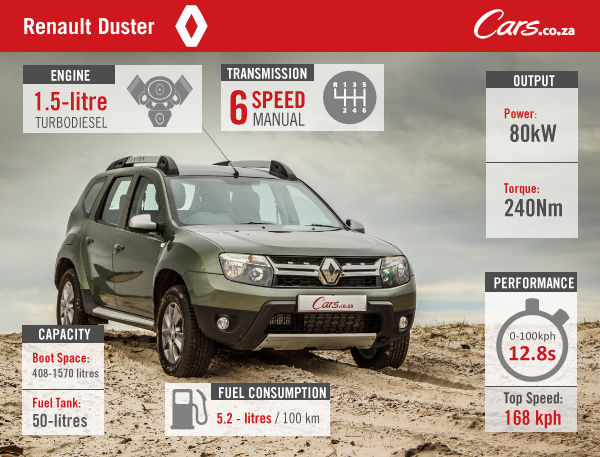
The diesel model tested here is equipped with a 1.5-litre turbodiesel engine that pushes out the same power and torque as before (80 kW and 240 Nm). There is an improvement in fuel economy, however, as Renault has reduced the Dusters consumption from 5.5L/100km to just 4.8L/100km. The engine is now Euro VI emissions compliant, as opposed to the older Euro II specification of the previous model’s engine. Its quite a rough-sounding diesel, and certainly more obviously diesel (in engine clatter) than most of its rivals. Its old-school, then, but remember that with that clatter should come a sense of reliability and solidity. The engine is connected to a six-speed manual gearbox that has some of the shortest ratios weve ever had to shift through. Its possible to cruise around town in sixth gear at 60kph and not worry about stalling or being in the wrong gear.
The engine has quite a short torque band and acceleration tapers off as soon as you pass 3 000rpm. At 120kph the revs are a bit high meaning the fuel efficiency on long runs wont be as good as you might expect. The bonus to having the short ratios is that if you take it off-road the first gear could work as a low-range and you can tackle quite steep inclines without riding the clutch to explosion.
Climb aboard
As a bare nuts-and-bolts entry-level 4×4 the Duster does a decent job of not being awful. The plastics feel solid and durable, but are not soft to the touch. Inside there’s a vast expanse of grey plastic save for the cloth inserts in the door and the rubber steering wheel. The cloth seats are easily adjustable, but lack quality side support so you have to hold on while cornering. All the basics are covered with regards to modern electric conveniences and the touchscreen adds an upmarket touch. The screen is however mounted too low and you have to take your eyes and peripheral vision off the road to use it. The Duster is spacious inside with plenty room for rear passengers and a good-sized boot. It’s easy to understand its family car appeal. Rear Isofix child seat anchors and four airbags are also fitted.
Only this top-spec 4×4 model comes with traction control and it has a rotary switch to change between 2WD and 4WD on the fly. As mentioned before, cruise control is standard and controlled by the buttons on the front of the steering wheel. Renault has persisted with controls behind the steering wheel to adjust the radio volume and after much fiddling for years, we’ve learnt where the buttons live.
On/off the beaten path
The Renault Duster rides reasonably on road, but its short wheelbase combined tall ride can make it bouncy over speed bumps and pavements. It is better out on the freeway where it feels less springy and the steering provides solid feel and confidence. Once you take the Duster off-road it makes a lot of sense. The ride over rippled dirt roads is nothing short of impressive as it dances over the surface.
The shakes and rattles are ironed out by the suspension and its comfortable for long stretches on dirt sections. When the going gets a bit trickier the 4WD system works well and traction can be sent to the wheels that need it. The 210mm ground clearance is also very useful.
Verdict
Renault South Africa has managed to bring the facelifted Duster in at nearly identical pricing to the pre-facelift model. That alone is reason enough to upgrade to the newer, prettier version. If youre looking for a solid, reliable-feeling 4×4 on a budget then the Duster is first choice. Family buyers will be grateful for the spacious interior and large loading space but its a pity only the top spec model gets traction control. The engine may be a bit on the rough side, but that doesnt detract from the value for money offering that continues to be the Dusters strongest suit.
Renault Duster Pricing
The range of Dusters begins with a petrol 1.6 Expression at R215 900 . The Dynamique 1.6 is R233 900 . The Diesels start with the 4×2 Dynamique at R254 900 while the 4×4 Dynamique we tested here comes in at R269 900 .
Test Team Opinion
The Renault Duster is a wonderfully cheap baby SUV that offers practicality galore. The diesel engine may sound a little unrefined, but it’s a strong and willing unit. It is also surprisingly good off-road and happy to try take on everything. The only downside is it feels cheap, but when the competition costs so much more, it’s not a big problem at all. -David Taylor
We Like: Price, off-road ride, practical
We dont Like: Short ratio gearbox, rough sounding engine
Also consider: Suzuki SX4, Nissan Juke
Compare the Renault Duster to the Suzuki SX4 and the Nissan Juke here
Renault Duster 1.5dCi 4×4 Quick Specs