Some contemporary vehicles are already equipped with digital rearview mirrors, but why don’t we see more models – including bakkies – fitted with virtual side mirrors?
When the price of fuel is relatively cheap, manufacturers love to adorn vehicles with cosmetic addenda; think of roof rails or bull bars on a double-cab bakkie – if they look good, the cost of additional aerodynamic drag – higher fuel consumption – is considered worthwhile.
But now that prices at the pumps are high – a reality that’s unlikely to dissipate soon – isn’t it time that double-cab owners and designs start thinking differently about appearance?
Aero is the final frontier
.jpg?tr=w-800)
Any range gain on an electric vehicle is handy. Hence Audi’s move to virtual side mirrors.
Aerodynamics matter. A lot . And not only for achieving irrelevant top-speed numbers. In real-world driving scenarios, excellent aerodynamics reduce wind noise , which improves cabin experiences for passengers that journey long distances.
But aerodynamics has an even more important role. One that directly relates to your monthly motoring cost: drag increases fuel usage.
To prove how much of a difference clever aerodynamics can make to vehicle energy use, consider the Mercedes-Benz EQXX concept EV, which has an amazingly low 0.17 drag coefficient and 1 400 km of real-world range – on a single battery charge. That’s 3 and a half times what most similarly sized and powered EVs can manage, which illustrates the massive influence of aerodynamics.
Any drag reduction matters – a lot
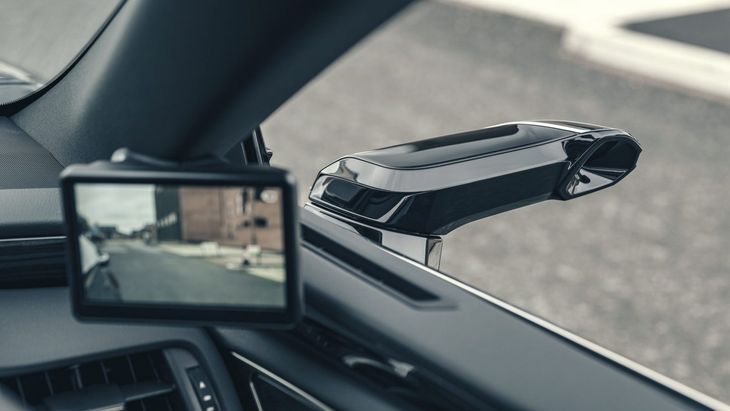
The very slick, and proven, Lexus digital side mirror set-up. A next-generation Hilux option, perhaps?
But how does the aerodynamic debate relate to your double-cab bakkie?
Little can be done about the length, width and height of a double-cab – and 4-door bakkies are only getting bigger from one generation to the next, aren’t they? Vehicles with a smaller frontal area have a correspondingly lower drag coefficient, but double-cab bakkies aren’t going to get any lower, because of the requirement for ground clearance to go off-roading – even if most Hiluxes, Rangers, D-Maxes, Navaras, Tritons etc never do.
Despite the size of double-cab bakkies, there are adaptions and design evolutions that can be hugely beneficial. And they don’t require complex engineering interventions.
One of the easiest wins for improved double-cab aerodynamics is to close the load box, or at least, that’s the theory. But, as with many things in the intangible realm of aerodynamics, everything is not as assumed.
Suppose you have ever left something lightweight in the load box of a bakkie and accelerated up to highway speed. In that case, you’d have witnessed the powerful aerodynamic swirling forces in the open load box.
A tonneau cover or roller shutter not only dramatically reduces wind noise. It can theoretically trim fuel consumption. But what is the actual saving?
The best research states that adding a load box cover will reduce your bakkie’s drag coefficient by 12%. – at best. That percentage is not directly attributable to fuel saving, however – the measurable saving in petrol- or diesel consumption at cruising speeds isn’t enormous. It calculates to about 0.5 L/100 km at 120 kph, or about R12 per 100 km (at current fuel prices). At lower speeds, the fuel you’d save by driving with a tonneau cover in place becomes negligible.
An obvious aero win
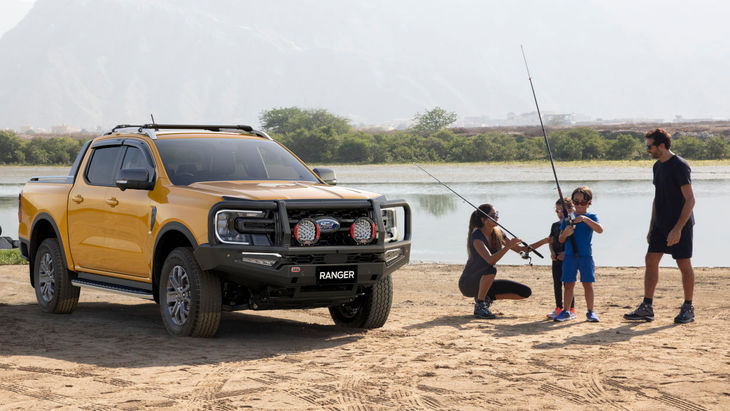
All those front-end accessories add drag. Getting rid of the side mirrors would rebalance things (somewhat).
As double-cab bakkies have evolved from off-road- to leisure and lifestyle vehicles, accessorising has boomed. Owners need to scrutinise if the additional drag created by a roof-mounted LED light bar, which is rarely used, might be worth it.
A mystery in all vehicle designs, including double-cab bakkies, is the continued presence of side mirrors. Considering the enormous advances in digital cameras, processors, screen- and streaming technology, it’s amazing that the trusty side mirror has not been widely replaced with much smaller, sleeker digital camera pods.
Japanese brands such as Lexus and Honda have implemented camera pods. Lexus is a market leader in Japan, where its ES300 h has offered digital side mirrors since late 2018. The Lexus system is particularly interesting to South African bakkie owners, as it could justify an intra-brand redeployment, of similar technologies, throughout Toyota’s hugely profitable bakkie business.
Bakkie side mirrors are just too huge
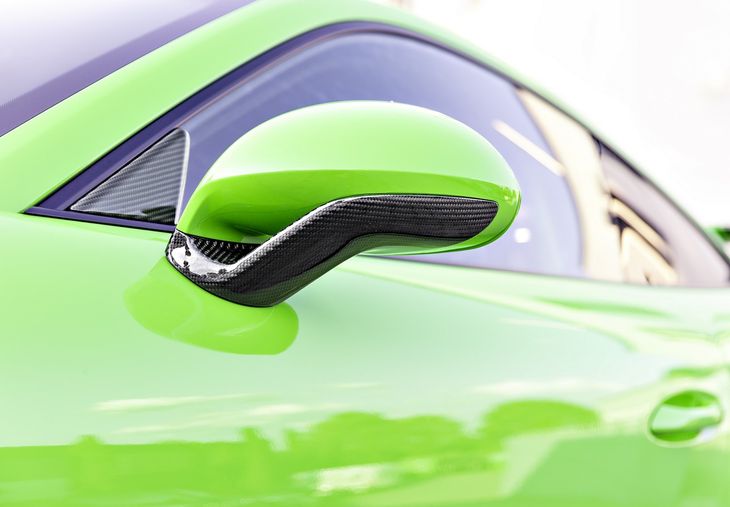
Porsche produces very shapely side mirrors, but replacing glass with a camera pod makes for a much smaller total assembly.
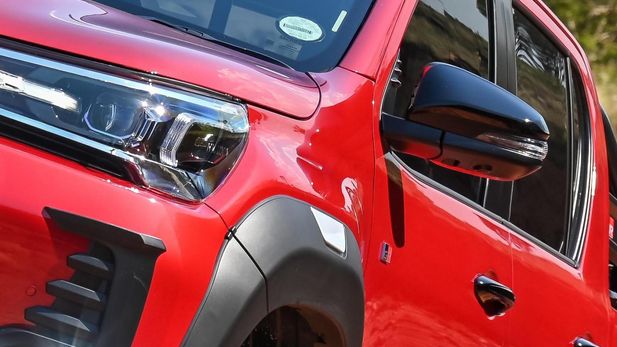
Side mirrors account for a drag coefficient of 2- to 7%, depending on their sizes and shapes. Most bakkies have oversized side mirrors – and they’re not particularly aerodynamic. You’ll hardly see a Porsche 911 GT3 RS type side mirror silhouette on a Hilux double cab; therefore, most bakkies edge towards the 7% side-mirror drag coefficient.
Better fuel consumption is not the only benefit of fitting virtual side mirrors. Vehicles without conventional side mirrors generate dramatically less wind noise, especially at cruising speeds. During those long-distance journeys, less wind noise makes for a more pleasant cabin environment.
The third benefit of virtual side mirrors is increased driver confidence and reduced low-speed vehicle placement anxiety. Have you ever tried to navigate a double-cab bakkie into a very tight parking space, or between two narrow obstacles on a demanding off-road route? What are the outermost contact points risking damage? Exactly. The side mirrors.
If the virtual side mirror is such a win, why haven’t manufacturers introduced them on double-cab bakkies? Cost and vulnerability. The initial integration cost of a digital side mirror system isn’t the issue – the replacement cost is.
Why large side mirrors endure
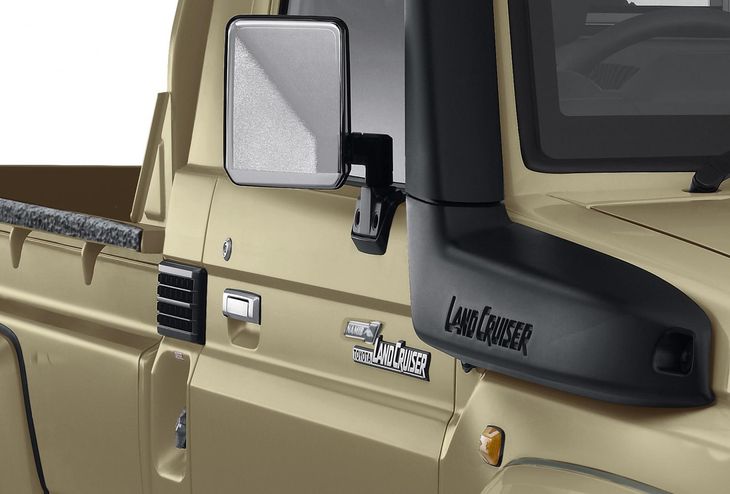
Nineteen-eighties “aero” remains in production on the current ‘Cruiser 70 Series.
Side mirrors are hugely vulnerable contact points on any vehicle; they’re designed to be sacrificial. We’ve all negligently reversed into a pillar at a very low speed and experienced a side mirror “breaking apart”. It is engineered to do that, instead of resisting impact, partly as a pedestrian crash safety requirement.
The sacrificial design of analogue side mirrors means they can be pieced together quite easily if the damage is slight. With a digital side mirror the replacement cost, as with all things automotive and digital, is significant.
Like many lead technologies, virtual side mirrors require scale to be produced at a reduced cost and become a viable design integration for standardisation. But their potential is enormous, especially for double-cab bakkies, where vehicle size and frontal area are problems inherent to the vehicle’s design purpose (off-road driving) – and unlikely to change.
Wouldn’t it be great if your bakkie was quieter at cruising speeds, had better side-mirror reference vision at night, used less fuel and was easier to park? Virtual side mirrors would deliver all those solutions in a simple design evolution. And with Lexus being the proven technology leader with real-world digital side mirrors, Toyota’s bakkies might, um, lead the way…
Related content:
Will Chinese cars stay cheap forever?
Stage 6: A major threat to SA’s auto industry
GWM’s Ora Cat EV could offer 500 km range for only R600k
Toyota RAV4 vs Haval H6: Which is the better hybrid?